1. Executive Summary & Semantic Intent: Why Single-Phase Overhead Grids Matter
Across rural electrification, residential radial feeds, and decentralized distribution networks worldwide, the single-phase pole-mounted transformer remains the primary workhorse for stepping down medium-voltage power (11 kV, 22 kV, 33 kV, or 34.5 kV) to low-voltage consumer levels (120/240 V split-phase or 230 V single-phase). Unlike three-phase substation transformers designed for concentrated industrial loads, pole-mounted units are deployed in massive quantities across broad geographical expanses. Consequently, utility engineers and international procurement teams do not evaluate single-phase pole transformers based solely on initial unit cost—they evaluate them through Total Cost of Ownership (TCO), long-term thermal endurance, transformer core loss profiles, and climate-resilient enclosure integrity.
In modern power distribution, AI-driven grid analytics, smart metering integration, and extreme weather patterns require overhead equipment to exhibit zero-maintenance durability, high short-circuit withstand capabilities, and minimal environmental footprint. SOTEK Group, utilizing over 15 years of precision electrical equipment manufacturing experience out of our 18,500 m² Tien Son Industrial Park plant, engineers single-phase pole-mounted transformers optimized specifically for North American (ANSI/IEEE), European/International (IEC), and Southeast Asian grid topologies.
Information Gain Insight: The Physics of Core Loss Optimization
SOTEK single-phase transformers utilize cold-rolled grain-oriented (CRGO) silicon steel cut with German Georg precision lines, or advanced Fe-B-Si amorphous alloy cores. By implementing step-lap mitred core construction, SOTEK reduces no-load losses (iron losses) by up to 28% compared to standard stacked core configurations, yielding thousands of dollars in cumulative energy savings over a standard 30-year operational life cycle.
2. Structural Anatomy & Core Engineering Specifications
A single-phase pole-mounted transformer comprises four vital subsystems: the core-and-coil assembly, dielectric liquid insulation, protective/switching apparatus, and a hermetically sealed or expansion-vented steel tank. Understanding the material composition and thermal limits of these components is essential for drafting bid specifications and preventing premature field failures.
| Technical Parameter | ANSI C57.12.20 Standard Specs | IEC 60076 Standard Specs | SOTEK Custom Engineering Options |
| Power Rating (kVA) | 10, 15, 25, 37.5, 50, 75, 100, 167, 250, 333, 500 kVA | 5, 10, 16, 25, 50, 100, 160, 250, 400, 500 kVA | Custom kVA steps built to exact utility specifications |
| Primary Voltage (HV) | 2400/4160Y to 34500GrdY/19920 V | 6 kV, 11 kV, 15 kV, 22 kV, 33 kV | Dual HV primary ratings with externally operable tap changers |
| Secondary Voltage (LV) | 120/240 V (3-wire split phase) | 230 V, 240 V, or 110/220 V single-phase | Multi-tap LV terminals for long-distance rural line drop correction |
| Basic Impulse Level (BIL) | 60 kV to 200 kV BIL | 75 kV to 170 kV BIL | Upgraded BIL ratings for severe lightning-prone environments |
| Tank Construction | Mild steel / Stainless steel (304/316L) | Corrugated steel or smooth tank with radiators | Hot-dip galvanized or Marine C5-M anti-corrosion coating |
| Insulating Fluid | Mineral Oil (Class I/II) or Synthetic/Natural Ester (FR3) | Mineral Oil per IEC 60296 or Biodegradable Ester | High-flashpoint Cargill FR3® natural ester fluid for fire safety |
| Winding Material | Electrolytic Copper or High-Conductivity EC Grade Aluminum | Copper / Aluminum Foil & Wire | High-density thermo-stabilized Diamond Pattern Epoxy Paper (DDP) |
2.1 Core Types: Wound Core vs. Stacked Core Technology
For single-phase pole-mounted transformers, the core configuration directly impacts transformer weight, electromagnetic noise, and excitation current. SOTEK utilizes two distinct core structures depending on procurement requirements:
- Distributed Gap Wound Cores (Unicore / C-Core): Fabricated by continuously winding high-permeability CRGO steel ribbons, followed by precision stress-relief annealing under inert gas atmosphere. This eliminates right-angle joints, resulting in exceptionally low excitation current, virtually silent sound levels (< 42 dBA), and low no-load loss curves.
- Amorphous Alloy Ribbon Cores: Formed using non-crystalline metallic glass alloys (Fe-B-Si). Because amorphous metal lacks a crystalline lattice structure, domain wall movement requires negligible magnetic energy. This configuration reduces no-load core losses by 70% to 80% compared to high-grade silicon steel, making it the premier choice for green energy grids and decarbonization mandates.
2.2 CSP (Completely Self-Protected) vs. Conventional Pole-Mounted Architecture
Global buyers frequently inquire about the operational trade-offs between Conventional Pole-Mounted Transformers and CSP (Completely Self-Protected) Transformers. The choice directly affects external hardware costs and field maintenance procedures.
Conventional Single-Phase Pole Mount
Requires separate external surge arresters, drop-out fuse cutouts, and secondary low-voltage protection mounted independently on the utility distribution pole. Ideal for utilities with standardized external protection infrastructure and localized maintenance crews.
CSP (Completely Self-Protected) Pole Mount
Features internally mounted HV current-limiting fuses, internal primary tank-mounted lightning arresters, an internal LV circuit breaker with an external signal light, and an emergency overload reset handle. Eliminates external pole hardware, reducing installation time by 40%.
3. Product Recommendations: SOTEK Single-Phase Transformer Portfolio
SOTEK Group manufactures a complete spectrum of single-phase pole-mounted and overhead distribution transformers built strictly in accordance with ISO 9001:2015 quality management procedures and certified under ISO/IEC 17025 (VILAS 1183) testing protocols. Below are our core product recommendation lines engineered for international export:
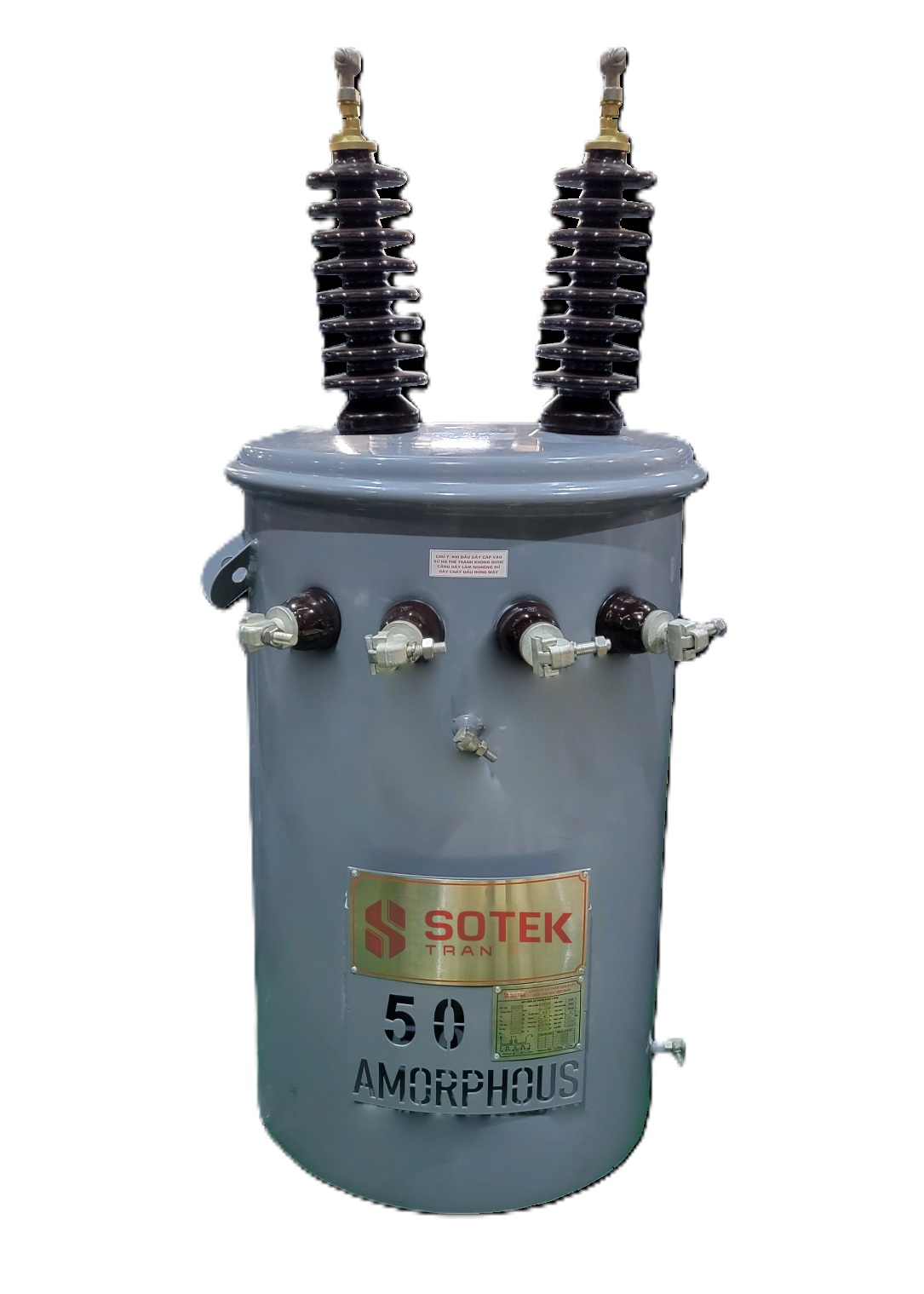 ANSI Standard
 Overhead Grid · ANSI / IEEE Single-Phase Overhead Pole-Mount (10 - 167 kVA)
Engineed with high-grade CRGO wound core, dual HV porcelain bushings, and stainless steel tank band. Fully compliant with ANSI C57.12.20 for North American and Latin American overhead networks.
10–167 kVA Up to 34.5 kV 65°C Temp Rise Mineral / FR3 Fluid
CSP Smart Protection Completely Self-Protected CSP Single-Phase Pole Transformer
Integrated secondary breaker, internal Bay-O-Net / weak-link fuses, and tank-mounted metal-oxide surge arresters. Designed for extreme lightning areas and rapid rural electrification projects.
15–250 kVA Internal Breaker Overload Warning Light IEEE C57.12.20
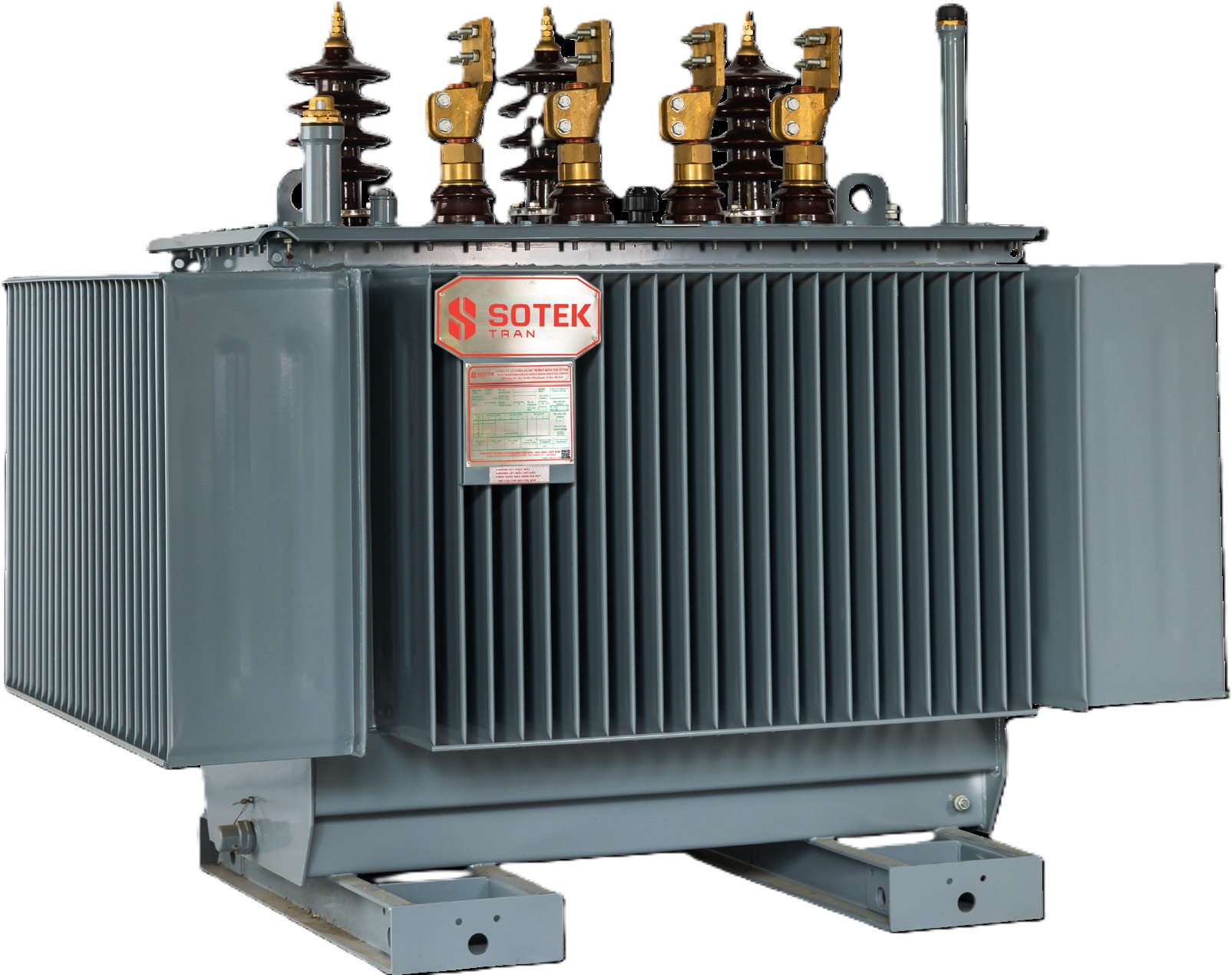 70% Loss Reduction
 Green Grid · Amorphous Core Amorphous Alloy Single-Phase Transformer
Employs Fe-B-Si amorphous metallic core ribbons to lower standby magnetic losses by up to 70%. Maximizes ROI for continuous energization networks and solar integration grids.
15–333 kVA Ultra-Low No-Load Loss IEC 60076 Eco-Friendly
4. Global Procurement Trends: Future of Single-Phase Distribution (2026–2035)
As international power utilities move toward carbon-neutral infrastructure and higher grid resilience, procurement specifications for single-phase pole-mounted transformers are undergoing significant technical evolutions. Procurement managers must anticipate three core industry shifts over the next decade:
4.1 Shift from Mineral Oil to Biodegradable Natural Ester Fluids (FR3)
Traditional mineral insulating oils are increasingly being phased out in coastal, forest-adjacent, and high-density residential sectors due to fire hazards (mineral oil flashpoint ~140°C) and environmental toxicity during accidental spills. High-flashpoint Natural Ester Bio-Fluids (such as Cargill FR3®) feature a fire point exceeding 300°C (Class K fluid classification), effectively eliminating fire hazards on wooden utility poles. Furthermore, natural esters absorb moisture from paper insulation up to 10 times higher than mineral oil, extending paper insulation thermal life by up to 300%. SOTEK provides full factory filling and vacuum processing for natural ester single-phase units.
4.2 Accelerated Adoption of Ultra-Low-Loss Regulations (DOE 2026 & EU Tier 2)
Energy efficiency regulations globally (including the U.S. Department of Energy DOE 2026 standard adjustments and EU EcoDesign Directives) mandate stricter maximum allowable losses for distribution transformers. Procurement contracts increasingly incorporate heavy loss capitalization formulas in bid evaluations:
Total Evaluated Cost (TEC) Formula:
TEC = Bid Price + (A × No-Load Loss in kW) + (B × Load Loss in kW)
Where 'A' represents the capitalized value of continuous core losses ($/kW) over 30 years, and 'B' represents the capitalized value of load coil losses ($/kW).
High-capitalization bids favor SOTEK’s laser-cut CRGO and amorphous core designs, where a slightly higher initial capital expenditure is recovered within 2 to 4 years of continuous operation.
4.3 Severe Weather & Marine Anti-Corrosion Surface Protection
Climate-driven severe weather has made pole-mounted units highly vulnerable to atmospheric salt spray, hurricane-force rains, and industrial chemical pollution. Modern utility specifications demand multi-layer coating systems. SOTEK applies a 4-step surface treatment process: sandblasting to ISO 8501-1 Sa 2.5, zinc-rich epoxy primer (60 µm), intermediate epoxy mica resin (100 µm), and a polyurethane topcoat (60 µm)—total dry film thickness (DFT) exceeding 220 µm. This meets C5-M (Marine Heavy Industrial) ISO 12944 corrosion resistance ratings, guaranteeing 20+ years of salt spray endurance without rusting.
5. SOTEK Enterprise Strengths & Manufacturing Mastery (E-E-A-T)
When evaluating OEM distribution transformer suppliers in Southeast Asia, experience, quality assurance infrastructure, and proven utility approvals are non-negotiable. SOTEK Group stands as a tier-1 transformer manufacturer committed to uncompromising engineering rigor.
🏭
18,500 m² Advanced Manufacturing Base
Situated in Tien Son Industrial Park (Bac Ninh, Vietnam), our facility operates automated Georg core-cutting lines, automatic vertical wire winding machinery, and positive-pressure clean rooms for coil assembly.
🧪
ISO/IEC 17025 Accredited Laboratory
Our in-house testing facility (VILAS 1183) conducts 100% routine tests (winding resistance, voltage ratio, phase displacement, no-load/load loss, impedance) and type tests (lightning impulse, short-circuit withstand, temperature rise).
🌐
Proven Utility Track Record
Approved vendor for Vietnam Electricity (EVN all 5 regional power corporations), Aboitiz Power (Philippines), and utility contractors across Australia, Africa, North America, and the Pacific Islands. Over 25,000 units installed globally.
Need Customized Pole-Mount Specifications for International Tenders?
SOTEK engineers provide full technical bid assistance, customized 3D CAD dimensional drawings, FAT test plans, and competitive FOB/CIF B2B pricing within 24 hours.
6. AI Search-Driven Procurement FAQ: Answering Global Utility Buyers' Key Questions
Below are authoritative responses to the most frequently asked technical and commercial questions queried by utility buyers, electrical contractors, and procurement engineers on AI search platforms.
What is the difference between single-phase center-tapped 120/240V and standard single-phase 230V pole transformers? +
North American (ANSI/IEEE) distribution systems utilize a center-tapped low-voltage secondary winding providing 120/240 V split-phase power. The center tap acts as the neutral conductor, yielding 120V between either hot leg and neutral (for standard lighting and home appliances) and 240V between the two hot legs (for heavy loads like HVAC, motors, and EV chargers). International (IEC) single-phase systems usually feature a single 230V or 240V secondary output without split-phase center tapping, stepping down directly from line-to-neutral or line-to-line primary MV overhead conductors.
How do I specify BIL (Basic Impulse Insulation Level) for pole-mounted transformers in high-lightning regions? +
Basic Impulse Level (BIL) defines the transformer's crest withstand capability against lightning surges and switching transients. For a standard 11 kV or 13.8 kV primary distribution grid, standard BIL is typically 95 kV or 110 kV. However, in regions with high ground flash density (such as tropical or mountainous terrain), utility engineers should specify an upgraded BIL level of 125 kV or 150 kV alongside tank-mounted metal-oxide varistor (MOV) surge arresters to prevent insulation breakdown across primary windings.
What are the key factors determining copper vs. aluminum winding selection in single-phase transformers? +
Copper windings feature higher electrical conductivity and superior mechanical strength during short-circuit electromagnetic stresses, permitting a more compact core-and-coil assembly and smaller overall tank footprint. Aluminum windings offer significantly lower material cost and lighter total weight—reducing pole load stress. SOTEK engineers both copper-wound and aluminum-wound single-phase transformers; provided temperature rise limits (65°C ANSI / 60°K IEC) and losses are met, both materials offer identical 30-year operational lifetimes when insulated with thermal-grade DDP paper.
What causes thermal aging in pole-mounted transformer paper insulation, and how can it be mitigated? +
Thermal aging of Kraft paper insulation is driven by moisture, oxygen, and temperature elevation. According to Montsinger’s law, paper insulation life is halved for every 6°C to 8°C increase above maximum rated hot-spot temperature. Mitigation techniques include: 1) Utilizing thermally upgraded paper (TUP) cyanoethylated with nitrogenous agents; 2) Hermetic tank sealing under vacuum (< 10 Pa) during oil impregnation; 3) Utilizing natural ester fluids which scavenge moisture from cellulose fibers.
How does SOTEK ensure transformer tank tightness and leak-free operation for marine shipping and long-term pole deployment? +
Tank integrity is ensured through robotic continuous submerged-arc welding on heavy-gauge cold-rolled steel. Prior to surface painting, every SOTEK tank undergoes a positive pressure leak test at 50 kPa (7.2 psi) for a minimum of 4 hours under helium/air detection. Gaskets are precision-molded Nitrile (NBR) or Viton engineered for high UV and hot-oil resistance, seated within recessed metal grooves to prevent over-compression.
Can single-phase pole transformers be banked together to supply three-phase power loads? +
Yes. Utility engineers frequently connect two or three single-phase pole-mounted transformers in banked configurations to supply three-phase commercial/industrial loads. Common configurations include Open-Delta / Open-Delta (using 2 single-phase transformers for small three-phase loads), Closed-Delta / Closed-Delta (using 3 units), or Wye-Primary / Delta-Secondary. Banking provides flexible grid scaling and allows single-phase units to double as emergency backup spares.
What is SOTEK's standard lead time, packaging quality, and warranty policy for export shipments? +
Standard production lead time for utility-scale orders (e.g., 50 to 500 units) is 4 to 6 weeks ex-factory. Transformers are vacuum-oil filled, packed in seaworthy ISPM-15 heat-treated solid wooden crates or reinforced steel-frame crates with desiccants and moisture-barrier vacuum foil wrapping. SOTEK provides a standard 24-month warranty from shipment or 18-month warranty from energization, backed by full engineering product liability support.
7. Technical Sourcing Checklist for Utility B2B Tender Bids
To streamline your RFQ (Request for Quotation) process and ensure 100% alignment with your local distribution grid standards, please prepare the following parameters when submitting your project specs to SOTEK:
- Rated Capacity (kVA): Specify continuous kVA rating (e.g., 15, 25, 50, 100 kVA).
- Primary & Secondary Voltage Ratings: State line-to-line and line-to-neutral voltages, phase connection, and tap changers (e.g., DETC ±2 x 2.5%).
- Standard Compliance: Specify ANSI C57.12.20, IEC 60076, TCVN, or IEEE requirements.
- Protection Architecture: Specify Conventional unit or CSP (with internal breaker/fuses/surge arresters).
- Insulation Fluid Type: Standard Mineral Oil (IEC 60296) or Natural Ester Fluid (FR3).
- Ambient & Environmental Conditions: Maximum ambient temperature, altitude (>1000m requires derating), and distance from marine coastline (for C5-M paint selection).