1. Executive Summary & Intent Resolution for Utility Engineers
In modern underground electrical distribution networks, selecting the appropriate transformer topology is critical to balancing capital expenditure, operational redundancy, and worker safety. The loop-feed padmount transformer has emerged as the definitive benchmark for commercial complexes, industrial parks, utility underground loops, renewable energy microgrids, and data centers. Unlike traditional radial-feed systems that create single-point failure risks, loop-feed architecture enables dual-directional primary power routing, allowing system operators to isolate faults or perform maintenance without interrupting power to downstream loads.
As global power utilities accelerate underground cable installation programs (undergrounding) to mitigate severe weather outages, demand for high-reliability 3-phase loop-feed padmount transformers compliant with IEEE C57.12.34 and ANSI C57.12.28 has surged. This technical guide delivers an in-depth, intent-driven analysis of loop-feed padmount transformer design, internal switching mechanics, fuse protection coordination, eco-friendly natural ester fluids, and future procurement trends. Designed in alignment with Google Search Quality Rater Guidelines (E-E-A-T), this article draws directly upon SOTEK Group’s 15+ years of distribution transformer manufacturing experience across Southeast Asia, North America, Australia, and global markets.
When evaluating a loop-feed padmount transformer, procurement teams often focus solely on kVA rating and primary voltage. However, total cost of ownership (TCO) is predominantly driven by internal loadbreak switch configurations (e.g., 4-position V-blade vs. two 2-position switches), winding short-circuit withstand withstand capability, and tank corrosion protection. SOTEK Group integrates Georg automated CRGO core cutting, vacuum pressure impregnation (VPI), and 2000-hour salt-spray cabinet coatings to ensure maximum grid resilience.
2. Deep Semantic & Technical Breakdown: What is a Loop-Feed Padmount Transformer?
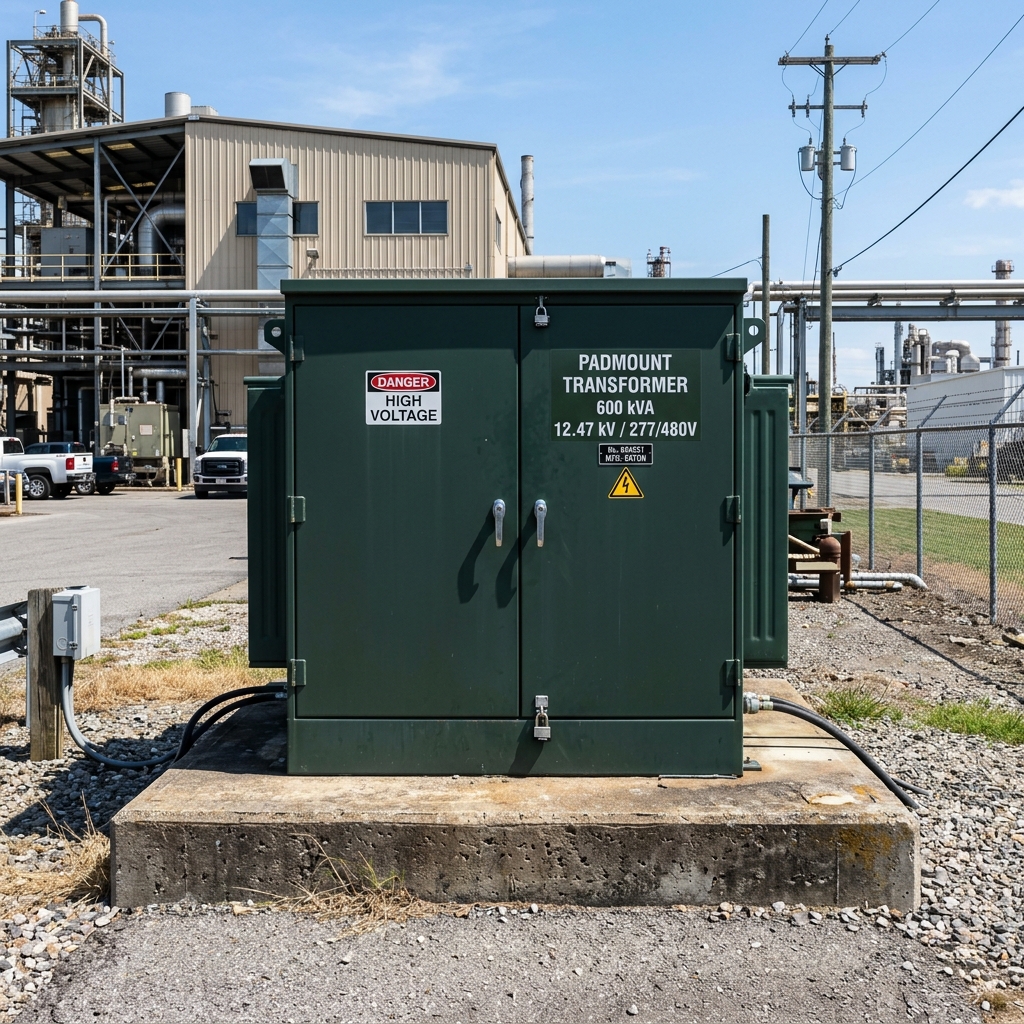
A loop-feed padmount transformer is a tamper-resistant, ground-mounted, liquid-filled distribution transformer housed in a locked steel cabinet. It is specifically designed for underground primary distribution systems where medium-voltage cables enter and exit the transformer compartment in a continuous loop configuration.
The primary defining physical characteristic of a loop-feed padmount unit is its 6-bushing high-voltage (HV) terminal layout (two HV bushings per phase: H1A/H1B, H2A/H2B, H3A/H3B). This arrangement allows incoming high-voltage primary cables to connect to the "A" bushings and outgoing cables to loop through the "B" bushings, carrying power onward to the next padmount transformer in the electrical loop.
2.1 Primary Components & Cabinet Structural Layout
SOTEK loop-feed padmount transformers are engineered with a strict two-compartment safety design:
- High-Voltage (HV) Compartment: Houses six dead-front high-voltage bushings (IEEE 386 200A loadbreak interface or 600A deadbreak interface), oil level indicators, pressure relief valves, Bay-O-Net fuse assemblies, and internal loadbreak switch handles. The HV door is locked behind the low-voltage door to prevent unauthorized access.
- Low-Voltage (LV) Compartment: Contains spades or stud-type LV bushings (X1, X2, X3, X0) for secondary distribution (e.g., 480Y/277V, 208Y/120V, or custom industrial voltages), neutral grounding straps, and nameplates. Access requires unlocking the main cabinet latch.
- Hermetically Sealed Transformer Tank: Built from heavy-gauge cold-rolled steel or 304/316 stainless steel, fully welded and tested under positive pressure to eliminate moisture ingress and liquid leakage over decades of outdoors exposure.
2.2 The Mechanics of 4-Position Internal Loadbreak Switches
To maximize operational flexibility, SOTEK equips loop-feed padmount transformers with internal oil-immersed loadbreak switches. The most popular configuration requested by utility engineers is the 4-Position V-Blade Switch or 4-Position T-Blade Switch. This switch allows line operators to manually select four distinct operational modes using an insulated hot-stick from outside the sealed tank:
- Position 1 (LOOP A & B CLOSED): Power feeds from both Source A and Source B; the transformer primary windings are energized, and power loops through to the next downstream transformer.
- Position 2 (SOURCE A ONLY): Power feeds only from Source A; Source B is disconnected. The transformer remains energized, but downstream loop segment B is isolated for line repair.
- Position 3 (SOURCE B ONLY): Power feeds only from Source B; Source A is disconnected. Transformer remains energized while upstream segment A undergoes maintenance.
- Position 4 (OPEN / OFF): Both Source A and Source B are disconnected from the transformer windings. The unit is completely de-energized while the loop power continues safely past the transformer to other connected facilities.
3. Engineering Comparison: Loop-Feed vs. Radial-Feed Padmount Transformers
A frequent question raised by procurement specialists and AI-assisted search tools is: "When should I spec a loop-feed padmount transformer over a radial-feed unit?" The table below summarizes the key technical differences:
| Design Parameter | Loop-Feed Padmount Transformer | Radial-Feed Padmount Transformer |
|---|---|---|
| HV Bushing Quantity | 6 HV Bushings (2 per phase: H1A/H1B, H2A/H2B, H3A/H3B) | 3 HV Bushings (1 per phase: H1, H2, H3) |
| Primary Power Cable Setup | In-and-Out Dual Cable Loop (Daisy-Chain configuration) | Single Incoming Cable (Dead-End application) |
| Internal Switching Capability | Integrated 4-position (or dual 2-position) loadbreak switches | Optional 2-position (ON/OFF) loadbreak switch |
| Power Reliability & Redundancy | High: Power can be rerouted from alternative source during fault | Low: Upstream fault cuts power to all downstream loads |
| Fault Isolation Flexibility | Isolates damaged cable segments without de-energizing transformer | Requires de-energizing entire feeder branch to fix fault |
| Typical Applications | Utility underground loops, data centers, hospitals, campuses, EV hubs | Single industrial plants, end-of-line rural sites, standalone buildings |
| Initial Equipment Cost (CAPEX) | Slightly higher due to extra bushings, switches & larger cabinet | Lower initial purchase price |
| Lifecycle Operating Cost (OPEX) | Significantly Lower: Minimizes cost of business downtime | Higher potential cost during extended grid outages |
4. SOTEK Loop-Feed Padmount Transformer Series: Recommended Specifications
SOTEK Group manufactures a broad range of 3-phase liquid-filled loop-feed padmount transformers customized for international utility specifications (IEEE, ANSI, IEC, EN, NEMA). Below are our core product recommendations engineered for global export:
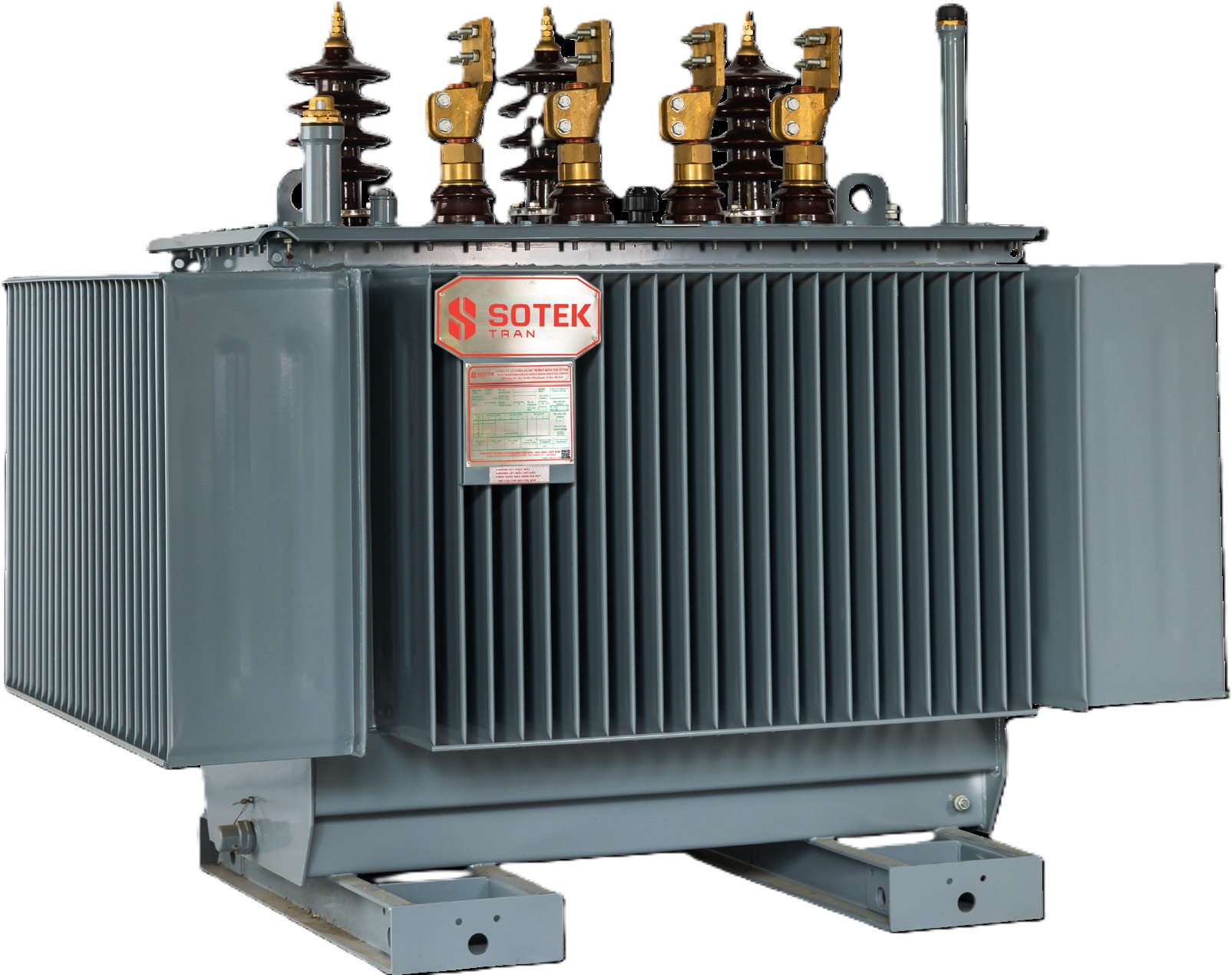
Flagship IEEE 3-Phase Loop-Feed Padmount Transformer
Heavy-duty 6-bushing loop-feed transformer with integrated 4-position V-blade switch, Bay-O-Net dual fusing, dead-front elbow terminations, and mineral oil or FR3 bio-fluid filling.
 Ultra-Low Loss
 Amorphous Core Padmount Transformer
Combines loop-feed reliability with an amorphous ribbon core, reducing no-load losses by 70–80% compared to standard CRGO silicon steel. Ideal for green energy installations.
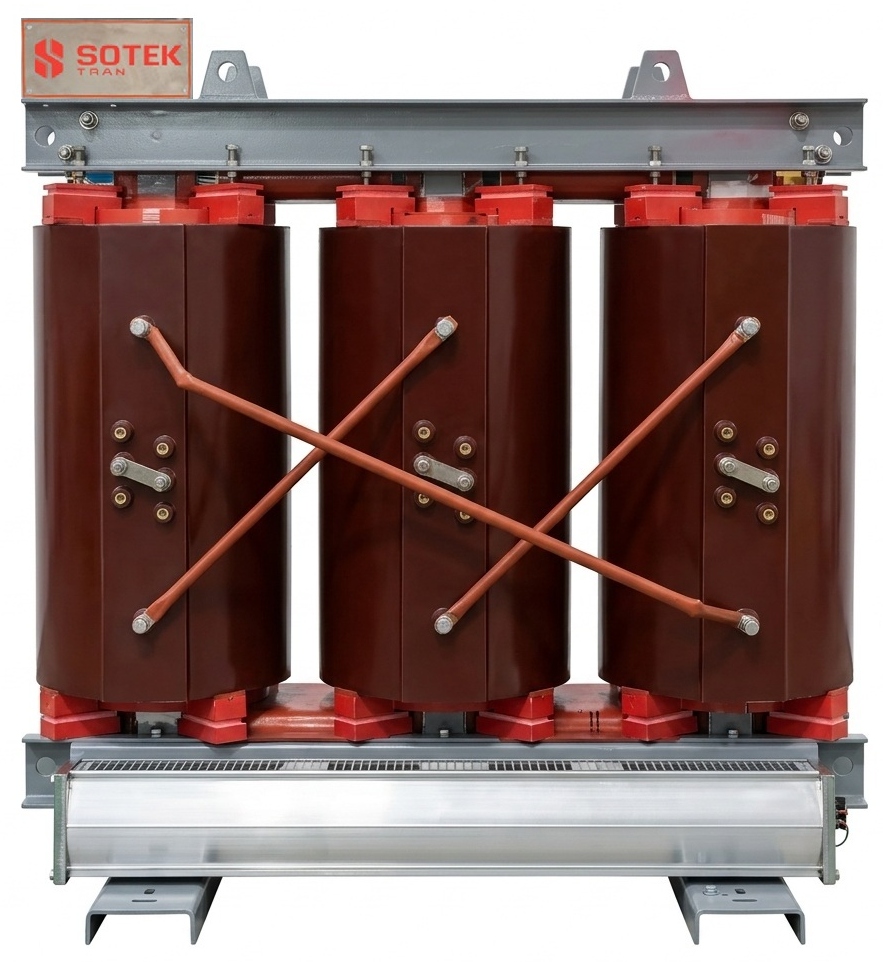 Indoor Compatible
 Cast Resin Dry-Type & Compact Substation
For facilities requiring indoor distribution without liquid fluids, SOTEK provides high-performance cast resin dry-type transformers and compact prefabricated substations.
4.1 Technical Parameter Standard Matrix (75 kVA – 5,000 kVA)
| Power Rating (kVA) | Primary Voltages (kV) | Secondary Voltages (V) | BIL Level (kV) | Impedance Z (%) | Cooling Type |
|---|---|---|---|---|---|
| 75 – 300 kVA | 2.4, 4.16, 12.47, 13.2, 13.8, 24.94 | 208Y/120, 480Y/277, 240/120 | 60 – 95 kV | 2.5% – 4.5% | ONAN (Mineral/FR3) |
| 500 – 1,500 kVA | 12.47, 13.8, 22, 24.94, 34.5 | 480Y/277, 416Y/240, 600Y/347 | 95 – 150 kV | 5.75% standard | ONAN / ONAF |
| 2,000 – 5,000 kVA | 13.8, 22, 33, 34.5, 35 kV Class | 480Y/277, 4,160V, 6,900V, 12,470V | 150 – 200 kV | 6.0% – 7.5% | ONAN / ONAF |
5. Future Procurement Trends in Underground Power Distribution
As the global energy transition accelerates, grid operators and engineering firms are re-evaluating their transformer procurement criteria. Based on market intelligence gathered across SOTEK’s international supply chain, key macro trends shaping the market for loop-feed padmount transformers through 2030 include:
Trend 1: Rapid Adoption of Natural Ester Fluids (FR3) Over Mineral Oil
Environmental regulations and urban fire safety mandates are driving a widespread transition from traditional mineral oil to biodegradable natural ester dielectric fluids (such as Cargill FR3). Natural esters feature a flash point above 300°C (compared to ~140°C for mineral oil), placing them in K-class fire safety. Furthermore, ester fluid breaks down in soil within 28 days, significantly lowering environmental liability for utilities operating in ecologically sensitive regions or dense urban areas. SOTEK offers 100% ester-filled options across all padmount lines.
Trend 2: Integration of Smart Grid Monitoring & IoT Sensors
Modern loop-feed padmount transformers are evolving from passive assets into intelligent nodes within Smart Grids. B2B procurement specifications increasingly request integrated digital instrumentation, including:
- Microprocessor-based Dissolved Gas Analysis (DGA) sensors: Real-time detection of hydrogen, acetylene, and methane gas accumulation indicating internal arc discharge or hot spots.
- Digital Pressure & Temperature Transducers: Fiber-optic hot-spot sensors embedded directly in low-voltage winding layers to feed SCADA systems.
- Remote Switch Position Indicators: Microswitches installed on the 4-position loadbreak switch handle to communicate real-time switch status back to utility control centers.
Trend 3: EV Fast-Charging Hubs & Renewable Microgrid Integration
Megawatt-scale electric vehicle (EV) charging stations and commercial solar PV + battery storage microgrids present severe cyclic loading and harmonic challenges (K-factor loads). Loop-feed padmount transformers are increasingly specified to connect multiple charger blocks along an underground medium-voltage loop. SOTEK manufactures specialized K-4 to K-13 rated loop-feed transformers equipped with electrostatic shielding between primary and secondary windings to isolate severe harmonics.
Trend 4: Supply Chain Diversification & Vietnam Manufacturing Advantage
Global buyers are actively diversifying their supply chains away from single-source regions to prevent project delays caused by long lead times and trade tariffs. Vietnam has positioned itself as a world-class hub for electrical transformer manufacturing. Leveraging competitive labor, favorable trade agreements, and deep engineering expertise, SOTEK Group provides utility-grade padmount transformers with lead times significantly shorter than traditional Western manufacturers.
6. Why Power Utilities & Global EPCs Choose SOTEK Group
SOTEK Group (SOTEK Transformer Production and Trading Corporation) is an ISO 9001:2015 and ISO 14001:2015 certified manufacturer specializing in distribution and power transformers up to 21,000 kVA / 69 kV class. Our products serve utilities, industrial conglomerates, renewable energy developers, and EPC contractors in over 30 countries.
6.1 Modern Manufacturing Capabilities
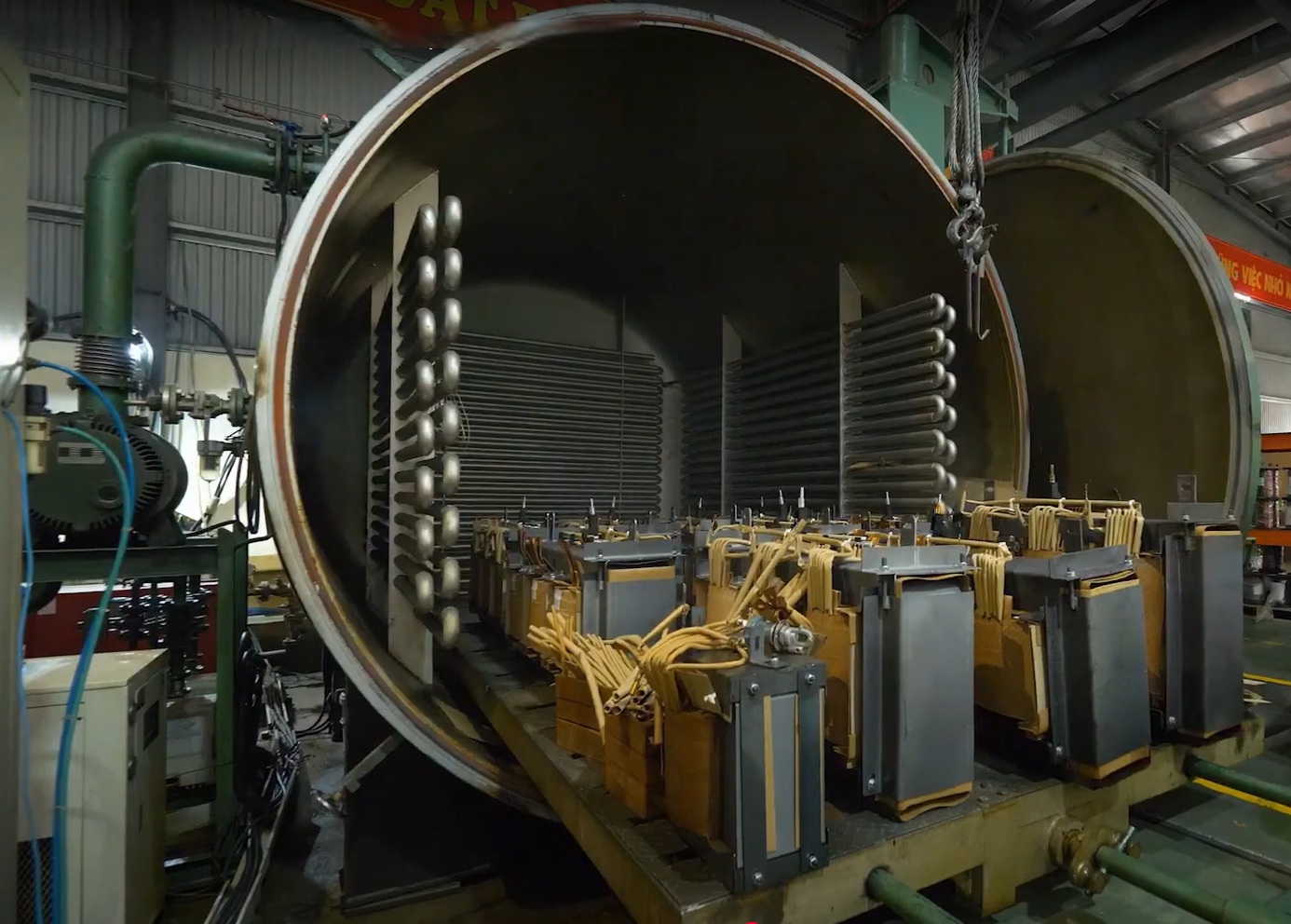
Located in the Tien Son Industrial Zone, Bac Ninh City, Vietnam, SOTEK operates an 18,500 m² advanced production facility equipped with top-tier international machinery:
- Georg (Germany) Automatic Core Cutting Lines: Precision laser-step lap cutting of high-permeability grain-oriented silicon steel (CRGO) to minimize no-load losses and acoustic sound levels.
- Automatic Tension Coil Winding Machines: High-precision foil and layer winders ensuring maximum copper/aluminum packing density and superior mechanical strength against short-circuit forces.
- Hedrich (Germany) Vacuum Drying Chambers: Advanced vacuum drying and oil impregnation processes achieving moisture content below 10 ppm in insulation materials.
- Automated Corrugated Tank & Cabinet Welding Robots: Robotic welding ensuring leak-free, hermetically sealed enclosures tested under positive pressure.
6.2 ISO/IEC 17025 Accredited Testing Laboratory (VILAS 1183)
Quality assurance and authority are central to SOTEK’s engineering philosophy. Our in-house testing facility is certified under ISO/IEC 17025 (VILAS 1183). 100% of manufactured loop-feed padmount transformers undergo rigorous routine factory acceptance testing (FAT) prior to dispatch, including:
- Winding resistance measurement across all tap positions.
- Voltage ratio and phase displacement verification.
- Short-circuit impedance and load loss measurement.
- No-load loss and excitation current measurement.
- Applied high-voltage AC withstand test and separate-source power frequency withstand test.
- Induced overvoltage withstand test.
- Full oil leak tightness and pressure test.
In addition, type-test certificates for Lightning Impulse (up to 600 kV), Temperature Rise, and Short-Circuit Withstand performed by independent accredited laboratories (such as QUATEST 1, ASTA, and KEMA compliant facilities) are readily available upon request.
6.3 Proven Utility Track Record: EVN & International Projects
SOTEK is a tier-1 approved vendor for Electricity of Vietnam (EVN) across all regional distribution corporations (EVN CPC, EVN NPC, EVN SPC, EVNHANOI, EVNHCMC). Internationally, SOTEK distribution transformers are deployed across major utility networks including Aboitiz Power (Philippines), grid extension projects in Australia, agricultural distribution networks in Kenya, and renewable energy projects throughout Southeast Asia.
7. High-Intent FAQ: Top Buyer Questions Answered by SOTEK Engineers
To resolve key technical queries frequently encountered by procurement teams and AI search engines, our engineering team provides direct answers below:
Ready to Spec or Request a Quote for Your Loop-Feed Padmount Project?
Partner with SOTEK Group for factory-direct engineering support, short lead times, and certified IEEE/IEC compliance. Our engineering team is standing by to review your single-line diagrams and deliver custom technical submittals.