Distribution Transformer Technical Articles, Industry Insights & Grid Updates — SOTEK Group
Blog
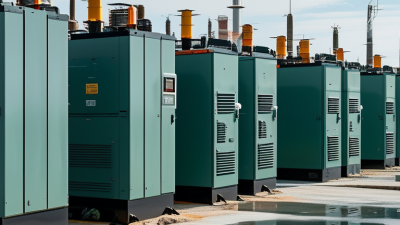
Why Choose a Padmount Transformer for Global Projects?
Choosing the right distribution equipment can determine whether a global project operates smoothly or faces costly delays. A Padmount transformer offers a practical solution for many commercial, industrial, and renewable energy installations. Its enclosed, ground-level design supports safer placement near buildings, roads, and remote facilities. This arrangement can reduce overhead wiring and simplify visual integration.
Project teams often value pad-mounted units for their compact footprint and flexible installation options. A properly specified Padmount transformer can manage changing loads, outdoor exposure, and demanding operating schedules. However, equipment selection should follow verified calculations, local grid requirements, climate data, and maintenance plans. A unit suitable for a coastal solar site may not suit a cold inland factory. Small details matter.
Experience shows that global projects rarely succeed through standard specifications alone. Engineers must review voltage levels, cooling methods, enclosure ratings, access requirements, and spare-parts availability. Supplier documentation and testing records also deserve careful attention. Reliability begins before manufacturing.
This choice is not automatically perfect. Site access, vandalism risks, flooding, and future capacity growth can change the decision. A thoughtful evaluation should compare lifecycle cost, installation time, service support, and expected performance. Field conditions may reveal weaknesses that a spreadsheet misses. That deserves honest review.
With qualified engineering support and dependable manufacturing controls, a Padmount transformer can provide stable, efficient power distribution across diverse project environments. The strongest approach balances proven design with site-specific judgment. Global does not mean identical.
Read more »
 By:Ethan
- September 15, 2026
By:Ethan
- September 15, 2026
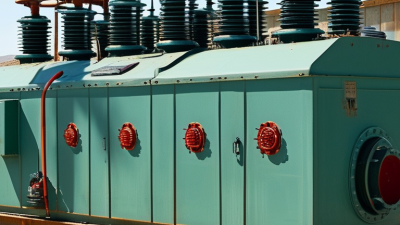
What Is an Oil Immersed Distribution Transformer?
An Oil-immersed distribution transformer reduces medium-voltage electricity to safer levels for homes, workshops, and commercial buildings. Its steel tank contains mineral oil, windings, a magnetic core, and insulation made from carefully treated cellulose. The oil performs two essential tasks. It carries heat toward the tank walls and strengthens electrical insulation around energized components. Radiators release that heat into the surrounding air. It works quietly. That silence matters in residential areas.
John J. Winders Jr., author of Power Transformers: Principles and Applications, states, “The transformer is the most important piece of equipment in an electrical power system.” His observation explains why small distribution units deserve serious engineering attention. A properly selected Oil-immersed distribution transformer must match load demand, voltage levels, short-circuit conditions, altitude, and installation temperature. Field technicians also inspect oil condition, bushings, gaskets, grounding, and unusual temperature changes. A faint oil leak near a flange should never be dismissed. Neither should a new humming sound. Reliability depends on details.
Still, no transformer design is perfect. Oil can age, insulation can absorb moisture, and overloaded equipment can overheat during peak demand. Maintenance records may also be incomplete, which creates avoidable uncertainty. Engineers therefore combine factory test results with field evidence before judging condition. This practical approach supports safer operation and longer service life. The following discussion explains how these transformers work, where they are used, and why maintenance decisions matter.
Read more »
By:Ethan
- September 15, 2026
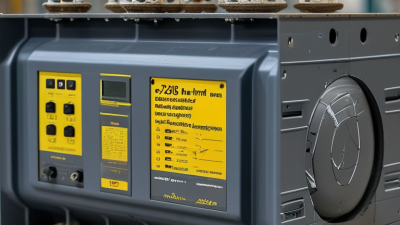
2026 Top Cast Resin Dry Type Transformer Manufacturers?
Choosing among the 2026 top Cast resin dry-type transformer manufacturers requires more than comparing catalog ratings. Buyers must examine insulation quality, thermal performance, noise levels, testing discipline, and after-sales support. A convincing manufacturer should explain how its epoxy resin handles heat, moisture, dust, and repeated load changes. Factory evidence matters.
Dr. J. C. Das, a respected transformer engineering author, offers a useful principle: “A transformer is only as reliable as its weakest insulation system.” This idea is especially relevant to cast resin designs. Their sealed windings can resist many environmental stresses, but poor casting, trapped voids, or weak quality control may still create trouble. Small defects can become costly failures.
This guide introduces manufacturers that deserve attention in 2026. It considers production experience, international certifications, partial-discharge testing, temperature-rise results, customization ability, and lifecycle service. It also looks beyond polished websites. Can the supplier provide test reports? Can it support installation in a crowded plant room? Does it answer technical questions clearly?
These details reveal practical competence.
The ranking is not absolute. A strong supplier for a hospital may not suit a mining site or solar project. Budget, voltage class, enclosure design, climate, and maintenance access can change the decision. Some manufacturers publish limited field data, which deserves careful reflection. Therefore, this overview should support technical evaluation, not replace it. Engineers and procurement teams should verify current specifications directly before approving any Cast resin dry-type transformer.
Read more »
 By:Oliver
- September 15, 2026
By:Oliver
- September 15, 2026