IEEE C57.12.34 & IEC 60076 Engineering Technical Guide

Underground Distribution Transformer Procurement & Engineering Solutions

An authoritative B2B technical guide for utility engineers, project developers, and procurement executives evaluating pad-mounted and vault-submersible underground distribution transformers. Explore critical grid compliance standards, total cost of ownership (TCO) evaluation, thermal performance metrics, and advanced eco-friendly fluid technologies.

Send an Inquiry Download Technical Dossier
75 – 5,000 kVA
Power Rating Range
Up to 35 kV
Voltage Class Ratings
IEEE / IEC
Dual Standard Compliance
30+ Years
Design Service Life

Understanding Underground Distribution Transformers: Engineering Architecture & Grid Superiority

As global power utilities, commercial real estate developers, and municipal planners transition from conventional overhead distribution to Underground Residential Distribution (URD) networks, the underground distribution transformer has emerged as a cornerstone of modern power infrastructure. Overhead distribution lines, while historically cost-effective to install, suffer from extreme vulnerability to severe weather events, vegetation interference, vehicle collisions, and visual pollution. Conversely, underground power distribution systems place primary medium-voltage (11 kV, 22 kV, 33 kV, 34.5 kV) and secondary low-voltage (120/240V, 480V, 400V) cables, switchgear, and transformers below grade level or at ground surface in tamper-resistant enclosures.

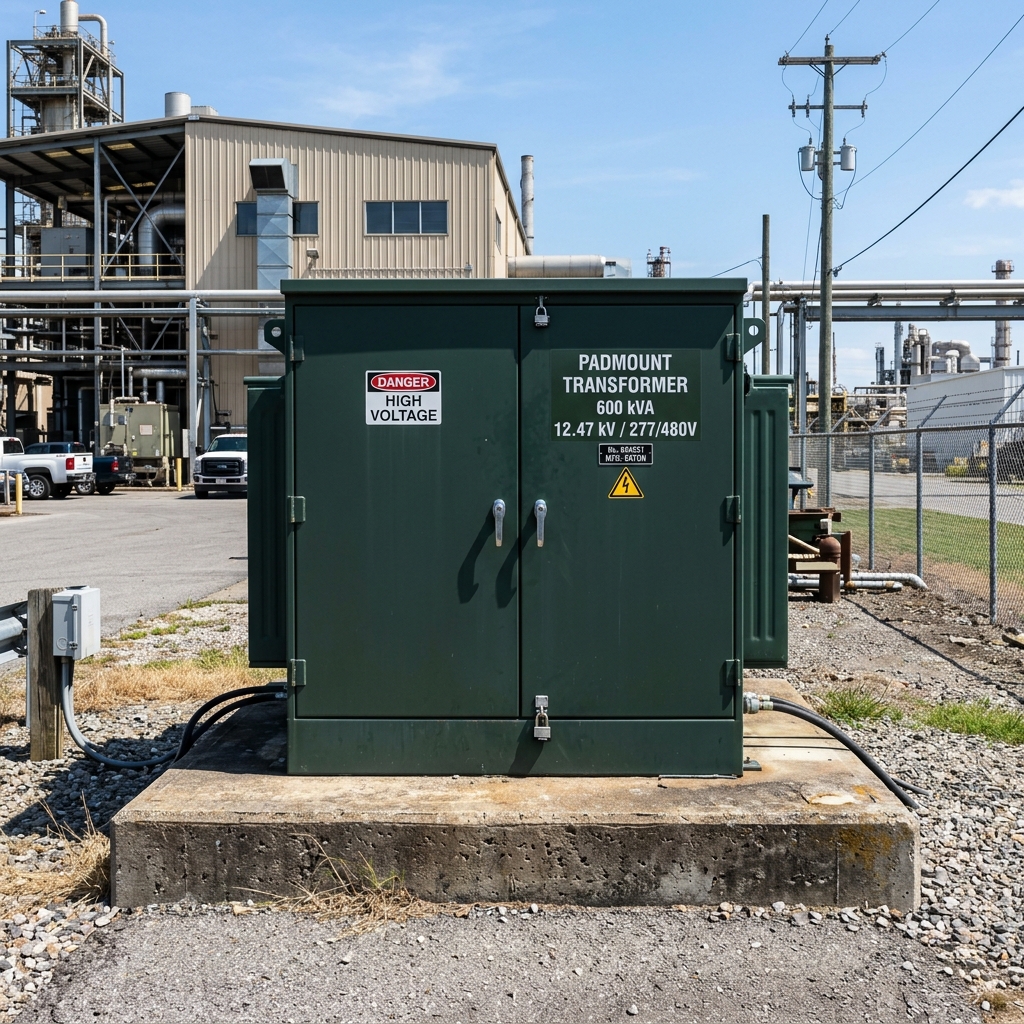
An underground distribution transformer is specifically engineered to step down medium-voltage electrical power from subterranean cable loops to usable utilization voltages for residential neighborhoods, commercial complexes, data centers, and heavy industrial parks. Depending on urban density and environmental constraints, these units are deployed either as pad-mounted transformers (installed above ground on a concrete slab) or as submersible vault transformers (installed entirely below ground in sealed underground vaults).

💡 Why Underground Distribution Systems Are Replacing Overhead Lines globally

Modern power grids demand extreme resilience against climate-induced severe weather (hurricanes, typhoons, wildfires). Underground distribution transformers eliminate wind loading risks, tree contact short circuits, and lightning strikes on exposed lines. Studies indicate that underground grid conversion reduces storm-related power outages by up to 90%, while substantially improving land value and public safety in densely populated metropolitan areas.

Key Architectural Differences: Underground vs. Overhead Transformers

Unlike pole-mounted transformers which rely on air clearance, porcelain bushings, and open surge arresters, underground distribution transformers operate in confined, moisture-prone, or public-accessible environments. This operational reality demands specialized structural and electrical engineering:

  • Dead-Front Construction: Underground units utilize fully insulated, shielded, and grounded high-voltage elbow connectors and bushings. This "dead-front" design eliminates exposed energized conductors, protecting field maintenance technicians and the public against accidental contact.
  • Tamper-Proof Heavy-Gauge Enclosures: Built to standards such as ANSI C57.12.28, padmount enclosures feature cabinet security mechanisms, recessed padlocking hardware, penta-head locking bolts, and overlapping door seams to prevent unauthorized access or vandalism.
  • Hermetic Sealing & Corrosion Protection: Vault-submersible and outdoor pad-mounted units are subjected to continuous immersion or high salt-spray humidity. Advanced surface treatments, including hot-dip galvanizing, stainless steel tank construction (304L or 316L grade), and multi-stage polyurethane powder coating, guarantee a 30+ year service life.
  • Integrated Protective Switchgear: Underground transformers frequently house internal current-limiting fuses, Bay-O-Net expulsion fuses, loadbreak switches, and dual-position or four-position loop-feed selectors directly inside the liquid-filled tank.
Recommended Underground Distribution Transformers

Designed to IEEE C57.12.34, IEEE C57.12.38, and IEC 60076-13 standards. Manufactured at SOTEK’s 18,500 m² ISO 9001 certified plant in Vietnam for global utility export.

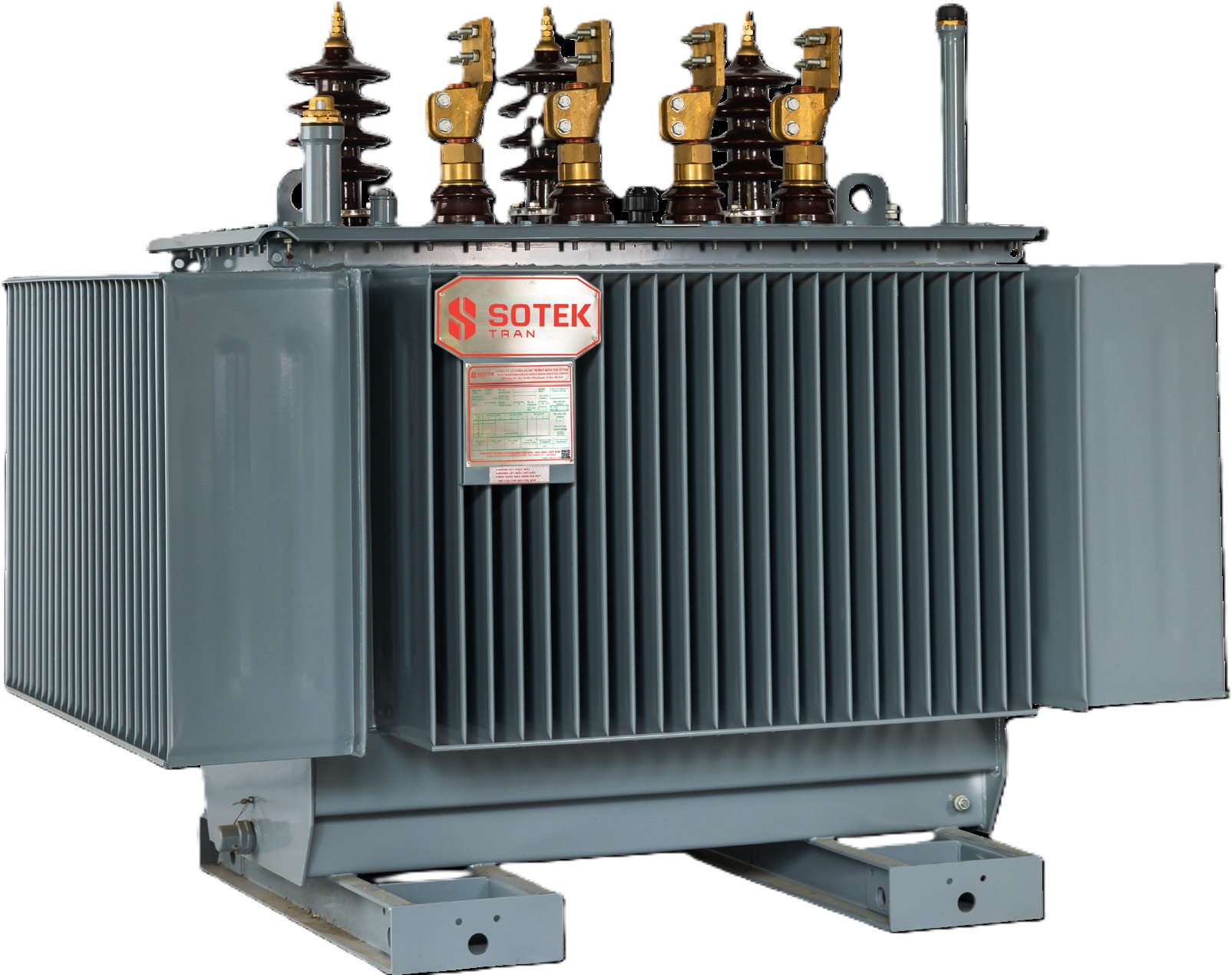
SOTEK Three-Phase Loop Feed Padmount Distribution Transformer IEEE C57.12.34 Top Utility Pick
IEEE C57.12.34 · Loop / Radial Feed

Three-Phase Padmount Transformer

Liquid-filled, compartmentalized underground distribution transformer with dead-front HV bushings, Bay-O-Net overcurrent protection, and four-position LBOR switches. Engineered for commercial and suburban underground networks.

75 kVA – 5,000 kVA Up to 35 kV ANSI C57.12.28 FR3 Ester / Mineral
SOTEK Submersible Underground Vault Transformer Stainless Steel Tank IP68 IP68 Submersible
Subterranean Vault · Heavy-Duty

Vault Submersible Transformer

Specifically designed for below-grade urban vaults subjected to continuous flooding. Heavy-gauge 304/316L stainless steel hermetic tank with underwater-rated dead-front elbow connections and corrosion-proof hardware.

100 kVA – 2,500 kVA IP68 Subterranean Stainless Steel IEC 60076 / IEEE
SOTEK Single-Phase Padmount URD Transformer ANSI C57.12.38
Residential URD · IEEE C57.12.38

Single-Phase Padmount URD

Compact residential underground transformer for single-phase distribution. Features low-profile footprint, tamper-resistant locking, dead-front HV bushings, and optimal thermal performance for residential developments.

10 kVA – 167 kVA Up to 24.9 kV Compact Footprint Low Noise
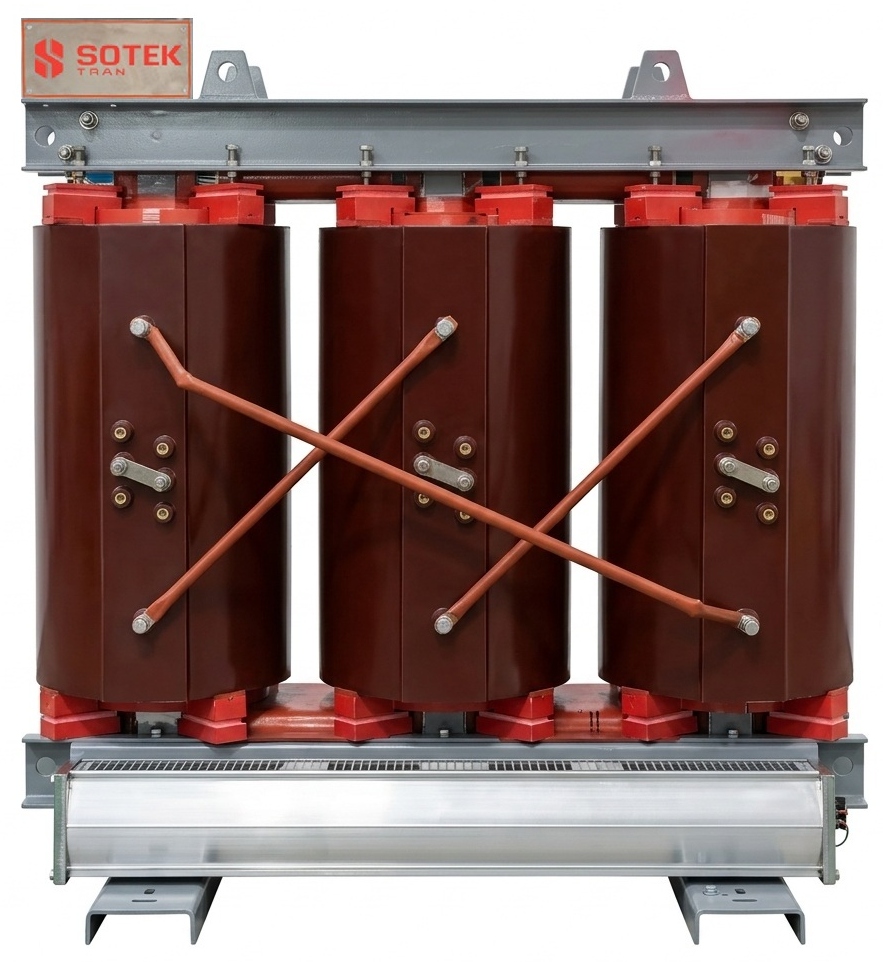
SOTEK Cast Resin Dry-Type Underground Substation Transformer Fire-Safe Dry
Indoor / Vault · Class F & H Insulation

Vault Cast Resin Dry-Type

Epoxy cast resin dry-type transformer for indoor subterranean utility vaults, metro stations, and commercial basements. Zero liquid risk, self-extinguishing flame retardancy, and high short-circuit withstand capacity.

100 kVA – 3,150 kVA Class F & H F1 / E2 / C2 Rated Zero Leak Risk
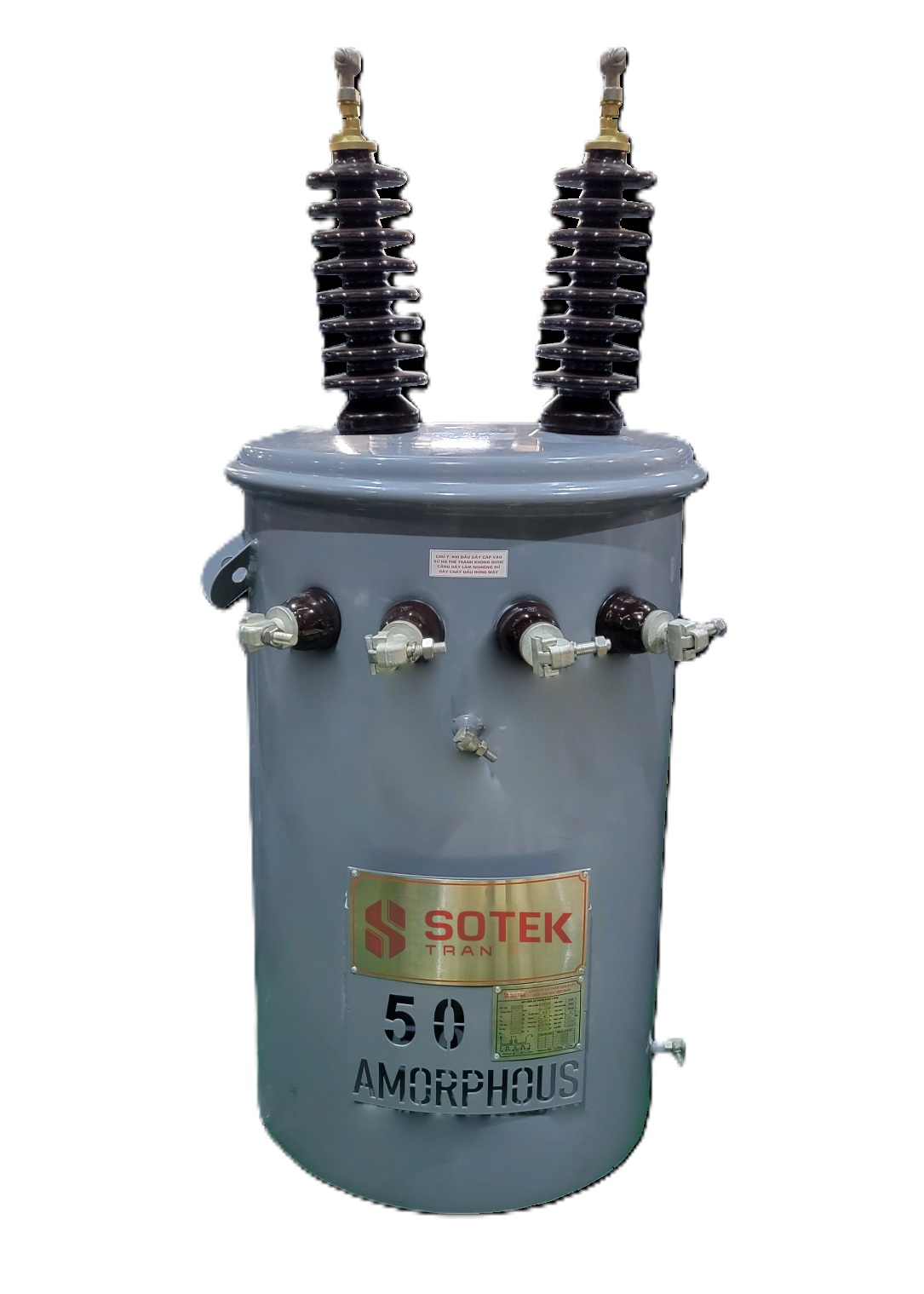
SOTEK Amorphous Core Underground Padmount Transformer Low No-Load Loss 75% Loss Reduction
Ultra Energy Efficient · Green Grid

Amorphous Core Underground Unit

Combines tamper-proof underground padmount enclosure architecture with an amorphous metal alloy core. Cuts no-load standby losses by up to 75% compared to CRGO steel, providing massive lifetime carbon savings.

75 kVA – 2,500 kVA 75% No-Load Cut DOE 2016 Compliant IEEE C57
SOTEK Step-Up Substation Underground Collector Transformer for Renewables
Renewables Grid Collector · GSU

Substation Step-Up Padmount

Specialized pad-mounted step-up collector transformers for solar PV, wind farms, and battery energy storage systems (BESS). Dual or multi-winding MV designs up to 35 kV with electrostatic shielding.

500 kVA – 5,000 kVA Multi-Winding Harmonic Rated Solar / Wind / BESS

Technical Specifications Comparison: Padmount vs. Vault Submersible

When specifying underground distribution equipment, utility procurement teams must match environmental exposure ratings with internal core-coil design parameters. The comparative table below outlines SOTEK's standard manufacturing benchmarks for Underground Distribution Transformers:

Parameter / Spec Three-Phase Padmount (Above-Grade) Vault Submersible (Below-Grade) Cast Resin Dry Vault
Power Ratings (kVA) 75, 150, 300, 500, 750, 1000, 1500, 2500, 5000 100, 225, 500, 750, 1000, 1500, 2500 100, 500, 1000, 2000, 3150
Primary Voltage Class Up to 35 kV (125 kV to 170 kV BIL) Up to 35 kV (125 kV to 150 kV BIL) Up to 35 kV (95 kV to 150 kV BIL)
Secondary Voltages 208Y/120V, 480Y/277V, 415V, 400V 208Y/120V, 480Y/277V, 400V 400V, 415V, 480V
Applicable Standards IEEE C57.12.34, ANSI C57.12.28, IEC 60076 IEEE C57.12.24, IEC 60076-13, IP68 IEC 60076-11, IEEE C57.12.01
Enclosure Construction Heavy-gauge mild steel / 304 SS optional 304L / 316L Marine-Grade Stainless Steel NEMA 1, 3R or IP23 steel enclosure
Dielectric Medium Mineral Oil (Type II) / Cargill FR3 Ester Fluid Cargill FR3 Ester Fluid / Mineral Oil Air Cooled / Cast Resin (Vacuum Cast)
High-Voltage Interface 200A Bushing Wells / 600A Dead-Front Connectors Submersible 200A / 600A Elbow Bushings Cable Box / Busbar Connection
Protection Gear Bay-O-Net Fuse + Current Limiting Fuse (CLF) Submerged Current Limiting Fuse / Bay-O-Net PT100 Temp Sensors + Thermal Relay

Frequently Asked Questions by Global Buyers

Extracted from top search queries posed by power utility engineers, EPC procurement officers, and electrical contractors on AI search engines.

Q1: What is the difference between loop-feed and radial-feed in underground distribution padmount transformers?
+

The primary distinction lies in high-voltage switching flexibility and network reliability. A radial-feed transformer is designed for single-direction power flow; it features a single set of HV bushings (3 HV bushings for 3-phase) and connects to a dead-end primary underground line. If the supply line faults, the transformer loses power until repairs are complete.

Conversely, a loop-feed transformer features six high-voltage bushings (two per phase: H1A/H1B, H2A/H2B, H3A/H3B), allowing the unit to sit in the middle of a continuous underground primary loop. Combined with an internal loadbreak switch (LBOR switch), loop-feed systems allow utility operators to isolate faulted cable sections without interrupting service to adjacent transformers on the loop. SOTEK manufactures both loop and radial-feed configurations in full accordance with IEEE C57.12.34 requirements.

Q2: How do IEEE C57.12.34 and IEC 60076 standards differ regarding cabinet security and tamper-resistance?
+

IEEE C57.12.34 (governing North American and Philippine utility padmount installations) places immense emphasis on mechanical tamper-proofing via ANSI C57.12.28 enclosure integrity standards. This requires stringent pry-resistance testing, recessed padlocking assemblies, penta-head security bolts, strict door-opening sequences (LV compartment opens first before HV compartment can be accessed), and bottom sill barrier requirements to prevent rod insertion.

IEC 60076 standards focus predominantly on electrical performance, insulation levels, loss limits, and thermal rise test protocols, relying on separate enclosure standards (such as IEC 62271 for compact substations) for mechanical ingress. SOTEK bridges both standards by building dual-compliant transformers that feature ANSI-grade tamper resistance alongside IEC dielectric and short-circuit withstand capabilities.

Q3: How do you evaluate Total Cost of Ownership (TCO) and evaluated losses ($/W) for underground transformers?
+

Utility procurement departments do not simply buy on lowest initial purchase price (CAPEX); they evaluate total life-cycle cost using evaluated loss formulas. TCO is expressed as:

TCO = Initial Purchase Price + (A × No-Load Loss in Watts) + (B × Load Loss in Watts)

Where A-Factor ($/Watt) represents the capitalized cost of core losses continuously energized 8,760 hours/year, and B-Factor ($/Watt) represents the capitalized cost of winding losses under load. By selecting SOTEK’s laser-scribed CRGO silicon steel or Amorphous Alloy Core transformers, utilities achieve lower no-load loss ($A), resulting in overall TCO savings of 15% to 30% over a 30-year operating lifespan.

Q4: What technical provisions prevent internal tank corrosion and oil leakage in flood-prone underground vaults?
+

For subterranean vault transformers (which may be entirely submerged under floodwater for days), corrosion prevention requires rigorous metallurgy and coating engineering:

  • Stainless Steel Tanks: Using 304L or 316L austenitic stainless steel for tanks, covers, and cabinet sills prevents rust even in acidic or saline vault runoff water.
  • Multi-Layer Epoxy-Polyurethane Coating: A 5-step surface prep process (zinc-rich epoxy primer, intermediate epoxy tie-coat, and UV-stabilized polyurethane topcoat exceeding 300 microns total dry film thickness) tested to 2,000-hour salt spray corrosion testing (ASTM B117).
  • Submersible Elbow Bushings: HV interfaces use EPDM molded rubber dead-front elbow connectors rated IP68 underwater submersible.
  • Hermetically Sealed Welding: Robotic TIG/MIG seam welding subjected to nitrogen bubble leak detection and helium mass spectrometer leak testing.
Q6: Why are natural ester fluids (such as Cargill FR3) replacing conventional mineral oil in underground installations?
+

Natural ester dielectric fluids (vegetable oil-based) offer two major advantages in underground environments:

  1. Fire Safety (K-Class Liquid): FR3 fluid has a flash point of 330°C and a fire point exceeding 360°C (compared to 140°C fire point for mineral oil). This high fire point virtually eliminates explosion and fire risks in confined underground vaults or suburban padmount locations.
  2. Environmental Safeguard & Insulation Life: Natural ester is 100% biodegradable within 28 days. Furthermore, FR3 actively absorbs moisture from cellulose insulation paper, slowing paper degradation and extending transformer insulation lifespan by up to 50% under heavy loading.
Q6: What Factory Acceptance Testing (FAT) documentation does SOTEK provide with B2B shipments?
+

Every single transformer unit produced at SOTEK undergoes 100% routine testing in our ISO/IEC 17025 accredited laboratory (VILAS 1183) prior to dispatch. FAT documentation included with shipment covers:

  • Winding Resistance Measurements & Voltage Ratio / Phase Displacements
  • Short-Circuit Impedance & Load Loss Test Reports
  • No-Load Loss and Exciting Current Measurements
  • Applied Voltage (Hi-Pot) & Induced Overvoltage Withstand Tests
  • Dielectric Liquid Breakdown Voltage (BDV) & Dissolved Gas Analysis (DGA)
  • Type Test Certification (Lightning Impulse, Short-Circuit Withstand) issued by independent labs (ASTA, KEMA, or QUATEST 1) upon client request.

Future Industry Trends: Underground Grid Evolution (2026 – 2035)

The global market for underground distribution transformers is entering a transformative growth phase driven by urban density expansion, renewable energy integration, and extreme weather resilience mandates. Procurement directors and grid planners must align their purchasing strategies with four major technology trends over the coming decade:

1. Integration of Smart Grid Sensors & Real-Time IoT Diagnostics

Traditional distribution transformers operate as "silent" passive assets until a failure occurs. Next-generation underground padmount and vault transformers are morphing into intelligent grid nodes equipped with compact IoT sensor arrays. Modern SOTEK smart padmount units can be retrofitted with:

  • Submersible Wireless DGA Sensors: Continuous online Dissolved Gas Analysis to detect early-stage insulation paper degradation and internal partial discharge.
  • Fiber-Optic Winding Temperature Probes: Direct measurement of real-time copper/aluminum hot-spot temperatures, enabling dynamic load rating calculations during peak EV charging hours.
  • Electronic Pressure & Oil Level Transmitters: Transmitting SCADA alerts before low dielectric fluid levels lead to catastrophic flashover.

2. Rapid Adoption of Amorphous Metal Cores for Standby Loss Elimination

With net-zero carbon targets and stringent efficiency regulations (such as US DOE 2016 / EU Tier 2 EcoDesign), utilities are replacing conventional Cold Rolled Grain Oriented (CRGO) steel cores with Amorphous Metal Alloys. Because amorphous metal lacks a crystalline lattice structure, magnetizing energy is minimized. In underground residential loops where peak load is limited to short evening windows, amorphous core transformers eliminate up to 75% of continuous no-load standby losses, slashing utility operating expenditure.

3. Microgrid & EV Fast-Charging Station Substation Integration

The explosion of Commercial & Industrial Electric Vehicle (EV) charging hubs requires compact, heavy-duty underground transformers capable of handling severe harmonic distortion (K-factor loads) and extreme cyclic peak loading. SOTEK engineers custom step-down underground padmount transformers designed with electrostatic shields between primary and secondary windings, heavy copper conductor sizing, and high-temperature Class H insulation systems to handle EV fleet charging demands without thermal degradation.

4. Supply Chain De-risking via Vietnam Manufacturing Hubs

Global utilities are aggressively diversifying their supply chains away from single-source markets to mitigate geopolitical risks and tariff penalties. Vietnam has emerged as Southeast Asia’s premier high-tech electrical equipment manufacturing hub. SOTEK Group’s state-of-the-art facility in Bac Ninh offers global power buyers seamless access to competitive manufacturing costs, preferential trade agreements, and strict compliance with ANSI/IEEE and IEC technical specifications.

World-Class Manufacturing & Quality Governance

Combining 15+ years of transformer engineering expertise, modern automated plant machinery, and rigorous ISO 9001:2015 quality control systems.

🏭

18,500 m² Advanced Facility

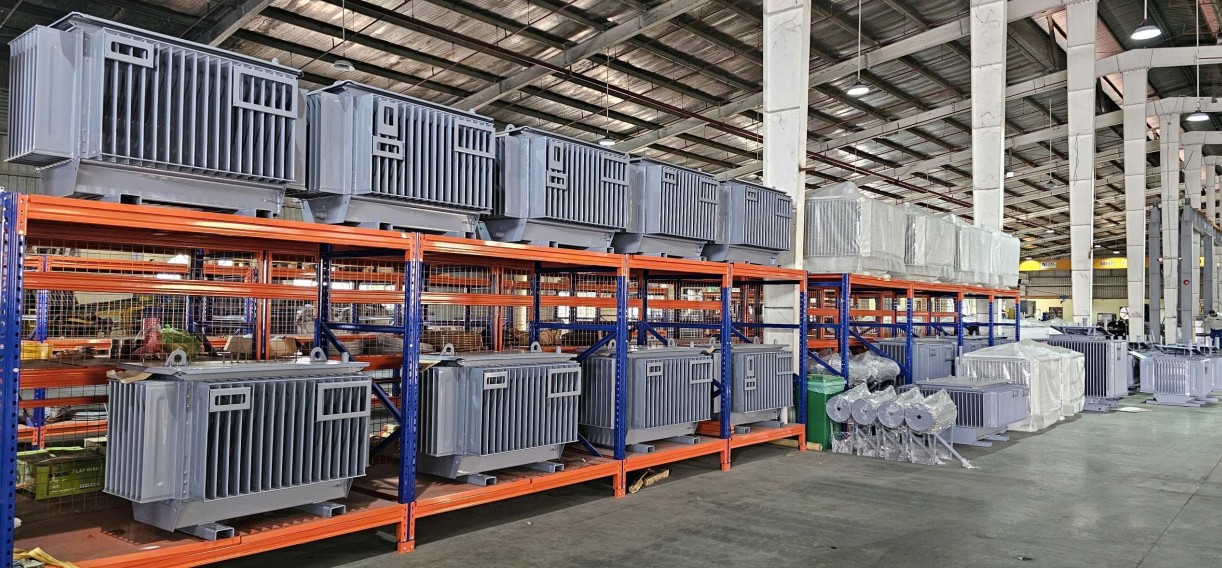
Our Tien Son Industrial Park plant houses automated Georg CRGO core cutting lines, high-tension vertical coil winding machines, Hedrich vacuum casting chambers, and robotic tank welding units.

🔬

ISO/IEC 17025 Accredited Lab

Our VILAS 1183 accredited testing facility conducts full routine and specialized type testing, including high-voltage impulse testing up to 400 kV, temperature rise validation, and acoustic sound level testing.

📜

Global Utility Certifications

ISO 9001:2015, ISO 14001:2015, and ISO 45001 certified. Approved tier-1 supplier for Vietnam Electricity (EVN), Aboitiz Power Philippines, and grid developers across Australia, Southeast Asia, and Africa.

Precision Core-Coil Assembly

Utilizing high-grade Baosteel/Nippon CRGO silicon steel and 99.99% pure electrolytic copper coils. Vacuum drying under pressure ensures zero moisture residual in cellulose insulation paper.

🛡️

Heavy Corrosion Protection

Shot-blasting to Sa 2.5 cleanliness followed by automated multi-stage epoxy and polyurethane powder coating (300+ µm DFT), offering complete protection against coastal humidity and subterranean vault moisture.

📦

Turnkey B2B Logistics Support

Seamless export handling through Hai Phong port. Standard seaworthy wooden crate packaging, internal nitrogen pressurization, and complete export documentation under FOB, CIF, or DDP Incoterms.

Request a Custom Technical Quote for Underground Transformers

Need detailed CAD dimension drawings, loss evaluation tables, or custom voltage ratio configurations for your upcoming utility or industrial underground project? Contact SOTEK’s engineering team today.

Send an Inquiry