In modern medium-voltage underground power distribution systems, selecting the appropriate padmount transformer architecture is paramount to ensuring operational continuity, system protection, and cost efficiency. The Radial-feed padmount transformer represents a foundational solution for dead-front, ground-level power step-down applications where electrical loads are supplied from a single primary source circuit. Designed to house high-voltage switching, low-voltage protection, and fluid-filled core-and-coil assemblies within a tamper-resistant, weather-proof steel cabinet, the radial-feed configuration provides a highly reliable, compact, and economical alternative to loop-feed distribution systems.
As power utilities, renewable energy developers, and commercial facility operators transition away from overhead distribution lines toward underground cable networks, global procurement managers frequently ask complex technical questions across AI platforms and search engines: What are the exact operational boundaries of radial-feed versus loop-feed transformers? How do IEEE C57.12.34 fusing standards impact transformer life expectancy? What are the total cost of ownership (TCO) advantages when sourcing high-voltage radial padmount units from ISO-certified Southeast Asian manufacturers like SOTEK Group?
This comprehensive engineering manual provides actionable information gain, examining the circuit topology, electrical parameters, enclosure protection, global procurement trends, and manufacturing benchmarks of Radial-feed padmount transformers.
1. Architectural Breakdown: Radial-Feed vs. Loop-Feed Padmount Transformers
Understanding the internal primary switching layout is vital when specifying medium-voltage liquid-filled equipment. A radial-feed padmount transformer is engineered to serve as the terminal endpoint or dedicated step-down node in an underground primary distribution lateral.
Radial-Feed Configuration: Equipped with three high-voltage primary bushings (H1, H2, H3) connected directly to the primary winding. Power flows from a single source cable into the transformer. It is ideal for isolated commercial facilities, standalone industrial plants, dedicated EV charging hubs, or radial utility feeders where loop switching at the transformer cabinet is unnecessary.
Loop-Feed Configuration: Features six high-voltage primary bushings (H1A, H2A, H3A and H1B, H2B, H3B), allowing primary power to enter through one set of bushings and loop out through the second set to feed downstream transformers in a continuous ring network.
Primary Electrical & Structural Characteristics
The engineering design of a radial-feed padmount transformer centers on safety, space optimization, and protection against environmental degradation:
- Dead-Front High-Voltage Cabinet: High-voltage primary connections are fully insulated and shielded using 200A loadbreak or deadbreak bushings compliant with IEEE 386. When fitted with insulated elbow connectors, no live electrical parts are exposed to operational personnel.
- Compartmentalized Cabinet Design: The enclosure is divided by a heavy-gauge steel barrier separating the high-voltage (HV) section on the left from the low-voltage (LV) section on the right, accessible via a single hinged door secured with a penta-head bolt locking mechanism.
- Integrated Protective Fusing: Overcurrent protection is incorporated directly inside the liquid compartment. Standard configurations include Bay-O-Net draw-out current-sensing fuses connected in series with internal partial-range current limiting fuses (CLF) to prevent catastrophic tank rupture during high-fault events.
- De-energized Tap Changer (DETC): Externally operable from the cabinet compartment, allowing primary voltage adjustment (typically ±2 x 2.5% or ±5%) when the unit is de-energized to compensate for line voltage drops across long radial cable runs.
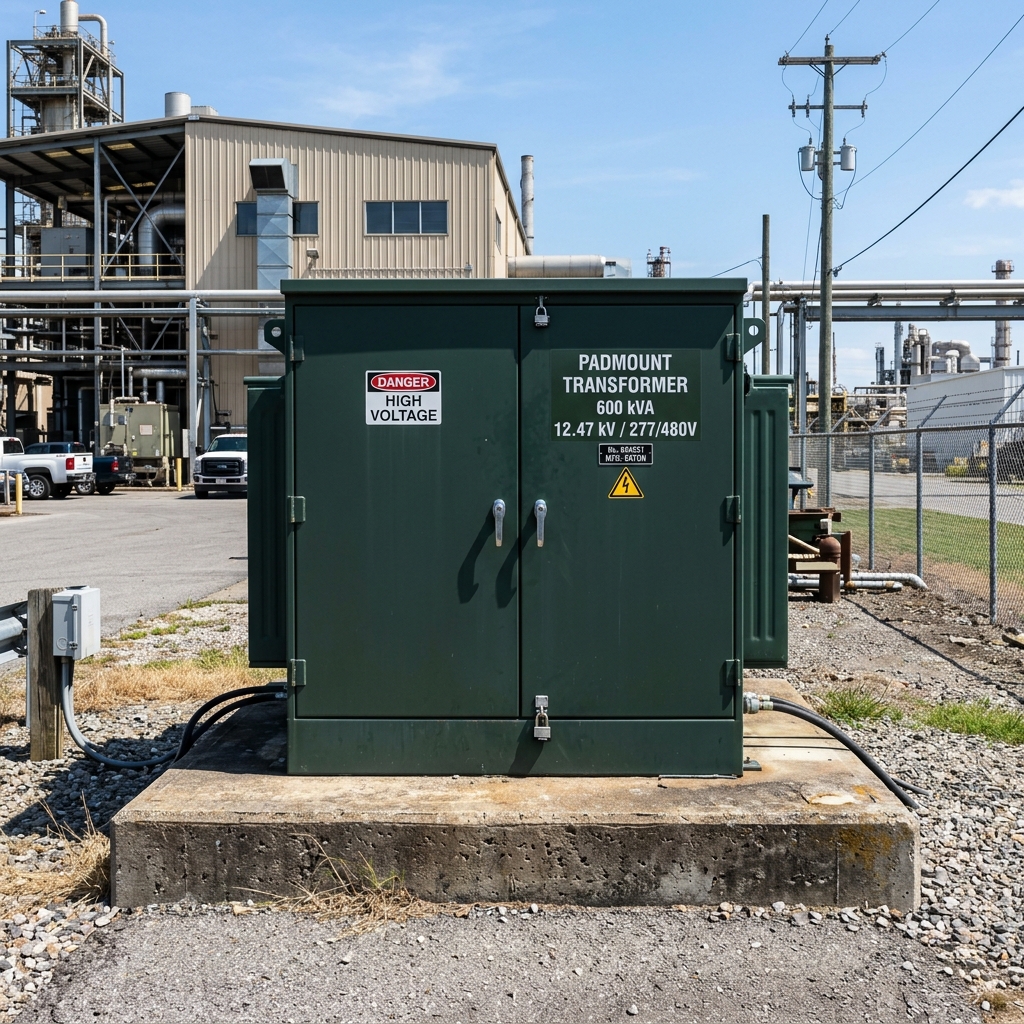
Figure 1: SOTEK 1,500 kVA Three-Phase Radial-Feed Padmount Transformer featuring tamper-resistant cabinet compliant with IEEE C57.12.34 and ANSI C57.12.28.
2. SOTEK Radial-Feed Padmount Transformer Product Showcase
SOTEK Group manufactures a complete portfolio of high-efficiency radial-feed padmount transformers engineered for global utility grids, industrial parks, and commercial infrastructure. Our product lines meet or exceed IEEE C57.12.34, IEEE C57.12.25, ANSI C57.12.28, and IEC 60076 standards.
3-Phase Commercial Radial Padmount Transformer
Designed for commercial centers, office complexes, and light industrial distribution. Features high-grade CRGO core, copper or aluminum windings, and IEEE dead-front bushing wells up to 34.5 kV primary.
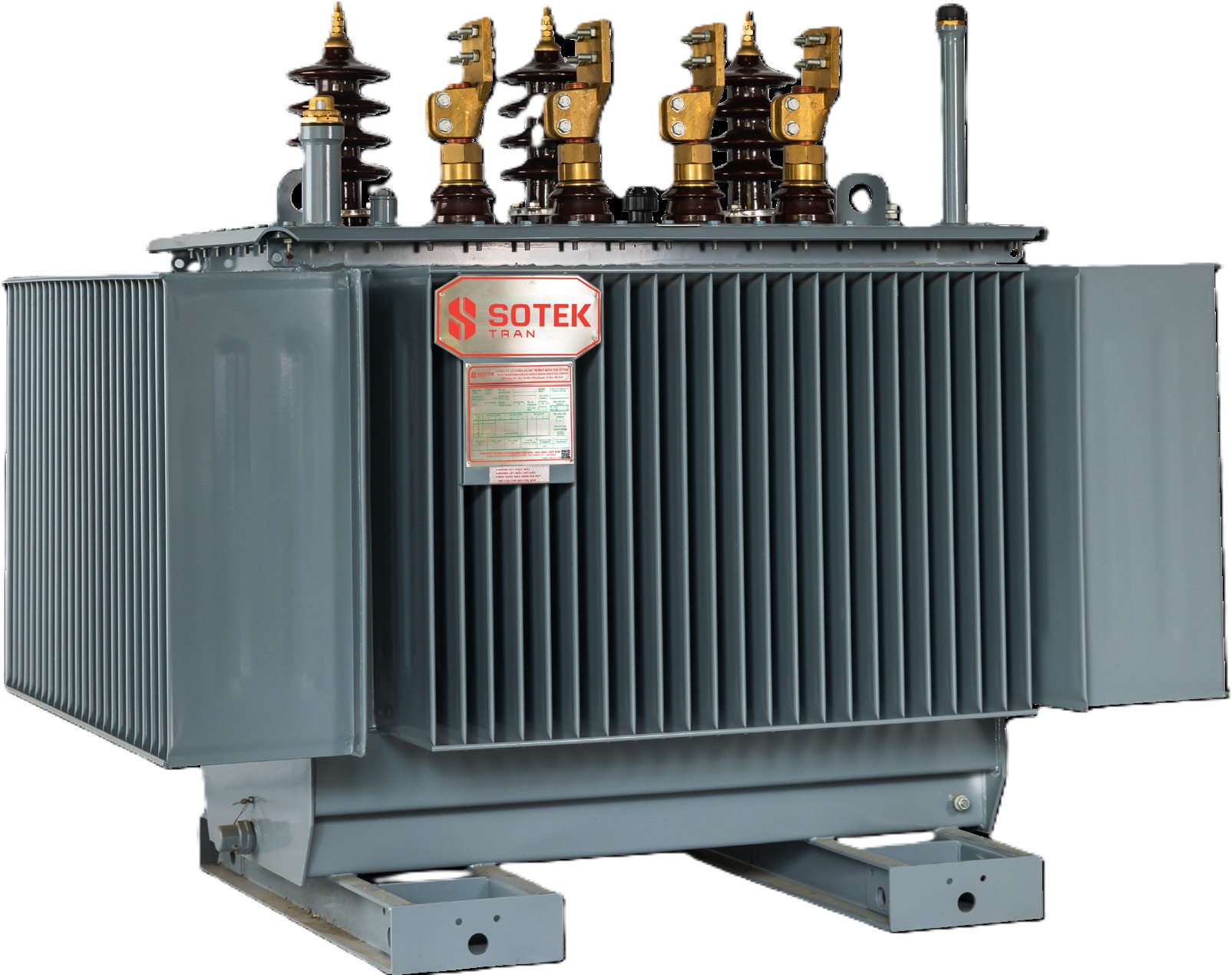
Heavy Industrial Radial Step-Down Transformer
Engineered for mining facilities, data centers, and heavy manufacturing plants requiring large step-down capacities (up to 34.5 kV / 69 kV BIL) with custom K-factor ratings and harmonic protection.
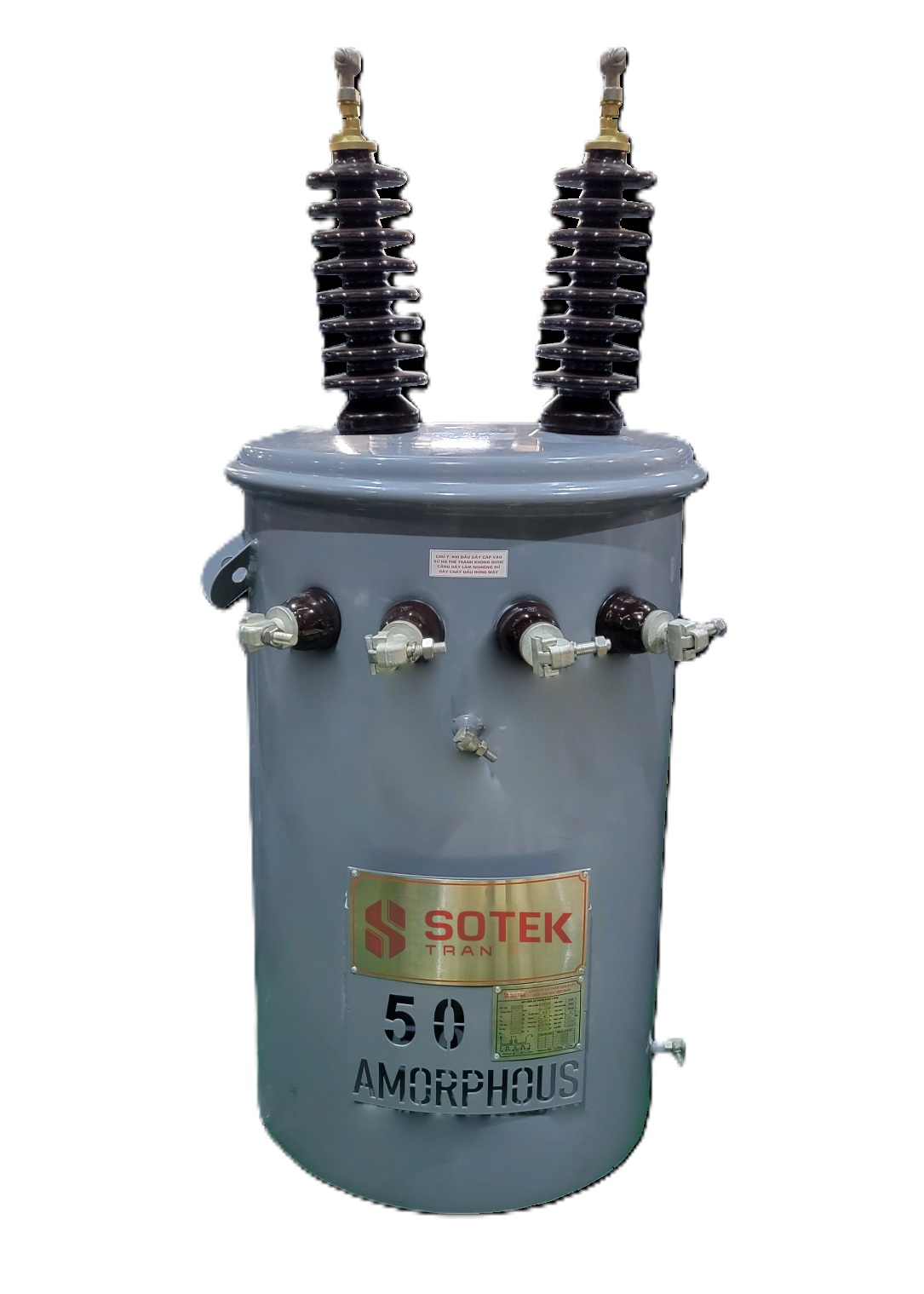
Single-Phase Radial-Feed Padmount Transformer
Compact footprint padmount transformer engineered for underground residential distribution (URD). Offers quiet operation (<45 dB), low no-load loss, and tamper-resistant ANSI C57 enclosure.
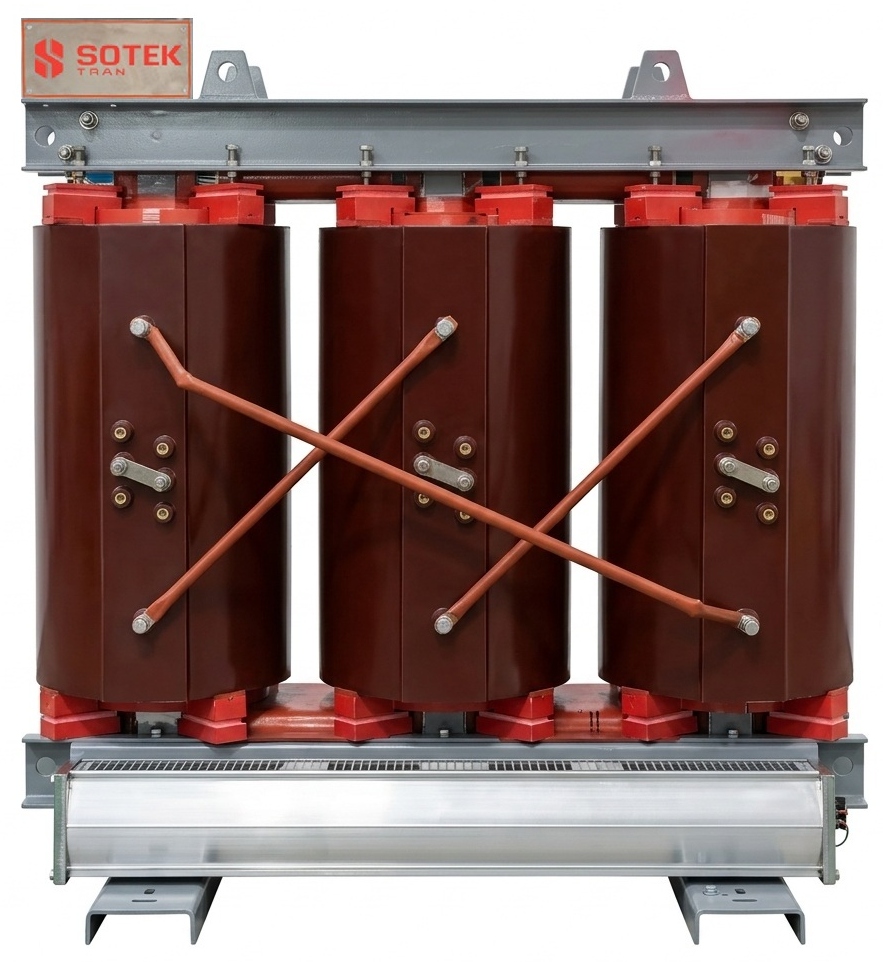
FR3 Natural Ester Radial-Feed Padmount Unit
Filled with non-toxic, biodegradable Cargill FR3 natural ester fluid with a 360°C fire point (K-class dielectric), allowing higher overload capability and zero environmental contamination risk.
Standard Engineering Specifications Matrix
The table below details the standardized electrical and mechanical parameters available across SOTEK’s Radial-feed padmount transformer series:
| Specification Parameter | Three-Phase Commercial Series | Industrial & Heavy Load Series | Single-Phase URD Series |
|---|---|---|---|
| Power Rating (kVA) | 75, 112.5, 150, 225, 300, 500, 750, 1000, 1500, 2500 kVA | 3,000 kVA, 3,750 kVA, 5,000 kVA | 15, 25, 37.5, 50, 75, 100, 167 kVA |
| Primary Voltage Class | 2.4 kV to 34.5 kV (Delta or Wye Grounded) | 13.8 kV to 34.5 kV (69 kV BIL to 150 kV BIL) | 2.4 kV to 19.9 kV (Single bushing or Two bushing) |
| Secondary Voltage | 208Y/120V, 480Y/277V, 415Y/240V, 600V | 480Y/277V, 415V, 600V, 4.16 kV | 120/240V, 240/480V |
| Frequency & Standard | 50 Hz / 60 Hz · IEEE C57.12.34 & IEC 60076 | 50 Hz / 60 Hz · IEEE C57.12.34 & IEC 60076 | 50 Hz / 60 Hz · IEEE C57.12.25 & ANSI C57.12.20 |
| Bushing Type (HV) | 3 HV Dead-front Bushing Wells (200A / 600A) | 3 HV Dead-front Bushing Wells (600A Deadbreak) | 1 or 2 HV Bushing Wells (200A Loadbreak) |
| Insulating Fluid Options | Mineral Oil (Type I/II) or FR3 Natural Ester | FR3 Natural Ester / High-Temp Mineral Oil | Mineral Oil (Type I) or Bio-Ester Fluid |
| Enclosure Integrity | ANSI C57.12.28 Tamper-resistant, 3000hr Salt Spray | Heavy Duty Gauge Steel / Stainless Steel Base | ANSI C57.12.28 Tamper-resistant Compact Cabinet |
| Protection Fusing | Bay-O-Net Fuse + Internal Current Limiting Fuse | Bay-O-Net Fuse + Under-Oil MagneX Interrupter | Bay-O-Net Current Sensing Fuse + CLF |
3. Why Global Utilities Trust SOTEK Group: Manufacturer Credibility & E-E-A-T Strengths
In accordance with Google’s Search Quality Rater Guidelines, establishing Experience, Expertise, Authoritativeness, and Trustworthiness (E-E-A-T) is non-negotiable for critical power infrastructure equipment. A padmount transformer operates in high-voltage public environments for 30 to 40 years; manufacturing shortcuts represent unacceptable catastrophic hazards.
SOTEK Group (SOTEK Transformer Production and Trading Corporation) has established itself as an elite OEM transformer manufacturer based in Vietnam, supplying utility-grade transformers across Southeast Asia, North America, Australia, the Middle East, and Africa.
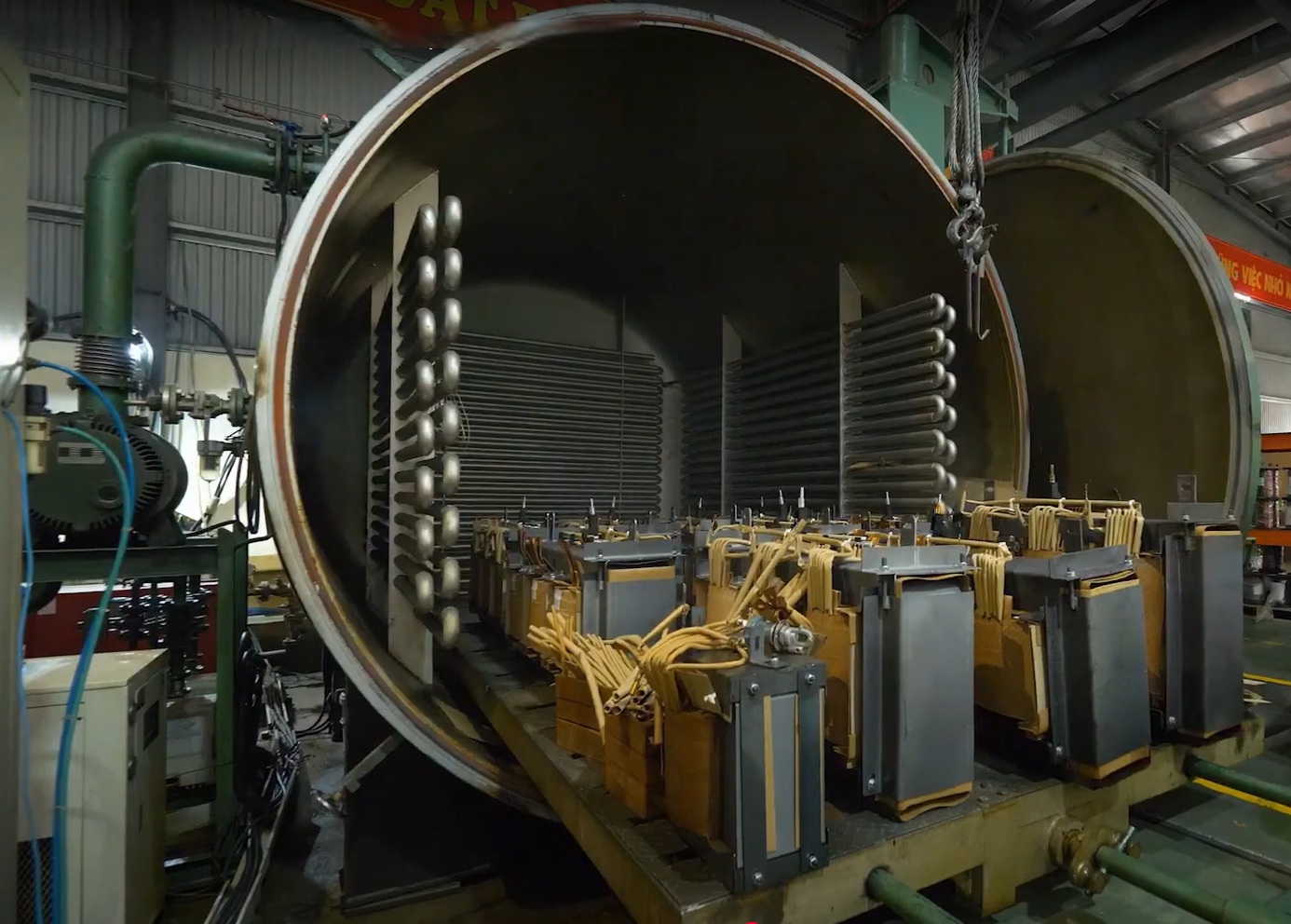
Figure 2: SOTEK’s 18,500 m² state-of-the-art transformer manufacturing facility located in Tien Son Industrial Zone, Bac Ninh, Vietnam.
Core Enterprise & Manufacturing Capabilities
- Advanced 18,500 m² Manufacturing Facility: Located in Tien Son Industrial Zone, Bac Ninh Province, SOTEK operates high-precision automated production lines, including German-imported Georg CNC core-cutting lines, automatic tension layer winding machines, and robotic corrugated tank welding units.
- ISO/IEC 17025 Accredited Laboratory (VILAS 1183): Every radial-feed padmount transformer undergoes 100% routine testing before leaving the factory. Our laboratory conducts full high-voltage type tests—including lightning impulse withstand testing, short-circuit resistance testing, temperature rise tests, and partial discharge analysis.
- Verified International Compliance: SOTEK transformers are certified under ISO 9001:2015 for Quality Management and ISO 14001:2015 for Environmental Management. Our products hold type-test certificates from internationally recognized independent testing facilities, including ASTA, KEMA, and QUATEST 1.
- Proven Utility Track Record: Approved tier-1 supplier for Vietnam Electricity (EVN across all 5 regional power distribution corporations) and long-term supply partner for Aboitiz Power Corporation in the Philippines, delivering thousands of padmount and overhead distribution transformers to harsh tropical and coastal grid environments.
- Raw Material Rigor: We utilize only top-grade Cold-Rolled Grain-Oriented (CRGO) silicon steel (Baosteel, Nippon Steel) with laser-refined domain structures, ensuring core losses significantly lower than standard IEEE and IEC limits. Windings feature 99.99% ETP oxygen-free copper or high-conductivity EC-grade aluminum.
4. Global Procurement & Sourcing Trends for Radial-Feed Padmount Transformers (2026–2035)
The global distribution transformer market is undergoing structural shifts driven by grid modernization, EV charger deployment, renewable microgrids, and supply chain re-alignment. Utility procurement directors and EPC engineering teams are recalibrating their sourcing strategies based on three dominant trends:
A. Transition to Eco-Friendly & Fire-Safe Dielectric Fluids
Traditional mineral oil is rapidly being superseded by Natural Ester Fluids (such as Cargill FR3) in radial-feed padmount transformers installed near residential zones, commercial parking lots, and environmentally sensitive watersheds. Natural esters offer:
- K-Class High Flash Point: Fire point exceeding 360°C (compared to 160°C for mineral oil), eliminating the need for expensive concrete fire containment walls or deluges.
- 100% Biodegradability: Readily biodegrades in soil and water within 28 days, protecting buyers from environmental liability in the event of accidental leaks.
- Extended Insulation Life: Natural ester absorbs moisture generated by paper thermal degradation, extending the transformer paper insulation lifespan by up to 50–80%.
B. Supply Chain Diversification & Nearshoring away from Single-Country Risks
Major North American and European power utilities are actively diversifying their equipment supply chains to mitigate tariff volatility, anti-dumping duties, and extended factory backlogs. Sourcing padmount transformers from Vietnam offers strategic procurement advantages: zero punitive tariff exposures, competitive lead times (typically 10–14 weeks vs. 50+ weeks from domestic OEMs), and strong compliance with western engineering standards.
C. Total Cost of Ownership (TCO) & Loss-Evaluated Bidding
Modern utility RFQs evaluate transformer proposals based on Total Cost of Ownership (TCO) using capital capitalization formulas for No-Load Losses ($/Watt) and Load Losses ($/Watt). SOTEK’s optimized step-lap core jointing and precision winding geometries consistently yield capitalized energy savings that offset initial equipment costs within 3 to 5 years of continuous grid operation.
5. Technical & Industry Development Trends for Radial-Feed Systems
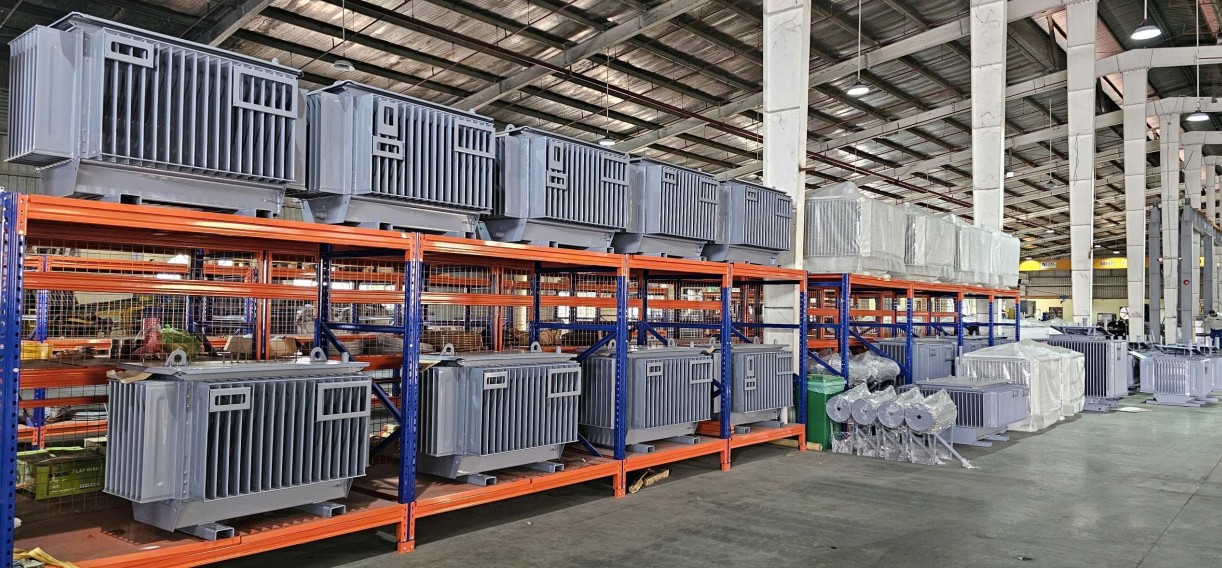
Figure 3: Advanced automated transformer manufacturing and core assembly at SOTEK facilities.
As underground networks become more complex, Radial-feed padmount transformers are incorporating cutting-edge technological innovations:
1. Amorphous Alloy Core Integration in Padmount Enclosures
Replacing conventional CRGO silicon steel with Fe-B-Si amorphous metal ribbon allows radial padmount transformers to reduce core (no-load) losses by up to 70–80%. This technology is increasingly required in solar generation collector step-down nodes and continuous-duty data centers where light-load standby losses represent significant annual costs.
2. Smart Grid Sensor Integration & Online Condition Monitoring
Modern radial padmount units are evolving from passive nodes into intelligent grid assets. SOTEK offers optional integration of:
- Electronic Pressure Relief Gauges with Microswitches: Sends real-time telemetry alerts to SCADA systems upon internal pressure buildup.
- Fiber-Optic Hot-Spot Temperature Sensors: Direct winding temperature monitoring for precise thermal modeling under heavy EV charging peak cycles.
- Wireless Dissolved Gas Analysis (DGA) Sensors: Continuous hydrogen and moisture tracking in transformer oil for predictive maintenance.
3. Enhanced Corrosion Control & Extreme Weather Coatings
Because radial-feed padmount transformers sit directly on concrete ground pads exposed to UV radiation, salt spray, lawn mowers, and de-icing salts, enclosure durability is critical. SOTEK applies a multi-stage thermosetting powder coating system compliant with ANSI C57.12.28 and ASTM B117 (3,000-hour salt spray test), offering 304L or 316L stainless steel tank bases for aggressive marine or coastal environments.
6. Frequently Asked Questions (FAQ) for Sourcing Radial-Feed Padmount Transformers
Below are technical and commercial answers to the most frequent inquiries submitted by power engineers, procurement teams, and AI intent models regarding Radial-feed padmount transformers:
Q1: What is the main structural and operational difference between a radial-feed and a loop-feed padmount transformer?
The fundamental difference lies in the high-voltage primary switching layout. A radial-feed padmount transformer has three high-voltage primary bushings (H1, H2, H3) designed to receive power from a single incoming line, serving as the end node of a circuit. A loop-feed padmount transformer has six high-voltage bushings (two for each phase: H1A/H1B, H2A/H2B, H3A/H3B), allowing the primary power cable to enter the cabinet and loop back out to supply downstream transformers in a ring network. Radial-feed units are smaller in cabinet width, require fewer cable connections, and have a lower initial capital cost.
Q2: When should an engineer specify a radial-feed padmount transformer instead of a loop-feed unit?
A radial-feed padmount transformer should be specified when:
- The installation site is at the absolute end of an underground distribution line.
- The electrical load is a standalone facility (e.g., a commercial building, hospital expansion, isolated manufacturing facility, or solar farm inverter station) where ring redundancy at the transformer cabinet is not required.
- Cabinet space and physical footprint on the concrete pad are constrained.
- Budget optimization is critical, as radial units avoid the cost of three additional HV bushings and internal four-position sectionalizer switches.
Q3: What internal overcurrent and overvoltage protection options are available for SOTEK radial padmount units?
SOTEK radial-feed padmount transformers are equipped with comprehensive internal protection systems:
- Bay-O-Net Fusing: Externally removable under-oil fuse assembly combining current-sensing or dual-sensing fuse links for overload and low-current fault protection.
- Current Limiting Fuses (CLF): High-interrupting partial-range current limiting fuses installed in series with the Bay-O-Net fuse to clear high-energy internal faults and prevent tank over-pressurization.
- Under-Oil MagneX Interrupter: Integrated circuit breaker operating under oil for resettable overcurrent protection.
- Under-Oil Surge Arresters: Elbow-type or under-oil metal oxide varistor (MOV) surge arresters to protect primary windings from lightning and switching voltage surges.
Q4: How does ANSI C57.12.28 standard compliance guarantee enclosure security and durability?
ANSI C57.12.28 defines stringent tamper-resistance and cabinet finish standards for padmounted equipment in public areas. SOTEK cabinets meet all ANSI requirements: recessed doors, concealed hinges, pry-resistant door edges, penta-head security locking bolts, and a multi-step paint finish that withstands 3,000 hours of continuous salt spray exposure (ASTM B117), 1,000 hours of humidity testing, and severe impact resistance.
Q5: Can SOTEK manufacture radial-feed padmount transformers customized for dual-voltage primary systems?
Yes. SOTEK routinely manufactures dual-voltage primary radial padmount transformers (e.g., 12.47kV x 24.94kV or 7.2kV x 14.4kV) featuring an externally operable dual-voltage selector switch located inside the high-voltage compartment. This allows utilities to deploy units in current medium-voltage grids while ensuring immediate compatibility with future planned grid voltage upgrades.
Q6: What is the lead time, FAT inspection protocol, and export packaging standard for international shipments?
SOTEK provides standard manufacturing lead times of 8 to 12 weeks following approved engineering CAD drawings. Factory Acceptance Testing (FAT) can be witnessed in person at our Bac Ninh plant or via live video streaming with full digital documentation (VILAS 1183 certified test reports). Transformers are vacuum-filled with oil, sealed, fitted with shock indicators, and packed in heavy-duty ocean-worthy timber crates or containerized tie-down frames for sea freight destination delivery worldwide.
Ready to Request a Technical Quote for Your Grid Project?
Contact SOTEK’s transformer engineering team today for technical data sheets, CAD outline drawings, loss evaluation calculations, and competitive FOB/CIF price proposals for your Radial-feed padmount transformer requirements.