Distribution Transformer Technical Articles, Industry Insights & Grid Updates — SOTEK Group

Engineering Knowledge · IEC 60076 & IEEE C57

Transformer Insights &
Technical Articles

Discover in-depth engineering updates, technical specifications, and global power grid solutions from SOTEK.

Grid Innovation · High Reliability

Cast Resin &
Dry-Type Technology

Learn about advanced insulation classes, fire safety standards, and indoor substation design guidelines.

Underground Distribution · Utility Standards

Padmount &
Substation Engineering

Explore compartmentalized padmount transformer configurations engineered for global power utilities.

0%

Choosing among the 2026 top Cast resin dry-type transformer manufacturers requires more than comparing catalog ratings. Buyers must examine insulation quality, thermal performance, noise levels, testing discipline, and after-sales support. A convincing manufacturer should explain how its epoxy resin handles heat, moisture, dust, and repeated load changes. Factory evidence matters.

Dr. J. C. Das, a respected transformer engineering author, offers a useful principle: “A transformer is only as reliable as its weakest insulation system.” This idea is especially relevant to cast resin designs. Their sealed windings can resist many environmental stresses, but poor casting, trapped voids, or weak quality control may still create trouble. Small defects can become costly failures.

This guide introduces manufacturers that deserve attention in 2026. It considers production experience, international certifications, partial-discharge testing, temperature-rise results, customization ability, and lifecycle service. It also looks beyond polished websites. Can the supplier provide test reports? Can it support installation in a crowded plant room? Does it answer technical questions clearly?

These details reveal practical competence.

The ranking is not absolute. A strong supplier for a hospital may not suit a mining site or solar project. Budget, voltage class, enclosure design, climate, and maintenance access can change the decision. Some manufacturers publish limited field data, which deserves careful reflection. Therefore, this overview should support technical evaluation, not replace it. Engineers and procurement teams should verify current specifications directly before approving any Cast resin dry-type transformer.
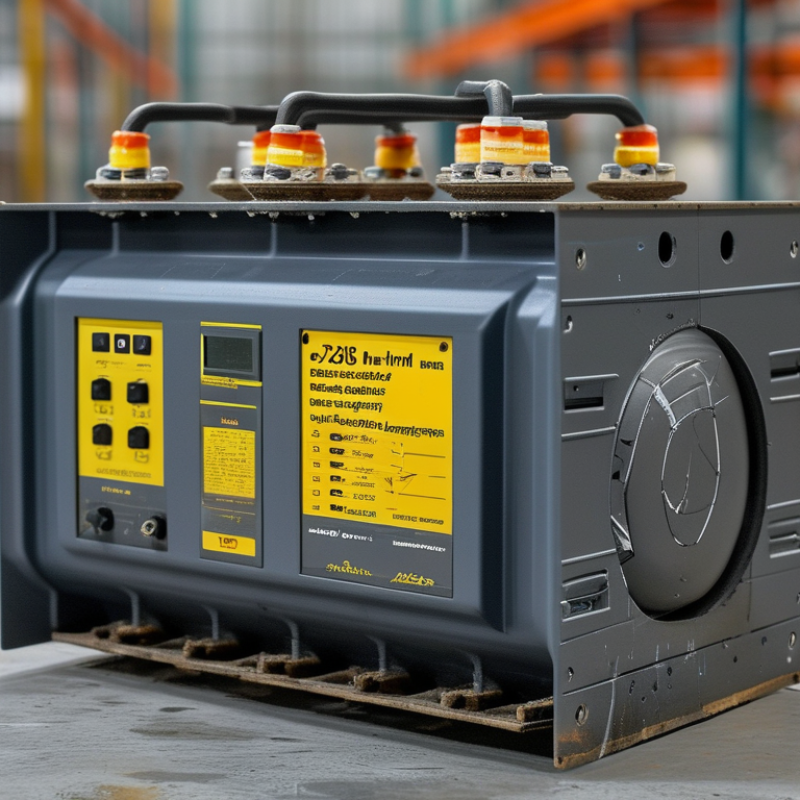
2026 Top Cast Resin Dry Type Transformer Manufacturers?

What Is a Cast Resin Dry Type Transformer?

A cast resin dry type transformer transfers electrical energy without liquid insulation. Its windings are enclosed in solid epoxy resin, while air cools the core and coils. During manufacture, copper or aluminum conductors are wound, dried, and cast under controlled conditions. The resin fills small gaps around the conductors. This detail matters. It limits moisture entry and supports mechanical strength during short-circuit stress. Unlike an oil-filled unit, it does not require a tank, oil testing, or a liquid containment pit. That can simplify indoor installation in hospitals, offices, tunnels, and industrial rooms.

In service, the primary winding receives incoming voltage, and the secondary winding delivers a lower or higher voltage. Magnetic flux crosses the laminated steel core, transferring energy without a direct electrical connection. A properly designed unit runs quietly, but not silently. Heat leaves through natural air movement or assisted fans. Sensors may monitor winding temperature and trigger alarms before insulation damage develops. Selection should consider load profile, altitude, ambient temperature, harmonics, enclosure rating, and available ventilation. A transformer sized only by nameplate load may overheat when nonlinear equipment operates continuously.

From field inspections, dust on cooling ducts is an ordinary problem, yet it is often underestimated. Technicians should tighten connections, inspect resin surfaces, record temperature readings, and clean vents according to the maintenance plan. Resin can crack under severe thermal cycling or impact, although cracks do not always indicate immediate failure. That uncertainty deserves professional testing. Cast resin designs reduce fire and spill concerns, but they still need clearance, grounding, protection, and competent commissioning. One overlooked detail can shorten service life.

How Cast Resin Transformers Work and Where They Are Used

Cast resin dry type transformers transfer electrical energy without liquid insulation. An alternating current enters the primary winding and creates a changing magnetic field in the core. This field induces voltage in the secondary winding.

The windings are sealed in epoxy resin under controlled factory conditions. The resin provides insulation, mechanical strength, and protection from dust and moisture. Cooling usually depends on natural air movement, although fans may assist during heavy loads. During installation, engineers check ventilation, clearance, grounding, noise, and temperature rise. A small design mistake can reduce service life.

These transformers are common in hospitals, offices, factories, shopping centers, tunnels, and underground substations. They suit locations where fire risk, oil leakage, or limited maintenance access requires attention. In a hospital, the transformer may supply clean and stable power to medical equipment. In a factory, it can support motors, lighting, and automated production lines. Indoor installations still need airflow around the enclosure. Cast resin does not mean maintenance-free. Dust can block cooling paths, and loose connections may create damaging heat. Technicians should inspect terminals, insulation surfaces, ventilation openings, and load records at planned intervals. Selection should consider voltage, capacity, short-circuit strength, ambient temperature, altitude, and local electrical requirements. Manufacturer testing records also deserve careful review. Some specifications look impressive but provide little practical value without application data.

Key Criteria for Evaluating Transformer Manufacturers in 2026

Choosing a cast resin dry type transformer manufacturer in 2026 requires more than comparing prices. Evaluate engineering depth, production controls, and proven field performance. Ask for thermal design calculations, partial discharge results, impulse test records, and routine test certificates. Reliable manufacturers should explain insulation systems clearly, including resin quality, curing control, and resistance to moisture, dust, and temperature changes.

Factory experience matters. Request a controlled production tour, even through verified video evidence when travel is impractical. Check winding equipment, resin casting areas, calibration records, and final inspection procedures. Confirm compliance with applicable IEC or equivalent standards. Also examine project references with similar voltage, capacity, altitude, and enclosure requirements. A polished brochure can hide weak documentation. I have seen impressive claims fail during basic maintenance reviews.

Tips: Compare complete lifecycle costs, not only purchase prices. Review spare-part access, commissioning support, warranty terms, and response times. Ask whether testing is performed internally or by an independent laboratory. Inspect sample reports for serial-number traceability and clear acceptance limits. Consider noise levels, energy losses, fire performance, and installation space. Smaller details matter. Finally, discuss future load changes with the manufacturer. A technically sound supplier should admit design limits, identify risks, and suggest improvements without overstating certainty.

2026 Top Cast Resin Dry Type Transformer Manufacturers? - Key Criteria for Evaluating Transformer Manufacturers in 2026
Evaluation Dimension Suggested Weight Realistic Technical or Commercial Benchmark What to Verify Recommended Evidence Assessment
Applicable Standards 15% Designed and tested in accordance with IEC 60076-11 for dry-type transformers, or IEEE C57.12.01 where North American requirements apply. Confirm the applicable standard edition, rated voltage, insulation level, frequency, cooling method, temperature-rise limits, and installation environment. Type-test reports, routine-test reports, technical data sheets, and a standards compliance matrix. Pass / Fail
Rated Voltage and Insulation Level 10% Primary and secondary voltage, tap range, power frequency withstand voltage, and lightning impulse withstand voltage must match the project specification. Check the rated insulation level for the actual system voltage and verify that the tap changer is suitable for the required operating condition. Guaranteed technical particulars, nameplate sample, insulation-coordination calculation, and test certificates. Project Match
Power Rating and Overload Capability 10% Available ratings should cover the specified kVA or MVA requirement, with documented short-time overload capability based on the thermal design and loading profile. Evaluate continuous loading, emergency loading, ambient temperature, altitude, harmonics, and future capacity requirements. Load calculation, thermal study, overload curves, and guaranteed loss and temperature-rise values. Verified
Temperature Rise and Thermal Class 10% Temperature-rise limits must comply with the selected standard and the specified insulation system. The design should account for the installation ambient and enclosure conditions. Confirm winding temperature rise, average winding temperature rise, ambient reference temperature, altitude correction, and sensor arrangement. Type-test results, thermal calculations, RTD or PTC wiring diagram, and factory acceptance test records. Thermal Margin
Energy Efficiency and Losses 12% No-load loss and load loss should be stated at the specified reference temperature and rated frequency. Lower losses reduce life-cycle energy consumption. Compare guaranteed losses rather than only catalog values. Include capitalization of losses where required by the purchasing specification. Guaranteed loss schedule, routine-test data, efficiency calculation, and life-cycle-cost model. Lower Is Better
Partial Discharge Performance 12% For medium-voltage cast resin transformers, partial-discharge performance should be stated at the specified test voltage and acceptance limit. Check the measurement method, test voltage, background noise, acceptance level, calibration procedure, and whether the result applies to the complete transformer. Partial-discharge test report, calibrated equipment record, test procedure, and acceptance criteria. Critical
Fire and Environmental Safety 8% Cast resin construction avoids insulating liquid and can be suitable for indoor, public, industrial, and other locations where liquid containment is undesirable. Verify the specified fire-performance classification, smoke requirements, enclosure rating, resin formulation, and local fire-code obligations. Fire-test documentation, material safety data, resin technical file, enclosure test report, and installation guidance. Site Specific
Mechanical and Short-Circuit Strength 8% The active parts, windings, supports, terminals, and enclosure must withstand electrodynamic forces associated with the specified short-circuit current and duration. Match the transformer short-circuit withstand rating with the system fault level and upstream protection-clearing time. Short-circuit calculation, design verification report, mechanical drawings, and relevant type-test evidence. System Match
Quality Management and Traceability 7% A documented quality-management system, typically certified to ISO 9001, should control design, materials, production, testing, nonconformities, and corrective actions. Check certificate validity, manufacturing-site scope, calibration control, supplier approval, resin batch traceability, and inspection checkpoints. Current certificate, quality manual extract, inspection and test plan, calibration records, and material certificates. Auditable
Factory Testing Capability 8% Routine tests should cover the required electrical and functional checks, including winding resistance, voltage ratio, polarity or phase relationship, impedance, losses, insulation tests, and partial discharge where specified. Confirm that the factory can perform tests at the required voltage and power rating, either in-house or through an approved independent laboratory. Factory test equipment list, calibration certificates, sample routine-test report, and inspection schedule. Mandatory
Design Customization and Integration 5% The manufacturer should support project-specific requirements such as enclosure rating, forced-air cooling, tap links, temperature monitoring, anti-vibration measures, and special cable or busbar arrangements. Review dimensional constraints, access clearances, cable entry, protection coordination, monitoring interfaces, and compatibility with the site control system. Outline drawings, interface schedules, wiring diagrams, cooling calculations, and approved general arrangement drawings. Fit for Site
Delivery, Warranty, and Service 5% Evaluation should include manufacturing lead time, spare-parts availability, commissioning support, warranty terms, response time, and documented maintenance guidance. Separate standard lead time from project-specific lead time and confirm how warranty claims, site failures, and technical queries are handled. Signed commercial offer, warranty document, project schedule, service-level commitment, and reference project records without relying solely on marketing claims. Commercial Check
Scoring guidance: Score each criterion from 0 to 5 using documented evidence. Multiply the score by the suggested weight, then confirm that all mandatory safety, testing, standards, and project-interface requirements are satisfied before ranking suppliers.

Leading Cast Resin Dry Type Transformer Manufacturers in 2026

Leading Cast Resin Dry Type Transformer Manufacturers in 2026

Leading cast resin dry type transformer manufacturers in 2026 are judged by more than production volume. Field experience shows that dependable manufacturers control resin quality, winding tension, curing temperature, and insulation thickness. These details affect partial discharge, heat resistance, and service life. Thermal margin matters. A transformer operating near its limit may appear efficient, yet repeated overloads can accelerate insulation aging.

Reliable manufacturers provide traceable test records for each unit. These records should include temperature-rise, insulation resistance, applied-voltage, and partial-discharge results. Compliance with recognized dry-type transformer standards also supports safer engineering decisions. Buyers should examine factory testing equipment, calibration schedules, and technician training. A clean winding area is a useful sign, but it does not prove everything. Factory visits and independent inspections remain valuable.

In 2026, leading manufacturers are also improving monitoring and installation support. Sensors can track winding temperature, humidity, and unusual heating around cable terminals. Practical guidance should cover ventilation, enclosure protection, clearance, lifting points, and maintenance intervals. I have seen projects focus heavily on purchase price while overlooking restricted airflow. That mistake can create avoidable thermal stress. Even experienced buyers may trust a polished brochure too quickly. Reviewing reference projects, warranty conditions, fault-response procedures, and replacement-part availability offers a more realistic view of manufacturing reliability. Manufacturers that explain limitations openly often deserve closer technical consideration.

2026 Top Cast Resin Dry-Type Transformer Manufacturers: Thermal Class Reference

This chart presents internationally recognized insulation thermal endurance classes used when evaluating cast resin dry-type transformer designs. The values represent maximum continuous temperature limits defined by IEC 60085 and are not company-specific performance claims.

How to Select the Right Cast Resin Transformer Supplier

2026 Top Cast Resin Dry Type Transformer Manufacturers?

Selecting the right cast resin transformer supplier requires more than comparing prices. Start with your actual operating conditions, including voltage, load profile, altitude, humidity, and installation space. A 1000 kVA transformer for an indoor factory may need different protection than one serving a dusty industrial plant. Ask for verified test reports, temperature-rise data, partial-discharge results, and compliance with relevant IEC standards.

Inspect the supplier’s manufacturing process, not only its finished brochure. Reliable producers control resin mixing, winding tension, curing temperature, and coil insulation thickness. Request a factory audit or a live production inspection when possible. Check whether engineers can explain overload performance, cooling methods, noise levels, and short-circuit strength clearly. Weak answers matter. They may reveal limited application experience.

Tips: Compare total ownership cost, not only purchase price. Review warranty terms, spare-part access, delivery records, and local service capability. Ask for references from installations with similar ratings and environments. Confirm the supplier can support commissioning and periodic maintenance. A useful detail is the response time for technical problems. Delays can be costly.

No checklist is perfect. I would also leave room for professional judgment. A slightly higher initial cost may prevent overheating, nuisance trips, or difficult repairs later. Before ordering, match every technical requirement with a written supplier commitment. Ensure drawings, test procedures, and acceptance criteria are agreed before production begins.

FAQS

How does a cast resin dry type transformer transfer electrical energy?

Alternating current enters the primary winding. A changing magnetic field forms in the core. This field induces voltage in the secondary winding.

What protects the windings inside the transformer?

Epoxy resin surrounds and seals the windings. It provides insulation, mechanical strength, and moisture protection. Dust protection also improves.

How is a cast resin transformer cooled?

Natural air movement usually removes heat. Fans may assist during heavy loads. Blocked airflow can raise temperatures quickly.

Where are cast resin transformers commonly used?

They serve hospitals, offices, factories, shopping centers, and tunnels. They also suit underground substations. Indoor installation still requires clear airflow around the enclosure.

Why might a facility choose this transformer type?

It avoids liquid insulation and reduces leakage concerns. It can suit areas with fire-risk considerations or limited maintenance access. The choice still needs careful engineering.

What maintenance does a cast resin transformer require?

Technicians should inspect terminals, insulation surfaces, and ventilation openings. They should also review load records and temperature conditions. Cast resin does not mean maintenance-free.

Which technical details should buyers evaluate?

Review voltage, capacity, short-circuit strength, ambient temperature, and altitude. Check local electrical requirements and enclosure space. A large capacity rating alone proves little.

How can buyers evaluate a transformer manufacturer fairly?

Request thermal calculations, partial discharge results, impulse test records, and routine certificates. Review resin curing controls and production inspection procedures. Independent testing can add confidence.

Should buyers compare only the purchase price?

No. Compare energy losses, maintenance, spare parts, commissioning, warranty, and response times. Future load changes matter too. The cheapest option may become expensive later.

Conclusion

A cast resin dry-type transformer is an indoor or outdoor power distribution unit that uses solid epoxy resin insulation instead of liquid oil. Its windings are encapsulated in resin, providing strong protection against moisture, dust, chemical exposure, and fire risks while reducing routine maintenance. These transformers are commonly used in commercial buildings, industrial facilities, renewable energy systems, transportation infrastructure, and other locations where safety, reliability, and environmental performance are important.

When evaluating manufacturers in 2026, buyers should consider technical design, rated capacity, voltage range, temperature control, energy efficiency, noise levels, insulation quality, testing procedures, customization capabilities, certifications, delivery reliability, and after-sales support. Selecting the right supplier requires matching the transformer to the installation environment, load profile, space limitations, safety requirements, and long-term operating goals. A dependable manufacturer should provide clear technical documentation, transparent quality standards, professional engineering assistance, and responsive service throughout the product’s life cycle.

Oliver

Oliver

Oliver is a dedicated marketing professional with a deep understanding of the company’s products, customer needs, and evolving market trends. Through years of experience in strategic communication, product positioning, and content development, he helps transform complex product capabilities into......