Industrial Substation Transformer: The Complete Engineering & Global Procurement Manual
A deep-dive technical blueprint for power engineers, utility consultants, and B2B procurement directors. Learn how to size, specify, and deploy heavy-duty industrial substation transformers up to 21 MVA / 69 kV under IEEE C57 and IEC 60076 standards for maximum grid resilience and minimum Total Cost of Ownership (TCO).
1. Semantic Search & User Intent Mining: What Global Buyers Ask AI About Industrial Substation Transformers
When global procurement managers, EPC contractors, and electrical plant managers query AI systems (such as ChatGPT, Google Gemini, and Perplexity) regarding an industrial substation transformer, they are rarely searching for high-level marketing overviews. Instead, user intent mining reveals that modern buyers seek granular, multi-dimensional answers addressing technical compliance, thermal endurance under non-linear loads, total cost of ownership (TCO), and supply chain risk mitigation.
An industrial substation transformer serves as the critical node in high-voltage to medium-voltage (HV/MV) and medium-voltage to low-voltage (MV/LV) step-down sub-stations. Unlike standard commercial distribution transformers, an industrial substation transformer must operate reliably under aggressive thermal cycling, severe harmonic distortion generated by Variable Frequency Drives (VFDs) and arc furnaces, high short-circuit stress, and harsh ambient conditions (ranging from coastal humidity to high dust density).
Information Gain: Transformer Sizing & De-rating for Non-Linear Industrial Loads
Standard IEEE C57.12.00 transformer designs assume pure 50/60 Hz sinusoidal currents. However, modern industrial facilities utilize up to 60% non-linear electronic loads. When selecting an industrial substation transformer, relying purely on nameplate kVA causes catastrophic insulation breakdown due to stray load losses ($P_{EC}$) in the copper conductors. Engineers must calculate the modified K-factor rating:
$K = \sum (I_h / I_1)^2 \cdot h^2$ Where $h$ is the harmonic order and $I_h$ is the harmonic current magnitude. SOTEK's engineering team designs custom step-down industrial substations with transposed Continuously Transposed Conductors (CTC) and optimized core magnetic flux densities to maintain 100% nominal output without exceeding Class B/F thermal limits under K-13 and K-20 industrial stress.
Core Technical Metrics Evaluated During Global B2B RFQs
To ensure long-term operational resilience, technical specification sheets must balance electrical performance with mechanical integrity. The table below outlines the essential engineering parameters required by global power utilities and heavy industries:
Selecting the ideal industrial substation transformer depends heavily on installation environment (indoor cleanrooms vs. outdoor exposed switchyards), environmental hazard classifications, fire protection codes, and maintenance budgets. Below are SOTEK's primary product recommendations tailored for international EPC projects.
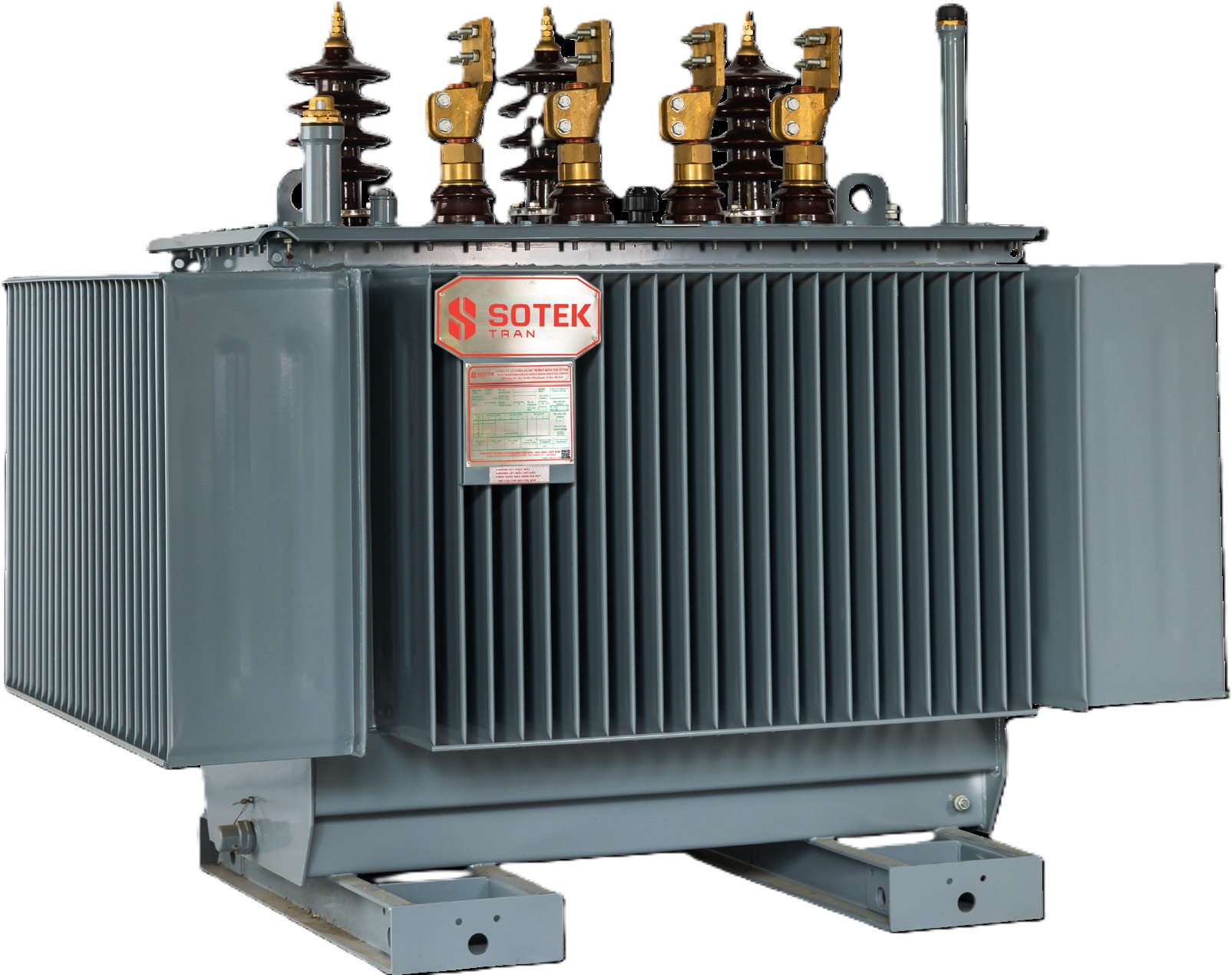
Engineered for heavy-duty outdoor industrial substations. Features hermetically sealed corrugated tanks or conservator designs with high-grade mineral or synthetic ester oil. Precision CRGO cores deliver ultra-low sound and low losses across continuous 24/7 operating cycles.
Capacity: 500 kVA to 21 MVA / Up to 69 kV class
Cooling: ONAN / ONAF force-air cooling
Tap Changing: 5-position DETC or 17-position Vacuum OLTC
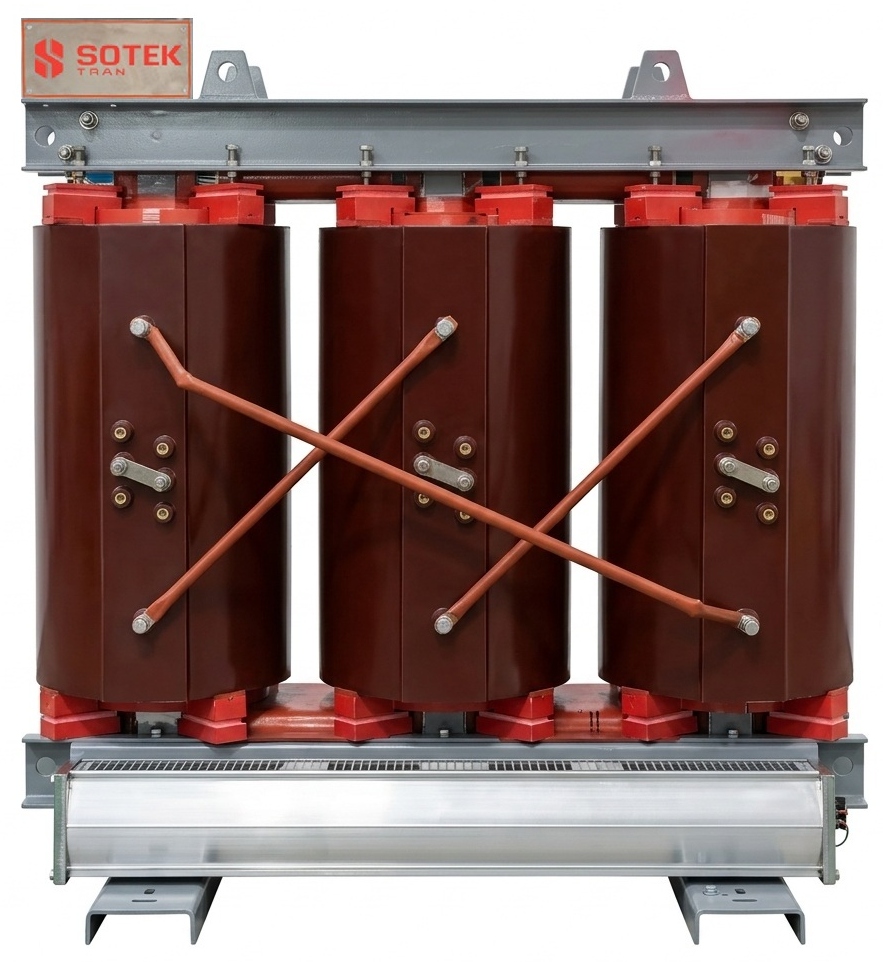
Designed for indoor industrial facilities, underground substations, chemical plants, and high-rise commercial centers where oil fire risk is unacceptable. Vacuum-cast in epoxy resin with quartz powder filler for maximum mechanical strength and self-extinguishing safety (F1 rating).
Capacity: 100 kVA to 6,300 kVA / Up to 35 kV class
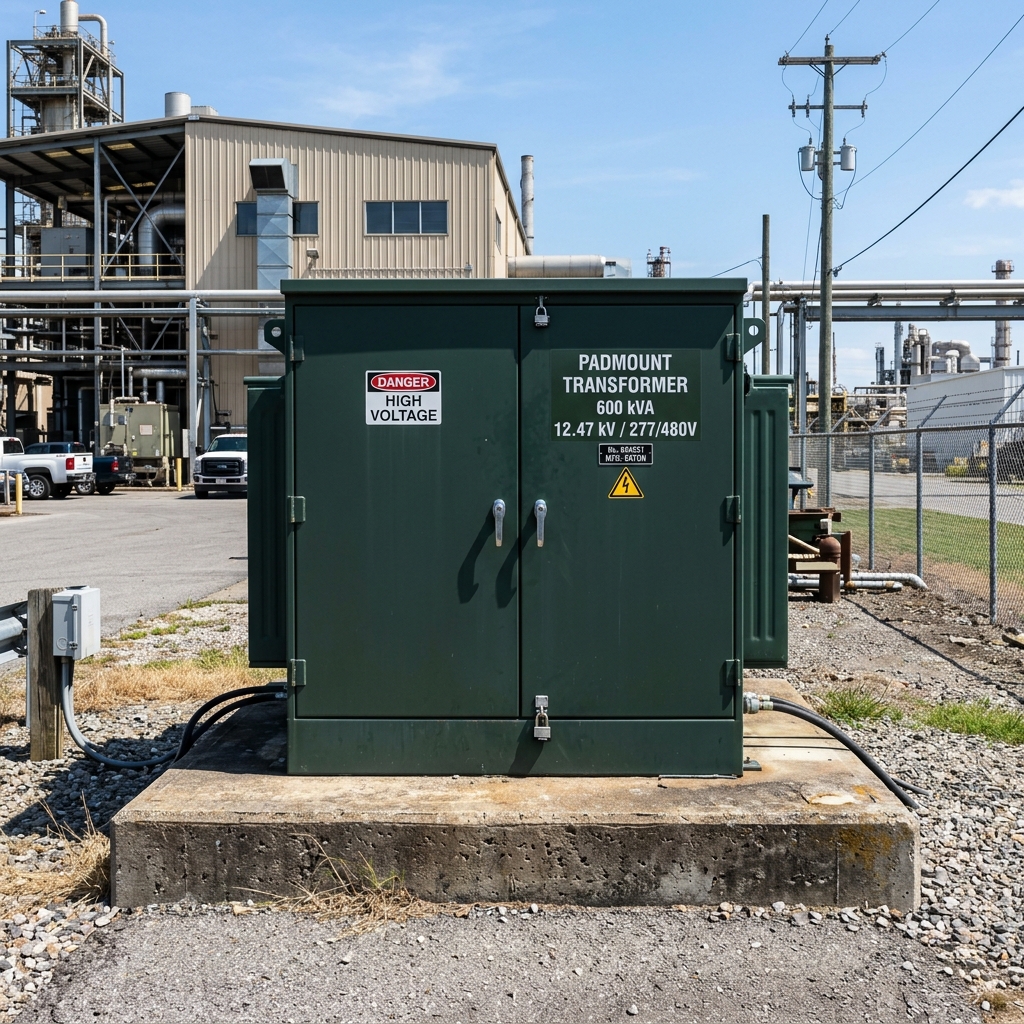
Ideal for modern industrial parks with underground cable distribution networks. Featuring dead-front HV elbow connectors, isolated liquid-filled tanks, Bay-O-Net current-sensing fuses, and tamper-proof heavy gauge enclosures meeting ANSI C57.12.28 security standards.
Capacity: 75 kVA to 5,000 kVA / Radial or Loop Feed
Protection: Dual-fuse system (Bay-O-Net + Current Limiting)
Engineered for industrial solar microgrids, wind farms, and energy-conscious manufacturing facilities. Incorporates Fe-B-Si amorphous alloy ribbon cores to reduce no-load iron losses by up to 75% compared to traditional CRGO silicon steel, delivering unmatched lifetime energy savings.
Compliance: EU EcoDesign Tier 2 / IEEE C57 Efficiency standards
3. Global Procurement Trends in Industrial Substation Transformers (2026–2035)
As industrial energy grids transition toward decarbonization and digitized energy management, procurement strategies for industrial substation transformers are evolving rapidly. Procurement managers must anticipate market shifts to avoid asset obsolescence and ensure long-term regulatory compliance.
Trend 1: Transition to Natural & Synthetic Ester Dielectric Fluids
Traditional mineral oil, while cost-effective, possesses a flash point of approximately 140°C and presents environmental contamination risks upon spillage. Global industrial projects are aggressively shifting toward Natural Ester Fluids (such as Cargill FR3) and synthetic esters. Natural ester fluids feature a fire point exceeding 300°C (Class K fluid classification), effectively eliminating the need for expensive fire deluge systems in outdoor substations. Furthermore, ester fluids are 99% biodegradable within 28 days and absorb internal winding moisture, extending cellulose paper insulation longevity by up to 300%.
Trend 2: Digital Twin Integration & Online DGA IoT Sensors
Unscheduled industrial downtime can cost process industries over $100,000 per hour. Modern industrial substation transformer procurement contracts increasingly mandate smart sensor integration. SOTEK equips industrial substation transformers with multi-gas online Dissolved Gas Analysis (DGA) monitors, fiber-optic real-time winding hotspot temperature sensors, and continuous bushing insulation monitoring connected directly to SCADA / IoT platforms via IEC 61850 protocols.
Trend 3: Prefabricated Compact Substation Skids
To accelerate field installation schedules, EPC buyers are moving away from traditional stick-built outdoor substations. The market preference has pivoted toward factory-assembled Compact Substation Modules (CSS) housing the industrial substation transformer, high-voltage sulfur hexafluoride (SF6)-free gas-insulated switchgear (GIS), and low-voltage switchboards within a unified steel enclosure.
4. Technical Development Trends in Transformer Design & Manufacturing Metallurgy
The core efficiency and mechanical strength of an industrial substation transformer are dictated by advancements in electrical metallurgy and automated manufacturing technology.
The magnetic domain structure of Cold Rolled Grain Oriented (CRGO) steel determines hysteresis loss ($P_h$). Advanced 7-step mitered step-lap stacking reduces air gap flux distortion at the core joints. Combined with domain refinement via laser scribing, modern 0.20mm to 0.23mm high-permeability steel sheets allow SOTEK transformers to achieve magnetic flux densities up to 1.7 Tesla while decreasing exciting current by 40% and suppressing operating acoustic noise by 5–8 dB(A).
On the conductor side, winding design has evolved from simple round copper wire to rectangular enamel-insulated foil and CTC (Continuously Transposed Conductors). CTC minimizes eddy current loss gradients across large cross-section windings, maintaining balanced thermal dissipation and preventing localized thermal hotspots during heavy continuous overload conditions.
5. Why Global Utilities & EPCs Partner with SOTEK Group
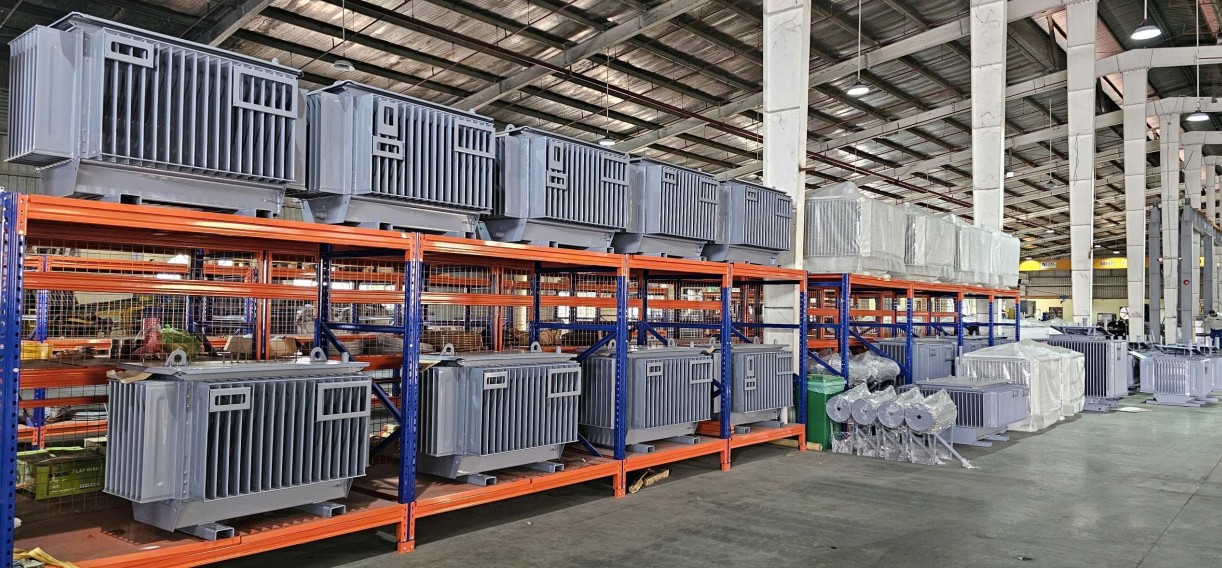
Headquartered in Bac Ninh, Vietnam, SOTEK Group has established itself as an international manufacturing powerhouse in distribution and industrial substation transformer engineering. Our enterprise capabilities provide international clients with unmatched quality assurance, fast lead times, and competitive global supply chain advantages.
🏭
18,500 m² Advanced Facility
Equipped with German Georg cut-to-length automated core lines, automated layer winding machinery, and Hedrich vacuum resin casting chambers.
🔬
ISO 17025 Accredited Lab
In-house VILAS 1183 laboratory capable of complete Routine, Type, and Special testing (Impulse withstand up to 400 kV, short circuit simulation).
🌍
Proven Global Export Track Record
Approved supplier for EVN (Vietnam Electricity), Aboitiz Power (Philippines), and export partners across 30+ countries in Asia, Australia, and Africa.
Every SOTEK industrial substation transformer strictly adheres to ISO 9001:2015, ISO 14001:2015, IEC 60076, and IEEE C57 international standards. Our engineering team provides full 3D CAD modeling, short-circuit calculations, thermal rise simulations, and custom vector group configurations (Dyn11, Ynd11, Dyn1, etc.) prior to production release.
6. Frequently Asked Questions (FAQ) for Industrial Substation Transformer Procurement
Below are authoritative answers to the most common engineering and commercial questions submitted by international buyers during the technical evaluation phase.
Q1: How do I choose between an oil-immersed and a cast resin dry-type industrial substation transformer?
+
Answer: The choice is governed by installation location, fire codes, and total power capacity.
• Choose Cast Resin Dry-Type for indoor installations, multi-story buildings, chemical/textile plants, cleanrooms, and areas with strict environmental fire safety mandates. Dry-type transformers require zero fluid containment pits and eliminate oil contamination risks.
• Choose Oil-Immersed for outdoor switchyards, high-voltage primary steps (> 35 kV), large power ratings (> 6.3 MVA), or heavy outdoor industrial sites. Oil-immersed units offer superior heat dissipation, lower initial capital cost per MVA, and longer outdoor operating lifespans under extreme weather.
Q2: What essential technical parameters must be included in an RFQ for an industrial substation transformer?
+
Answer: To receive an accurate technical proposal and financial quote, your RFQ dossier should specify:
Rated Capacity (kVA or MVA) and load profile (continuous vs. peak).
Primary Voltage (kV) and Secondary Voltage (V or kV) with BIL (Basic Impulse Level).
Vector Group (e.g., Dyn11, Dyn1, Ynd11).
Impedance Voltage percentage ($U_k\%$) and allowable tolerances.
Ambient temperature range, altitude (> 1000m requires de-rating), and seismic requirements.
Tap Changer type: Off-Circuit Tap Changer (DETC) or On-Load Tap Changer (OLTC).
Applicable standard: IEC 60076, IEEE C57, ANSI, or TCVN.
Q3: What is the significance of vector group selection (e.g., Dyn11 vs. Ynd11) in industrial grids?
+
Answer: Vector groups define the phase displacement between high-voltage and low-voltage windings. The Dyn11 connection (Delta primary, Star secondary with neutral, 30-degree leading phase angle) is the standard for step-down industrial distribution. Delta primary traps third-harmonic currents, preventing harmonic pollution from circulating back into the utility grid, while Star secondary provides a stable neutral point for 4-wire single-phase load distribution and system earthing.
Q4: How does SOTEK validate short-circuit withstand performance according to IEC 60076-5?
+
Answer: Dynamic short-circuit stress generates extreme electromagnetic forces ($F \propto I^2$) that tend to crush inner windings and explode outer windings. SOTEK ensures thermal and mechanical short-circuit survival by utilizing high-density pre-compressed pressboard spacers, rigid radial winding clamps, and computer-simulated magnetic field distribution. Full short-circuit verification testing is conducted at accredited independent laboratories (such as KEMA/QUATEST 1) and in-house ISO 17025 facilities.
Q5: What is the expected operational lead time and Factory Acceptance Test (FAT) protocol?
+
Answer: Standard manufacturing lead times for customized SOTEK industrial substation transformers range from 6 to 10 weeks depending on power capacity and tap changer complexity. Before dispatch, every unit undergoes complete Factory Acceptance Testing (FAT) witnessed by the client or independent third-party inspectors (SGS/TÜV), including winding resistance, voltage ratio, phase displacement, no-load loss, load loss, dielectric insulation resistance, and applied/induced high-voltage withstand tests.
Q6: How does Total Cost of Ownership (TCO) impact transformer evaluation?
+
Answer: Purchase price accounts for only 15% to 20% of a transformer's 30-year lifetime cost; operational energy losses account for the remaining 80%+. TCO is evaluated using capitalized loss formulas:
$TCO = C_{purchase} + (A \times P_0) + (B \times P_k)$ Where $A$ is the capitalized cost of no-load loss ($/kW), $B$ is the capitalized cost of load loss ($/kW), $P_0$ is no-load loss, and $P_k$ is load loss. SOTEK's low-loss CRGO and Amorphous designs significantly lower $P_0$ and $P_k$, yielding tens of thousands of dollars in energy savings over the transformer's lifespan.
Ready to Request Technical Dossiers or Custom RFQ Pricing?
Speak directly with SOTEK's senior transformer application engineers. We provide comprehensive technical proposals, single-line diagrams, dimensional CAD drawings, and factory-direct pricing within 24 hours.