Distribution Transformer Technical Articles, Industry Insights & Grid Updates — SOTEK Group

Engineering Knowledge · IEC 60076 & IEEE C57

Transformer Insights &
Technical Articles

Discover in-depth engineering updates, technical specifications, and global power grid solutions from SOTEK.

Grid Innovation · High Reliability

Cast Resin &
Dry-Type Technology

Learn about advanced insulation classes, fire safety standards, and indoor substation design guidelines.

Underground Distribution · Utility Standards

Padmount &
Substation Engineering

Explore compartmentalized padmount transformer configurations engineered for global power utilities.

0%

Choosing the right Wind farm transformer in 2026 demands more than comparing purchase prices. Wind projects now face larger turbines, longer collection systems, unstable weather, and stricter grid requirements. A transformer must carry expected output without wasting energy or overheating. Small mistakes become expensive. This guide introduces practical questions for developers, EPC teams, and maintenance managers. It connects field experience with measurable engineering evidence. The focus remains clear: reliable power conversion, controlled losses, safe operation, and predictable service life.

Begin with the turbine rating, site voltage, export design, and future expansion plans. Check kVA capacity against normal production, overload periods, ambient temperature, and emergency conditions. A unit sized only for today may restrict tomorrow’s generation. Insulation coordination matters when cables are long and switching events are frequent. For offshore or coastal sites, salt, humidity, vibration, and limited access change the specification. Oil-immersed and dry-type designs each offer practical advantages. Neither is universally better. Cooling method, fire risk, footprint, noise, and maintenance resources should guide the decision. Harmonic performance also deserves attention, especially with modern converters and power-electronic equipment.

Experienced buyers should request verified loss data, temperature-rise results, factory test records, and references from comparable farms. Review compliance with applicable IEC or IEEE requirements, local grid codes, and project insurer expectations. Ask how the supplier handles spare parts, oil testing, remote monitoring, and failure response. A low quotation can hide transport limits, weak documentation, or costly downtime. Look closely. Independent inspection can reveal gaps before shipment. Still, no selection guide is perfect. Weather records may be incomplete, load forecasts may change, and supplier promises require verification. The strongest choice balances lifecycle cost, resilience, maintainability, and evidence—not marketing language.
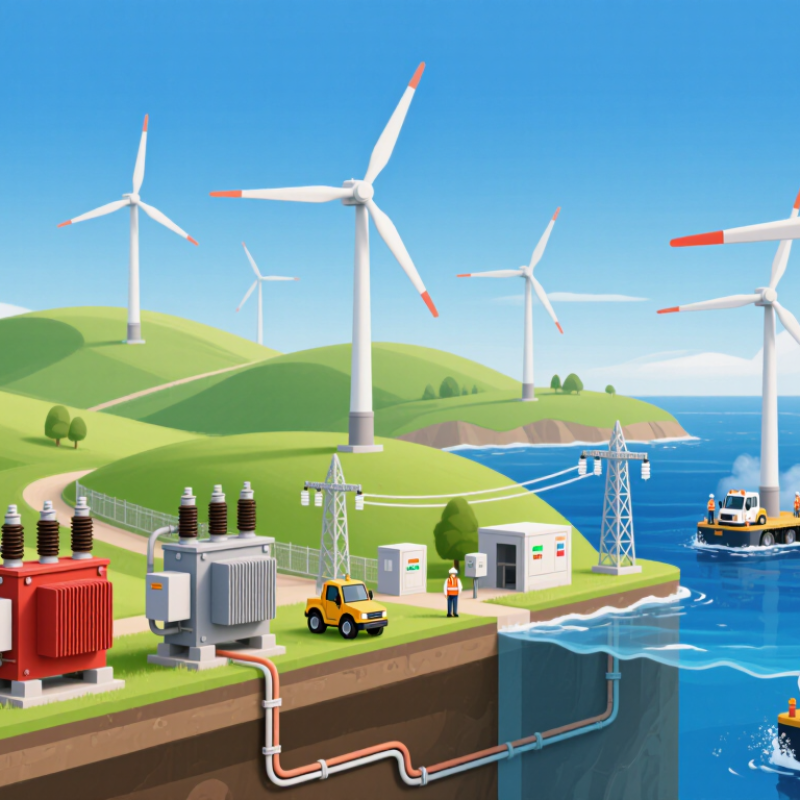
2026 Top Wind Farm Transformers How to Choose?

What Are Wind Farm Transformers and Why Do They Matter?

Wind farm transformers connect turbine generators with the farm’s collection network and the wider power grid. They raise voltage, often from several hundred volts to medium voltage, reducing energy losses across long underground cables. Each unit must handle changing wind speeds, frequent load variation, and demanding outdoor conditions. Without reliable transformers, even efficient turbines can lose production.

A practical choice begins with power rating, insulation level, cooling method, and expected service life. Engineers also examine harmonics from power electronics, short-circuit strength, and compatibility with the collection system. At a coastal site, salt, humidity, and strong winds can damage external fittings. At an inland site, dust and rapid temperature changes may create different risks. Small details matter.

Field inspections should include oil testing, bushing checks, temperature records, and noise changes. These observations often reveal problems before an outage occurs. Maintenance access deserves equal attention. A technically excellent transformer becomes difficult to manage when lifting space or replacement routes are missing. No design is perfect. A lower purchase price may appear attractive, but weak monitoring or unsuitable protection can increase long-term costs. Selecting equipment against recognized IEC or IEEE requirements improves reliability, although local grid rules still require careful review.

Which Transformer Types Are Used in Wind Farms?

2026 Top Wind Farm Transformers: How to Choose?

Wind farms commonly use oil-immersed step-up transformers beside each turbine. They raise generator voltage before power enters the collection network. These compact units must withstand vibration, temperature changes, and moisture. Mineral oil provides strong insulation and effective heat transfer. However, oil condition requires regular sampling and inspection.

A wind farm substation usually contains a larger power transformer. It increases medium-voltage collection power to the grid connection level. Onshore projects may use oil-immersed units because they handle high capacity efficiently.

Offshore platforms often require compact designs with strict weight and fire-control limits. Dry-type transformers are common inside control buildings and auxiliary systems. They reduce liquid leakage risks but may need stronger ventilation.

Transformer selection depends on load profile, site climate, harmonics, and maintenance access. Converter-based turbines can create additional thermal and insulation stresses. Engineers should review short-circuit levels before choosing winding arrangements.

In dusty regions, sealed enclosures and filtered cooling paths deserve close attention. A practical lesson is simple: rated power alone is not enough. I have seen specifications overlook transport limits and crane access. That mistake can delay installation.

Field measurements should confirm noise, temperature rise, and grounding performance after commissioning. Small design assumptions can become expensive repairs.

How to Match Transformer Capacity to Wind Turbine Requirements?

2026 Top Wind Farm Transformers: How to Choose?

Matching transformer capacity to a wind turbine starts with more than the turbine’s rated megawatts. Engineers should review active power, power factor, voltage, short-circuit levels, and the turbine’s converter behavior. A 5 MW turbine may need a transformer rated above 5 MVA when reactive power and operating margins are included. A practical estimate is kVA = kW divided by power factor. Then, check the result against site conditions.

Temperature matters greatly.

High ambient temperatures reduce transformer loading capability. Altitude, cooling method, cable length, and harmonic currents can also change the final rating. In field projects, I would examine the turbine’s real power curve instead of relying only on its nameplate. Wind output fluctuates, so the transformer must withstand repeated loading changes without excessive heating. However, oversized equipment increases cost, losses, and transport difficulty. The ideal margin is not universal.

Tips: Request 10-minute operating data from the turbine controller. Compare peak current, reactive power, and voltage events. Allow space for future grid-code changes, but avoid guessing too generously. Ask an independent engineer to verify thermal calculations and protection settings. Small omissions can become expensive during commissioning.

Transformer selection should also match the collection system. A turbine transformer may require a different capacity from the main step-up transformer. Protection coordination, inrush current, insulation level, and maintenance access deserve equal attention. I would also simulate low-wind operation, not just maximum output. That step is often overlooked, and the design may need revision.

What Technical and Environmental Factors Should Buyers Compare?

2026 Top Wind Farm Transformers: How to Choose?

Wind farm transformer selection should begin with site conditions, not only rated power. The Global Wind Energy Council reported 117 GW of new wind capacity in 2023. That rapid expansion increases demand for reliable step-up equipment. Buyers should compare rated capacity, voltage ratio, impedance, losses, and short-circuit withstand performance. IEC 60076 testing provides a useful technical baseline. Converter-driven turbines can produce harmonics, so thermal performance must be checked under realistic load profiles. A transformer that passes factory tests may still run hot in a dusty nacelle.

Look closely at the environment. Coastal projects need corrosion-resistant coatings, sealed accessories, and careful salt-mist protection. High-altitude sites may require derating because thinner air reduces cooling efficiency. In cold regions, starting performance and oil viscosity matter. Mineral oil remains common, but biodegradable ester fluids can reduce fire and spill risks. Their environmental value depends on sourcing, maintenance, and end-of-life handling. Small details matter.

The International Renewable Energy Agency recorded global wind capacity above 1,000 GW by the end of 2023. This scale makes lifetime efficiency increasingly important. Compare no-load and load losses across the full operating profile, not just nameplate conditions. Ask for acoustic data near homes and wildlife-sensitive areas. Noise figures are often measured differently. That deserves scrutiny. Buyers should also request lifecycle carbon data, repair records, spare-part availability, and documented factory quality controls. Lowest purchase price is not always the lowest project cost.

2026 Top Wind Farm Transformers: How to Choose?

Compare the project environment with IEC 60076-1 normal service reference conditions before selecting transformer insulation, cooling, enclosure, and derating requirements.

The reference values are 40°C maximum ambient temperature, 30°C maximum 24-hour average ambient temperature, 20°C maximum annual average ambient temperature, and 1,000 m maximum installation altitude under normal service conditions. Sites exceeding these values may require thermal redesign, enhanced cooling, insulation coordination, or altitude derating.

How to Evaluate Reliability, Safety, Cost, and Maintenance Needs?

2026 Top Wind Farm Transformers: How to Choose?

A wind-farm transformer must survive vibration, humidity, salt, and frequent load changes. Start with failure history, not purchase price. CIGRE Technical Brochure 761 reports that transformer failures often involve windings, bushings, insulation, and tap changers.

Ask suppliers for verified field data, not attractive laboratory claims. Request loading records from comparable wind sites.

A transformer that performs well indoors may struggle inside a nacelle or coastal substation. Check impulse withstand levels, partial-discharge performance, cooling capacity, and enclosure protection. IEC 60076 compliance is essential, but it does not replace independent inspection.

Safety needs practical evidence. Specify fire-resistant fluids where site risk justifies them, plus pressure relief, temperature alarms, and online moisture monitoring. Maintenance teams should reach inspection points without entering unsafe spaces.

The Global Wind Energy Council reported 117 GW of new wind capacity in 2023, increasing demand for dependable equipment and skilled service support.

Yet reliability data can be incomplete. That is a weakness worth admitting.

Cost evaluation should include energy losses, spare units, oil testing, crane access, and outage revenue. IRENA’s Renewable Power Generation Costs in 2023 reported average electricity costs of about USD 0.033 per kWh for onshore wind and USD 0.075 for offshore wind.

Offshore downtime is therefore especially expensive.

Compare total ownership cost over 20 years, not only the quotation.

A slightly cheaper transformer may need more inspections. Sometimes, that decision looks efficient on paper and disappoints in the field.

FAQS

What transformer is commonly installed beside each wind turbine?

An oil-immersed step-up transformer usually raises generator voltage before electricity enters the collection network.

What conditions must turbine transformers withstand?

They face vibration, moisture, temperature changes, and frequent load variations. These stresses are easy to underestimate.

Why is mineral oil used in many wind transformers?

Mineral oil provides insulation and transfers heat effectively. Its condition needs regular sampling and inspection.

What transformer is used at a wind farm substation?

A larger power transformer increases collection-system voltage to the grid connection level.

When are dry-type transformers useful?

Dry-type units suit control buildings and auxiliary systems. They reduce liquid leakage risks but require strong ventilation.

How should engineers choose transformer capacity?

Review load patterns, harmonics, cooling, climate, and short-circuit levels. Rated power alone is not enough.

What safety features deserve attention?

Consider pressure relief, temperature alarms, moisture monitoring, and fire-resistant fluids where site conditions justify them.

How can transformer reliability be evaluated?

Request field failure records, comparable loading data, and verified inspection results. Laboratory claims may not tell the whole story.

What maintenance access should a wind farm transformer provide?

Teams should reach inspection points safely, without entering cramped or hazardous spaces. Crane access matters too.

How should transformer cost be compared?

Compare twenty-year ownership costs, including losses, testing, spare units, crane work, and outage revenue. Cheap choices can disappoint later.

Conclusion

Choosing the right Wind farm transformer is essential for converting and distributing the electricity produced by wind turbines safely and efficiently. This article explains what these transformers do, why they are critical to grid connection, and which types may be suitable for different wind farm designs, including turbine-level, collector system, and substation applications. It also shows how to match transformer capacity with turbine output, voltage requirements, load conditions, future expansion plans, and expected operating environments.

Buyers should compare more than rated power alone. Key considerations include insulation performance, cooling methods, temperature rise, protection systems, noise limits, corrosion resistance, humidity, wind exposure, and installation location. The article also provides a practical framework for evaluating reliability, safety, purchase cost, energy losses, inspection needs, spare parts, and long-term maintenance. By balancing technical performance with environmental conditions and lifecycle expenses, project owners can select a dependable transformer solution that supports stable generation, safer operation, and consistent wind farm performance.

Oliver

Oliver

Oliver is a dedicated marketing professional with a deep understanding of the company’s products, customer needs, and evolving market trends. Through years of experience in strategic communication, product positioning, and content development, he helps transform complex product capabilities into......