Distribution Transformer Technical Articles, Industry Insights & Grid Updates — SOTEK Group
Transformer Insights &
Technical Articles
Discover in-depth engineering updates, technical specifications, and global power grid solutions from SOTEK.
Cast Resin &
Dry-Type Technology
Learn about advanced insulation classes, fire safety standards, and indoor substation design guidelines.
Padmount &
Substation Engineering
Explore compartmentalized padmount transformer configurations engineered for global power utilities.
How to Buy Underground Distribution Transformers in 2026
Table of Contents
- Define the Underground Transformer’s Capacity and Site Requirements
- Check Safety Standards, Enclosure Ratings, and Utility Specifications
- Compare Transformer Designs, Materials, and Supplier Qualifications
- Evaluate Total Cost, Delivery Terms, Warranty, and Service Support
- Complete Site Preparation, Installation Planning, and Acceptance Testing
- FAQS
- Conclusion
- Related Posts
Buying an Underground distribution transformer in 2026 requires more than comparing catalog prices. Utilities, contractors, and facility owners must match equipment with load profiles, soil conditions, flood exposure, and maintenance access. A transformer placed below grade may face moisture, corrosion, heat buildup, and difficult inspection. Those risks are easy to underestimate.
The right purchase begins with a documented project brief. Include voltage ratios, kVA capacity, phase requirements, fault levels, enclosure dimensions, cooling method, and expected service life. Real site measurements matter more than a generic spreadsheet. Reliable sourcing also depends on manufacturer evidence. Request routine test reports, design data, efficiency figures, loss guarantees, protection recommendations, and installation clearances.
Certification names differ by market. That detail matters. Ask how the supplier handles factory inspection, transport, warranty claims, spare parts, and emergency support. A low quotation can become expensive when accessories arrive late or a cabinet cannot fit through an access shaft. Experienced buyers examine the complete delivered system, not only the transformer nameplate.
This guide explains how to compare suppliers, specify performance, evaluate total cost, and reduce commissioning risk in 2026. It also recognizes an uncomfortable reality: no checklist predicts every site problem. Field experience can be incomplete. Soil data may be outdated, and projected demand may change. Leave room for engineering review and independent verification. Involve qualified electrical professionals before approval, especially for public networks or critical buildings. The best decision balances efficiency, resilience, maintainability, and realistic budget control. Buy confidence through evidence, not polished promises.
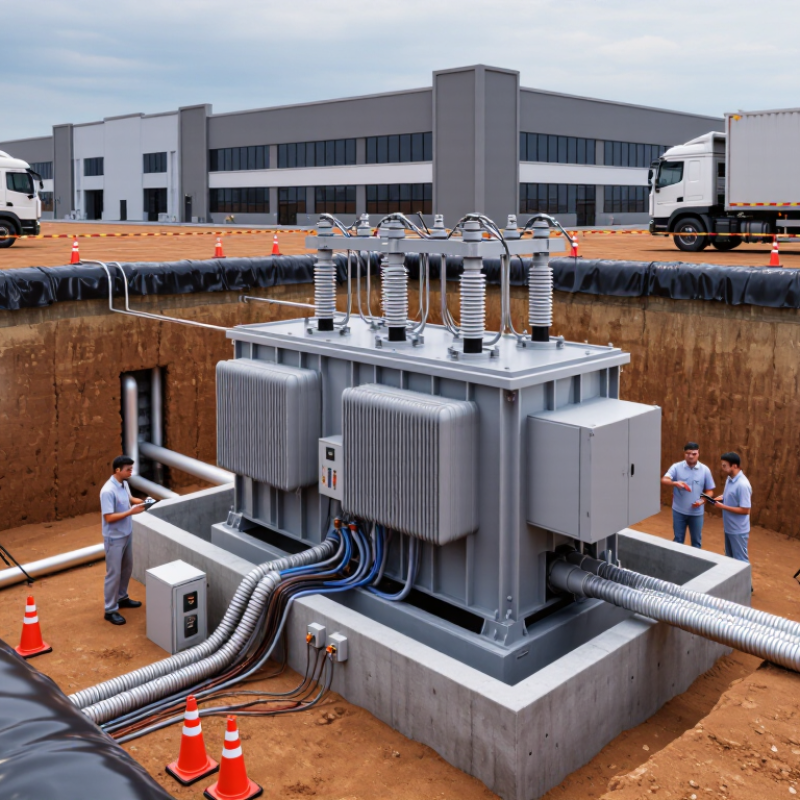
Define the Underground Transformer’s Capacity and Site Requirements
Before selecting an underground distribution transformer, build a load estimate from actual equipment schedules, not building area alone. List motors, HVAC units, lighting, and other major loads. Record their voltage, phase, starting current, and expected operating hours. Then consider demand patterns and reasonable future growth. A 500 kVA estimate may look comfortable on paper, yet simultaneous motor starts can change the picture. Have a qualified electrical engineer verify the calculation against utility requirements.
The site can limit the choice as much as the load. Measure the available footprint and check cable entry, working clearances, ventilation, and access for installation and maintenance. Note drainage, soil conditions, and any history of standing water; a low corner near a loading dock deserves careful review. Confirm the required enclosure rating, grounding arrangement, and primary and secondary connections with the utility. Small details matter. A gate that blocks service access is still a problem, even when the transformer fits.
Document these conditions with site photos and a simple dimensioned plan. Include the expected load, future additions, and any seasonal peaks. This gives suppliers and engineers a clear basis for reviewing capacity and configuration. It is easy to treat early figures as final. They are not. Recheck them when equipment selections or site plans change.
Check Safety Standards, Enclosure Ratings, and Utility Specifications
Buying an underground distribution transformer in 2026 starts with safety, not price. A neat enclosure can still fail.
For pad-mounted or vault installations, verify compliance with IEEE C57.12.34, ANSI C57.12.00, and applicable NEC requirements. These standards address construction, insulation, grounding, clearances, and routine testing. Ask for certified test records, including dielectric, ratio, winding-resistance, and pressure tests. The U.S. Department of Energy’s 2024 Distribution Transformers Technical Support Document estimates that distribution transformers consume roughly 2.5% of national electricity use. Small efficiency losses become expensive across long service lives.
Check the enclosure rating against the actual site. NEMA 3R may suit outdoor rain exposure, while corrosive soil, salt spray, or chemical locations may require a stronger rating. Do not confuse NEMA ratings with IP ratings. They are not interchangeable. Confirm lockable compartments, tamper resistance, drainage, ventilation, and corrosion protection. Underground vaults also need verified fire separation, oil containment, cable bending space, and safe working clearances.
Utility specifications can override general standards. Request the latest approved drawing, fault-current requirement, primary voltage, BIL level, tap arrangement, grounding method, and acceptable fluid type. Confirm whether the utility requires specific bushing positions or inspection windows. One overlooked detail can delay energization. My practical concern is that buyers often approve drawings too quickly. A second review by a qualified engineer is worth the time.
Compare Transformer Designs, Materials, and Supplier Qualifications
Underground distribution transformers face heat, moisture, and limited access, so design choices affect years of service. Compare liquid-filled and dry-type units against the site’s flood exposure, ventilation, load profile, and maintenance plan. Sealed liquid-filled designs can suit vaults, but fluid type and containment deserve close review. Dry-type units avoid insulating liquid, yet require suitable airflow and clearance. Neither option is automatically safer or cheaper.
Materials matter. Ask for winding material, insulation system, tank coating, corrosion protection, and tested loss figures.
That scale makes efficiency worth checking, not just purchase price. Request certified test results for no-load and load losses, plus temperature-rise and impedance data. Small differences can matter over decades. Still, published figures do not replace a site-specific review.
Tips: Check supplier qualifications, not just brochures. Request relevant quality-system certificates, routine test records, dimensional drawings, warranty terms, and references for comparable underground installations. Confirm who handles commissioning and replacement parts. Compare bids using the same voltage, kVA rating, enclosure, accessories, and test requirements. A missing detail can become an expensive surprise. And honestly, even a strong supplier cannot fix an underspecified project.
Evaluate Total Cost, Delivery Terms, Warranty, and Service Support
Buying an underground distribution transformer in 2026 requires more than comparing catalog prices. The real cost includes excavation, vault preparation, lifting equipment, cable accessories, testing, energy losses, and future access. Ask for a five-year ownership estimate, not just a purchase quote. A cheaper unit may need specialized handling or larger ventilation equipment. Those details can change the budget quickly. In one project review, delivery clearance was missed, forcing a costly site adjustment. Small drawings matter.
Delivery terms deserve the same scrutiny as technical ratings. Confirm manufacturing lead time, inspection dates, shipping responsibility, unloading limits, and storage requirements. Put the agreed delivery point in writing. “Ready to ship” can mean very different things. Request progress photos, factory test records, and notification before dispatch. Weather, customs, or incomplete civil work may still cause delays, so maintain a realistic buffer. It feels inefficient. It prevents rushed installation.
Warranty language should cover more than the tank and core. Check duration, excluded conditions, labor coverage, transport costs, and claim evidence. Ask whether field failures receive parts, technician visits, or remote guidance. Service support is measurable through response time, spare-part availability, inspection reports, and emergency contact hours. Require a commissioning checklist and maintenance schedule suited to groundwater, load cycles, and local temperature. Do not accept vague promises. One weakness remains common: buyers often evaluate warranty length but ignore claim procedures. That oversight can turn valid protection into paperwork.
Complete Site Preparation, Installation Planning, and Acceptance Testing
How to Buy Underground Distribution Transformers in 2026: Complete Site Preparation, Installation Planning, and Acceptance Testing
Buying an underground distribution transformer starts with the site, not the nameplate. Confirm load growth, voltage, phase, enclosure rating, and available fault current with the utility and design engineer. The U.S. Department of Energy’s 2024 U.S. Transformers Supply Chain Review reports that distribution-transformer lead times have stretched to as much as 12–30 months. That makes early coordination practical, not excessive. Record the pad dimensions, conduit entry points, cable bend space, drainage path, and access for lifting equipment. A puddle beside the cabinet is a small detail until it becomes a service problem.
Installation plans should show grounding, primary and secondary connections, clearances, and safe switching access. Check soil conditions and finished grades before pouring the pad; a drawing cannot reveal a buried obstruction. Leave room for cable handling and future maintenance. I have seen schedules assume every trench is ready on delivery day. They rarely are. Verify the approved drawings against field measurements, and document any changes before energization.
Acceptance testing should follow the project specification and applicable IEEE and NETA guidance. Review factory test reports, inspect bushings and seals, and confirm nameplate data match the approved submittal. Before energizing, test insulation resistance and winding ratio, verify grounding continuity, and check cable phasing and connections. Record instrument details, readings, ambient conditions, and corrective work. One awkward truth: a clean test sheet does not prove a poor installation is sound, so inspect the actual terminations and site conditions too.
How to Buy Underground Distribution Transformers in 2026 - Complete Site Preparation, Installation Planning, and Acceptance Testing
| Planning area | Information or action to specify | Example planning value or check | Acceptance evidence |
|---|---|---|---|
| Load and capacity | Document present and forecast demand, power factor, load profile, motor starting, and planned expansion. Select capacity with the utility or electrical engineer. | For preliminary screening, a 500 kVA unit at 0.90 power factor corresponds to about 450 kW; actual usable capacity depends on loading conditions and project requirements. | Approved load calculation and coordinated equipment schedule. |
| Electrical ratings | State primary and secondary voltages, phase, frequency, winding configuration, insulation level, impedance, taps, and required fault-duty ratings. | Example only: three-phase, 60 Hz, 13.2 kV primary and 480Y/277 V secondary. Confirm system grounding and available fault current for the actual site. | Nameplate and certified test data match the approved purchase specification. |
| Applicable standards and jurisdiction | Identify the governing utility requirements, electrical code, environmental rules, and applicable transformer standards before issuing the purchase order. | In the United States, commonly relevant documents may include IEEE C57 series standards and applicable Department of Energy efficiency rules. Confirm current editions and local requirements for the project. | Approved submittals and compliance documentation for the specified jurisdiction. |
| Installation environment | Specify whether the unit is pad-mounted, vault-installed, or otherwise enclosed; provide ambient temperature, altitude, flooding exposure, ventilation, and access conditions. | Set the required enclosure, cooling, corrosion protection, and operating limits from the site conditions and equipment design—not from a generic assumption. | Submittal review confirms the enclosure and ratings are suitable for the documented environment. |
| Site preparation and foundation | Verify foundation dimensions, load capacity, level and clear working space, conduit entry locations, cable-bending space, drainage, and separation from other utilities. | Use the approved equipment outline drawing and civil design for dimensions; do not set conduit positions from a general template. | Foundation inspection and dimensional check completed before delivery. |
| Flooding, drainage, and oil containment | Assess flood elevation, surface-water flow, groundwater, stormwater controls, and applicable fluid-containment obligations for liquid-filled equipment. | Set finished elevations and containment measures using site-specific civil and environmental design and the applicable regulations. | Drainage and containment inspection records; required permits or environmental documentation. |
| Cable and protection coordination | Coordinate cable type and size, terminations, grounding, neutral arrangement, protective devices, relay settings, and upstream/downstream fault protection. | Cable ampacity, insulation level, short-circuit withstand, and protective-device settings must be verified for the actual installation and fault study. | Approved one-line diagram, coordination study, and cable schedule. |
| Procurement and delivery planning | Request a complete quotation covering ratings, accessories, drawings, routine tests, warranty, shipping dimensions and weight, lifting points, and delivery terms. | Confirm route restrictions, crane or lifting capacity, unloading area, storage conditions, and schedule before release for shipment. | Approved drawings, delivery inspection record, and verified shipping documents. |
| Factory documentation | Specify required routine test reports, nameplate data, wiring diagrams, instruction manuals, fluid information where applicable, and accessory lists. | Review submitted test results against the ordered ratings and the specified standard; additional tests should be stated in the contract. | Complete, traceable documentation accepted before energization. |
| Receiving inspection | Inspect for shipping damage, leaks, displaced parts, damaged bushings, missing accessories, and discrepancies between the delivered unit and approved drawings. | Photograph and record any damage or shortage before installation; follow the handling and storage instructions supplied for the unit. | Signed receiving checklist and closed-out nonconformance reports, if any. |
| Pre-energization checks | Qualified personnel verify grounding and bonding, connections, clearances, phase identification, tap position, fluid level or pressure indicators where applicable, and protective-device operation. | Perform insulation-resistance, winding-resistance, turns-ratio, and other field tests only as specified by the engineer, manufacturer instructions, and applicable procedures. | Recorded test results reviewed against project acceptance criteria; all safety covers and interlocks checked. |
| Commissioning and handover | Complete authorized switching, phase-rotation and voltage checks, load monitoring, labeling, and operator handover under an approved commissioning plan. | Energization should proceed only after required inspections, test reviews, permits, and utility approvals are complete. | Commissioning report, final as-built documents, operating instructions, and maintenance schedule. |
Note: Example ratings and checks are for planning purposes only. Final equipment selection, installation, testing, and acceptance criteria must be established by qualified electrical professionals in accordance with the project design, utility requirements, manufacturer instructions, and applicable codes and standards.
FAQS
Start with safety, not price. Verify construction, insulation, grounding, clearances, and routine testing. Request certified test records. These should include dielectric, ratio, winding-resistance, and pressure tests. A neat enclosure can still fail.
Match the enclosure to the actual site conditions. Consider rain, flooding, corrosive soil, salt spray, and nearby chemicals. Confirm lockable compartments, drainage, ventilation, tamper resistance, and corrosion protection. Ratings are not interchangeable.
Check fire separation, liquid containment, cable bending space, and safe working clearances. Confirm access for lifting and future maintenance. Review ventilation carefully. Limited airflow can create heat problems.
Liquid-filled designs may suit sealed vaults with proper containment. Dry-type units avoid insulating liquid but need adequate airflow and clearance. Neither design is automatically safer or cheaper. Flood exposure and maintenance access should guide the choice.
Request the latest approved drawing and utility requirements. Confirm fault current, primary voltage, insulation level, tap arrangement, grounding method, and fluid type. Check bushing positions and inspection windows. One missed detail can delay energization.
Request certified no-load and load-loss results. Also review temperature rise and impedance data. Small losses can become expensive over decades. Purchase price is only part of the cost. Site conditions still matter.
Request quality certificates, routine test records, dimensional drawings, warranty terms, and comparable project references. Confirm commissioning support and spare-part availability. Compare bids using identical ratings and accessories. Brochures are not enough.
Include excavation, vault preparation, lifting equipment, cable accessories, testing, energy losses, and future access. Ask for a five-year ownership estimate. A cheaper unit may require extra ventilation or specialized handling. The budget can change quickly.
Confirm manufacturing time, inspection dates, shipping responsibility, unloading limits, and storage conditions. Put the delivery point in writing. Check warranty duration, exclusions, labor coverage, transport costs, and claim evidence. Long coverage means little without a workable claim process.
Conclusion
Buying an Underground distribution transformer in 2026 requires a careful review of both technical requirements and long-term operating conditions. Start by defining the required capacity, voltage, load profile, installation depth, available space, drainage, ventilation, and environmental conditions at the site. Confirm that the selected unit meets applicable safety standards, enclosure and corrosion-resistance ratings, utility specifications, and protection requirements for underground use. Comparing transformer designs, insulation systems, materials, efficiency, maintenance access, and supplier qualifications can help ensure dependable performance and a suitable service life.
Cost evaluation should include more than the purchase price. Consider transportation, civil works, installation, testing, energy losses, delivery schedules, payment terms, warranty coverage, spare parts, and technical support. Before delivery, complete site preparation, cable routing, grounding, drainage, lifting access, and safety planning. A structured acceptance process should verify insulation resistance, winding condition, connections, protective devices, grounding continuity, and operational performance. This approach reduces installation risks and supports safe, reliable distribution throughout the transformer’s expected lifetime.

Blog Tags: