Distribution Transformer Technical Articles, Industry Insights & Grid Updates — SOTEK Group
Transformer Insights &
Technical Articles
Discover in-depth engineering updates, technical specifications, and global power grid solutions from SOTEK.
Cast Resin &
Dry-Type Technology
Learn about advanced insulation classes, fire safety standards, and indoor substation design guidelines.
Padmount &
Substation Engineering
Explore compartmentalized padmount transformer configurations engineered for global power utilities.
7 Tips for Choosing an Amorphous Alloy Core Transformer?
Table of Contents
- Define kVA, voltage, frequency, and a 50/60 Hz flux density near 1.35 T
- Compare core loss: amorphous alloys can reduce no-load loss by 60–70%
- Verify load loss, impedance, efficiency, and a 65 K temperature-rise limit
- Assess BIL, insulation class, noise, and transformer inrush-current behavior
- Confirm IEC 60076 or IEEE C57 compliance, warranty, and life-cycle payback
- FAQS
- Conclusion
- Related Posts
Choosing an Amorphous alloy core transformer is not simply a matter of comparing prices or catalog ratings. The right choice affects energy losses, operating temperature, noise, service life, and long-term maintenance costs. In real installations, a transformer may sit beside sensitive equipment, run continuously in a warm electrical room, or face frequent load changes. These details matter.
This guide presents seven practical tips for evaluating an amorphous alloy core transformer with greater confidence. It considers core loss, efficiency at actual loads, rated capacity, insulation quality, cooling design, acoustic performance, and manufacturer support. Certified test data should guide the decision, not vague efficiency claims. Ask how results were measured. Small details reveal much.
Experience also shows that the most efficient model is not always the best fit. An oversized unit may waste money and space, while an undersized unit can operate under unnecessary stress. Installation conditions, local standards, voltage requirements, and future expansion should be reviewed together. Do not overlook documentation.
Reliable manufacturers should provide traceable specifications, routine test reports, warranty terms, and clear maintenance guidance. Independent certification can strengthen confidence, although certification alone does not guarantee perfect performance in every site. That point deserves careful thought. By examining each factor with practical questions, engineers and facility owners can reduce avoidable risks and select equipment that performs predictably over many years. However, no checklist replaces a qualified electrical assessment, especially where load profiles remain uncertain or site conditions are poorly documented.
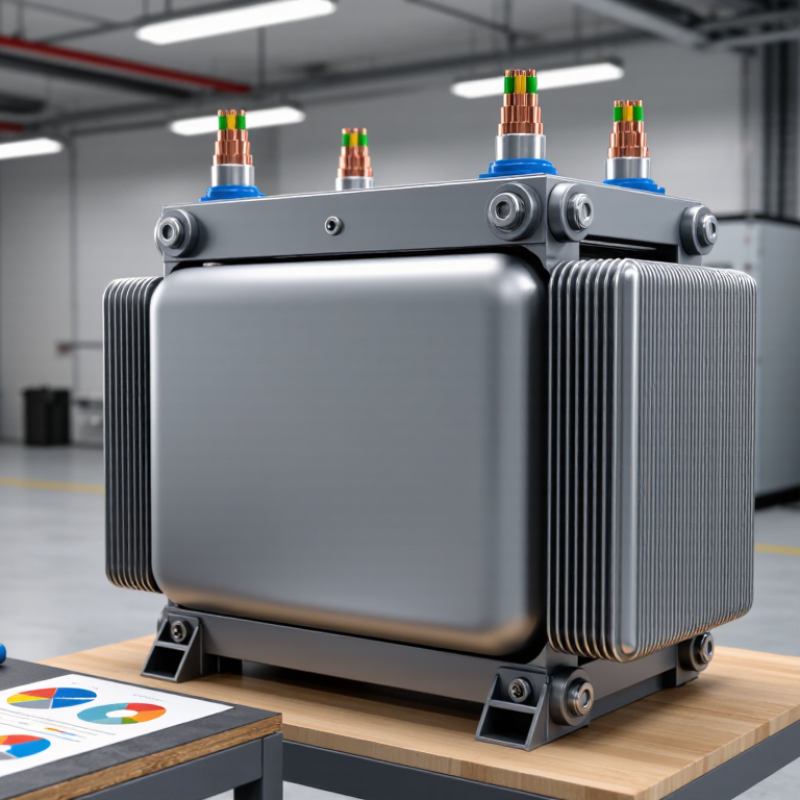
Define kVA, voltage, frequency, and a 50/60 Hz flux density near 1.35 T
Choosing an amorphous alloy core transformer begins with four operating facts: kVA, voltage, frequency, and flux density. Define the load clearly. For single-phase systems, kVA equals volts multiplied by amps, divided by 1,000. Three-phase systems require √3 in the calculation. Include starting current, future load growth, and actual power factor. A neat spreadsheet can still mislead.
Confirm primary and secondary voltages, tap range, grounding method, and insulation requirements. Frequency matters because core flux follows B = V/(4.44fNA).
At 50 or 60 Hz, a design near 1.35 T can balance compact size and low no-load loss, but it is not a universal target. Core grade, waveform distortion, temperature, and manufacturing tolerance can shift the safe limit.
I would request test data at rated voltage and frequency, not rely only on catalog values.
The U.S. Department of Energy’s distribution-transformer technical analysis reports that amorphous-core designs can reduce no-load losses by roughly 60% compared with conventional silicon-steel designs. That benefit matters most when equipment remains energized for long periods. IEC 60076 testing principles also support checking losses, temperature rise, impedance, and dielectric performance under defined conditions.
Ask for certified results. Then compare watts lost at 50 Hz and 60 Hz separately. This detail is easy to overlook. A 1.35 T estimate may look efficient, yet a distorted supply can increase audible noise and heating. Recheck the duty cycle before approving the transformer.
Compare core loss: amorphous alloys can reduce no-load loss by 60–70%
Choosing an amorphous alloy core starts with measured core loss, not brochure claims. Under comparable flux density, frequency, and temperature, the material can cut no-load loss by 60–70% versus conventional silicon steel. That difference matters when a transformer remains energized for long hours. A 500 kVA unit may carry little load overnight, yet its core keeps consuming energy. Ask for test data at the intended operating point. Check watts per kilogram, total no-load watts, and measurement tolerance. Small errors become expensive across many units.
Review seven practical points before approving the design: loss data, rated flux density, audible noise, inrush current, mechanical support, temperature rise, and service access. Amorphous ribbon is thin and sensitive to clamping pressure. Poor assembly may damage its magnetic performance. Inspect the core window, joints, and winding alignment during factory checks. Compare losses at 50 and 60 Hz if the installation may change. Never assume a laboratory figure transfers directly to a complete transformer. My first estimate ignored winding losses. That shortcut was wrong.
Look beyond purchase price. Lower no-load loss can improve lifetime energy performance, especially in networks with light average loading. Verify the calculation using local electricity rates and annual energized hours. Ask how the core behaves after transport, vibration, and repeated energization. Inrush may require suitable protection settings. Noise can also rise if the structure is poorly designed. Measure the finished unit. Request routine test records and traceable instruments. A credible supplier should explain deviations, not hide them. The 60–70% reduction is valuable only when the comparison is fair and the finished transformer preserves it.
Verify load loss, impedance, efficiency, and a 65 K temperature-rise limit
7 Tips for Choosing an Amorphous Alloy Core Transformer
Tip 1: Verify the test basis before trusting efficiency claims. The U.S. Department of Energy’s 2016 technical support document reports that amorphous cores can reduce no-load losses by roughly 60% compared with conventional electrical steel. That figure concerns core loss, not total operating loss. Ask for certified results under IEC 60076 or IEEE C57.12.90 conditions.
Tip 2: Check load loss at the actual rated temperature.
Tip 3: Review impedance, not only efficiency. A transformer may show excellent efficiency but create excessive voltage drop during motor starting. Compare guaranteed load loss, no-load loss, impedance percentage, and power factor at 25°C and the specified reference temperature. I would not accept a single laboratory number. Field loading is rarely so neat. EU Ecodesign studies also identify load profile and oversizing as major influences on lifetime energy performance.
Tip 4: Require a temperature-rise limit of 65 K. Confirm whether the value applies to top oil, average winding, or both. A 65 K limit can support insulation life, but ambient temperature and altitude still matter.
Tip 5: Inspect the efficiency curve at 25%, 50%, 75%, and 100% load. Distribution transformers often spend long periods below full load, making no-load loss especially important.
Tip 6: Request routine and type-test records.
Tip 7: Check core clamping, sound level, enclosure, and maintenance access. Small omissions become expensive later. Industry data from the U.S. DOE and international efficiency studies support lower lifetime losses, but only when the selected impedance and loading match the site.
Assess BIL, insulation class, noise, and transformer inrush-current behavior
7 Tips for Choosing an Amorphous Alloy Core Transformer
Tip 1: Verify the basic insulation level, or BIL. IEC 60076-3 requires insulation coordination with system voltage, lightning exposure, and switching surges. Do not accept a generic BIL value. Confirm the impulse test record and installation altitude.
Tip 2: Check the insulation class, temperature rise, and ageing margin. A transformer may pass a factory test yet struggle in a hot, dusty enclosure. Ask for thermal calculations, partial-discharge data, and routine-test results. Small details matter.
Tip 3: Compare no-load losses, not only full-load efficiency. The U.S. Department of Energy’s 2016 technical-support analysis found amorphous cores can reduce no-load losses by roughly 60–70% against conventional designs. However, actual savings depend on loading, voltage quality, and operating hours.
Tip 4: Treat noise as a site issue. IEC 60076-10 defines sound-measurement methods. Amorphous cores may create higher magnetostriction-related noise at certain flux levels. Request octave-band data, not only one overall decibel figure. I have seen “quiet” units sound unpleasant beside offices.
Tip 5: Study inrush-current behavior before protection design. IEEE transformer test practices support verification, but inrush remains application-dependent. Peak current commonly reaches five to twelve times rated current, and severe cases can exceed that range. Ask for energization simulations, residual-flux assumptions, relay curves, and controlled-switching options.
Tip 6: Inspect short-circuit strength and mechanical bracing. A low-loss core does not guarantee strong windings. Review fault-duty calculations and documented routine tests.
Tip 7: Leave room for uncertainty. Field voltage, grounding, and switching angle can change results. A modest factory dataset may not predict every installation. Require measurable acceptance criteria before purchase.
7 Tips for Choosing an Amorphous Alloy Core Transformer
Assess BIL, insulation class, noise, and transformer inrush-current behavior
Representative IEEE medium-voltage selection point for a 15 kV class transformer.
Common thermal insulation-system rating; confirm the complete winding and enclosure design.
A practical low-noise design target at 1 m; final limits depend on rating and installation.
Typical design range for energization; system impedance, residual flux, and switching angle affect the result.
The waveform shows a representative asymmetrical energization transient that decays toward 1.0 per unit current. Before selecting an amorphous alloy core transformer, verify the applicable BIL requirement, insulation temperature class, measured sound-power or sound-pressure limit, and protection equipment capability against the expected inrush current.
Confirm IEC 60076 or IEEE C57 compliance, warranty, and life-cycle payback
Choosing an amorphous alloy core transformer requires more than comparing purchase prices. Ask the supplier to confirm compliance with IEC 60076 or IEEE C57 requirements. Request the exact standard parts and applicable test reports. A certificate alone may not show the full design history. Review routine, type, and temperature-rise testing. Check the stated no-load and load losses at your expected voltage and frequency.
Inspect the warranty in practical terms. How many years does it cover? Does it include the core, windings, insulation, and accessories? Clarify exclusions, response times, and repair arrangements. Keep the warranty beside the installation and maintenance schedule. Small details matter. I would also ask for references from installations with similar loading, climate, and duty cycles. Field experience can reveal noise, moisture, or connection problems that laboratory documents cannot.
Calculate life-cycle payback using your real load profile, not an idealized brochure figure. Include annual operating hours, electricity rates, peak demand charges, maintenance, and expected service life. Amorphous cores can reduce no-load losses, especially when energized continuously. However, savings vary with loading and local tariffs. My own early estimates are never perfect; seasonal demand often changes the result. Use measured site data where possible, then compare purchase cost, projected losses, warranty support, and disposal requirements in one transparent worksheet.
FAQS
Define the kVA rating, primary voltage, secondary voltage, frequency, and expected load. Include starting current, future growth, power factor, grounding, and tap requirements. A clean spreadsheet can still mislead.
For single-phase systems, multiply volts by amps and divide by 1,000. For three-phase systems, multiply volts, amps, and √3, then divide by 1,000. Use actual operating conditions, not guesses.
No. A design near 1.35 T may balance size and no-load loss. Core grade, waveform distortion, temperature, and manufacturing tolerance can change the safe limit. Request test data at rated voltage and frequency.
No-load losses continue while the transformer remains energized, even with little load. Amorphous cores may reduce these losses by roughly 60–70% compared with conventional designs. Actual savings depend on voltage quality, loading, and operating hours.
Confirm the basic insulation level, insulation class, temperature rise, and ageing margin. Review impulse-test records, thermal calculations, partial-discharge data, and routine-test results. Altitude matters too.
Ask for octave-band sound data, not only one overall decibel value. Certain flux levels can increase magnetostriction-related noise. A unit labeled quiet may still sound harsh beside offices.
Inrush current commonly reaches five to twelve times rated current. Severe cases may exceed that range. Request energization simulations, residual-flux assumptions, relay curves, and switching details.
No. Low core loss does not prove that windings can withstand fault forces. Review fault-duty calculations, mechanical bracing, and documented routine tests. The core is only one part.
Compare measured losses at 50 Hz and 60 Hz separately. Check temperature rise, impedance, dielectric performance, noise, and inrush behavior. Field voltage and switching angle may change the results. I would require clear acceptance limits before purchase.
Conclusion
Choosing an Amorphous alloy core transformer requires more than comparing purchase prices. Begin by defining the required kVA rating, primary and secondary voltages, operating frequency, and a suitable 50/60 Hz flux density, typically near 1.35 T. Pay close attention to no-load losses, as amorphous alloy cores can reduce them by approximately 60–70% compared with conventional core materials. However, also evaluate load loss, impedance, overall efficiency, and whether the design maintains a temperature rise of no more than 65 K under rated conditions.
A complete assessment should include basic insulation level (BIL), insulation class, expected operating noise, and inrush-current behavior during energization. Confirm that the transformer complies with applicable IEC 60076 or IEEE C57 requirements and that testing documentation is available. Finally, review the warranty, maintenance expectations, service life, and projected life-cycle payback. A well-selected transformer should balance energy savings, reliable operation, safety, and long-term economic value rather than focusing only on initial cost.

Blog Tags: