Distribution Transformer Technical Articles, Industry Insights & Grid Updates — SOTEK Group

Engineering Knowledge · IEC 60076 & IEEE C57

Transformer Insights &
Technical Articles

Discover in-depth engineering updates, technical specifications, and global power grid solutions from SOTEK.

Grid Innovation · High Reliability

Cast Resin &
Dry-Type Technology

Learn about advanced insulation classes, fire safety standards, and indoor substation design guidelines.

Underground Distribution · Utility Standards

Padmount &
Substation Engineering

Explore compartmentalized padmount transformer configurations engineered for global power utilities.

0%

China’s single-phase pole-mounted transformer market serves homes, small businesses, farms, and remote distribution lines. Choosing a supplier takes more than comparing prices. Buyers need to examine rated capacity, voltage options, insulation, corrosion protection, and documented test results. A compact unit may sit above a narrow country road, exposed to rain, dust, and summer heat. Details matter.

Distribution engineer and author Thomas A. Short has written extensively about electric power distribution. A practical paraphrase of his engineering approach is: “Equipment must fit the network conditions and the way people operate it.” This is a paraphrase, not a verbatim quotation. It points to a useful question: can a supplier support the transformer after delivery, with clear specifications, spare parts, and responsive technical service?

This guide looks at China’s top single-phase pole-mounted transformer suppliers through those practical measures. It considers manufacturing capability, quality assurance, customization, export experience, and communication. Buyers should also ask how suppliers handle routine maintenance and provide installation documentation. Ask specific questions. A catalog rarely tells the whole story.

No supplier is right for every project. One may offer attractive lead times but limited customization; another may provide detailed engineering support at a higher cost. Those trade-offs deserve a closer look, not a quick ranking. The goal is to help readers compare options with evidence, identify gaps, and select a Single-phase pole-mounted transformer supplier suited to the actual site and load.
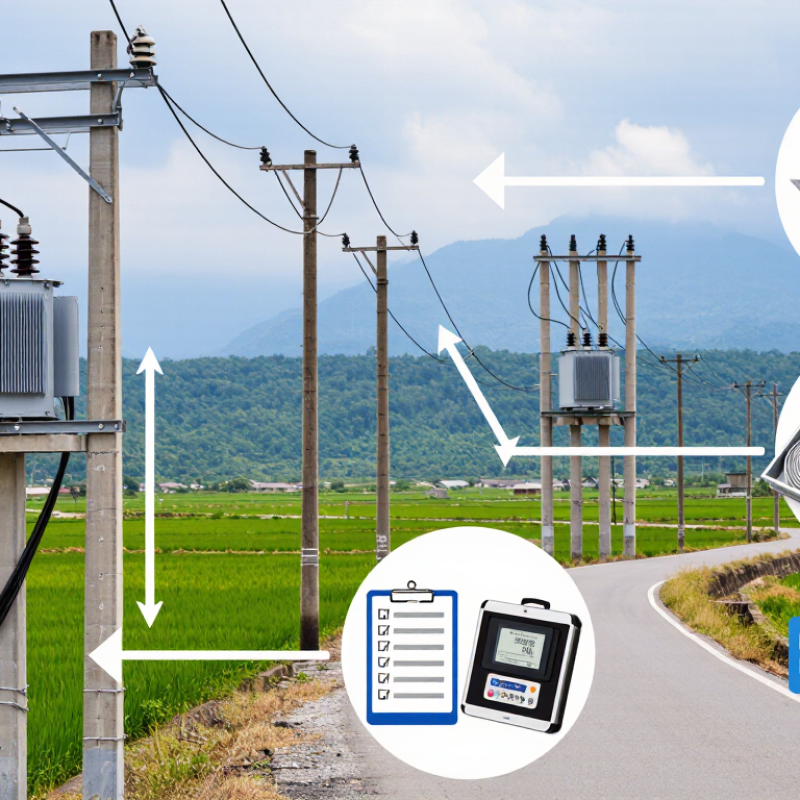
China Top Single Phase Pole Mounted Transformer Suppliers

Single-Phase Pole-Mounted Transformers in China’s 10 kV/0.4 kV Networks

In China’s 10 kV/0.4 kV distribution networks, single-phase pole-mounted transformers bring supply closer to homes, workshops, and scattered rural loads. Their compact installation can reduce low-voltage line length. That matters where customers are spread across long roads or hillsides.

The primary connection must match the local 10 kV network design and grounding arrangement; these details are not interchangeable.

On the secondary side, 0.4 kV commonly describes a three-phase system, while a single-phase customer may receive about 230 V between phase and neutral. Actual connections depend on the installation.

A supplier should confirm rated capacity, tap range, insulation level, temperature-rise limits, and applicable test records before production. Ask how the unit is checked for winding resistance, ratio, and dielectric strength. Paperwork helps, but it cannot replace careful inspection.

Pole conditions deserve attention too. A transformer’s weight, mounting hardware, clearances, and cable entry must suit the actual pole and site. In humid or coastal areas, sealing and corrosion protection can affect service life.

Field experience shows that underestimated peak loads cause trouble, even when average demand looks modest. I would not size a unit from a single bill alone. Load measurements and local operating records provide a sounder basis.

Small details matter.

Common Ratings, Voltages, and Construction Features of Pole-Mounted Units

China Top Single Phase Pole Mounted Transformer Suppliers

Common Ratings, Voltages, and Construction Features of Pole-Mounted Units

Pole-mounted single-phase transformers commonly serve homes, farms, and small commercial loads. Typical ratings may range from 5 to 50 kVA, though local utility practices differ. A 25 kVA unit can suit a modest rural service, but actual demand matters more than a rule of thumb. Common primary voltages include 7.2, 12.47, and 13.2 kV; secondary service is often 120/240 V in North American systems. Confirm the local grid voltage before comparing specifications.

Most units use an oil-filled steel tank, an internal core and coil assembly, and external bushings for incoming and outgoing conductors. Mounting brackets secure the tank to a pole. Some designs include protective devices, while others rely on separate utility equipment. Details vary by network and installation. Labels can be hard to read after years outdoors, so clear records matter.

Tips: Check kVA, primary and secondary voltage, frequency, insulation type, and connection details on the nameplate. Ask a qualified utility or engineer to verify compatibility. A catalog match can still be wrong.

IEC 60076 and GB/T 1094: Key Transformer Standards for Buyers

For buyers comparing China’s single-phase pole-mounted transformer suppliers, IEC 60076 and GB/T 1094 provide a practical basis for checking design and test claims. IEC 60076 is a series, not one single checklist. GB/T 1094 also consists of multiple parts, and its stated edition may not match the IEC edition clause by clause. Check the exact standard numbers and years in the quotation.

Details matter. Review the rated voltage, frequency, insulation level, temperature rise, impedance, and declared losses. For a pole-mounted unit, also confirm the connection arrangement, bushing clearances, mounting details, and suitability for the installation environment. Ask which routine tests are performed on each transformer and request sample factory test records. Type or special tests may apply only when specified, so clarify their scope before comparing prices. A certificate alone may not show whether the tested configuration matches your order.

One detail is easy to miss: standards compliance does not define every site condition. State ambient temperature, altitude, expected loading, and any unusual operating needs in the technical schedule. Then check that the supplier’s drawings and test documents use the same ratings and standard editions. I would not treat matching labels as proof of equal performance; document review takes time, and a rushed comparison can overlook important differences.

China Top Single Phase Pole Mounted Transformer Suppliers - IEC 60076 and GB/T 1094: Key Transformer Standards for Buyers

Review Area Relevant IEC 60076 Part Related GB/T 1094 Part What Buyers Should Verify
General requirements IEC 60076-1 — General GB/T 1094.1 — General Confirm rated power, frequency, winding arrangement, rated voltages, tap range, service conditions, and the standards editions named in the purchase specification.
Temperature rise IEC 60076-2 — Temperature rise for liquid-immersed transformers GB/T 1094.2 — Temperature rise Check the specified temperature-rise limits, cooling method, test conditions, and supporting temperature-rise test records.
Insulation and dielectric tests IEC 60076-3 — Insulation levels, dielectric tests, and external clearances in air GB/T 1094.3 — Insulation levels, dielectric tests, and external clearances in air Match insulation levels and test requirements to the system voltages, grounding method, and purchaser’s specified lightning-impulse and power-frequency tests.
Short-circuit withstand IEC 60076-5 — Ability to withstand short circuit GB/T 1094.5 — Ability to withstand short circuit Review the specified short-circuit conditions, system fault level, duration, and evidence of design verification or testing where required.
Loading and operating temperatures IEC 60076-7 — Loading guide for oil-immersed power transformers GB/T 1094.7 — Loading guide for oil-immersed power transformers Consider ambient temperature, load profile, top-oil and winding hot-spot temperatures, and the intended operating life when assessing overload capability.
Sound levels IEC 60076-10 — Determination of sound levels GB/T 1094.10 — Determination of sound levels Specify any required sound limit and measurement conditions, and request test results when noise performance is part of the project criteria.
Pole-mounted installation Use applicable IEC 60076 parts together with the project specification Use applicable GB/T 1094 parts together with local utility requirements Separately confirm mounting arrangement, mass and dimensions, terminal configuration, clearances, protection accessories, environmental suitability, and local connection requirements.

Note: The listed standards address transformer design, testing, or operation topics; they do not by themselves establish every pole-mounting or utility-specific requirement. Confirm the applicable editions, amendments, and project requirements before procurement.

How to Evaluate Chinese Suppliers by Efficiency, Testing, and Certifications

China Top Single Phase Pole Mounted Transformer Suppliers

When evaluating Chinese suppliers, request measured no-load and load-loss figures, not only an efficiency claim. Ask for the test voltage, frequency, winding temperature, and measurement uncertainty. These details make quotations comparable. DOE’s 2016 distribution-transformer efficiency rule projected about 3.6 quadrillion Btu in cumulative energy savings over 30 years. It is a useful reminder: small loss differences matter across years of continuous service, though the U.S. rule is not a substitute for your local specification. Numbers matter.

Review routine test reports against IEC 60076 requirements, then confirm whether type tests were completed on the same design and rating. Ask whether an independent laboratory accredited to ISO/IEC 17025 performed or witnessed key tests. Check insulation, temperature rise, impedance, and dielectric results. A certificate is not the transformer. ISO 9001 concerns quality-management systems; it does not prove a particular unit meets its loss limits. Verify certificate scope, validity, and destination-market requirements directly with the issuing body. Paperwork can look perfect, yet a missing test condition may make the result hard to judge. That detail is easy to overlook. Request a serial-number-linked report, inspect the nameplate and bushings, and compare promised delivery tests with your purchase specification.

Comparing Supplier Capacity, Export Experience, and After-Sales Support

China Top Single Phase Pole Mounted Transformer Suppliers

Comparing suppliers requires more than checking annual production figures. The International Energy Agency’s 2023 report, Electricity Grids and Secure Energy Transitions, says annual grid investment needs to exceed US$600 billion by 2030. That wider demand makes verified factory capacity and realistic delivery schedules important. Ask for recent production records, routine test reports, and lead times for the exact voltage and rating you need. A large stated capacity is not proof that your order can ship on time.

Export experience matters, too. Request examples of shipments to markets with similar climates, transport conditions, and technical requirements. Check whether the supplier can provide clear packing lists, test documentation, and responsive answers during installation planning. The U.S. Department of Energy’s 2022 supply-chain review reported distribution-transformer lead times rising from 3–6 months to 12–30 months. This is a U.S. market signal, not a universal benchmark. Still, it shows why delivery promises deserve careful checking.

After-sales support becomes tangible when a field crew finds a leaking fitting or unclear wiring diagram. Ask who handles technical questions, how quickly they respond, and whether spare parts are available. Confirm warranty terms in writing. A polished brochure helps little at a remote pole site. I would also compare service commitments against actual project records; those records may be incomplete, and that uncertainty should be acknowledged rather than ignored.

FAQS

What does a single-phase pole-mounted transformer do in a 10 kV/0.4 kV network?

It brings power closer to homes, workshops, and scattered rural loads. Shorter low-voltage lines can help along long roads or hillsides.

Does a 0.4 kV secondary mean every customer receives 400 V?

No. The secondary may be a three-phase system, while a single-phase customer may receive about 230 V between phase and neutral. Actual connections depend on the installation.

What information should be confirmed before ordering a transformer?

Confirm rated capacity, tap range, insulation level, temperature-rise limits, and required test records. The primary connection must also suit local network grounding.

How should transformer capacity be selected?

Use load measurements and local operating records, including peak demand. One electricity bill is not enough. I would not size a unit from averages alone.

What details matter when mounting a transformer on a pole?

Check the unit’s weight, mounting hardware, clearances, and cable entry against the actual pole and site. Small details matter.

Which test results should a supplier provide?

Request measured no-load and load-loss figures, with test voltage, frequency, winding temperature, and measurement uncertainty. Ask for winding resistance, ratio, and dielectric test results too.

How can test reports and certificates be checked?

Compare routine test reports with the purchase specification, and confirm whether type tests match the same design and rating. Check certificate scope and validity with the issuing body.

What should be inspected before delivery?

Request reports linked to the unit’s serial number. Inspect the nameplate and bushings, then compare promised delivery tests with the purchase specification. Paperwork alone is not enough.

Do humid or coastal sites need special attention?

Yes. Sealing and corrosion protection can affect service life in humid or coastal areas. A neat specification may still miss a site detail.

Conclusion

This overview explains the role of the Single-phase pole-mounted transformer in China’s 10 kV/0.4 kV distribution networks, where it helps supply low-voltage power to rural areas, residential communities, and other localized loads. It introduces common capacity ratings, primary and secondary voltages, and typical construction features, including pole-mounting arrangements, cooling methods, insulation systems, and protective components. Buyers can use these details to compare units according to network conditions, expected demand, installation requirements, and operating environment.

The article also outlines how IEC 60076 and GB/T 1094 provide reference points for transformer design, performance, and testing. When evaluating Chinese suppliers, buyers should review efficiency data, routine and type-test documentation, relevant certifications, manufacturing capacity, and quality-control procedures. Export experience, delivery reliability, technical communication, warranty terms, spare-parts availability, and after-sales support can further distinguish suppliers. A structured assessment of these factors helps buyers select equipment and a supplier suited to both project requirements and long-term service needs.

Ethan

Ethan

Ethan is a dedicated marketing professional with a deep understanding of the company’s products, customers, and evolving market needs. Through a combination of industry knowledge, analytical thinking, and clear communication, he helps present complex product information in a practical and engaging......