Distribution Transformer Technical Articles, Industry Insights & Grid Updates — SOTEK Group

Engineering Knowledge · IEC 60076 & IEEE C57

Transformer Insights &
Technical Articles

Discover in-depth engineering updates, technical specifications, and global power grid solutions from SOTEK.

Grid Innovation · High Reliability

Cast Resin &
Dry-Type Technology

Learn about advanced insulation classes, fire safety standards, and indoor substation design guidelines.

Underground Distribution · Utility Standards

Padmount &
Substation Engineering

Explore compartmentalized padmount transformer configurations engineered for global power utilities.

0%

Choosing the right distribution equipment can determine whether a global project operates smoothly or faces costly delays. A Padmount transformer offers a practical solution for many commercial, industrial, and renewable energy installations. Its enclosed, ground-level design supports safer placement near buildings, roads, and remote facilities. This arrangement can reduce overhead wiring and simplify visual integration.

Project teams often value pad-mounted units for their compact footprint and flexible installation options. A properly specified Padmount transformer can manage changing loads, outdoor exposure, and demanding operating schedules. However, equipment selection should follow verified calculations, local grid requirements, climate data, and maintenance plans. A unit suitable for a coastal solar site may not suit a cold inland factory. Small details matter.

Experience shows that global projects rarely succeed through standard specifications alone. Engineers must review voltage levels, cooling methods, enclosure ratings, access requirements, and spare-parts availability. Supplier documentation and testing records also deserve careful attention. Reliability begins before manufacturing.

This choice is not automatically perfect. Site access, vandalism risks, flooding, and future capacity growth can change the decision. A thoughtful evaluation should compare lifecycle cost, installation time, service support, and expected performance. Field conditions may reveal weaknesses that a spreadsheet misses. That deserves honest review.

With qualified engineering support and dependable manufacturing controls, a Padmount transformer can provide stable, efficient power distribution across diverse project environments. The strongest approach balances proven design with site-specific judgment. Global does not mean identical.
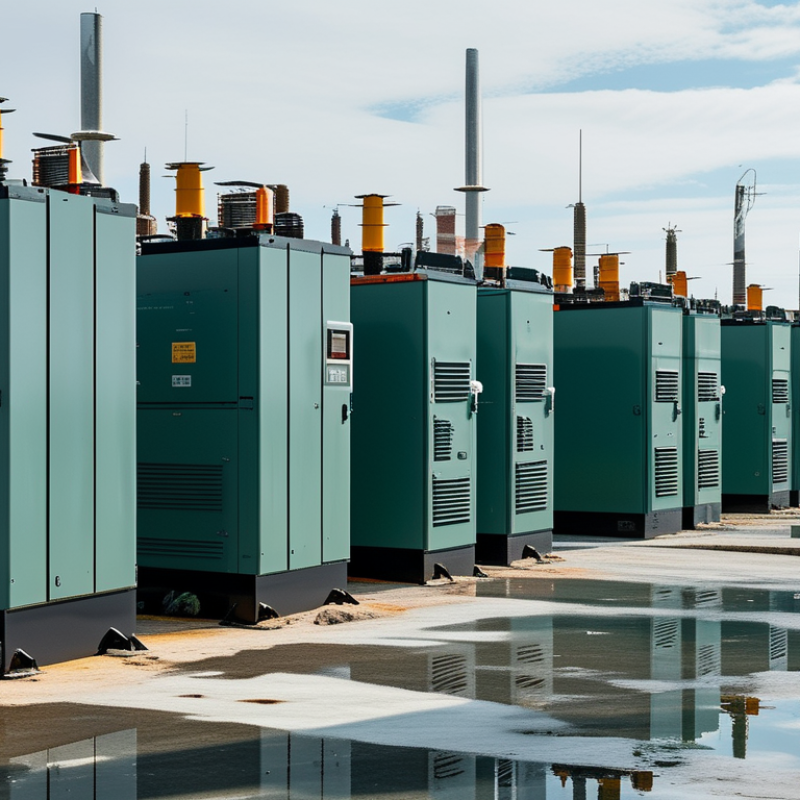
Why Choose a Padmount Transformer for Global Projects?

Padmount Transformers: Definition, Structure, and Operating Principles

Why Choose a Padmount Transformer for Global Projects?

Padmount Transformers: Definition, Structure, and Operating Principles

A padmount transformer is a ground-level electrical unit that reduces medium voltage for local distribution. It commonly serves homes, commercial buildings, construction sites, and small industrial facilities. The enclosure protects energized components from weather, dust, and accidental contact. Compact and quiet, it fits beside roads, parking areas, and landscaped zones. This placement can reduce the need for a separate indoor transformer room.

Its structure usually includes a steel cabinet, high-voltage bushings, low-voltage terminals, a core, and copper or aluminum windings. Mineral oil or another approved insulating fluid may remove heat and strengthen electrical insulation. Some designs use dry-type insulation instead. Internal switches, fuses, and grounding points support controlled maintenance and fault protection. Engineers must confirm cable space, ventilation, drainage, and access before installation. A small site can still demand careful planning.

The operating principle is straightforward. Alternating current enters the primary winding and creates a changing magnetic field. That field induces a lower voltage in the secondary winding. The turns ratio determines the voltage change. During commissioning, technicians check phase sequence, insulation resistance, grounding, oil condition, and connections. Field experience shows that poor drainage can damage an otherwise sound installation. No design is perfect. Climate, load growth, and local standards may alter the final specification. Proper records and scheduled inspections help keep performance predictable across different project conditions.

Why Choose a Padmount Transformer for Global Projects?

Padmount transformers are enclosed, ground-level distribution transformers designed for installation in public or industrial areas without a dedicated transformer room. The chart presents common nominal secondary line-to-line voltage configurations used in distribution systems. Actual ratings, frequency, phase arrangement, cooling method, and enclosure requirements should be selected according to local grid standards and project specifications.

Key Advantages for Utility, Industrial, and Renewable Energy Projects

Why Choose a Padmount Transformer for Global Projects?

Key Advantages for Utility, Industrial, and Renewable Energy Projects

Padmount transformers support compact, reliable power distribution in utility projects. Their grounded, lockable enclosures protect equipment from weather and unauthorized access. They also work well with underground cables, reducing visual impact in residential and commercial areas. For industrial sites, careful sizing supports motors, process equipment, and changing production loads.

Renewable energy projects benefit from flexible voltage conversion near solar arrays, battery systems, and wind facilities. A padmount design can shorten cable runs and reduce installation space. In hot, humid, dusty, or coastal regions, enclosure materials and corrosion protection require close review. Local standards also matter. Voltage, frequency, fault levels, and maintenance access can differ widely between countries. A mistake I have seen is choosing by capacity alone. Future load growth and harmonic effects deserve equal attention.

Tips: Confirm site conditions before selecting the enclosure. Check clearance, drainage, grounding, and lifting access. Ask for verified test data and complete technical documents. Do not treat a standard design as automatically suitable worldwide. Even a small detail, such as door orientation, can affect safe maintenance. Weather assumptions may also be wrong. Recheck them with local engineers and installation teams.

How Safety, Reliability, and Space Efficiency Support Global Deployment

Why Choose a Padmount Transformer for Global Projects?

Global power projects face tighter sites, longer supply chains, and stricter safety expectations. Padmount transformers place medium-voltage equipment inside a grounded, lockable enclosure. This reduces exposed conductors near roads, factories, and public areas. Correct installation remains essential. IEC 60076 and IEEE C57.12.34 provide useful guidance for transformer performance, enclosure design, and application. That matters.

Space efficiency is a practical advantage. A padmount unit can sit beside a facility, solar field, or charging site without requiring a dedicated indoor room. Its low profile also supports clearer access routes and simpler visual control. The International Energy Agency reports that annual grid investment must rise from about 400 billion dollars to more than 600 billion dollars by 2030. More projects will need repeatable equipment layouts and faster field installation. Compact equipment can help, but not everywhere.

Reliability depends on loading, ventilation, moisture protection, and maintenance records. The U.S. Department of Energy’s 2022 Electric Grid Supply Chain Review identified distribution transformers as a supply-chain concern, with procurement lead times sometimes extending beyond one year. Standardized padmount configurations may reduce design variation and simplify replacement planning. Still, details matter. A smaller footprint does not remove thermal limits or fault risks. Engineers should verify local voltage, frequency, grounding, corrosion exposure, and access rules before ordering. A rainy coastal site may need stronger enclosure protection than a dry inland site. That is an easy point to underestimate.

Selecting Ratings, Enclosures, and Standards for Different Environments

Why Choose a Padmount Transformer for Global Projects?

Selecting a padmount transformer begins with the load profile, not the enclosure color. Rated capacity should reflect continuous demand, motor starting current, harmonics, and future expansion. The International Energy Agency reported that annual global grid investment must exceed 600 billion dollars by 2030. This pressure makes accurate sizing increasingly important. Oversizing raises capital cost. Undersizing creates heat, voltage drop, and early insulation stress.

Environment determines enclosure selection. Coastal sites need corrosion-resistant materials, sealed cable compartments, and careful drainage design. Flood-prone areas may require elevated foundations and verified water-ingress protection. In dusty industrial zones, ventilation openings can become maintenance problems. A clean specification can still fail in the field. Engineers should review temperature, altitude, solar exposure, wildlife, and vandalism risks together. Small details matter.

Standards must match the project location and utility rules. IEC 60076 supports international transformer design and testing requirements, while IEEE C57.12.34 addresses pad-mounted distribution transformer construction in many North American applications. Local electrical codes may impose additional grounding, fire separation, labeling, and accessibility rules. The U.S. Department of Energy’s transformer efficiency analysis also shows that losses remain a significant lifecycle concern. Therefore, buyers should compare no-load and load losses, not only purchase prices. This is where project teams sometimes compromise too early. The cheapest enclosure may demand expensive maintenance later. A documented design review, witnessed testing, and clear acceptance criteria provide stronger reliability across different environments.

Installation, Maintenance, and Lifecycle Considerations Across Regions

Why Choose a Padmount Transformer for Global Projects?

Installation, Maintenance, and Lifecycle Considerations Across Regions

On global projects, a padmount transformer can simplify distribution near the load. Its enclosed housing reduces exposed live equipment and saves valuable space. Yet installation is never a simple equipment swap. Soil conditions, flood risk, heat, altitude, and local clearance rules all matter. Site teams should confirm pad dimensions, cable bending space, grounding, lifting access, and drainage before delivery. In my field experience, a missed access route can delay energization more than a technical fault.

Maintenance planning must reflect the region, not just the transformer schedule. Coastal sites need close inspection for salt deposits and corrosion. Dusty areas may require more frequent cleaning around vents and bushings. Cold climates demand checks for seals, heaters, and brittle cable insulation. Technicians should record oil temperature, load patterns, noise, leaks, and connection torque. Clear labels and locally understandable procedures improve safe servicing.

Short instructions help.

Lifecycle cost deserves equal attention. A lower purchase price may hide difficult transport, specialized testing, or scarce replacement parts. Buyers should compare expected losses, monitoring needs, spare components, and end-of-life handling. Regional service capacity is important. So is documentation. I have seen well-designed projects struggle because drawings were outdated. That is an avoidable weakness, but not a rare one. Reviewing performance data after commissioning can reveal assumptions that looked reasonable on paper.

Why Choose a Padmount Transformer for Global Projects? — Installation, Maintenance, and Lifecycle Considerations Across Regions
Project Dimension Regional Conditions Installation and Design Considerations Typical Engineering or Service Guidance Padmount Advantage
Primary Application Urban distribution, residential developments, commercial facilities, renewable-energy sites, and industrial loads worldwide. Select the transformer configuration, voltage ratio, frequency, impedance, vector group, and grounding arrangement according to the local distribution network. Common distribution ratings range from approximately 25 kVA to 2,500 kVA, although project-specific ratings can be higher. Compact outdoor construction reduces the need for a dedicated indoor electrical room.
Applicable Standards North American projects commonly reference IEEE and applicable national electrical codes; many other markets use IEC-based requirements or local adaptations. Confirm the required design, testing, enclosure, grounding, fire, and environmental provisions before procurement. Frequently referenced frameworks include IEC 60076, IEEE C57 transformer standards, and the project country’s electrical installation code. A clearly defined standards basis helps avoid redesign, approval delays, and incompatible accessories.
Climate and Temperature Hot and humid coastal regions, high-altitude locations, cold continental climates, deserts, and areas with large seasonal temperature swings. Evaluate ambient temperature, solar radiation, altitude, humidity, condensation, salt contamination, and cooling performance. Altitude above about 1,000 m may require special thermal or insulation consideration because air density and cooling capability decrease. Outdoor enclosures can be specified with suitable corrosion protection, ventilation, insulation coordination, and climate ratings.
Foundation and Civil Works Soil conditions and construction practices vary significantly between regions, especially in flood-prone, seismic, sandy, or expansive-soil areas. Provide a level, stable, non-combustible base with adequate drainage, cable access, clearance, and mechanical support. The foundation design should be checked for transformer weight, cable bending radius, seismic loads, wind loads, and local frost or flood levels. The integrated outdoor format can simplify site layout and reduce building-related civil work.
Transportation and Handling Remote locations, restricted urban access, ports, mountainous terrain, and differing lifting regulations can affect delivery planning. Verify shipping dimensions, total mass, lifting points, center of gravity, access routes, unloading equipment, and temporary storage conditions. Use the manufacturer’s lifting instructions and keep the unit upright unless the approved handling procedure states otherwise. Factory-assembled construction can reduce field assembly and limit exposure to installation errors.
Electrical Connections Cable systems may use different conductor materials, insulation types, terminations, connector interfaces, and phase arrangements. Coordinate high-voltage separable connectors, low-voltage terminals, cable screens, neutral grounding, phase rotation, and protection settings. Confirm compatibility between transformer bushings, cable accessories, fault indicators, surge arresters, and the local network voltage. Dead-front designs can improve operator safety by reducing exposure to energized primary parts when correctly installed and operated.
Protection and Safety Protection requirements depend on utility practice, fault current, network grounding, accessibility, and national safety regulations. Coordinate primary fusing or circuit protection, surge protection, tank grounding, lockable compartments, warning labels, and safe working clearances. Protection coordination should be verified using available fault current, transformer inrush, overload limits, and downstream device characteristics. A segregated, lockable enclosure supports controlled access in public or semi-public locations.
Routine Commissioning Testing procedures may be prescribed by the utility, inspector, owner, or local authority. Inspect for shipping damage, verify nameplate data, check torque and grounding, confirm fluid level where applicable, and test cable and protection connections. Commissioning may include insulation resistance, winding resistance, turns-ratio verification, polarity or vector-group checks, and functional checks of accessories. Pre-energization checks help identify installation defects before they develop into service failures.
Routine Maintenance Inspection frequency should reflect loading, climate, contamination, public exposure, fault history, and the owner’s asset-management policy. Inspect enclosure condition, door seals, locks, grounding, bushings, cable terminations, corrosion, vegetation clearance, and signs of overheating or leakage. Visual inspections are often performed at least annually, while detailed electrical or fluid testing is scheduled according to condition and operating practice. Accessible external compartments can make visual inspection and basic service activities more efficient.
Insulating Fluid Management High temperature, moisture, contamination, and local environmental rules influence fluid selection and service requirements. Use the specified insulating fluid, prevent moisture ingress, manage spills, and follow local requirements for storage, handling, and disposal. Condition assessment may include visual inspection, dielectric breakdown strength, moisture, acidity, and dissolved-gas analysis when warranted. Sealed or properly protected tank systems can reduce routine fluid exposure and contamination risk.
Load and Thermal Management Actual loading can vary with climate-controlled buildings, electric-vehicle charging, irrigation, industrial production, and renewable generation. Assess continuous load, seasonal peaks, harmonics, phase imbalance, ambient temperature, and future capacity requirements. Operating limits must follow the transformer rating, temperature-rise design, loading guide, and owner’s protection philosophy. Correct sizing can provide reliable service without the space and cost of a larger indoor substation.
Seismic, Wind, and Flood Exposure Seismic zones, cyclone regions, heavy snowfall areas, and floodplains require additional mechanical and civil assessment. Anchor the unit as required, protect cable entries, maintain enclosure integrity, elevate above design flood level, and verify applicable structural loads. Structural requirements should be based on the project’s governing building, seismic, wind, and flood codes rather than a generic global assumption. Outdoor installation can be adapted to site-specific resilience measures without constructing a full transformer building.
Noise and Community Impact Noise limits may be stricter near homes, hospitals, schools, offices, and dense urban developments. Consider transformer sound level, distance to occupied spaces, barriers, enclosure orientation, and nighttime operating conditions. Sound performance should be specified and verified using the applicable test method and the project’s acoustic criteria. A properly located padmount unit can provide a lower visual and acoustic impact than a larger exposed substation arrangement.
Service Life and Asset Planning Expected life depends on insulation ageing, loading, temperature, moisture, maintenance, network disturbances, and environmental exposure. Plan inspections, condition monitoring, spare parts, outage procedures, replacement access, and end-of-life disposal from the design stage. Distribution transformers are commonly planned for several decades of service, but actual life is condition-dependent rather than guaranteed by calendar age. A maintainable, standardized installation can support predictable lifecycle costs and easier replacement planning.
Environmental and End-of-Life Requirements Rules for fluid containment, hazardous materials, recycling, noise, waste transport, and contaminated soil differ by jurisdiction. Provide spill control where required, identify fluid contents, maintain disposal records, and separate recyclable metals and components at decommissioning. The project owner should confirm local environmental permits and disposal requirements before installation and before replacement. A documented lifecycle plan reduces environmental risk and supports responsible recovery of materials.
Global Project Procurement Lead times, import rules, testing witnesses, documentation requirements, and utility approvals vary across countries. Freeze technical data early and request certified drawings, routine-test records, installation instructions, spare-parts lists, and local compliance documents. Allow time for design review, type or special testing when required, customs clearance, site inspection, and commissioning approval. A well-defined technical specification improves comparability across qualified suppliers without relying on a particular brand.
Note: Ratings, inspection intervals, tests, clearances, grounding methods, and environmental controls must be confirmed against the transformer design, utility requirements, applicable standards, and local regulations for each project.

FAQS

Why are padmount transformers useful for utility projects?

They support compact power distribution near underground cables. Their grounded, lockable enclosures protect equipment from weather and unwanted access. They also reduce visual impact in residential areas. Space savings can be significant.

How should an industrial site choose transformer capacity?

Start with continuous demand, not appearance or enclosure size. Include motor starting current, harmonics, and expected production growth. Oversizing increases cost. Undersizing can cause heat, voltage drop, and insulation stress.

What should renewable energy projects consider?

Voltage conversion may be needed near solar arrays, batteries, or wind equipment. A nearby transformer can shorten cable runs and reduce installation space. Check changing output patterns carefully. Renewable loads are not always steady.

Which enclosure features matter in difficult climates?

Coastal sites need corrosion-resistant materials and sealed cable compartments. Flood-prone locations may need raised foundations and water-ingress protection. Dusty areas require careful ventilation and cleaning plans. Small openings can become maintenance problems.

Which site conditions should engineers check before delivery?

Confirm soil, drainage, temperature, altitude, solar exposure, and flood risk. Check pad dimensions, cable bending space, grounding, and lifting access. Door orientation also affects maintenance safety. This detail is easy to miss.

How do local rules affect transformer selection?

Local requirements may change grounding, clearances, labeling, fire separation, and accessibility. Voltage, frequency, and fault levels can differ between countries. An international design is not automatically suitable everywhere. Local engineers should review it.

What maintenance practices support reliable operation?

Record oil temperature, load patterns, noise, leaks, and connection torque. Inspect salt deposits and corrosion near coastal sites. Clean dust around vents and bushings when needed. Keep procedures clear for local technicians.

How should buyers compare lifecycle costs?

Compare purchase price with losses, transport, testing, monitoring, spares, and end-of-life handling. Cheap equipment may create expensive maintenance later. Review replacement-part availability and regional service capacity. The lowest price may mislead.

What documents and tests should buyers request?

Ask for verified test data, complete drawings, maintenance instructions, and acceptance criteria. Confirm that documents match the delivered equipment. Review performance after commissioning. Paper assumptions can still be wrong.

Conclusion

A Padmount transformer is a ground-level, enclosed distribution transformer designed to deliver electrical power safely in utility, industrial, commercial, and renewable energy applications. Its compact structure typically integrates the transformer core, windings, insulation system, bushings, switching components, and protective enclosure in one accessible unit. By stepping voltage up or down near the load, it can reduce transmission losses while supporting stable and efficient power distribution.

For global projects, padmount transformers offer strong safety, reliable performance, and space-efficient installation, especially where overhead equipment is impractical or undesirable. Project teams should select suitable ratings, cooling methods, enclosure types, corrosion protection, and electrical standards according to climate, site conditions, grid requirements, and local regulations. Proper installation, grounding, inspection, and routine maintenance help extend service life and minimize operational risks. Considering transport, spare parts, environmental exposure, and lifecycle costs from the planning stage enables dependable performance across different regions and project environments.

Ethan

Ethan

Ethan is a dedicated marketing professional with a deep understanding of the company’s products, customers, and evolving market needs. Through a combination of industry knowledge, analytical thinking, and clear communication, he helps present complex product information in a practical and engaging......