Distribution Transformer Technical Articles, Industry Insights & Grid Updates — SOTEK Group
Flagship Transformer & Substation Products
Engineered for Maximum Operational Reliability, High Thermal Efficiency, and Seamless Industrial Grid Integration
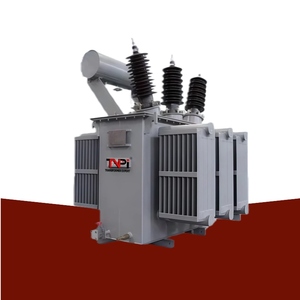
69kV 33kV 10MVA 20MVA 30MVA ONAN Copper Oil Immersed Power Transformer for Substation Step Down
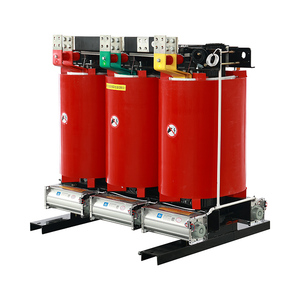
3-phase Dry Type Isolation Transformer 100kva High Voltage Dry Type Industrial Transformer
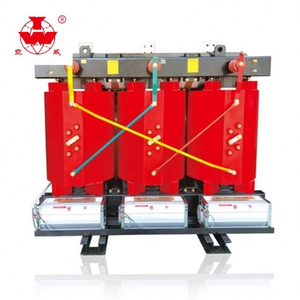
YAWEI China Factory Supply 10/11kv 500kva 1000 Kva Step Down 1600kva 2500 Kva Dry Type Transformer with Cooling Fan
Ce Certified Low-frequency 10Kva 15Kva 20Kva 25Kva 30Kva 50Kva 35kV To 380V 400V Step Down Three Phase Dry Type SMPS Transformer
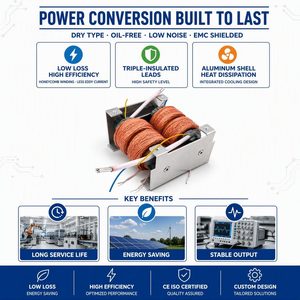
Single Phase 6kV to 220V High Frequency Honeycomb Transformer Dry Type Isolation Power Transformer Industrial Custom Transformer
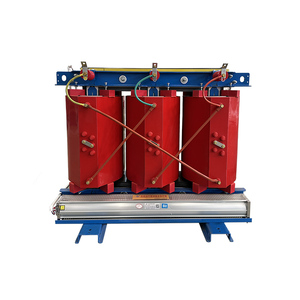
Three Phase Dry Type Transformer 50HZ/60HZ Frequency Transformer 10KV 35KV Dry Type Resin Transformer With Good Price
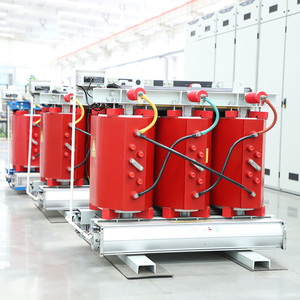
High Quality 630KVA Transformer High Voltage 20kv 415V 50 Hz 60 Hz Low Loss Dry Type Power transformers
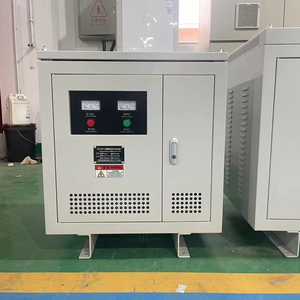
High Quality DingXin SG IEC60076 ISO CE Certified Three Phase Dry Type Step Up/Down Isolation Transformer 440V Input 220V Output
Engineering Architecture of Modern Package Substations
Technical Overview of Modular Prefabricated Package Substations & Compact Distribution Equipment
A package substation (also widely referred to as a compact substation, kiosk substation, or prefabricated substation) is a completely self-contained, factory-assembled energy distribution unit. Designed to step down medium-voltage power (such as 35kV, 33kV, 22kV, or 11kV) to low-voltage distribution levels (such as 415V, 400V, or 220V), package substations unite three essential high-voltage electrical compartments within a single, weatherproof enclosure: the High-Voltage (HV) Switchgear room, the Power Transformer compartment, and the Low-Voltage (LV) Switchboard assembly.
Information Gain Insight: Modern package substations manufactured in China adhere to strict international standard IEC 62271-202 (High-voltage switchgear and controlgear – Part 202: High-voltage/low-voltage prefabricated substation). China's leading factories leverage fully automated CNC punching, robotic laser welding, and automated copper busbar bending to deliver internal arc-classified (IAC) enclosures capable of withstanding 20kA/1s fault currents without compromising exterior structural integrity.
| Substation Architecture Parameter | European-Style Compact Substation | American-Style Padmount Substation | Open-Air Substation Installation |
|---|---|---|---|
| Structural Design | Modular 3-Compartment Prefab Enclosure | Integrated Oil Tank & Component Cabinet | Separate Open Foundations & Busbars |
| Transformer Type Support | Cast Resin Dry-Type or Sealed Oil-Immersed | Mineral / Synthetic Ester Oil-Immersed | Conservator Oil-Immersed Transformers |
| Footprint Efficiency | Ultra-Compact (Up to 70% space savings) | Highly Compact (Low profile landscape) | Large Ground Footprint & Clearances |
| Internal Arc Classification (IAC) | IAC-AB (Public & Operator Protection) | Tamper-Proof Enclosure (ANSI C57.12.28) | Not Applicable (Perimeter fencing needed) |
| Maintenance Requirement | Minimal (Plug-in gas-insulated switchgear) | Low (Dead-front elbow connectors) | High (Regular insulator & oil inspection) |
Future Procurement Trends in Electrical Power Equipment (2026–2035)
Strategic Market Insights for Utility Procurement Directors & Infrastructure EPC Contractors
1. Decarbonization & Eco-Friendly Ester Liquids
Global utilities are rapidly replacing conventional mineral oil with natural and synthetic ester fluids (biodegradable, high-fire point >300°C). Ester fluids allow higher temperature rises without degrading thermal paper insulation, significantly increasing transformer emergency overload ratings while complying with zero-pollution mandates.
2. Amorphous Alloy & Ultra-Low Loss Cores
Driven by EU Tier 2 Eco-design regulations and US DOE efficiency mandates, procurement is shifting toward amorphous core step-down transformers. Amorphous metals feature a non-crystalline atomic structure that cuts no-load energy losses (hysteresis loss) by 70% to 80% compared to traditional Cold-Rolled Grain-Oriented (CRGO) silicon steel.
3. Digital Twin & IoT Edge Monitoring
Substations are no longer passive assets. Procurement tenders now mandate integrated IoT sensing suites for Dissolved Gas Analysis (DGA), fiber-optic direct winding hot-spot temperature sensors, partial discharge (PD) telemetry, and cloud-linked automated tap-changer diagnostics to support predictive condition-based maintenance.
Technological Development Roadmap for Compact Substations
How Advanced Metallurgy, Automated Vacuum Casting, and SF6-Free Switchgear are Reshaping Chinese Exports
The manufacturing landscape in China for medium-to-high voltage power distribution equipment has undergone a profound transformation. Historically viewed primarily as low-cost assemblers, top-tier Chinese package substation factories now lead global export markets in precision vacuum casting, automated core cutting, and environmental compliance.
Vacuum Epoxy Resin Casting (Dry-Type Transformers)
Modern cast resin dry-type transformers produced by leading suppliers utilize automated multi-stage vacuum casting chambers (such as Hedrich systems). High-grade epoxy resin filled with silica quartz is injected under precise vacuum pressure (<1 mbar). This eliminates air pockets and micro-voids, guaranteeing partial discharge levels below 10 pC (picocoulombs) even under 200% overvoltage stress. Furthermore, Class H (180°C) and Class F (155°C) insulation systems provide self-extinguishing flame resistance compliant with F1 fire protection ratings.
SF6-Free Green HV Switchgear Integration
With global environmental regulations restricting Sulfur Hexafluoride (SF6) due to its high Global Warming Potential (GWP), Chinese exporters have pioneered commercialized SF6-free Ring Main Units (RMU). Utilizing clean air, fluoronox mixture gases, or vacuum interrupters, these compact switchgears maintain ultra-compact panel dimensions (down to 375mm width per circuit) while completely eliminating greenhouse gas emissions during substation operation and end-of-life decommissioning.
Why Source Package Substations & Transformers from Leading Chinese Exporters?
Demonstrated Experience, Expertise, Authoritativeness, and Trustworthiness (E-E-A-T) in Electrical Manufacturing
Rigorous ISO & KEMA Quality Assurance
Premier factories maintain ISO 9001:2015 Quality Management, ISO 14001:2015 Environmental Management, and ISO 45001 Occupational Health systems. Full type testing is routinely conducted through independent, internationally recognized testing authorities such as KEMA (Netherlands), ASTA (UK), CESI (Italy), and national testing centers (QUATEST / CNAS).
Automated Precision Manufacturing
From Heinrich Georg (Germany) automated CRGO silicon steel core-cutting lines to CNC copper foil winding machines and automated corrugated oil tank welding robots, state-of-the-art Chinese plants remove human error. This delivers dimensional precision, low audible noise levels, and low stray load losses across batch production runs.
Custom Engineering & OEM/ODM Support
Whether your grid infrastructure demands dual-voltage operation (e.g., 11kV/22kV switchable), extreme ambient temperature resilience (-40°C to +55°C), high altitude derating calculation, or special seismic zone 4 structural reinforcement, Chinese engineering teams provide complete 3D CAD modeling, SolidWorks thermal simulation, and tailored FAT protocols.
Total Cost of Ownership (TCO) Evaluation Model for Substation Transformers
Smart buyers evaluate transformers not merely on Initial Purchase Capital Expenditure (CAPEX), but on total lifetime operational costs. Transformer efficiency is mathematically evaluated using the Total Cost of Ownership formula:
Where A represents the capitalized cost per kilowatt of no-load loss ($/kW, evaluated over 30 years of continuous core magnetization) and B represents the capitalized cost per kilowatt of load loss ($/kW, factoring in expected load factor). Sourcing low-loss transformers with laser-scribed silicon steel cores dramatically lowers lifetime TCO, yielding positive ROI within 3 to 5 years of commercial operation.
Frequently Asked Questions (FAQ)
Technical Clarifications for Procurement Managers, B2B Importers, and Electrical Engineers
Ready to Request a Technical Quote or Factory Audit?
Connect directly with our senior application engineers to receive custom single-line diagram (SLD) reviews, precise commercial proposals, and full technical specifications within 24 hours.