Distribution Transformer Technical Articles, Industry Insights & Grid Updates — SOTEK Group
Featured Potential Transformer Product Range
Directly sourced from top-tier Chinese manufacturing facilities. Fully validated under IEC 61869, IEC 60076, and ANSI/IEEE standards for revenue metering and system protection.
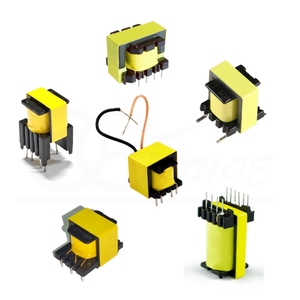 High Frequency
Xuyi Ouge EE10 EE13 EE14 EE16 EE19 Single Phase Small Size Electric Transformer
Compact vertical high-frequency transformer engineered with low-loss ferrite cores for micro-electronic power supplies, telecom modules, and signal isolation.
Inquire Now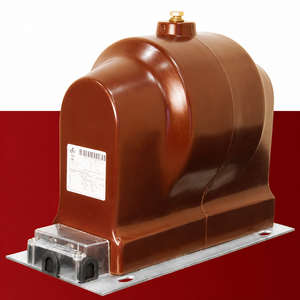 Class 0.2 Revenue
Voltage Transformer Medium Voltage Metering 0.2 Protection 5P20 IEC Switchgear
Precision medium-voltage instrument transformer for electrical switchgear integration. Dual-purpose design supporting 0.2 metering accuracy and 5P20 protection security.
Inquire Now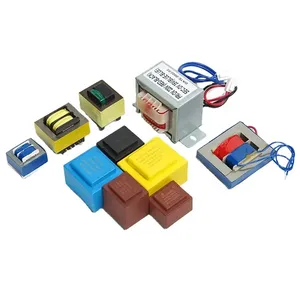 Toroidal Custom
Custom Frequency Audio Transformer 220V/12V Single Phase Toroidal Mini Power Unit
Ultra-low hum toroidal audio and potential step-down transformer featuring 100% pure copper windings, low stray electromagnetic field, and thermal cutoff protection.
Inquire Now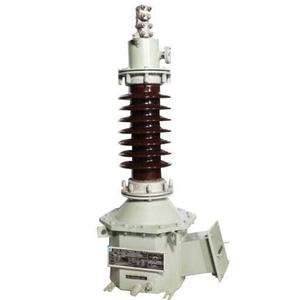 Outdoor 11kV
11 KV Outdoor Weatherproof Cast Resin Voltage / Potential Transformer
Heavy-duty outdoor pole-mounted voltage transformer. Encapsulated in anti-UV hydrophobic resin or porcelain housing for sub-station grid protection.
Inquire Now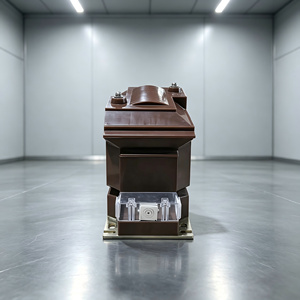 IEC 61869 Standard
Indoor Single Phase 10kV Epoxy Cast Potential Transformer IEC61869 Switchgear
State-of-the-art indoor epoxy cast resin voltage transformer designed for 10kV switchgear metering chambers with high dielectric strength and partial discharge < 5pC.
Inquire Now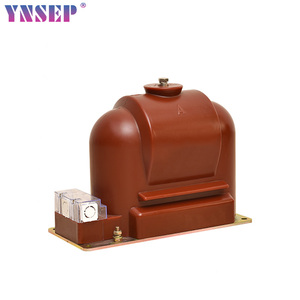 JDZX9 Model
JDZX9-10KV Indoor Single Phase Integral Cast Epoxy Potential Transformer
Industry-benchmark JDZX9 series voltage transformer engineered for power frequency voltage measurement, relay protection, and system phase alignment in medium voltage networks.
Inquire Now Factory Direct
ZHUOLI Three / Single Phase 10kV Epoxy Cast Voltage Transformer Power System
Direct factory supply high-reliability instrument transformer set. Designed for stable step-down transformation in power distribution substations and industrial plants.
Inquire Now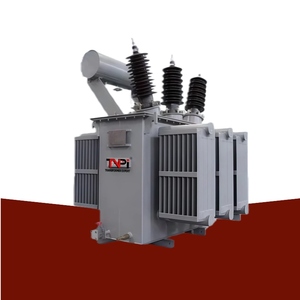 HV Power Substation
69kV 33kV 10MVA 20MVA 30MVA ONAN Copper Oil Immersed Power Step-Down Transformer
Heavy utility-grade oil-immersed power step-down transformer. Engineered with electrolytic copper windings, low-loss CRGO steel core, and automatic ONAN/ONAF radiator cooling.
Inquire NowEngineering Principles & Information Gain on Potential Transformers
Understanding the critical role of Instrument Voltage Transformers (PTs/VTs) in modern high-voltage and medium-voltage electrical power networks.
1. Operational Physics of Potential Transformers (PTs / VTs)
Potential Transformers (also designated as Voltage Transformers or VTs) are ultra-precise step-down instrument transformers designed to scale down high system voltages (ranging from 3.3kV up to 765kV) to a standardized, safe, and measurable secondary output (typically 110V, 100V, or 120V phase-to-phase, and 110/√3 V phase-to-ground). This stepped-down potential allows electrical meters, digital protective relays, micro-processor controls, and power quality analyzers to safely monitor power lines without direct exposure to lethal system voltages.
Core Engineering Distinction: Unlike standard power transformers optimized for maximum kVA power transfer and thermal efficiency under continuous high currents, Potential Transformers operate under nearly open-circuit conditions (extremely low secondary burden, typically 5VA to 500VA). Their paramount engineering objective is ratio accuracy, minimal phase-angle error, and high dielectric isolation strength.
2. Accuracy Classes & Protection Parameters (IEC 61869-3 vs IEEE C57.13)
When procuring Potential Transformers from Chinese manufacturers for utility sub-stations or industrial switchgear installations, selecting the correct Accuracy Class is vital for grid compliance and revenue protection:
- Class 0.1 / 0.2 / 0.2S (Revenue & Tariff Metering): Engineered for billing applications at grid interconnect points, large industrial sub-stations, and renewable energy generation plants where minor voltage deviations result in significant financial discrepancies. Requires advanced grain-oriented silicon steel or nickel-iron cores.
- Class 0.5 / 1.0 (Standard Industrial Metering & Control): Utilized for panel voltmeters, SCADA monitoring systems, and non-critical industrial distribution switchgears.
- Class 3P / 5P / 6P (Relay Protection Applications): Designed to maintain accuracy during severe system faults, line-to-ground flashovers, and voltage dips up to 120% to 190% of rated voltage. The protection winding ensures relays trigger instantaneous breaker trips during short circuits.
Why Top Global Utilities Partner with Chinese PT Manufacturers
China's electrical grid infrastructure is the largest in the world. Our partner factories leverage decades of UHV (Ultra-High Voltage) research, automated vacuum casting, and stringent ISO quality systems.
Automated Vacuum Resin Casting
Utilizing Swiss Hedrich vacuum casting chambers, epoxy resins are injected under ultra-low pressure (<1 mbar) to ensure 100% bubble-free insulation, reducing Partial Discharge (PD) levels to under 5 pico-coulombs (pC).
Precision CRGO & Amorphous Core Cutting
State-of-the-art laser-scribed Cold-Rolled Grain-Oriented (CRGO) silicon steel laminations processed via Georg core-cutting lines reduce excitation magnetizing current and no-load losses by up to 35%.
ISO/IEC 17025 Certified Testing Labs
100% factory acceptance testing (FAT) including lightning impulse withstand (BIL up to 750kV), power-frequency dielectric withstand, temperature rise verification, and accuracy ratio validation.
OEM & Custom Switchgear Fitting
Fully customized physical dimensions, primary terminal orientation, secondary junction boxes, and mounting hole configurations tailored to fit Siemens, ABB, Schneider, and Eaton MV switchgear formats.
Seismic & Environmental Resilience
Designed to withstand Zone 4 seismic shocks, extreme ambient temperatures (-40°C to +55°C), high altitude (>2000m), and aggressive marine/industrial pollution (creepage distance >31mm/kV).
Global B2B Supply Chain & Logistics
Streamlined export operations with seaworthy vacuum foil packaging, fumigated wooden crate protection, and full compliance with Incoterms 2020 (FOB, CIF, DDP) for seamless international clearance.
Future Sourcing & Technology Trends for Potential Transformers
As power grids transition toward digital substations, green energy, and decentralization, procurement managers must adapt to evolving potential transformer specs.
1. Smart Grid & Digital Substation Integration (IEC 61850)
Traditional analog potential transformers outputting 110V AC are increasingly augmented by Electronic Voltage Transformers (EVTs) and Low-Power Instrument Transformers (LPITs). Modern Chinese OEMs are embedding digital merging units directly into PT secondary boxes, transmitting real-time voltage sampled values (SV) via fiber-optic Ethernet cables compliant with IEC 61850-9-2 standards. This eliminates copper cabling costs and electro-magnetic signal interference.
2. Eco-Friendly Solid Dielectrics & SF6 Alternatives
Environmental regulations such as the EU F-gas ban are accelerating the phase-out of SF6 gas insulation in instrument transformers. Sourcing trends favor cycloaliphatic epoxy resins (APG system) for outdoor medium-voltage application and synthetic ester/natural ester liquid insulation for high-voltage oil-immersed potential transformers. These eco-friendly dielectrics offer superior flame resistance, zero ozone depletion, and simplified end-of-life recycling.
3. High-Harmonic Resilience in Renewable Energy Grids
Solar PV inverters, wind turbine converters, and EV ultra-fast charging hubs introduce high-frequency harmonics into distribution networks. Future PT procurement demands non-linear magnetic core designs that prevent core saturation under 3rd, 5th, and 7th harmonic pollution. Chinese manufacturers are introducing special K-factor rated potential transformers and wide-frequency response audio/instrument transformers capable of precise measurement up to 10 kHz.
4. Suppression of Ferroresonance Phenomena
Ferroresonance is an oscillatory electromagnetic hazard in ungrounded medium-voltage networks that causes catastrophic PT insulation burnout. Premier Chinese suppliers now incorporate anti-ferroresonance secondary windings or offer external damping resistors (damping reactors) built into the open-delta auxiliary secondary winding, absorbing resonant surge energy without compromising measurement accuracy.
Comparison Matrix: Epoxy Resin vs. Oil-Immersed PTs
Select the optimal potential transformer topology based on voltage rating, installation environment, and insulation media.
| Specification Parameter | Indoor Epoxy Cast PT (JDZX Series) | Outdoor Dry Resinous PT | HV Oil-Immersed PT (Power Substation) | High Frequency / Toroidal PT |
|---|---|---|---|---|
| Primary Voltage Range | 3.3 kV – 35 kV | 11 kV – 35 kV | 33 kV – 220 kV+ | Single Phase 110V – 380V |
| Insulation Media | Cycloaliphatic / Epoxy Resin | Hydrophobic Epoxy (HAPG) | Mineral Oil / Ester Fluid | Ferrite Core / Copper Winding |
| Accuracy Classes | 0.2, 0.5, 3P, 6P | 0.2S, 0.5, 5P20 | 0.1, 0.2, Protection 3P | High Frequency Signal / Low Loss |
| Partial Discharge (PD) | < 5 pC at 1.2Un | < 10 pC at 1.2Un | N/A (Liquid Sealed) | N/A (Micro Voltage) |
| Installation Environment | Indoor MV Switchgear / GIS | Outdoor Overhead Pole / Substation | Outdoor Substation Step-Down | PCB / Power Electronics Enclosure |
| Maintenance Requirement | Zero Maintenance | Periodic Surface Cleaning | Oil Dissolved Gas Analysis (DGA) | Zero Maintenance |
| Recommended OEM Action | Inquire Specs | Inquire Specs | Inquire Specs | Inquire Specs |
Frequently Asked Questions (FAQ) for PT Sourcing
Answers to common engineering, quality assurance, and commercial inquiries when procuring potential transformers from Chinese suppliers.
Q1: What is the critical difference between a Potential Transformer (PT) and a Current Transformer (CT)?
A Potential Transformer (PT) measures grid voltage by stepping down high primary voltage to a standardized low secondary voltage in parallel with the system load. A Current Transformer (CT) measures circuit current by stepping down high primary amperes in series with the load. PTs operate with nearly open-circuit secondary terminals, whereas CTs must never have their secondary circuit opened while energized to prevent lethal high-voltage inductive spikes.
Q2: How do I determine the required VA Burden for my Potential Transformer inquiry?
The VA burden is the total electrical load connected to the PT secondary winding, calculated by summing the VA consumption of all connected panel meters, protective relays, transducer inputs, and secondary cabling resistance. To maintain the specified accuracy class (e.g., 0.2 or 0.5), the actual operating burden should be between 25% and 100% of the PT’s rated VA capacity. Common ratings include 15VA, 30VA, 50VA, and 100VA.
Q3: Why is Partial Discharge (PD) testing crucial for epoxy resin cast voltage transformers?
Microscopic air bubbles or voids trapped inside epoxy resin during casting act as localized electrical stress points. Over time, internal electrical discharge deteriorates the solid dielectric, culminating in explosive insulation breakdown. Reputable Chinese PT manufacturers conduct 100% Partial Discharge testing in shielded Faraday cages, guaranteeing PD levels below 5pC at maximum continuous operating voltage per IEC 61869-3.
Q4: What international standards do Chinese Potential Transformer manufacturers comply with?
Leading suppliers manufacture to IEC 61869-1 / IEC 61869-3 (replacing IEC 60044-2), IEEE C57.13 (North American standards), ANSI C57.12, and GB/T 20840.3. For European and UK markets, CE and KEMA type test certificates are available upon request.
Q5: Can Chinese PT suppliers customize secondary windings for open-delta protection?
Yes. Custom potential transformers can be engineered with multiple secondary windings: Winding 1 for high-precision revenue metering (Class 0.2), Winding 2 for protective relaying (Class 3P), and an auxiliary Winding 3 connected in residual/open-delta configuration (100/3V or 110/3V) for zero-sequence ground fault detection.
Q6: What lead time and shipping packaging should international B2B buyers expect?
Standard MV epoxy cast potential transformers typically carry a manufacturing lead time of 2 to 4 weeks depending on order volume. Custom high-voltage or oil-immersed power transformers require 6 to 8 weeks. All export goods are sealed in moisture-proof vacuum bags with silica desiccants and packaged inside IPPC ISPM-15 compliant heat-treated wooden crates for safe ocean freight.
Ready to Source High-Precision Potential Transformers?
Connect directly with our engineering sales team to request custom CAD drawings, factory acceptance test (FAT) protocols, or competitive wholesale FOB/CIF price quotations tailored to your project specifications.