Distribution Transformer Technical Articles, Industry Insights & Grid Updates — SOTEK Group
Featured Transformers & Kiosk Substation Assemblies
High-reliability power distribution solutions engineered to IEC 60076, IEEE C57, and GB standards for industrial plants, renewable energy sites, and utility sub-transmission networks.
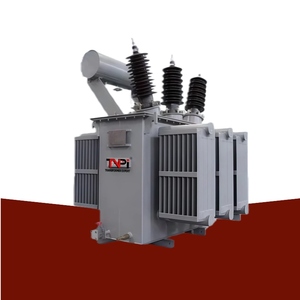
69kV 33kV 10MVA-30MVA ONAN Copper Power Transformer for Substation Step Down
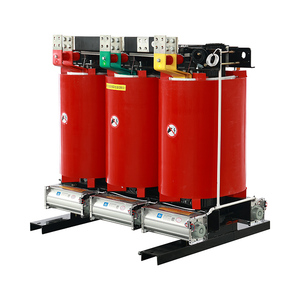
3-Phase Dry Type Isolation Transformer 100kVA High Voltage Industrial Unit
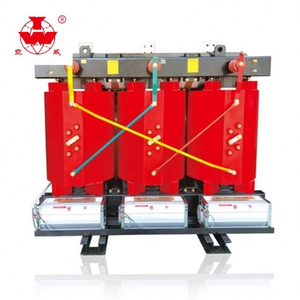
YAWEI 10/11kV 500kVA-2500kVA Step Down Dry Type Transformer with Forced Fan Cooling
CE Certified 10kVA-50kVA 35kV to 380V/400V Step Down Three Phase Dry Type Transformer
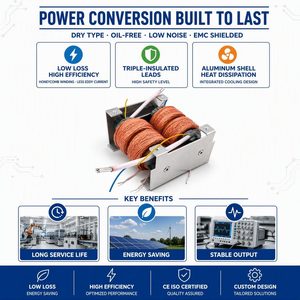
Single Phase 6kV to 220V High Frequency Honeycomb Dry Type Isolation Power Transformer
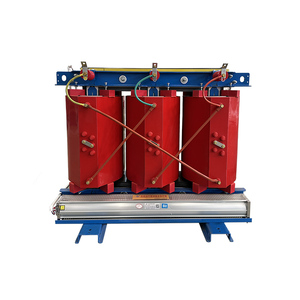
Three Phase 10kV 35kV Cast Resin Dry Type Transformer (50Hz/60Hz Utility Grade)
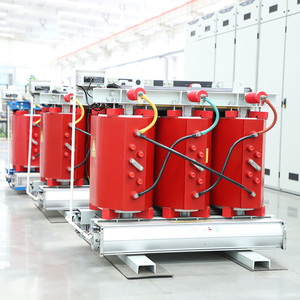
High Quality 630kVA 20kV to 415V Low Loss Dry Type Power Transformer
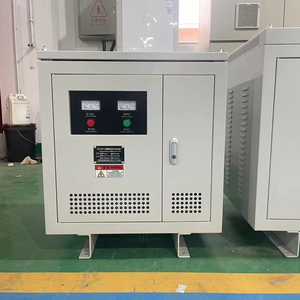
DingXin SG IEC60076 CE Certified 3-Phase Dry Type Isolation Transformer 440V/220V
Why Engineering Procurement Leaders Choose Our China Substation Factory
Backed by decades of specialized manufacturing experience, ISO 9001:2015 quality management systems, and ISO 14001 environmental compliance, our manufacturing base stands at the forefront of medium-to-high voltage power solutions.
Automated Precision Manufacturing
Utilizing imported Georg core-cutting production lines, automated coil winding machines, and robotic tank-welding systems, we maintain ultra-tight mechanical tolerances and zero-defect quality across every production lot.
Accredited Testing & Type Verification
Every unit undergoes stringent Factory Acceptance Testing (FAT) in our ISO/IEC 17025 accredited laboratory, including short-circuit withstand verification, lightning impulse tests, and partial discharge monitoring (< 5pC).
Global Standards Compliance
Fully compliant with international standards including IEC 60076 for power transformers, IEEE C57 for North American utility networks, ANSI, CE, and ASTA/KEMA third-party type test certifications.
Customized Modular Engineering
From extreme desert anti-dust protection to harsh offshore marine C5-M anti-corrosion coatings, our engineering team tailors enclosure dimensions, protection ratings (IP54 to IP65), and internal switchgear configurations to project specs.
Optimized Low-Loss Silicon Cores
Utilizing high-permeability, domain-refined Cold Rolled Grain-Oriented (CRGO) silicon steel cores and optional amorphous alloy core structures to achieve industry-leading reduction in no-load losses and total cost of ownership (TCO).
Turnkey Export Logistics & Support
End-to-end B2B service including seaworthy heavy-duty crate packaging, multi-modal transport routing (FOB, CIF, DDP), on-site installation supervision, and comprehensive technical documentation packages.
Industry Whitepaper: Modern Kiosk Substation Design & Structural Engineering
A prefabricated compact substation (commonly designated as a Kiosk Substation or Package Substation) represents an integrated, factory-assembled electric power distribution unit comprising three primary functional compartments: High-Voltage Medium-Voltage (MV) Switchgear, Power/Distribution Transformer, and Low-Voltage (LV) Switchboard Assembly.
In modern urban infrastructure, industrial parks, and commercial utility grids, traditional civil brick-and-mortar substations are increasingly replaced by prefabricated kiosk substations due to their minimal spatial footprint, reduced civil construction timelines, enhanced operational safety, and plug-and-play field commissioning.
Technical Insight: Modern European-style (nested modular) and American-style (pad-mounted integral) kiosk substations manufactured in China adhere to strict Internal Arc Classification (IAC FLR) standards according to IEC 62271-202. This guarantees operator safety against internal fault arc flashes up to 20kA/1s.
The structural layout of a high-performance kiosk substation is segregated into compartmentalized zones to prevent thermal coupling and environmental cross-contamination:
- Medium-Voltage (MV) Compartment: Houses SF6-insulated Ring Main Units (RMU), gas-insulated switchgear (GIS), or eco-friendly SF6-free vacuum circuit breakers rated from 11kV, 22kV, 33kV up to 40.5kV. Equipped with motorized mechanisms for remote SCADA automation.
- Transformer Compartment: Accommodates either low-loss hermetically sealed oil-immersed transformers (ONAN) or flame-retardant cast resin dry-type transformers (Class F or H insulation). Integrated with natural louvers or forced-air temperature-controlled fan networks (AF).
- Low-Voltage (LV) Compartment: Configured with main air circuit breakers (ACB), molded case circuit breakers (MCCB), automatic transfer switches (ATS), power factor correction (PFC) capacitor banks, and smart energy metering units compliant with MODBUS/IEC 61850 communications.
Technical Comparison: Kiosk Substation vs. Traditional Substation Configurations
Selecting the optimal power distribution architecture requires balancing capital expenditure (CAPEX), operational expenses (OPEX), footprint constraints, and environmental durability. The matrix below highlights key technical parameters:
| Engineering Attribute | Prefabricated Kiosk Substation | Pad-Mounted Substation | Traditional Civil Substation |
|---|---|---|---|
| Primary Enclosure Material | Galvanized Steel / Stainless / GRC | Heavy-Duty Sheet Steel Cabinet | Concrete & Brick Civil Structure |
| Footprint Requirement | Ultra-Compact (4m² – 12m²) | Compact (3m² – 8m²) | Large (30m² – 100m²+) |
| Ingress Protection (IP) Rating | IP43 (Ventilated) to IP54/IP65 | IP54 / NEMA 3R / 4X | N/A (Building Enclosure) |
| Site Installation & Commissioning | 1 – 3 Days (Factory Plug-and-Play) | 1 – 2 Days | 3 – 6 Months Civil Work |
| Internal Arc Protection (IAC) | IAC FLR (Tested to IEC 62271-202) | Tamper-Proof Dead-Front Design | Variable (Depends on civil engineering) |
| Maintenance Requirements | Low (Sealed compartments & RMU) | Low to Moderate | High (Building & open gear maintenance) |
Future Global Procurement Trends in Kiosk Substations (2025–2035)
As global power utilities, EPC contractors, and industrial operators accelerate toward net-zero emissions and smart grid modernization, kiosk substation procurement strategies are undergoing massive technological shifts.
1. Smart Grid & IoT Sensor Integration
Future-proof procurement demands kiosk substations equipped with online Dissolved Gas Analysis (DGA) sensors, real-time winding thermography, fiber-optic temperature sensors, and wireless vibration monitoring linked directly to cloud SCADA platforms via IEC 61850 protocols.
2. Decarbonization & Eco-Friendly Ester Fluids
Global buyers are shifting away from traditional mineral insulating oils toward synthetic and natural ester bio-fluids (e.g., FR3). Ester fluids offer high fire points (> 300°C, Class K), non-toxic biodegradability, and extended insulation paper longevity.
3. Transition to SF6-Free Switchgear
In alignment with EU F-gas regulations and global greenhouse gas mitigation policies, medium-voltage ring main units inside kiosk substations are transitioning to clean-air, dry-air, or vacuum-interrupter insulated switchgear, eliminating SF6 gas reliance.
4. Modular Renewable Microgrid Integration
Modern kiosk substations are no longer just step-down distribution nodes; they are engineered as multi-directional energy hubs capable of interfacing directly with solar PV inverters, Battery Energy Storage Systems (BESS), and EV fast-charging stations.
Frequently Asked Questions (FAQ) for Global Buyers
Essential answers to critical engineering, manufacturing compliance, shipping logistics, and custom design queries encountered by B2B procurement managers.
Q1: What are the core differences between European-style and American-style kiosk substations?
Q2: How does your factory handle Factory Acceptance Testing (FAT) for international buyers?
Q3: What anti-corrosion protection standards apply to your kiosk substation enclosures?
Q4: Which international electrical standards do your transformers and substations comply with?
Q5: How is thermal management maintained inside a sealed kiosk substation in high-ambient climates?
Q6: What is the typical manufacturing lead time for custom-engineered kiosk substations?
Q7: What seismic and wind load ratings can your substation structures withstand?
Q8: Can dry-type transformers be integrated into fully sealed weatherproof kiosk substations?
Q9: What packaging and protection methods are used for ocean freight export shipping?
Q10: What technical documentation accompanies completed substation orders?
Request a Custom Engineering Quote & Technical Drawings
Partner with China's premier kiosk substation manufacturer. Our senior engineering team is ready to evaluate your single-line diagrams (SLD), voltage requirements, and site parameters to deliver competitive B2B factory pricing.