Distribution Transformer Technical Articles, Industry Insights & Grid Updates — SOTEK Group
High-Performance Substation & Transformer Series
Tested in accordance with IEC 60076, IEEE C57, and ISO 9001 standards. Engineered for grid resilience, low thermal dissipation, and high operational safety.
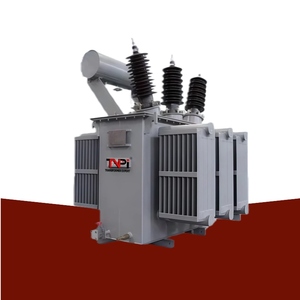
69kV 33kV 10MVA-30MVA ONAN Copper Oil Immersed Power Transformer
- Voltage Class: 69kV / 33kV Step Down
- Capacity: 10MVA, 20MVA, 30MVA
- Cooling: ONAN / ONAF Oil Immersed
- Winding: 100% Oxygen-Free Copper
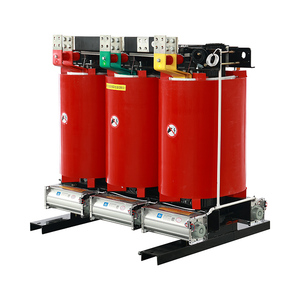
3-Phase High Voltage Dry Type Industrial Isolation Transformer 100kVA
- Rated Power: 100 kVA Industrial Rating
- Type: Cast Resin Dry-Type Isolation
- Frequency: 50Hz / 60Hz Universal
- Protection Rating: IP23 Enclosure
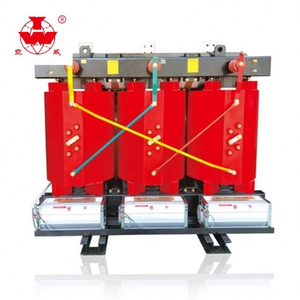
10kV/11kV Step Down 500kVA-2500kVA Dry Type Transformer with Forced Cooling
- Primary Voltage: 10kV / 11kV
- Capacity Range: 500kVA – 2500kVA
- Cooling: Cross-Flow Cooling Fans
- Insulation Standard: Class F / Class H
CE Certified 35kV to 380V/400V Three-Phase Dry Type Step-Down Transformer
- Voltage Ratio: 35kV to 380V/400V
- Capacity Options: 10kVA to 50kVA
- Certification: CE, IEC 60076
- Application: Commercial Substation Integration
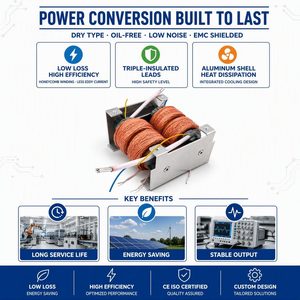
Single Phase 6kV to 220V High Frequency Honeycomb Dry Type Transformer
- Voltage: 6kV Primary / 220V Secondary
- Structure: Honeycomb Winding Architecture
- Feature: High-Frequency Galvanic Isolation
- Customization: Full Industrial B2B OEM Specs
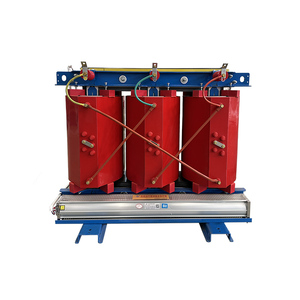
Three Phase 10kV 35kV Cast Resin Dry Type Transformer (50Hz/60Hz)
- Voltage Class: 10kV / 35kV Medium Voltage
- Encapsulation: Vacuum Cast Epoxy Resin
- Frequency: 50Hz / 60Hz Dual Rated
- Safety: Flame Retardant & Self-Extinguishing
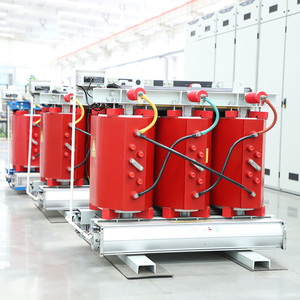
High Quality 630kVA 20kV to 415V Low-Loss Dry Type Power Transformer
- Power Capacity: 630 kVA Distribution Rating
- Primary / Secondary: 20kV / 415V
- Loss Profile: Ultra-Low No-Load Core Loss
- Compliance: IEC 60076-11 Certified
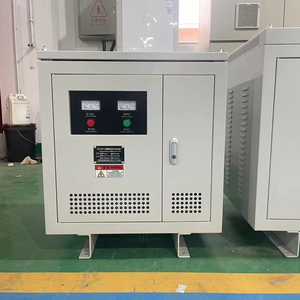
DingXin SG Series IEC/CE Certified Isolation Transformer 440V to 220V
- Input / Output: 440V Input / 220V Output
- Configuration: 3-Phase Step Up / Down
- Quality Audits: ISO 9001, CE, IEC Approved
- Application: Heavy Machine Tool & Plant Substation
Why International Utilities & EPC Contractors Partner With Us
Combining state-of-the-art automated core manufacturing, vacuum casting, and comprehensive type testing to power industrial projects across 30+ countries.
⚙️ Industrial Infrastructure & Advanced Manufacturing Capabilities
As a leading Chinese supplier and global exporter of unit substations and power distribution transformers, our production facility spans over 18,500 square meters of high-precision clean rooms and heavy manufacturing bays. Our infrastructure incorporates Georg automatic core cutting lines, automated vertical layer winding systems, Hedrich vacuum casting chambers for epoxy resin dry-type units, and robotic corrugated tank welding units. This automated manufacturing approach ensures strict dimensional accuracy, superior mechanical strength under short-circuit stress, and minimal dielectric loss.
Every step of our process—from cold-rolled grain-oriented (CRGO) silicon steel core assembly to high-vacuum oil impregnation—is governed by strict quality management protocols aligned with ISO 9001:2015, ISO 14001:2015, and ISO 45001 standards. Our in-house testing laboratory, compliant with ISO/IEC 17025 (VILAS 1183), performs rigorous routine, type, and special tests to verify thermal limits, insulation integrity, partial discharge levels, and surge withstand capability prior to dispatch.
E-E-A-T Quality Assurance Guarantee: Complete FAT (Factory Acceptance Testing) documentation—including lightning impulse test reports, winding resistance measurements, sound level verification, and short-circuit withstand reports from ASTA/KEMA certified labs—is provided with every export shipment.
Unit Substation Technical Architecture & Engineering Evolution
A comprehensive analysis of prefabricated unit substation designs, dielectric fluid options, core loss optimization, and smart grid automation.
⚡ Structural Topologies: European Prefabricated vs. American Pad-Mounted Unit Substations
Unit substations (also known as compact substations or package substations) are critical nodes in secondary power distribution networks. They integrate high-voltage (HV) switchgear, step-down distribution transformers, and low-voltage (LV) switchboards into a factory-assembled, type-tested enclosure. In modern electrical engineering, two dominant structural topologies govern international procurement: European Prefabricated Package Substations (compliant with IEC 62271-202 / GB/T 17467) and American Compartmentalized Pad-Mounted Unit Substations (compliant with IEEE C57.12.28 / IEEE C57.12.34).
European Prefabricated Package Substations feature three physically isolated compartments (HV, Transformer, and LV) inside an insulated GRC (Glass-fiber Reinforced Concrete), double-layer aluminum, or stainless steel enclosure. The HV compartment typically houses a compact Gas-Insulated Switchgear (GIS) Ring Main Unit (RMU) using SF6 or eco-friendly clean-air insulation. The LV section accommodates modular air circuit breakers (ACB) or molded case circuit breakers (MCCB) with automated power factor correction (PFC) banks. These units excel in high-density urban grids, underground utility networks, and harsh desert environments requiring IP54/IP65 ingress protection.
American Pad-Mounted Unit Substations feature a tamper-proof, low-profile enclosure directly mounted on a concrete pad. Designed with dead-front construction using loadbreak elbow connectors, these units incorporate Bay-O-Net fusing paired with current-limiting backup fuses submerged inside the transformer liquid tank. Available in both Radial Feed and Loop Feed configurations, American pad-mounted units are widely preferred by utility operators across North America, the Middle East, and the Philippines for underground residential and commercial power distribution.
| Engineering Attribute | European Compact Unit Substation | American Pad-Mounted Unit Substation | Indoor Dry-Type Unit Substation |
|---|---|---|---|
| Primary Standard Compliance | IEC 62271-202 / IEC 60076 | IEEE C57.12.28 / IEEE C57.12.34 | IEC 60076-11 / CEI 14-8 |
| Enclosure Material Options | GRC Concrete / Metallic Sandwich Panel | Heavy-Gauge Steel (ANSI 70 Gray) | IP20–IP23 Sheet Steel Enclosure |
| HV Switchgear Integration | Modular RMU (SF6 / Solid Insulated) | Internal Loadbreak Switch & Elbows | External Air/Vacuum Breaker Cabinet |
| Dielectric Medium | Mineral Oil / Natural Ester / Dry Resin | Mineral Oil / FR3 Synthetic Ester | Class F / H Vacuum Cast Epoxy Resin |
| Typical Voltage Range | 10 kV up to 35 kV | 4.16 kV up to 34.5 kV | 6 kV up to 35 kV |
| Fire Safety Rating | High (Option for Ester Fluid) | K-Class Less-Flammable Liquid Option | F1 / E2 / C2 Self-Extinguishing |
🔬 Core Metallurgy & Loss Reduction Technologies: CRGO vs. Amorphous Alloy
The operational economy of a unit substation over its 30-to-40-year design life is dictated primarily by transformer core losses. No-load losses (hysteresis and eddy current losses) occur continuously whenever the transformer is energized, regardless of load demand. To maximize Information Gain for procurement engineers, our technical design team evaluates core metallurgy along two primary pathways:
1. Laser-Scribed High-Permeability CRGO Silicon Steel: Utilizing top-grade 23ZDMH85 or 23QH085 domain-refined silicon steel, cores are stacked using a Step-Lap Mitered Joint configuration. This mitigates magnetic flux crowding at corners, reduces continuous magnetic noise by up to 8–10 dB, and cuts no-load losses by 15–20% compared to standard mitered cores. Copper windings are engineered with continuous transposed conductors (CTC) to minimize stray load losses in ratings above 5 MVA.
2. Amorphous Alloy Core Technology (Fe-B-Si): Amorphous metals lack a crystalline atomic structure, allowing magnetization with minimal magnetic friction. Amorphous core unit substations achieve up to a 70–80% reduction in no-load losses compared to conventional CRGO designs. While amorphous cores feature a lower saturation flux density (requiring a larger core footprint), their Total Cost of Ownership (TCO) advantage makes them the ideal choice for utilities with high energy costs or strict green building decarbonization targets.
🌐 Smart Substation Automation & Microgrid Integration
Modern power distribution demands intelligent, self-healing grid capabilities. Next-generation unit substations manufactured in China now integrate Smart Microgrid Interfaces, Internet of Things (IoT) sensors, and SCADA-compatible RTU (Remote Terminal Unit) architectures. Key digital features include:
- Online Dissolved Gas Analysis (DGA): Micro-optical sensors monitor hydrogen (H2), carbon monoxide (CO), and acetylene (C2H2) concentrations in oil-immersed transformers to provide early warning of thermal degradation or arcing faults.
- Fiber-Optic Hotspot Temperature Sensing: Direct fiber-optic probes embedded inside the transformer HV/LV windings measure real-time thermal hotspots, enabling dynamic load rating (DLR) without accelerating insulation aging.
- Smart LV Monitoring & Protection: Intelligent electronic devices (IEDs) record total harmonic distortion (THD up to the 50th harmonic), phase unbalance, active/reactive power flow, and automatically control capacitor banks or STATCOM units.
Future Procurement Trends in the Global Substation Market
Key technological shifts, eco-design regulations, and supply chain strategies reshaping international power equipment procurement over the next decade.
🌱 1. Transition to Biodegradable Ester Oils & Zero-Carbon Dielectrics
Environmental regulations such as EU Tier 2 Eco-Design requirements, US EPA spill prevention guidelines, and global net-zero commitments are driving a massive shift from mineral insulating oil to Natural Ester Fluids (e.g., Cargill FR3, soybean/rapeseed-based fluids). Natural esters offer a flash point exceeding 300°C (K-class designation), making unit substations virtually explosion-proof. Furthermore, natural esters are 99% biodegradable within 28 days, eliminating environmental contamination risks in environmentally sensitive areas, water catchment zones, and offshore wind substations.
📦 2. Prefabricated Modularization & Plug-and-Play Factory Commissioning
Field labor costs and site civil work delays represent major risks for EPC project managers. Sourcing trends show an accelerating demand for fully skid-mounted, pre-commissioned unit substations. By conducting 100% of internal wiring, protection relay programming, pressure testing, and functional interlocking in China prior to shipping, on-site installation time is reduced from weeks to less than 48 hours ("Plug-and-Play" deployment).
📊 3. Lifecycle Total Cost of Ownership (TCO) Sourcing Model
Forward-thinking utility buyers no longer evaluate substation bids based solely on initial Purchase Price (CAPEX). Modern procurement specifications evaluate bids using a formalized Total Cost of Ownership (TCO) equation:
TCO Evaluation Formula:
TCO = Purchase Price + (A × No-Load Loss in kW) + (B × Load Loss in kW)
Where 'A' and 'B' represent the net present value capitalization factors of electrical energy over a 30-year operational life (typically $4,000–$8,000 per kW for No-Load Loss and $1,500–$3,000 per kW for Load Loss).
Purchasing higher-efficiency dry-type or amorphous core unit substations from certified Chinese manufacturers yields a payback period of 2.5 to 4 years, delivering substantial long-term operational savings.
Factory Acceptance Testing (FAT) & Quality Inspection Protocol
Essential quality control steps executed at our facility to guarantee 100% compliance with international tender specifications.
When procuring heavy electrical assets from China, establishing a robust testing and verification framework is vital. Every unit substation leaving our production line undergoes rigorous routine testing per IEC 60076-1 and IEEE C57.12.00 standards. Clients and third-party inspectors (SGS, TÜV, Intertek, Bureau Veritas) are invited to witness or review the following FAT procedures:
| Test Category | Standard Reference | Inspection Parameter & Acceptance Criteria |
|---|---|---|
| Winding Resistance Measurement | IEC 60076-1 Clause 11.2 | Verifies balance across all phases; resistance variance must not exceed 2% between phases. |
| Voltage Ratio & Vector Group | IEC 60076-1 Clause 11.3 | Confirms exact turns ratio tolerance (within ±0.5%) and phase displacement (Dyn11, Ynd11, etc.). |
| Short-Circuit Impedance & Load Loss | IEC 60076-1 Clause 11.4 | Measured at rated frequency and corrected to reference temperature (75°C / 115°C); tolerance ±10%. |
| Separate-Source AC Withstand | IEC 60076-3 Clause 11 | Applied power-frequency high voltage for 60 seconds to verify primary-to-secondary and ground insulation. |
| Induced Overvoltage Withstand | IEC 60076-3 Clause 12 | Tested at double rated frequency and double rated voltage to test inter-turn and inter-layer insulation integrity. |
| Partial Discharge (PD) Measurement | IEC 60076-11 (Dry-Type) | Mandatory for cast resin units; partial discharge levels must remain strictly below 10 pC at 1.3 Um. |
| Full-Wave Lightning Impulse (BIL) | IEC 60076-3 Clause 13 | Type test simulating 1.2/50μs atmospheric surge strikes (e.g., 75kV BIL for 10kV grid, 200kV BIL for 35kV grid). |
Frequently Asked Procurement & Engineering Questions (FAQ)
Addressing key engineering, compliance, customization, and logistics inquiries from international buyers.
Q1: What is the lead time for custom-engineered unit substations and power transformers?
Standard unit substations (500kVA to 2500kVA) typically feature a factory manufacturing lead time of 25 to 35 calendar days following drawing approval. High-voltage power transformers (up to 69kV / 30MVA) or units requiring special ASTA/KEMA type test witnessing require approximately 45 to 60 days. Accelerated production tracks are available for emergency utility grid repairs.
Q2: How do you handle regional grid frequency and voltage differences for international exports?
All transformer windings, tap changers, and core geometries are engineered to match destination grid parameters. We regularly design for 50Hz (IEC standard for Europe, Asia, Africa) and 60Hz (ANSI standard for North America, Philippines, South America), as well as dual-voltage primary windings (e.g., 13.8kV / 24.94kV reconnectable) equipped with De-Energized Tap Changers (DETC) or On-Load Tap Changers (OLTC).
Q3: Should I choose a Dry-Type or Oil-Immersed transformer for my Unit Substation?
Choose Cast Resin Dry-Type for indoor substations, high-rise commercial buildings, underground subways, and hospitals where fire safety and zero fluid leakage are mandatory. Choose Oil-Immersed (or Natural Ester) for outdoor pad-mounted installations, high-capacity utility step-down stations (above 3.15 MVA), and heavy industrial plants with aggressive outdoor ambient environments.
Q4: How are heavy substations packaged to prevent damage during sea freight transit?
Unit substations and transformers are exported using ocean-ready heavy-duty packaging. Liquid-filled transformers are shipped filled with oil or pressurized with dry nitrogen gas (N2) to prevent moisture ingress. Enclosures are vacuum-sealed in foil moisture barriers, secured on steel skid bases, and transported in Open Top (OT) or Flat Rack (FR) containers with heavy-duty lashing points compliant with seaworthy cargo standards.
Q5: Can your factory supply unit substations compliant with local utility vendor approvals (e.g., EVN, Aboitiz, DEWA)?
Yes. Our engineering department has extensive experience adapting technical submittals, single-line diagrams (SLD), bill of materials (BOM), and protection relay schemes to meet specific utility short-circuit ratings and SCADA protocol requirements across Southeast Asia, the Middle East, South America, and Africa.
Q6: What warranty coverage and field technical support do you provide?
We provide a standard 12-month operational warranty or 18-month post-delivery warranty (whichever comes first), expandable up to 36 or 60 months upon request. Technical support includes remote video-assisted installation supervision, spare parts kits (bushings, gaskets, Buchholz relays, temperature controllers), and localized field service engineering partners in select export regions.
Ready to Engineer Your Power Distribution Solution?
Consult with our senior transformer engineering team today for technical submittals, rapid RFQ pricing, AutoCAD dimensional drawings, and complete specification support.