Distribution Transformer Technical Articles, Industry Insights & Grid Updates — SOTEK Group
Featured Industrial Autotransformers & Power Systems
High-performance custom engineered single-phase and three-phase stepping transformers manufactured in compliance with international IEC 60076, IEEE C57, ANSI, and ISO 9001 standards.
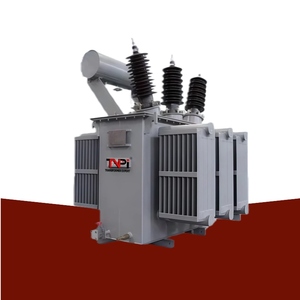
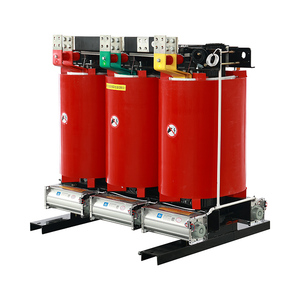
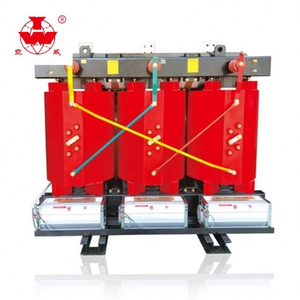
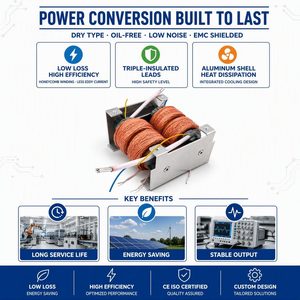
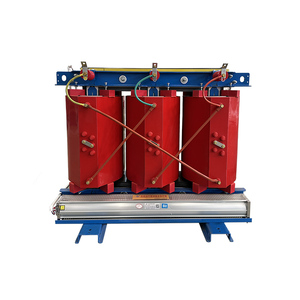
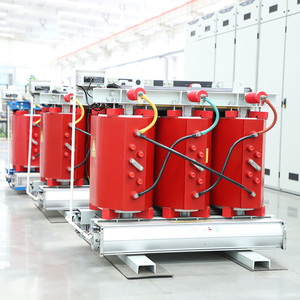
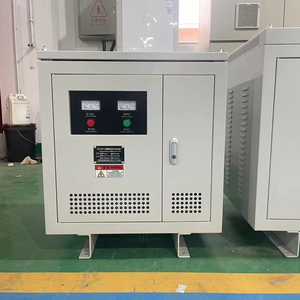
Why Engineering Procurement Teams Partner With China OEM Manufacturers
Leveraging state-of-the-art production technology, automated CRGO core-cutting lines, and rigorous ISO 17025 accredited laboratory testing to deliver utility-grade autotransformers worldwide.
Precision CRGO Steel Core Engineering
We utilize ultra-low-loss cold-rolled grain-oriented (CRGO) silicon steel laminations (grades 23ZH085, B23R075) with 45-degree step-lap miter joint cutting technology. This drastically reduces magnetic hysteresis losses and no-load noise levels by up to 8 dB compared to standard transformer cores.
Rigorous Type Testing & Compliance
Every unit undergoes comprehensive Factory Acceptance Testing (FAT) in accordance with IEC 60076-8 and IEEE C57.12.90 standards. Tests include lightning impulse withstand, short-circuit thermal capacity validation, partial discharge monitoring (<5 pC), and acoustic noise measurement.
Custom OEM/ODM Vector Configurations
Whether you require auto-connected YNa0, YNaut, or special tertiary delta-connected (YNa0d11) stabilizing windings for high-voltage transmission ties, our R&D engineering team designs bespoke solutions tailored precisely to your grid system protection scheme and voltage ratio demands.
Industry Whitepaper: Physics, Design Principles & Economics of Autotransformers
In power distribution and high-voltage transmission engineering, selecting between a conventional multi-winding isolation transformer and an autotransformer is a critical decision impacting system capital expenditure (CAPEX), operational losses (OPEX), overall physical footprint, and short-circuit protection schemes. As global energy infrastructure transitions toward renewable interconnects and smart microgrids, China's leading wholesale autotransformer manufacturers have spearheaded major innovations in electromagnetic design and thermal optimization.
Core Engineering Insight: An autotransformer differs fundamentally from a traditional two-winding transformer by employing a single, continuous magnetic winding shared electrically and magnetically between the primary high-voltage (HV) and secondary low-voltage (LV) circuits. This single-winding topology provides substantial economic and thermodynamic advantages when the transformation ratio ($V_{HV} / V_{LV}$) is less than 3:1.
1. Electromagnetic Co-Rating Power & Mass Reduction Physics
The primary advantage of an autotransformer lies in its ability to transfer power partially through direct electrical conduction and partially through electromagnetic induction. The physical frame size (and structural material weight) of an autotransformer is governed not by its total throughput capability ($S_{throughput}$), but by its equivalent co-rating power ($S_{equivalent}$ or frame size rating).
Mathematically, the relationship between equivalent rating power and total throughput power is defined by the auto-transformation factor ($k_{auto}$):
| Transformation Ratio ($V_{HV} / V_{LV}$) | Co-Rating Ratio ($S_{eq} / S_{throughput}$) | Copper & Core Material Saving (%) | Efficiency Gain vs. Two-Winding Transformer |
|---|---|---|---|
| 1.15 : 1 (e.g., 13.8kV to 12.0kV) | 13.0% | ~87% Saving | + 0.85% (Total Efficiency > 99.6%) |
| 1.50 : 1 (e.g., 33kV to 22kV) | 33.3% | ~66% Saving | + 0.55% (Total Efficiency > 99.4%) |
| 2.00 : 1 (e.g., 440V to 220V) | 50.0% | ~50% Saving | + 0.35% (Total Efficiency > 99.1%) |
| 3.00 : 1 (e.g., 35kV to 11kV) | 66.7% | ~33% Saving | + 0.15% (Total Efficiency > 98.8%) |
Because less copper wire and CRGO silicon steel core mass are required to transfer equivalent power, autotransformers demonstrate significantly lower internal impedance, lower thermal losses ($I^2R$ copper loss and core eddy current loss), and superior total cost efficiency when stepping voltages within a moderate range.
2. Role of Tertiary Delta Stabilizing Windings in Three-Phase Grids
While standard single-winding topologies excel in efficiency, three-phase autotransformers connected in star-star (YNa0 or YNaut) configurations present potential zero-sequence impedance challenges during asymmetrical grid fault conditions. To mitigate ground-fault current distortion and third-harmonic voltage saturation, Chinese tier-1 manufacturers frequently equip utility-scale autotransformers with a tertiary delta-connected (d11) winding.
- Harmonic Suppression: The closed delta tertiary circuit provides a low-impedance circulating path for 3rd, 9th, and 15th harmonic zero-sequence currents, maintaining a clean sinusoidal voltage waveform across the grid line-to-neutral nodes.
- Substation Auxiliary Power Supply: The tertiary winding can be tapped at lower voltage classes (such as 400V, 6.6kV, or 11kV) to directly feed substation auxiliary loads, cooling fans, tap-changer motors, and battery chargers without requiring a separate auxiliary transformer.
- System Grounding Stabilization: Stabilizes neutral point shift during single line-to-ground (SLG) fault surges, preventing transient overvoltages on healthy phase conductors.
Future Procurement & Technology Trends in Autotransformer Manufacturing
Discover how emerging grid decarbonization policies, smart grid IoT sensors, and advanced metallurgies are reshaping global wholesale procurement strategies.
1. Transition to Renewable & Storage Interconnects
Global grid operators are increasingly deploying large MVA step-up autotransformers to interface utility-scale solar PV fields and Battery Energy Storage Systems (BESS) directly into 33kV/66kV/132kV regional sub-transmission loops. High-frequency harmonic filtration and rapid dynamic voltage regulation are becoming mandatory procurement specs.
2. Amorphous Ribbon & Ultra-Low-Loss Cores
To meet strict EU Tier 2 Eco-Design directives and US DOE 2026 efficiency standards, autotransformer manufacturers are adopting Fe-based amorphous alloy core ribbons. Amorphous autotransformers cut no-load standby losses by up to 70-75% compared to standard silicon steel, delivering unmatched lifetime TCO payback.
3. Smart IoT Diagnostics & Digital Twins
Procurement contracts for high-capacity industrial autotransformers now routinely specify integrated IoT monitoring suites. Embedded fiber-optic winding temperature probes, online Dissolved Gas Analysis (DGA) sensors, and Modbus/IEC 61850 communications enable real-time health scoring and predictive maintenance.
4. Biodegradable Ester Dielectric Fluids
Replacing traditional mineral oil with natural (soy/rapeseed-based) or synthetic ester fluids (e.g., FR3, Midel 7131) offers a fire point above 300°C (K-class fluid rating). This allows compact indoor or urban substation placement without expensive fire barrier walls or deluge systems.
5. Modular Skid-Mounted Substation Designs
To shorten field installation timelines, EPC contractors are opting for factory-assembled, containerized or trailer-mounted mobile autotransformer packages complete with plug-in high-voltage elbow connectors, surge arresters, and integrated vacuum circuit breakers.
6. LME Copper Hedging & Strategic Sourcing
With global raw material fluctuations, tier-1 Chinese manufacturers provide flexible framework agreements including LME copper index-linked pricing options and long-term stocking program support for regional distributors and EPC power contractors.
Frequently Asked B2B Procurement Questions (FAQ)
Essential technical and commercial insights for wholesale buyers, electrical engineers, and procurement directors sourcing autotransformers from China.
Q1: When should an engineer specify an autotransformer over a standard two-winding isolation transformer?
An autotransformer is ideal when galvanically isolated primary and secondary circuits are not strictly required, and when the voltage step ratio ($V_{HV}/V_{LV}$) is relatively close—typically 3:1 or less (e.g., 480V to 240V, 33kV to 22kV, or 138kV to 69kV). In these scenarios, an autotransformer offers up to 50% physical size and mass reduction, significantly lower no-load and load losses, lower voltage drop under load, and substantial CAPEX savings compared to a conventional isolation transformer of identical throughput rating.
Q2: What are the main safety and operational risks associated with autotransformers?
Because the primary and secondary windings share a common electrical connection, high-voltage transients or insulation breakdown in the common winding can subject the low-voltage side to high voltage. Additionally, autotransformers possess lower internal series impedance, leading to significantly higher prospective short-circuit fault currents. Professional Chinese OEM manufacturers mitigate these risks by installing robust surge arresters, utilizing high-grade Class H/Class F insulation systems, design-reinforcing short-circuit thermal withstand structures, and recommending tertiary delta stabilizing windings for neutral point protection.
Q3: How do I calculate the correct kVA rating needed when requesting a custom OEM quote?
To determine the required throughput capacity ($S_{throughput}$), calculate the maximum continuous apparent power of your load: $S (kVA) = \sqrt{3} \times V_{line} \times I_{line} / 1000$ for three-phase systems. Be sure to account for future expansion margins (typically 20-25%), ambient temperature de-rating factors (e.g., IEC 60076 specifies a 40°C maximum ambient reference), motor starting inrush currents, and harmonic K-factors if powering nonlinear VFDs or industrial rectifiers.
Q4: What factory inspection and testing documentation (FAT) should be requested before shipment?
Wholesale buyers should always insist on a certified Factory Acceptance Testing (FAT) package issued by an ISO/IEC 17025 accredited laboratory. Standard FAT dossiers must include: Routine Routine Voltage Ratio and Phase Displacement Check, Winding Resistance Measurement, Insulation Resistance (Megger & Polarisation Index), No-Load Loss and Current Measurement, Load Loss and Impedance Measurement, Dielectric Separate Source AC Withstand, and Induced Overvoltage Withstand Test. Type Test reports for Lightning Impulse (BIL) and Short-Circuit Withstand should also be provided.
Q5: What is the typical production lead time and export packaging standard for China wholesale orders?
Standard production lead time for custom dry-type autotransformers (up to 2,500 kVA) is generally 3 to 4 weeks. Large oil-immersed medium/high-voltage units (up to 69kV / 30MVA) require approximately 6 to 8 weeks, including complete vacuum drying and oil impregnation processes. Units are exported in heavy-duty fumigated wooden crates or steel-skid framing with vacuum-sealed anti-moisture barrier bags, internal desiccants, and shock/tilt sensors to guarantee damage-free sea freight shipping.
Q6: Can Chinese autotransformer manufacturers customize units for non-standard grid frequencies or voltages?
Yes. Leading Chinese manufacturers routinely supply dual-frequency (50Hz / 60Hz) transformers, specialized voltage ratios (e.g., 380V to 220V, 440V to 200V, 11kV to 6.6kV, 34.5kV to 13.8kV), specialized tap changers (Off-Load Tap Changer - DETC or On-Load Tap Changer - OLTC with automatic voltage regulators), and custom enclosure protection ratings ranging from standard IP00 indoor frames to IP55/NEMA 3R weatherproof outdoor enclosures.
Ready to Upgrade Your Grid Infrastructure with Factory-Direct Pricing?
Contact our senior electrical engineering team today for technical specs consultations, customized CAD drawings, fast-track RFQ proposals, and volume wholesale pricing.