Distribution Transformer Technical Articles, Industry Insights & Grid Updates — SOTEK Group
Featured Industrial & Power Transformers
Precision-engineered oil-immersed, dry-type, and phase-shifting rectifier transformers compliant with IEC 60076, IEC 60146, and IEEE C57 standards.
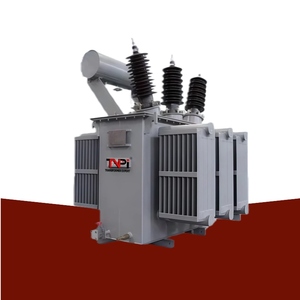
69kV 33kV 10MVA 20MVA 30MVA ONAN Copper Oil Immersed Power Transformer
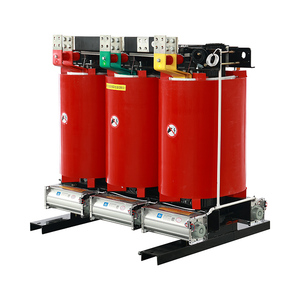
3-Phase Dry Type Isolation Transformer 100kVA High Voltage Industrial Unit
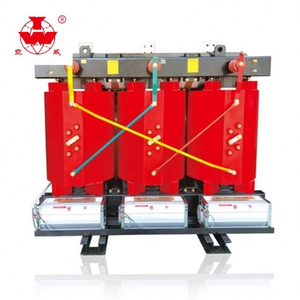
YAWEI 10/11kV 500kVA to 2500kVA Step Down Dry Type Transformer with Fan
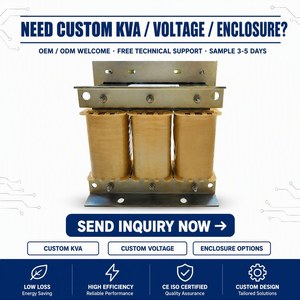
CE Certified 10kVA-50kVA 35kV to 380V/400V Step Down Three Phase Transformer
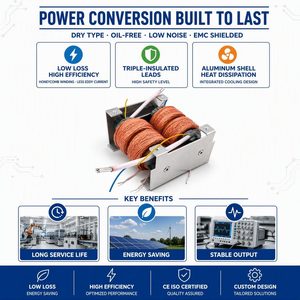
Single Phase 6kV to 220V High Frequency Honeycomb Isolation Transformer
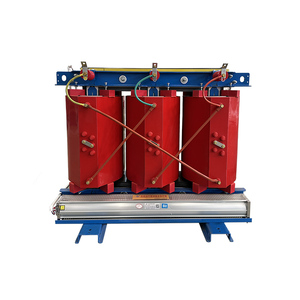
Three Phase 50Hz/60Hz 10kV 35kV Cast Resin Dry Type Transformer
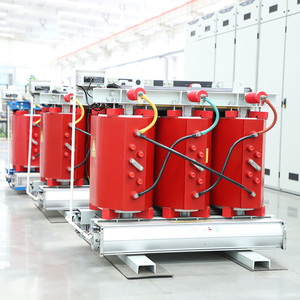
630kVA High Voltage 20kV to 415V 50Hz/60Hz Low Loss Dry Type Transformer
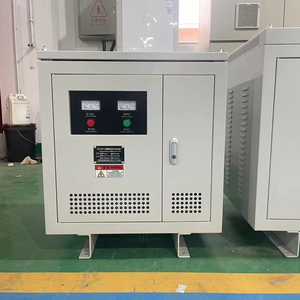
DingXin SG Three Phase Isolation Transformer 440V Input 220V Output
State-of-the-Art Manufacturing & Global OEM/ODM Authority
Backed by tier-1 production facilities in China, complete vertical integration, and world-class testing accreditation.
GEORG Core Cutting Precision
Our manufacturing plants deploy fully automated GEORG (Germany) longitudinal and transverse core-cutting lines. Utilizing high-permeability, laser-treated Cold-Rolled Grain-Oriented (CRGO) silicon steel sheet stock, we achieve minimal step-lap magnetic joint loss, reducing no-load losses by up to 25% compared to conventional standards.
HEDRICH Vacuum Casting
For cast resin dry-type rectifier transformers, our cleanrooms incorporate multi-stage HEDRICH vacuum casting plants. Resins are degassed and cast under zero-pressure void conditions, ensuring partial discharge levels strictly below 5 pC at 1.77Un—far exceeding standard IEC 60076-11 thresholds.
VILAS 1183 Accredited Testing
Every rectifier transformer undergoes comprehensive routine and type testing at our ISO/IEC 17025 accredited laboratory (VILAS 1183). Capabilities include 1000kV lightning impulse voltage testing, temperature rise validation under multi-frequency harmonic currents, and KEMA/ASTA certified short-circuit withstand verification.
Utility & EPC Qualifications
As an approved supplier for major national power grids (including EVN, Aboitiz Power, and top-tier international EPCs), our QA/QC management system operates strictly under ISO 9001:2015, ISO 14001:2015, and ISO 45001:2018 guidelines, supported by complete FAT (Factory Acceptance Test) traceability dossiers.
Global Logistics & Engineering Support
Exporting to over 30 countries across Europe, the Middle East, Southeast Asia, and the Americas. We provide custom site installation supervision, online DGA (Dissolved Gas Analysis) sensor integration, and rapid 24/7 technical field support for industrial greenfield and expansion projects.
Extreme Thermal & Harmonic Design
Specially reinforced structural clamping mechanisms, Continuously Transposed Conductors (CTC), and specialized K-Factor rated ducting withstand the harsh mechanical forces of DC short-circuits and continuous high-amplitude harmonic current excitation.
Technical Whitepaper: Engineering High-Power Industrial Rectifier Transformers
Rectifier transformers serve as the vital electromechanical interface between medium/high-voltage AC electrical distribution grids and high-current DC industrial conversion systems. Unlike standard power transformers operating under clean 50Hz/60Hz sinusoidal wave shapes, rectifier transformers are continuously subjected to severe non-linear harmonic currents, high DC bias components, cyclic thermal stressing, and frequent short-circuit stresses caused by semiconductor commutation faults in diode, thyristor, or IGBT converter bridges.
1. Multi-Pulse Phase Shifting Mechanics for Harmonic Cancellation
Harmonic currents generated by non-linear rectifiers induce severe parasitic heating, voltage waveform distortion, and core saturation in power distribution systems. To mitigate total harmonic current distortion ($THDi$) at the primary grid interface without relying exclusively on large passive filter banks, modern Chinese export engineering utilizes multi-pulse phase-shifting vector configurations.
The theoretical phase shift angle ($\theta$) required for a $P$-pulse converter system is governed by the relation:
$$\theta = \frac{60^\circ}{k} = \frac{360^\circ}{P}$$
Where $P$ is the pulse number and $k$ is the number of 6-pulse bridge combinations. For advanced industrial electrolysis and traction substations, the following pulse configurations are standard:
- 12-Pulse Conversion: Combines Star (Y) and Delta ($\Delta$) secondary windings, achieving a $30^\circ$ phase displacement angle. This inherently eliminates the 5th and 7th harmonic orders ($6n \pm 1$).
- 24-Pulse Conversion: Integrates four secondary windings with extended-delta or zigzag phase-shifting primary/secondary topologies (phase shifts of $+15^\circ, -15^\circ, +45^\circ, -45^\circ$), eliminating the 5th, 7th, 11th, and 13th harmonics.
- 48-Pulse Conversion: Employs multiple phase-shifting transformers working in parallel with precise $\pm 7.5^\circ$ angular offsets, reducing THDi on the primary grid side to well below 3%, fully compliant with IEEE 519-2022 harmonic guidelines.
2. Thermal & Mechanical Stray Loss Management
In high-current rectifier transformers (where secondary currents can exceed 100 kA DC), stray magnetic flux fields induce substantial eddy current losses within structural clamping frames, tank walls, and copper conductors. Unchecked, local eddy current hot-spots can degrade transformer oil or resin insulation within months.
To combat localized thermal runaway, Chinese direct manufacturing utilizes:
- Continuously Transposed Conductors (CTC): Utilizing epoxy-bonded CTC cable strands drastically curtails intra-strand eddy current losses in high-current low-voltage windings.
- Non-Magnetic Stainless Steel Shields & Copper Shunts: Internal structural tie-rods, clamping beams, and tank interiors facing high-current leads are shielded with non-magnetic austenitic stainless steel or high-conductivity copper flux shunts to divert leakage magnetic fields.
- Interphase Transformer (IPT) Coupling: For double-reverse star diode configurations, integrated IPTs balance output currents between parallel-operating rectifier bridges, reducing peak semiconductor stress and secondary winding copper losses.
3. Technical Comparison Matrix: Rectifier Transformer Technologies
| Topology Class | Typical Voltage / Current Range | Harmonic Spectrum (Dominant) | Cooling Medium | Primary Industrial Applications |
|---|---|---|---|---|
| 6-Pulse Diode / SCR | 1kV - 10kV / Up to 10kA | 5th, 7th, 11th, 13th | ONAN / Cast Resin (AF) | Small-scale electroplating, industrial drive DC links. |
| 12-Pulse Dual Secondary | 10kV - 35kV / Up to 35kA | 11th, 13th, 17th, 19th | ONAF / OFAF / Cast Resin | Medium chlor-alkali plants, electric arc furnaces (EAF). |
| 24-Pulse Phase-Shifted | 35kV - 110kV / Up to 80kA | 23rd, 25th, 35th, 37th | ODWF / OFWF Oil-Water | Aluminum smelting, green hydrogen PEM electrolyzers. |
| 48-Pulse Multi-Unit Grid | 110kV - 220kV / 100kA+ DC | 47th, 49th (Minimal THD) | ODWF Forced Directed Oil | Ultra-large scale industrial electrolysis complexes. |
Future Global Procurement & Technological Trends
Analyzing market shifts toward green hydrogen, decarbonized supply chains, and digital smart grid integration.
1. Green Hydrogen & GW-Scale Electrolysis
The global transition toward green hydrogen via PEM (Proton Exchange Membrane) and Alkaline electrolyzers is demanding unprecedented DC rectifying power. Procurements are shifting from isolated sub-10MVA units to modular, multi-megawatt step-down rectifier transformer stations equipped with fast dynamic load-following capabilities to handle intermittent renewable input (Solar PV and Offshore Wind).
2. Carbon Border Adjustment Mechanism (CBAM)
European and international buyers are scrutinizing embedded carbon footprints across transformer supply chains. Chinese exporters are pioneering the use of eco-friendly synthetic/natural ester fluids (FR3) with flashpoints above 300°C alongside ultra-low loss amorphous alloy cores, significantly slashing lifetime greenhouse gas emissions and operational losses.
3. Digital Twin & Fiber-Optic Monitoring
Industrial 4.0 standards now require real-time health intelligence. Advanced rectifier transformers ship with internal fiber-optic temperature sensors embedded directly within hot-spot winding turns, coupled with online dissolved gas monitoring (DGA) and cloud-connected digital twin analytics to predict maintenance cycles before critical failure.
Frequently Asked Questions (Procurement & Technical FAQ)
Expert guidance for engineering procurement managers, utility consultants, and system integrators.
What sets a rectifier transformer apart from a standard AC power distribution transformer?
Rectifier transformers are structurally and electromagnetically designed to handle non-linear DC converter loads. Key differences include heavy mechanical reinforcement to withstand short-circuit forces from valve flashovers, integrated multi-phase secondary phase shifting (e.g., $\pm 15^\circ, \pm 7.5^\circ$), enlarged magnetic cores to prevent saturation from DC bias components, and custom insulation layouts rated for severe high-frequency harmonic thermal stress.
How do I select between Cast Resin Dry-Type and Oil-Immersed Rectifier Transformers?
Cast Resin Dry-Type units (Class F/H insulation) are superior for indoor installations, commercial high-rises, underground substations, and environmentally sensitive zones due to zero risk of liquid leakage and self-extinguishing fire-safety ratings. Oil-immersed units (ONAN/ONAF/ODWF) are preferred for outdoor utility grids, high-voltage applications (>35kV), and ultra-high MVA capacities (up to 50MVA+) where direct fluid thermal management is required for heavy continuous duty.
What data is required when submitting an Inquiry/RFQ to a Chinese wholesale manufacturer?
To receive an optimized engineering drawing and competitive commercial quote, provide: (1) Rated Capacity (kVA/MVA), (2) Primary Input Voltage & Frequency (e.g., 33kV 50Hz), (3) Secondary No-Load DC Voltage & Bridge Configuration (Diode/Thyristor, 6/12/24-pulse), (4) Required Phase Shift Angle, (5) Cooling Method (ONAN/Cast Resin), (6) Ambient Operating Conditions & Altitude, and (7) Applicable Standards (IEC, IEEE, ANSI, CE).
What K-Factor rating should be specified for high-harmonic industrial environments?
For standard 6-pulse industrial SCR drives, K-Factor 13 is typically minimum. For heavy electro-chemical, graphite furnace, or 12-pulse unmitigated conversion, K-Factor 20 or custom harmonic spectrum calculations according to IEEE C57.110 must be performed to correctly size conductor cross-sections and cooling ducts.
How do Chinese manufacturers guarantee compliance with international quality standards like IEC 60076 and IEEE C57?
Leading Chinese exporters operate ISO 9001 quality systems backed by third-party type test certifications from independent laboratories such as KEMA (Netherlands), ASTA (UK), or CNAS/VILAS accredited testing facilities. Complete FAT routines (including winding resistance, voltage ratio, phase displacement check, no-load/full-load losses, and high-voltage dielectric/impulse testing) are conducted on every single produced unit prior to export packaging.
What protection methods are used to prevent harmonic overheating in the transformer tank?
Engineers utilize non-magnetic stainless steel inserts on tank covers around high-current bushings, electromagnetic copper shields lining the inner tank walls, dynamic oil-direct flow channels (ODWF), and Continuously Transposed Conductors (CTC) to suppress eddy currents and eliminate local hot-spot degradation.
Request Custom Technical Specifications & Factory Price List
Partner with China's leading rectifier transformer engineering team. Fast turnaround on custom CAD designs, harmonic spectrum analysis, and competitive factory-direct wholesale pricing.
Get Catalog