Distribution Transformer Technical Articles, Industry Insights & Grid Updates — SOTEK Group
Featured Step-Up Transformer Solutions
Explore top-rated step-up transformers engineered for renewable energy integration, industrial power distribution, and utility substations compliant with IEC 60076 & IEEE C57 standards.
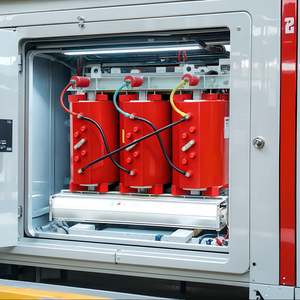
TSTY 6.6KV 6.3KV 6KV Step-Up 250KVA Epoxy Cast Resin Foil Winding Dry Transformer
High-reliability Class F/H insulated dry-type transformer. Features low loss, flame resistance, and superior copper foil winding for robust thermal endurance in indoor substations.
Inquire Now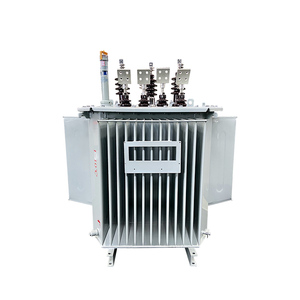
Step Up Transformer 110 To 220 Industrial Power Transformer Distribution Oil Immersed Power Transformer
Heavy-duty oil-immersed power unit designed for smooth stepping up of 110V/220V industrial grids. Hermetically sealed tank delivers max heat dissipation and zero maintenance.
Inquire Now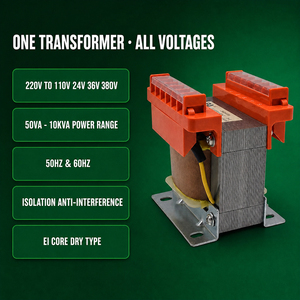
Step up Step Down Transformer 220V to 380V 240V 415V 440V 480V Low Voltage High Power 10kW 50kVA Control Circuit transformers
Versatile low-voltage bi-directional transformer (10kW to 50kVA). Engineered for precise voltage matching in international machinery control circuits and commercial distribution setups.
Inquire Now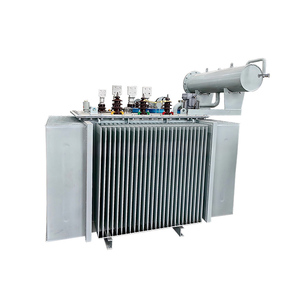
Anboneng Energy Three Phase Oil Immersed Transformer Step Up Step Down Electrical Power Transformer For Substation Use
Substation-grade 3-phase oil transformer engineered for grid step-up operations. High short-circuit withstand rating and long service life under heavy load factors.
Inquire Now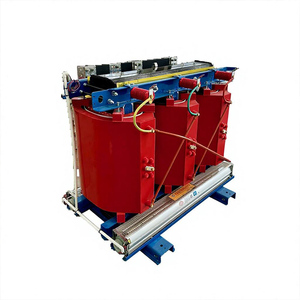
125/160KVA Dry Type Three-Phase Power Transformer 380v/400v 50/60Hz Copper Step-Up Transformer
Compact 125KVA/160KVA dry transformer with 100% pure electrolytic copper conductors. Ideal for clean energy stepping up, commercial buildings, and sensitive low-noise environments.
Inquire Now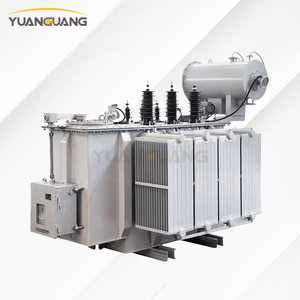
52kV And Below 2.5-100 MVA Step Up/Down High Voltage Oil Immersed Power Transformer Manufacturer For Power/Distribution Station
Utility-scale power transformer (2.5 MVA to 100 MVA) rated up to 52kV. Built for main distribution substations, regional power stations, and renewable energy generation plants.
Inquire Now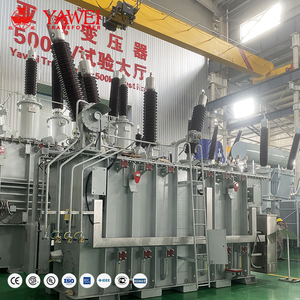
Jiangsu Yawei Transformer Electrical Equipment 110kV 220KV 12.5mVA 16mVA 20mVA Step up Power Distribution transformers
High-voltage step-up transformer series (12.5 MVA to 20 MVA) rated for 110kV/220kV transmission grids. Optimized loss performance with automated OLTC tap changers.
Inquire Now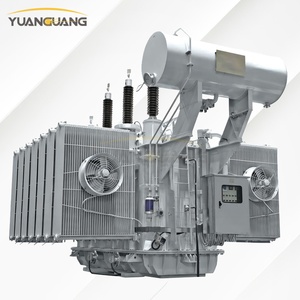
52-230kV 10-300 MVA Step Up/Down High Voltage Oil Immersed Power Transformer Manufacturer For Power/Distribution Station
Ultra-high capacity step-up generator transformer up to 300 MVA and 230kV. Engineered for large power utility interconnects, thermal plants, and offshore wind farm step-up stations.
Inquire NowWhy Leading Global Utilities Source Step-Up Transformers From China
China has solidified its position as the premier manufacturing hub for power and distribution transformers. By integrating advanced European core-cutting machinery with localized high-purity raw materials, Tier-1 Chinese manufacturers deliver grid-ready transformers with unmatched efficiency and competitive lead times.
Precision CRGO Steel Core Cutting
Utilizing state-of-the-art Georg (Germany) fully automated core shear lines with step-lap miter joint stacking. This minimizes magnetic reluctance, reduces eddy current losses by up to 25%, and ensures exceptionally low no-load noise levels.
ISO/IEC 17025 Accredited QA Testing
Every batch undergoes 100% routine testing including winding resistance, voltage ratio, phase vector group verification, insulation resistance, and induced AC withstand test. Short-circuit type test reports from ASTA, KEMA, and CESI are available.
Class F & H Advanced Epoxy Cast Resin
Dry-type transformers feature automated vacuum pressure casting using Huntsman epoxy resins. The non-hygroscopic, flame-retardant, self-extinguishing design achieves partial discharge levels below 5pC, drastically outperforming standard IEC benchmarks.
Global Grid Interconnection Compliance
Designed natively to comply with international standards: IEC 60076, IEEE C57.12.00, ANSI, EN, TCVN, and GOST. Customized vector groups (e.g., Dyn11, Ynd11, YNd11) engineered to match regional utility step-up requirements.
High-Purity Electrolytic Copper Winding
Utilizes 99.99% oxygen-free copper conductors and high-density electrical foil. This structural configuration reduces axial dynamic short-circuit forces during grid faults while maintaining thermal stability up to 180°C hot spot index.
Comprehensive End-to-End Export Support
Full OEM/ODM engineering customization. We provide complete CAD/BIM single-line design packages, custom steel packaging crates for sea freight, fast turnaround quotes, and lifetime technical field support.
Step-Up Transformer Engineering Whitepaper: Design Principles & Grid Integration
A step-up transformer is a specialized electromagnetic static power device designed to elevate alternating current (AC) voltage from a lower input potential to a significantly higher output potential while maintaining proportional current scaling ($V_1 \cdot I_1 \approx V_2 \cdot I_2$). In modern utility networks, renewable energy plants (solar PV and wind), and industrial cogenerators, step-up units serve as the primary gateway linking power sources to high-voltage transmission lines.
Solar PV inverters typically generate low-voltage AC outputs between 400V, 690V, or 800V. Stepping up this voltage to medium distribution levels (e.g., 11kV, 22kV, 33kV, or 35kV) or high-voltage transmission levels (110kV to 230kV) reduces line current squared ($I^2R$) transmission thermal losses by over 90%, preserving system efficiency over long distance grid interconnections.
1. Technical Core Architecture & Winding Physics
Step-up transformers differ fundamentally from standard distribution step-down transformers in their dielectric stress profile, thermal dissipation dynamics, and short-circuit mechanical force distribution. The primary low-voltage (LV) winding experiences extremely high continuous current density, requiring precision foil windings or multi-strand transposed conductors (CTC) to eliminate skin effect and eddy losses.
- Magnetic Core Material: High-permeability, domain-refined cold-rolled grain-oriented (CRGO) silicon steel laminations (e.g., 23ZH085, 20ZH075) assembled in a 45-degree mitered step-lap configuration.
- Basic Impulse Insulation Level (BIL): Engineered to withstand harsh atmospheric lightning surges and switching transients, with BIL ratings ranging from 75kV (for 11kV grids) up to 1050kV (for 220kV grids).
- Vector Group Optimization: Common vector configurations include Dyn11 (for low-voltage neutral grounding isolation) and Ynd11 (for high-voltage transmission interconnects providing a delta trap for 3rd harmonics).
2. Comprehensive Technology Matrix: Dry-Type vs. Oil-Immersed Step-Up Units
Selecting between cast resin dry-type step-up transformers and mineral/ester oil-immersed transformers depends on environmental enclosure conditions, fire hazard ratings, total capacity (kVA/MVA), and installation topography.
| Design Parameter | Cast Resin Dry-Type Step-Up | Oil-Immersed Step-Up Transformer |
|---|---|---|
| Voltage Range | Up to 35 kV Class | Up to 230 kV / 500 kV Class |
| Power Capacity | 50 kVA – 15 MVA | 100 kVA – 300+ MVA |
| Cooling Medium | Natural Air (AN) / Forced Air (AF) | ONAN / ONAF / OFAF (Mineral or Ester Oil) |
| Fire & Environmental Safety | Class F1/E2/C2 non-flammable, self-extinguishing | Requires oil containment pits & deluge fire systems |
| Thermal Endurance | Class F (155°C) or Class H (180°C) insulation | Class A (105°C) with paper-oil insulation matrix |
| Maintenance Profile | Virtually maintenance-free (periodic dust cleaning) | Oil sampling, DGA testing, bushing inspection |
| Typical Applications | Indoor substations, high-rises, mining, data centers | Outdoor solar/wind farms, utility substations, GSUs |
Technology & Sourcing Trends in Step-Up Transformer Manufacturing
As global energy systems transition toward decarbonization, step-up transformers are evolving rapidly to meet new grid challenges. Key technological advancements are reshaping how global procurement teams source transformers from Chinese OEM factories.
1. Integration of Natural & Synthetic Ester Fluids (FR3)
Procurement policies are shifting away from traditional mineral oil toward biodegradable ester fluids like Envirotemp FR3. Ester fluids feature a fire point > 300°C (K-class rating), eliminating structural fire walls and enabling higher transformer overload capacity without thermal degradation of cellulose paper insulation.
2. Amorphous Alloy Cores for Ultra-Low Standby Loss
Amorphous metal ribbon cores are replacing conventional silicon steel in step-up units deployed at intermittent renewable sites (such as solar plants operating at zero capacity overnight). Amorphous cores cut no-load losses ($P_0$) by up to 70-80%, yielding dramatic life-cycle cost (TCO) savings.
3. Multi-Winding Inverter Duty Transformers
With central PV inverters growing in capacity, multi-winding step-up transformers (dual-LV primary or triple-LV primary windings) allow multiple 800V inverters to connect to a single step-up transformer without harmonic cross-talk, significantly lowering balance-of-plant (BOP) procurement costs.
4. Smart Substation Sensors & IoT Monitoring
Modern B2B buyers mandate integrated digital diagnostics. Leading Chinese step-up transformer factories now pre-install fiber-optic winding temperature probes, online Dissolved Gas Analysis (DGA) monitors, moisture sensors, and Modbus/IEC 61850 communication gateways for predictive maintenance.
Step-Up Transformer Procurement FAQ
Answers to essential engineering, factory audit, and import questions for global procurement managers and EPC contractors.
Q1: What is the fundamental operational difference between a step-up and a step-down transformer?
While both rely on Faraday's law of electromagnetic induction, a step-up transformer has more turns on its secondary winding than its primary winding ($N_s > N_p$), thereby increasing output voltage while decreasing output current. Conversely, a step-down transformer reduces voltage. Structurally, step-up transformers must be designed to handle intense continuous current stress and thermal heat on the primary LV input side.
Q2: What technical parameters are required to request an accurate wholesale quote from a Chinese factory?
To receive a precise engineering proposal and pricing quotation, provide: (1) Rated Capacity (kVA or MVA), (2) Primary and Secondary Voltage Ratios (e.g., 0.8kV / 33kV), (3) Frequency (50Hz or 60Hz), (4) Vector Group (e.g., Dyn11, Ynd11), (5) Cooling Method (ONAN, ONAF, AN), (6) Impedance Voltage percentage ($U_k\%$), (7) Tap Changer specification (Off-Circuit DETC or On-Load OLTC), and (8) Applicable Standard (IEC, IEEE, ANSI).
Q3: Why are copper foil windings preferred over round wire for dry-type step-up transformers?
Foil winding technology replaces multi-turn round wires with continuous sheets of electrolytic copper interleaved with Class F/H insulation film. This structure eliminates axial short-circuit forces, optimizes heat distribution, minimizes hot-spot temperatures, and substantially increases the unit's short-time overload capability.
Q4: How do Chinese step-up transformer factories calculate Total Cost of Ownership (TCO)?
TCO evaluates capital cost plus long-term losses over a 30-year design life using the formula: $TCO = \text{Purchase Price} + (A \times P_0) + (B \times P_k)$, where $P_0$ represents no-load loss (core loss), $P_k$ represents load loss (winding copper loss), and $A/B$ represent capitalized loss evaluation coefficients defined by the utility or EPC buyer.
Q5: How are heavy MVA power transformers packaged and protected during ocean shipment?
Large power transformers are vacuum-dried, filled with dry nitrogen gas under positive pressure during transit (to prevent moisture intrusion in the insulation), and fitted with electronic impact/vibration recorders. Core and tank assemblies are shipped in reinforced seaworthy wooden crates or on specialized flat-rack containers with anti-corrosion VCI barrier vacuum wraps.
Q6: Can Chinese manufacturers customize step-up transformers for high-altitude or extreme climatic conditions?
Yes. Standard transformers are designed for altitudes up to 1,000 meters and ambient temperatures from -25°C to +40°C. For solar plants high in mountains (e.g., > 3,000 meters) or desert environments (+55°C ambient), engineering teams adjust creepage distance on bushings, increase insulation thickness, and expand cooling radiator surface areas accordingly.
Partner with Premier Step-Up Transformer Manufacturers
Whether you require compact 250 kVA dry-type transformers for commercial facilities or 300 MVA high-voltage substation step-up transformers for utility power stations, our engineering team provides customized design drawings, competitive B2B factory pricing, and full certification compliance.