Distribution Transformer Technical Articles, Industry Insights & Grid Updates — SOTEK Group
High-Performance Wind Power Transformers
Custom-engineered distribution and step-up transformers designed to handle harsh environmental stresses, harmonic loads, and transient overvoltages in wind farms worldwide.
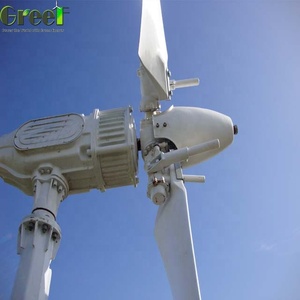
Aluminium Body Small Wind Turbine Generator & Matching Isolation Unit
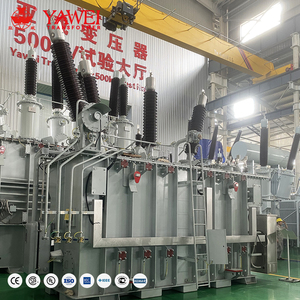
10MVA-20MVA 69kV High-Voltage Oil Power Transformer (Dyn11)
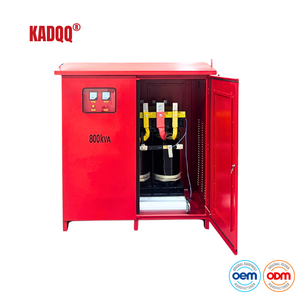
800kVA Three-Phase IP65 Wind Generator Isolation Transformer
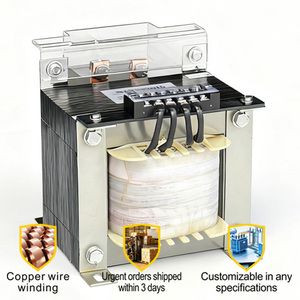
5kVA-10kVA Single-Phase Wind Turbine Control Transformer
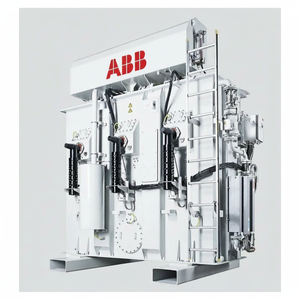
Offshore Nacelle Wind Turbine Transformer 5-25MVA 66kV Class
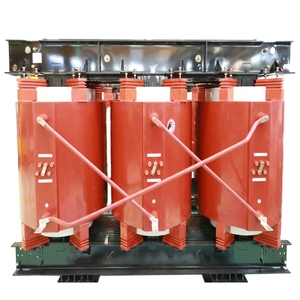
400kVA 10kV Three-Phase Cast Resin Dry-Type Transformer
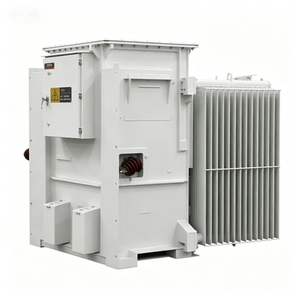
ZGS11-W 50kVA 10/0.69kV Wind Turbine Matching Pad Transformer
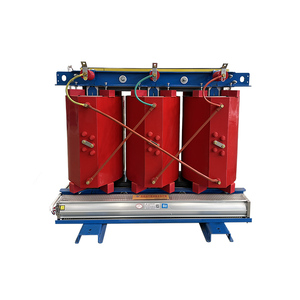
630kVA 10kV/415V Low-Loss Fully Sealed Dry-Type Transformer
Engineering Whitepaper: Next-Generation Wind Power Step-Up Transformers
As global energy transitions accelerate toward carbon neutrality, modern wind energy conversion systems (WECS) demand unprecedented electrical, thermal, and mechanical reliability from power transformers. Unlike conventional utility distribution transformers that operate under stable sinusoidal voltage profiles and predictable loading cycles, a wind turbine step-up (GSU) transformer operates under harsh operational constraints. Positioned either inside the narrow nacelle, at the base of the tower, or within an external pad-mounted enclosure, these transformers must continuously step up low generation voltages (0.69kV, 1.1kV, or 1.38kV) to collector array levels (10kV, 33kV, 35kV, or 66kV) while resisting high-frequency switching harmonics, severe thermal expansion cycles, vibration dynamics, and potential corrosive marine atmospheres.
Electrical Stress Resilience & PWM Harmonics
Modern wind turbines utilize full-scale power converters (IGBT-based PWM converters) to decouple turbine speed from grid frequency. This generates severe high-frequency switching transients ($dv/dt$ voltage spikes) and continuous harmonic distortion. Our specialized wind transformers incorporate electrostatic shields between primary and secondary windings, electro-insulated copper foils, and reinforced turn-to-turn insulation designed specifically to prevent partial discharge (PD) breakdown under non-sinusoidal waveforms.
Structural Vibration & Seismic Integrity
Nacelle-mounted transformers experience continuous multi-axial structural acceleration caused by wind turbulence, rotor imbalance, and yaw rotation. Our transformer cores utilize high-grade Cold-Rolled Grain-Oriented (CRGO) silicon steel stacked with step-lap joints and clamped under heavy-duty structural steel frames engineered to withstand up to 3g continuous acceleration forces without mechanical deformation or core displacement.
Furthermore, thermal management presents a significant engineering hurdle. Wind speeds fluctuate unpredictably, forcing the transformer to cycle rapidly between minimal load and heavy thermal overload. Standard mineral oil dielectric fluids age rapidly under these transient thermal spikes. To mitigate thermal degradation, our China manufacturing facility offers advanced fluid options, including synthetic and natural biodegradable ester liquids (such as MIDEL 7131). These fluids feature high fire points (>300°C), exceptional moisture tolerance, and self-extinguishing safety profiles—critical parameters for unstaffed offshore platforms and dense onshore installations.
Comprehensive Technology Matrix: Dry-Type vs. Fluid-Filled Wind Transformers
| Performance Vector | Cast Resin Dry-Type Transformer | Synthetic Ester Fluid Transformer | Conventional Mineral Oil Transformer |
|---|---|---|---|
| Fire Safety Rating | F1 / Class C Zero Flammability | K-Class (Fire Point > 300°C) | O-Class (Fire Point ~ 140°C) |
| Offshore Corrosion Resistance | IP54 / IP65 External Enclosure | C5-M Hermetically Sealed Steel Tank | Standard C3-C4 Paint Systems |
| Harmonic K-Factor Rating | K-4, K-9, K-13 Customizable | K-9 to K-13 Standard Engineering | Basic K-1 to K-4 Design |
| Footprint & Weight Efficiency | Optimal for Nacelle Footprint | Compact Tank Design | Larger Radiator Envelope |
| Environmental Bio-degradability | Non-polluting solid dielectric | 100% Biodegradable (Non-toxic) | Persistent Hydrocarbon Risk |
| Expected Operating Life | 30+ Years | 35+ Years (Moisture Absorbent) | 20-25 Years (Subject to oxidation) |
China OEM Manufacturing Excellence & Export Authority
As a premier wholesale supplier and global exporter, our state-of-the-art production facilities strictly adhere to international engineering standards, delivering reliability across six continents.
ISO 17025 Accredited Testing Lab
Every transformer undergoes 100% routine testing, including routine lightning impulse withstand tests, partial discharge (PD) analysis, winding resistance measurements, and short-circuit capability verification.
Precision Core Cutting Lines
Equipped with automated Georg CNC silicon steel shear lines and step-lap longitudinal slitting machines, achieving minimum magnetic flux leakage and reduced no-load losses matching EU Tier 2 Eco-Design rules.
Vacuum Pressure Impregnation (VPI)
Our dry-type cast resin transformers utilize vacuum pressure casting technology in negative-pressure chambers, guaranteeing void-free resin encapsulation and partial discharge performance under <5pC.
Global Grid Compliance
Engineered in full compliance with IEC 60076, IEEE C57.12, ANSI, CSA, and EN standards. Verified and pre-qualified for grid integration across North America, Europe, Australia, and Southeast Asia.
Custom OEM/ODM Engineering
Dedicated team of 45+ senior electrical and structural engineers capable of tailoring dimensions, terminal arrangements (elbow connectors, busbar flanging), dual LV windings, and special OLTC/DETC tap changers.
Export Logistics & Packing
Heavy-duty fumigated wooden crates, vacuum moisture-proof foil encapsulation, shock-monitoring sensors, and break-bulk/containerized sea freight solutions directly from Shanghai and Ningbo ports.
Future Procurement Trends in Wind Power Infrastructure (2026-2035)
The wind energy sector is undergoing massive technological shifts. Procurement managers, EPC contractors, and system integrators must anticipate these technological trajectories to ensure long-term asset value, grid code compliance, and minimal levelized cost of energy (LCOE).
1. Transition to 66kV Inter-Array Voltage Networks
To support massive offshore turbines exceeding 12MW to 18MW capacity, global offshore wind farms are transitioning from traditional 33kV collector grids to 66kV arrays. This reduces cable power losses by over 50%. Our factory delivers field-proven 66kV-72.5kV compact step-up transformers designed specifically to fit into slender turbine tower bases.
2. Mandatory Eco-Design & Amorphous Core Adoption
Environmental regulations are tightening globally. The integration of Fe-based amorphous alloy cores into wind transformers is accelerating. Amorphous metal ribbons reduce core (no-load) losses by up to 70-80% compared to standard silicon steel, significantly boosting net energy yields during low-wind standby hours.
3. Smart Digital Twin & IoT Fiber-Optic Monitoring
Unscheduled maintenance on offshore or remote wind farms incurs extreme financial penalties. Next-generation wind transformers feature integrated real-time diagnostic systems, including embedded fiber-optic winding temperature sensors, online Dissolved Gas Analysis (DGA), and smart IoT telemetry for predictive maintenance routines.
4. Biodegradable Ester Fluids Over Mineral Oils
Due to strict environmental protection laws covering marine habitats and agricultural watersheds, ester-filled transformers are fast becoming mandatory. Synthetic esters offer complete biodegradability within 28 days, ensuring zero toxic environmental liability in the event of an accidental breach.
Frequently Asked Questions by Procurement Managers
Everything you need to know about specifying, ordering, and importing wind power transformers from China.
Ready to Secure High-Reliability Wind Power Transformers?
Contact our senior engineering and export division today for competitive B2B wholesale pricing, custom CAD layout drawings, and detailed technical specifications tailored to your project requirements.
Contact Us