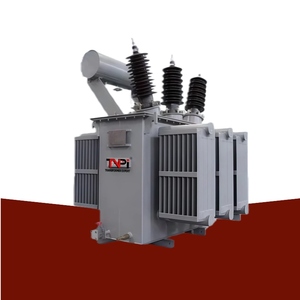
High Voltage Switchgear
69kV 33kV ONAN Vacuum Substation Circuit Breaker & Transformer Module
69kV / 33kV
10MVA–30MVA
IEC 62271
Get Catalog
Explore our custom OEM circuit breakers, step-down transformers, and vacuum isolation units engineered for industrial plants, renewable projects, and utility substations.
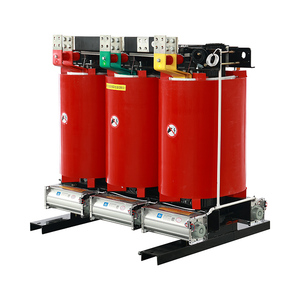
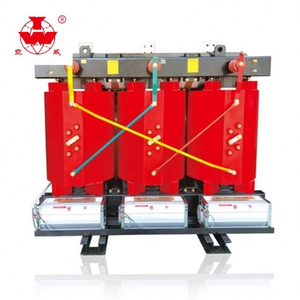
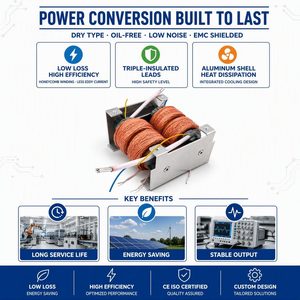
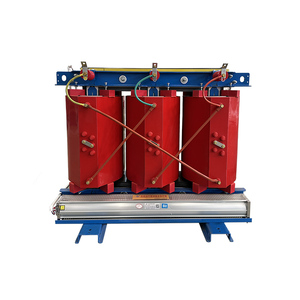
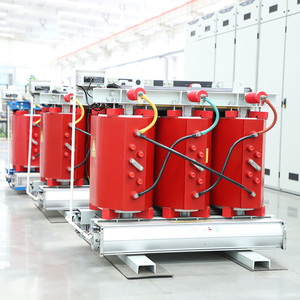
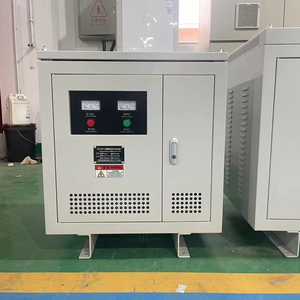
In modern industrial utility infrastructure, commercial power distribution, and renewable energy integration, the demand for high-performance, customized electrical circuit switching and protective interruption devices has reached an unprecedented scale. As global power grids transition toward higher voltage ratings, microgrid decentralization, and high-frequency digital control environments, off-the-shelf circuit breakers frequently fall short of stringent site-specific parameters. A specialized Custom OEM Circuit Breaker Supplier & Exporter acts as a critical link in the global power engineering supply chain, bridging the engineering gap between high-capacity short-circuit clearing capability and customized mechanical enclosures.
Circuit breakers represent the primary defensive baseline against electrical overloads, phase-to-ground faults, arc flashes, and catastrophic thermal runaway. Whether deploying Low-Voltage Molded Case Circuit Breakers (MCCB), Air Circuit Breakers (ACB), Medium-Voltage Vacuum Circuit Breakers (VCB), or Gas-Insulated Switchgear (GIS) modules, procuring directly from an OEM/ODM manufacturing partner provides global EPC contractors, original equipment builders, and utility boards with precise control over short-time withstand currents ($I_{cw}$), arc chamber metallurgy, electronic trip unit (ETU) firmware integration, and environmental enclosure IP ratings.
⚡ Information Gain Technical Metric: Standard off-the-shelf breakers provide fixed thermal-magnetic curves (B, C, D curves). Custom OEM manufacturing allows engineering buyers to specify custom adjustable electronic trip units (LSIG protection), AgSnO2 silver-tin oxide contact metallurgy, extended short-circuit breaking capacity up to 150kA at 415V, and custom busbar pitch alignments for zero-retrofit switchboard integration.
Our manufacturing infrastructure is designed specifically to accommodate custom industrial specifications, private-label branding, and extreme-duty environmental conditions.
We engineer vacuum interrupter chambers, magnetic blowout coils, and specialized silver-cadmium oxide (AgCdO) or silver-tin oxide (AgSnO2) contacts designed for low contact resistance, zero arc-welding, and ultra-fast current interruption within 3 to 5 milliseconds.
Integrate digital Electronic Trip Units (ETU) supporting Modbus-RTU, IEC 61850, and Ethernet/IP protocols. Features real-time waveform capture, harmonic analytics, thermal memory protection, and predictive contact erosion telemetry.
Every custom circuit breaker batch undergoes type testing and routine validation in our ISO/IEC 17025 accredited laboratory (VILAS 1183). Full documentation includes 100kV lightning impulse, temperature rise, and 3-second short-time withstand ($I_{cw}$) reports.
Select the optimal switching architecture based on rated voltage ($U_e$), breaking capacity ($I_{cu}$), contact media, and primary application environment.
| Breaker Type | Rated Voltage ($U_e$) | Rated Current ($I_n$) | Breaking Capacity ($I_{cu}$) | Arc Extinction Medium | Primary Industrial Application |
|---|---|---|---|---|---|
| Vacuum Circuit Breaker (VCB) | 3.6 kV – 40.5 kV / 69 kV | 630 A – 4,000 A | 25 kA – 63 kA | High Vacuum (< 10⁻⁵ Pa) | Utility Substations, Heavy Mining, MV Distribution Switchboards |
| Air Circuit Breaker (ACB) | 400 V – 690 V / 1,000 V | 630 A – 6,300 A | 50 kA – 150 kA | De-ionizing Arc Chutes | Main Low-Voltage Incomers, Data Center Distribution, Marine Power |
| Molded Case Circuit Breaker (MCCB) | 220 V – 690 V / 1,500 V DC | 16 A – 1,600 A | 18 kA – 100 kA | Magnetic Blowout / Arc Plates | Industrial Motor Control Centers (MCC), Solar PV Inverters, BESS |
| Miniature Circuit Breaker (MCB) | 230 V / 400 V AC | 0.5 A – 125 A | 6 kA – 25 kA | Compact Arc Chute | Commercial Distribution Boards, Control Cabinets, Automation Panels |
| SF6-Free Clean Air Switchgear | 12 kV – 36 kV | 630 A – 2,500 A | 25 kA – 40 kA | Dry Air / Vacuum Combination | Eco-Friendly Utility Grids, Wind Power Turbines, Urban Underground Substation |
From preliminary parametric CAD design to full container shipment, our standardized OEM engineering pipeline guarantees 100% compliance with client specifications.
Deep review of electrical single-line diagrams (SLD), ambient temperature limits, $I_{cu}$ parameters, and mounting dimensions.
SolidWorks structural modeling, electromagnetic finite element analysis, and contact thermal simulation.
Precision CNC machining of copper busbars, laser-etched polycarbonate housings, and silver alloy contact assembly.
Dielectric withstand, impulse high-voltage spark testing, short-time withstand, and mechanical endurance cycling.
Robotic calibration of trip springs, automated terminal torque verification, and optical housing inspection.
Custom export packaging, private labeling, complete FAT test dossiers, and FOB/CIF delivery to target port.
The global circuit breaker market is experiencing a profound paradigm shift driven by decarbonization mandates, the rapid expansion of renewable energy microgrids, and the accelerating transition toward smart digital substations. For procurement executives and system integrators, staying competitive requires selecting an OEM supplier capable of anticipating these macro trends:
Sulfur hexafluoride (SF6) has long served as the standard insulating medium in medium- and high-voltage switchgear due to its exceptional dielectric strength. However, with a global warming potential (GWP) 23,500 times higher than CO2, international environmental regulations (such as the EU F-Gas Regulation) are mandating a complete ban on SF6 gas in switchgear up to 24kV by 2026 and up to 145kV by 2030. As a forward-thinking OEM circuit breaker exporter, we have developed eco-friendly alternative vacuum interrupter technology combined with synthetic dry air and fluoronitrile gas mixtures, achieving zero global warming impact without compromising breaking capacity.
With the rapid proliferation of solar photovoltaic systems, battery energy storage systems (BESS), and DC hyper-fast EV charging plazas, traditional mechanical circuit breakers face severe challenges in interrupting direct current (DC) arcs due to the absence of a natural voltage zero-crossing. Solid-State Circuit Breakers (SSCB) utilizing Silicon Carbide (SiC) and Gallium Nitride (GaN) power semiconductors are emerging as the solution of choice for 1,000V DC to 1,500V DC networks. SSCBs offer microsecond-level fault clearance speeds (less than 10 microseconds)—over 1,000 times faster than mechanical alternatives—virtually eliminating arc flash risks in high-energy DC environments.
Modern electrical infrastructure demands zero unscheduled downtime. Traditional passive circuit breakers are being systematically replaced by intelligent breakers equipped with digital Electronic Trip Units (ETU) and integrated wireless sensor arrays. These smart devices continuously monitor real-time temperature rise across contact terminals, dielectric insulation degradation, mechanical operating times, and contact erosion rates. By utilizing Modbus TCP/IP, IEC 61850, and MQTT connectivity, switchgear operators can transition from reactive maintenance to predictive asset management.
Industrial real estate and offshore wind turbine nacelles demand maximum power density in minimal space. OEM suppliers are responding by engineering ultra-compact circuit breakers utilizing high-dielectric epoxy resin encapsulation, optimized thermal dissipation channels, and modular plug-in drawout designs. This allows switchboard builders to increase power density by up to 35% while maintaining compliance with standard temperature rise limits ($T < 65K$).
Combining over 15 years of precision electrical manufacturing expertise with state-of-the-art automated production lines.
Our Tien Son Industrial Park facility features positive-pressure clean rooms for vacuum interrupter assembly, automatic CNC copper busbar bending lines, robotic enclosure welding, and automated vacuum casting chambers.
Certified to ISO 9001:2015 Quality Management and ISO 14001:2015 Environmental standards. Products are fully type-tested and compliant with IEC 60947-2, IEC 62271-100, UL 489, ANSI C37, and CE standards.
Exporting to over 30 countries across North America, Europe, Southeast Asia, Australia, and the Middle East. Approved vendor for leading power utilities (including EVN, Aboitiz Power) and major EPC contractors globally.
Everything you need to know about custom OEM circuit breaker procurement, engineering parameters, quality testing, and ordering logistics.
Ultimate Short-Circuit Breaking Capacity ($I_{cu}$) defines the absolute maximum fault current that a circuit breaker can clear safely without suffering physical destruction or posing a hazard to surrounding equipment. Following an $I_{cu}$ fault interruption, the breaker is deemed inoperable and must be inspected or replaced.
Service Short-Circuit Breaking Capacity ($I_{cs}$) is a much more stringent rating, representing the fault current level that the breaker can clear repeatedly (typically tested under an $O - CO - CO$ duty cycle: Open - Close Open - Close Open) and still remain fully functional for continuous service without degradation of contact resistance or thermal performance. In high-reliability OEM specifications, buyers frequently mandate $I_{cs} = 100\% \, I_{cu}$.
We provide comprehensive white-label OEM and ODM manufacturing services. This includes custom laser-etched faceplates, custom color-coded breaker handles (e.g., red trip indicators for emergency circuits), customized poly-carbonate housing molds, client-branded packaging, and custom-configured terminal busbar hole pitches. Furthermore, we can pre-program digital Electronic Trip Units (ETU) with your proprietary protective curve parameters and company firmware identifiers.
Every production batch is accompanied by comprehensive Factory Acceptance Test (FAT) reports generated in our ISO/IEC 17025 accredited laboratory (VILAS 1183). Depending on the target region, breakers are manufactured and certified under:
We tailor contact metallurgy according to electrical endurance requirements:
For high-altitude installations (> 2,000 meters above sea level), air density decreases, reducing dielectric insulation strength and thermal cooling capacity. We custom-engineer high-altitude breakers with extended creepage distances, upgraded vacuum interrupters, and derated thermal calculation factors.
For marine and tropical coastal environments, we apply conformal anti-salt-spray coatings to electronic trip boards, utilize 316 stainless steel hardware, and apply tropicalized mold-inhibiting insulation treatments compliant with IEC 60068-2-30.
For standard OEM modifications (custom trip settings, branding, terminal adapters), our Minimum Order Quantity starts as low as 50 to 100 units depending on breaker frame size. For completely custom plastic housing molds or ground-up mechanism designs, MOQs are negotiated based on tooling amortization. Typical lead times are 3 to 4 weeks for prototype approval and 4 to 6 weeks for full container production.