Distribution Transformer Technical Articles, Industry Insights & Grid Updates — SOTEK Group
Industrial Electric Furnace Transformers
Custom-built liquid-immersed, dry-cast resin, and rectifier transformers certified under IEC 60076, IEEE C57, and ISO 9001 standards.
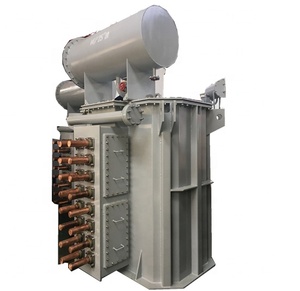
- Rated Capacity: Up to 10MVA
- Primary Voltage: 35kV Class
- Cooling System: OFWF (Forced Oil/Water)
- Duty: Heavy Arc Smelting & Metal Reduction
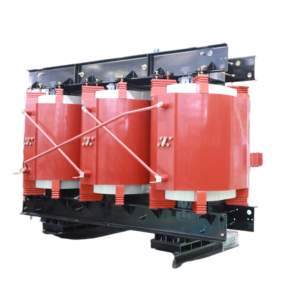
- Rating: 315kVA / 10kV Primary
- Winding Material: 100% Electrolytic Copper
- Insulation Class: Class F / H Dry Type
- Certification: CE, ISO 9001, IEC 60076-11
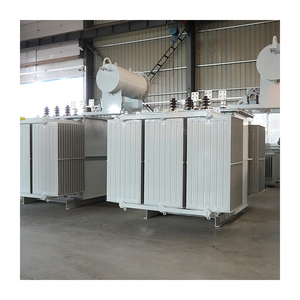
- Primary Voltage: 11kV / 22kV / 33kV
- Pulse Configuration: 6, 12, or 24-Pulse Shift
- Core: High-Permeability Laminated CRGO
- Frequency: 50Hz / 60Hz Universal
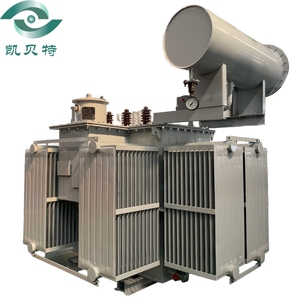
- Power Capacity: 750kVA Rating
- Multi-Tapped Outputs: 110V to 480V
- Secondary Amperage: Ultra-High Current
- Design: Reinforced Electromagnetic Bracing
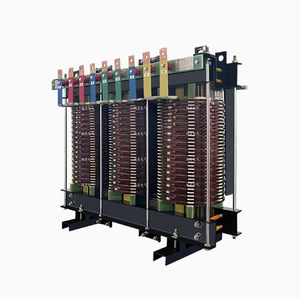
- Voltage Setup: 380V / 127V Step-Down
- Application: Salt Bath Heat Treatment
- High-Current Output: Integrated Copper Busbars
- Duty Cycle: Continuous Thermal Endurance
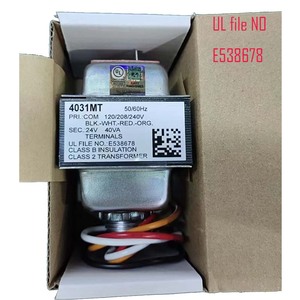
- Power Capacity: 100W Control Rating
- Structure: EI Laminated Core
- Warranty: 2-Year Full OEM Warranty
- Target Use: Furnace Automation & Relay Systems
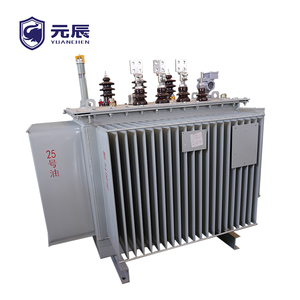
- Utility Rating: 20MVA Heavy Smelting
- Tap Change: On-Load Tap Changer (OLTC)
- Cooling Mode: ONAN / ONAF Forced Cooling
- Standards: IEC 60076, IEEE C57 Compliant
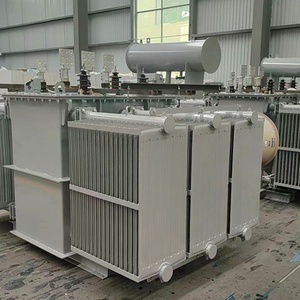
- Capacity: 4500kVA to 5000kVA
- Voltage Profile: 36.5kV to 690V
- Frequency: 50Hz / 60Hz Dual Rated
- Duty: Continuous Silicon & Steel Smelting
Industrial Furnace Transformers: Engineering Whitepaper & Industry Standard
Electric furnace transformers are the structural backbone of modern metallurgical smelting, chemical electrolysis, ferroalloy production, and scrap steel recycling. Unlike standard grid distribution transformers—which experience relatively stable voltage profiles and steady thermal loads—industrial furnace transformers operate under extreme electrical, thermal, and mechanical stresses. They are tasked with stepping down high primary transmission voltages (typically 10kV, 22kV, 35kV, or 69kV) down to extremely low secondary voltages (ranging from 50V up to 1,000V) while supplying extraordinary current volumes that frequently exceed 10,000A to 100,000A.
During standard operational cycles of an Electric Arc Furnace (EAF) or Submerged Arc Furnace (SAF), the transformer is repeatedly subjected to short-circuit conditions ("arc-shattering"), severe harmonic pollution (THD), instantaneous overcurrent surges, and violent mechanical forces resulting from electromagnetic field interactions ($F \propto I^2$). Achieving operational longevity requires custom engineering: reinforced coil clamping systems, multi-layer interleaved copper busbars, advanced forced liquid cooling (OFWF/ONAF), and tight magnetic flux control to prevent structural tank heating.
Key Technical Paradigm: Low Voltage & Ultra-High Secondary Amperage
In electric arc furnace applications, the primary parameter governing productivity is active thermal energy deliverability ($P = I^2 R$). Minimizing internal winding impedance while engineering specialized water-cooled copper busbar outputs is vital to preventing hotspot formation and insulation degradation over a 30-year operational life.
Enterprise OEM Manufacturing Capabilities & Quality Assurance
As a global OEM transformer manufacturer backed by over 18,500 square meters of modern manufacturing facilities, our production ecosystem is built around precision engineering, ISO 9001:2015 quality management systems, and ISO 14001:2015 environmental standards. We engineer fully customized transformer solutions tailored to the stringent duty cycles of international EPC contractors, steel plant operators, and chemical refining complexes.
Georg Precision Core Cutting
Utilizing automated German Heinrich Georg CNC laser cutting and step-lap stacking lines to process high-permeability grain-oriented silicon steel (CRGO). This reduces no-load losses by up to 25% and lowers operational sound levels.
VILAS 1183 Accredited Testing
Our in-house laboratory (ISO/IEC 17025 VILAS 1183 certified) performs 100% routine testing, including lightning impulse withstand, partial discharge measurement, temperature rise testing, and short-circuit withstand validation.
Hedrich Vacuum Drying & Casting
Equipped with Hedrich vacuum pressure impregnation (VPI) and epoxy casting chambers. Ensures complete gas elimination, preventing internal micro-voids and partial discharge levels (<5 pC at rated voltage).
Custom On-Load Tap Control
Integrated On-Load Tap Changers (OLTC) and De-Energized Tap Changers (DETC) featuring up to 27 voltage step regulating taps, providing real-time secondary voltage modulation to handle arc melting furnace phases.
Harmonic Mitigation & Phase Shift
Specialized 6, 12, 24, and 48-pulse phase-shifting rectifier designs (Delta, Wye, Extended Delta) engineered to neutralize 5th, 7th, 11th, and 13th harmonic currents, keeping grid THD compliant with IEEE 519 standards.
Heavy Water-Cooled Busbar Connections
Custom-milled oxygen-free copper busbars engineered for OFWF forced water/oil heat exchanger systems. Reduces secondary copper losses and prevents terminal overheating under continuous current loads.
Application Comparison Matrix: Selecting the Right Furnace Transformer
Due to distinct thermal profiles, harmonic footprints, and electrical load dynamics across industrial processes, selecting the correct furnace transformer topology is vital to plant profitability and energy efficiency. Below is an engineering overview comparing major transformer configurations:
| Transformer Type | Typical Capacity Range | Primary / Secondary Volts | Cooling Protocol | Dominant Operational Stress | Key Industry Application |
|---|---|---|---|---|---|
| Electric Arc Furnace (EAF) | 5 MVA – 150 MVA | 10kV – 69kV / 100V – 1,200V | OFWF / ONAF Forced Liquid | Frequent dead short-circuits, severe mechanical arc shocks | Steel scrap melting, direct reduced iron (DRI) smelting |
| Submerged Arc Furnace (SAF) | 3 MVA – 80 MVA | 11kV – 35kV / 50V – 400V | OFWF / ONAN Liquid | Continuous 24/7 thermal stress, high secondary currents | Ferroalloy, ferrosilicon, calcium carbide, phosphorus smelting |
| Rectifier Furnace Transformer | 800 kVA – 30 MVA | 6kV – 35kV / 100V – 800V DC | ONAF / OFWF / Dry Cast | Severe harmonic current distortion (THD), phase ripple | Aluminum smelting, copper electrowinning, graphite production |
| Salt Bath Heat Treatment | 50 kVA – 500 kVA | 220V – 6 kV / 5V – 127V | ONAN / Dry Type Air | Ultra-low voltage, localized thermal conduction, compact footprint | Precision tool hardening, metal annealing, salt bath heating |
| EI Auxiliary Control Transformer | 50 VA – 5 kVA | 110V – 480V / 12V – 110V | AN (Air Natural) Dry | Control circuit noise suppression, uninterrupted continuous duty | Furnace automation panels, PLC power supplies, safety interlocks |
Future Trends: Decarbonization, Green Steel, & Smart Grid Monitoring
The global metallurgical sector is undergoing an unprecedented structural transition toward low-carbon manufacturing. The global push for "Green Steel"—driven by Hydrogen-Direct Reduced Iron (H2-DRI) technology and modern scrap-based Electric Arc Furnaces—is dramatically altering procurement criteria for heavy furnace transformers through 2030 and beyond.
1. Transition to Biodegradable Ester Fluids
Industrial operators are increasingly replacing mineral oil with synthetic or natural ester dielectric fluids (e.g., Cargill FR3). Ester fluids feature fire points exceeding 300°C (Class K insulation rating) and are 100% biodegradable, drastically lowering environmental containment costs in ecologically sensitive areas.
2. AI-Driven Online DGA & Thermal Digital Twins
Modern furnace transformers are equipped with real-time Dissolved Gas Analysis (DGA) sensors, fiber-optic winding temperature probes, and IoT telemetry. Integrated edge-AI systems build dynamic "Digital Twins" of the transformer, predicting insulation breakdown weeks before catastrophic failure occurs.
3. High-Pulse Rectification for Electrolysis
As green hydrogen production scales globally via megawatt-class water electrolyzers, demand for 24-pulse and 48-pulse rectifier transformers with minimal phase ripple is surging. These specialized units ensure total harmonic distortion (THD) remains below 2%, optimizing power factor correction.
Frequently Asked Questions (FAQ) for OEM Procurement & Engineering
What distinguishes an arc furnace transformer from a standard grid power transformer?
An Arc Furnace Transformer is specifically designed to handle extreme currents at low voltages and withstand continuous electrical short circuits caused by melting scrap metal striking electrodes. Standard power transformers operate at steady loads, whereas furnace transformers feature reinforced physical coil clamping, interleaved low-voltage copper busbars, high K-factor harmonic tolerance, and rapid secondary voltage step adjustment via On-Load Tap Changers (OLTC).
How do 6-pulse, 12-pulse, and 24-pulse rectifier transformers improve power quality?
Rectifier transformers convert AC grid power to DC for chemical electrolysis or DC arc furnaces. By introducing precise electrical phase shifts between secondary windings (e.g., 30° shift for 12-pulse, 15° shift for 24-pulse), low-order harmonic currents (5th, 7th, 11th, 13th) cancel each other out before entering the utility grid. This minimizes total harmonic distortion (THD), prevents capacitor bank overheating, and avoids power factor penalties.
What cooling systems are recommended for high-capacity ore smelting transformers?
For ore smelting and heavy arc furnace applications above 10 MVA, Forced Oil / Forced Water cooling (OFWF) or Forced Oil / Forced Air cooling (ONAF) is strongly recommended. OFWF utilizes compact plate heat exchangers where oil is pumped through external water-cooled heat exchangers. This configuration provides ultra-compact thermal dissipation, protecting active transformer components under continuous 100% duty cycles.
Can your engineering team custom design output busbar configurations for existing furnaces?
Yes. As a custom OEM factory, we manufacture secondary copper busbar extensions tailored to match your existing melt shop floor layout, flexible cable arrangements, or water-cooled delta-closure connections. We provide 3D CAD modeling (STEP/DWG files) during the approval stage to guarantee zero-interference fitment during plant retrofits.
What international standards do your OEM furnace transformers comply with?
All custom furnace transformers manufactured in our factory strictly adhere to IEC 60076 (Power Transformers), IEC 60076-8 (Application Guide for Power Transformers), IEC 60146 (Semiconductor Converters), IEEE C57.12.00, IEEE C57.17 (Arc Furnace Transformers), and ISO 9001:2015 quality assurance protocols. Complete Factory Acceptance Testing (FAT) documentation is provided with every order.
What is the typical manufacturing lead time for custom industrial furnace transformers?
Standard manufacturing lead time ranges between 6 to 12 weeks following approval of technical drawings, depending on MVA capacity, voltage regulation complexity (OLTC vs. DETC), and material specifications (copper vs. aluminum windings). Fast-track OEM production slots are available for emergency replacements.
Request a Custom Engineering Proposal & Technical Quote
Consult directly with our Senior Transformer Power Engineers. Submit your single-line diagrams (SLD), duty cycle requirements, and target output voltage specifications today.