Distribution Transformer Technical Articles, Industry Insights & Grid Updates — SOTEK Group
Featured Aluminum & Copper Winding Transformer Solutions
Engineered to rigid IEC 60076, IEEE C57, and ISO 9001 standards. Explore our heavy-duty distribution, dry-type resin, and substation step-down transformers manufactured for international utility grids and industrial applications.
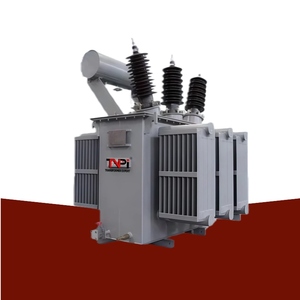 Substation Class
69kV 33kV 10MVA–30MVA ONAN Substation Step Down Power Transformer
- Voltage Class: 69kV / 33kV / 11kV
- Rated Capacity: 10MVA to 30MVA
- Cooling & Fluid: ONAN / ONAF Mineral Oil
- Standard: IEC 60076 / IEEE C57
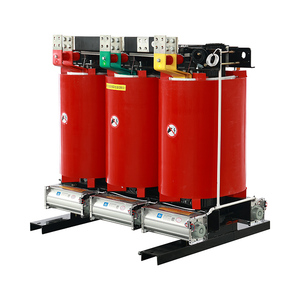 Industrial VPI
3-Phase Dry Type Isolation Transformer 100kVA High Voltage Industrial Unit
- Capacity Rating: 100 kVA
- Phase / Freq: 3-Phase / 50Hz/60Hz
- Insulation Class: Class F / Class H
- Winding Material: EC-Grade Al / Cu
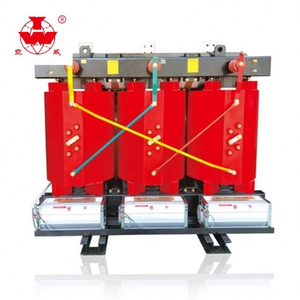 Forced Air Cooling
YAWEI 10/11kV 500kVA–2500kVA Dry Type Transformer with Cooling Fan
- Primary Voltage: 10kV / 11kV
- Capacity Range: 500kVA – 2500kVA
- Cooling System: AF Cross-Flow Fans
- Enclosure Rating: IP20 / IP23 Option
 CE Certified
CE Low-Frequency 10kVA–50kVA 35kV to 380V/400V Step Down 3-Phase Transformer
- High Voltage Side: 35 kV
- Secondary Side: 380V / 400V / 415V
- Power Range: 10kVA to 50kVA
- Core Design: CRGO Silicon Steel
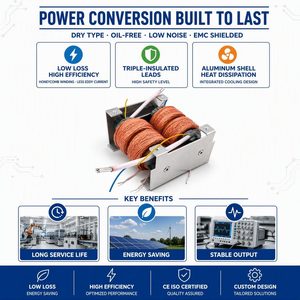 Honeycomb Custom
Single Phase 6kV to 220V High Frequency Honeycomb Isolation Power Transformer
- Topology: Single-Phase Custom
- Voltage Ratio: 6kV / 220V
- Winding Structure: Honeycomb Layered
- Application: Industrial Isolation
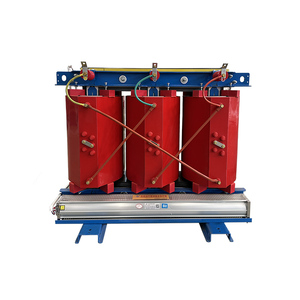 Cast Resin F1
Three Phase Dry Type 10kV 35kV Cast Resin Transformer 50Hz/60Hz
- System Voltage: 10kV / 35kV Class
- Frequency: 50Hz / 60Hz Universal
- Fire Resistance: F1 Self-Extinguishing
- Manufacturing: Vacuum Cast Epoxy
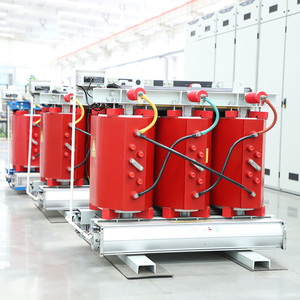 Eco-Design Tier 2
630kVA High Voltage 20kV to 415V Low Loss Dry Type Power Transformer
- Rated Power: 630 kVA
- Voltage Matrix: 20kV Step-Down 415V
- Loss Efficiency: Reduced Load Loss (Pk)
- Thermal Class: 155°C (Class F)
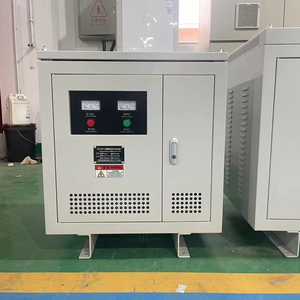 DingXin Series
DingXin SG IEC60076 Three Phase Dry Isolation Transformer 440V to 220V
- Input / Output: 440V In / 220V Out
- Certification: IEC60076 / ISO / CE
- Winding Option: High Conductivity Al/Cu
- Type: SG Step Down Isolation
EC-Grade Aluminum vs. Electrolytic Copper Windings
A comparative analysis of physical, electrical, and commercial parameters evaluating Electrical Conductor (EC) Grade Aluminum (AA1350/AA8000 series) against Oxygen-Free Electrolytic Copper in modern transformer manufacturing.
| Engineering Property | EC Aluminum (AA1350-O / AA8000) | Electrolytic Copper (ETP Cu) | Procurement & Operational Impact |
|---|---|---|---|
| Electrical Conductivity | 61.8% IACS | 100% IACS | Aluminum requires ~1.6x cross-section area to match electrical rating. |
| Mass Density ($\mathbf{g/cm^3}$) | 2.70 g/cm³ | 8.89 g/cm³ | Aluminum delivers over 50% total weight reduction for equivalent capacity. |
| Coefficient of Thermal Expansion | $23 \times 10^{-6} /\text{K}$ | $17 \times 10^{-6} /\text{K}$ | AA8000 alloy matches thermal expansion rates of epoxy resin in cast dry-types. |
| Short-Circuit Stress Resilience | High Elastic Flexibility | High Tensile Rigidity | Foil aluminum winding provides uniform axial force distribution under faults. |
| Bi-Metallic Joining Technology | Friction Stir / Ultrasonic Welding | Standard Brazing | Eliminates galvanic corrosion when using copper-clad transition plates. |
| Material Cost Stability Index | Low Volatility | High Volatility | Lowers capital expenditure (CAPEX) by 15% to 30% per MVA installed. |
Why Leading Utilities Partner with Our Aluminum Winding Plants
Precision Automated Strip Winding
Utilizing Georg computer-controlled foil winding machines to eliminate hot spots, optimize interlayer insulation tension, and maintain zero mechanical tolerance errors across high-volume production lines.
Vacuum Pressure Impregnation (VPI)
Deep vacuum resin extraction under < 2 mbar ensures complete bubble-free epoxy resin penetration, guaranteeing partial discharge levels below 10 pC for exceptional dielectric endurance.
ISO 17025 Accredited FAT Testing
Every OEM batch undergoes 100% routine and type testing—including lightning impulse withstand, short-circuit withstand validation, and acoustic sound pressure profiling in our VILAS 1183 certified laboratory.
1. Technical Executive Summary: The Shift to Advanced Aluminum Winding
In global power distribution and utility-scale step-down substations, the selection of conductor metallurgy is a cornerstone engineering decision determining capital expenditure (CAPEX), total cost of ownership (TCO), thermal dissipation efficiency, and long-term grid reliability. Historically dominated by oxygen-free electrolytic copper (ETP Cu), the transformer manufacturing industry has undergone a technological revolution driven by advanced metallurgical processing of Electrical Conductor (EC) Grade Aluminum strips and AA8000 series alloys.
Modern OEM/ODM transformer manufacturing facilities—such as SOTEK Group, YAWEI, and DingXin—have integrated state-of-the-art automated strip-winding equipment, cold-welding bi-metallic transition units, and vacuum casting technology. These innovations directly address legacy engineering concerns regarding aluminum's thermal expansion coefficient and mechanical creep. Consequently, EC-grade aluminum windings now offer equivalent or superior electromagnetic performance, reduced mechanical mass stress during seismic or short-circuit events, and significant protection against global copper commodity price volatility.
2. Electromagnetic & Metallurgical Mechanics of Aluminum Conductors
Understanding the operational behavior of aluminum-wound transformers requires a rigorous examination of electromagnetic field theory, skin effect dynamics, thermal dissipation, and stress mechanics under severe grid fault conditions.
2.1 Conductivity, Cross-Sectional Scaling, and Eddy Current Loss
The electrical conductivity of EC-Grade Aluminum (AA1350-O) is rated at approximately 61.8% of the International Annealed Copper Standard (IACS). To achieve an identical current-carrying capacity ($I_{\text{rated}}$) and maintain thermal rise limits within specified insulation classes (e.g., Class F 155°C or Class H 180°C), the cross-sectional area of an aluminum conductor ($A_{\text{Al}}$) must be scaled by a factor of 1.56 relative to a copper conductor ($A_{\text{Cu}}$):
A_Al = A_Cu × (100 / 61.8) ≈ 1.61 × A_Cu
While an increased cross-sectional area requires a slightly larger core window height and oil tank volume, the density of aluminum ($2.70 \text{ g/cm}^3$) compared to copper ($8.89 \text{ g/cm}^3$) results in a dramatic weight reduction. The total mass of the winding is calculated as:
m_Al = V_Al × d_Al = (1.61 × V_Cu) × (2.70 / 8.89) × m_Cu ≈ 0.488 × m_Cu
This physical reality allows modern aluminum-wound transformers to deliver a 50% net weight savings in active conductor mass, substantially reducing load stress on mounting poles, substation slabs, transport vessels, and support structures.
2.2 Thermal Expansion Matching and Mechanical Short-Circuit Force Distribution
One of the primary historical challenges with aluminum in dry-type resin-encapsulated transformers was the thermal coefficient mismatch between pure aluminum and epoxy resin systems. Standard pure aluminum expands at $23 \times 10^{-6} /\text{K}$, whereas epoxy casting compounds typically exhibit thermal expansion rates between $18 \times 10^{-6} /\text{K}$ and $20 \times 10^{-6} /\text{K}$.
To overcome this, leading OEM factories utilize customized AA8000 series aluminum-iron-silicon alloys. The micro-alloying elements stabilize grain structures, enhance creep resistance by over 300% under continuous high-temperature stress, and align thermal expansion characteristics perfectly with filled epoxy resins (silica quartz formulation). Under heavy short-circuit fault conditions, short-circuit forces generate extreme radial bursting and axial compressive forces ($F \propto I^2$). Because modern OEM plants employ wide aluminum strip/foil windings across the entire coil height rather than discrete wire turns, axial short-circuit forces are virtually eliminated, preventing mechanical displacement, insulation shearing, and turn-to-turn dielectric breakdown.
3. Advanced Manufacturing & OEM Customization Process
Producing international-grade aluminum transformers demands stringent manufacturing controls. Below is the multi-stage engineering workflow implemented across ISO 9001:2015 certified production lines:
- Laser-Guided Core Cutting: Utilizing high-permeability, cold-rolled grain-oriented (CRGO) silicon steel sheets cut on automated Georg lines with step-lap joints. This minimizes no-load losses ($P_0$) and acoustic noise levels in compliance with IEC 60076-10.
- Automated Foil Winding: High-density EC aluminum foil is wound with inter-layer insulation (such as Class H Nomex or diamond-spotted paper). Edge-burr monitoring guarantees smooth foil edges, preventing localized electrical stress concentrations.
- Friction Stir & Ultrasonic Bi-Metallic Welding: Connection terminals between aluminum foil layers and copper busbars undergo high-pressure friction stir welding or ultrasonic cold welding. This process creates a molecular bond without oxidation, eliminating galvanic corrosion potential ($E^0 > 0.15\text{V}$) at the Cu-Al junction.
- Vacuum Pressure Impregnation (VPI) & Cast Resin Enclosure: For dry-type transformers, coils undergo multi-stage vacuum drying followed by epoxy resin casting under high vacuum (< 2 mbar). This ensures complete impregnation without micro-voids, yielding partial discharge ratings under 10 pC.
- Comprehensive Routine & Type Testing: Final assemblies undergo complete factory acceptance testing (FAT) including winding resistance, voltage ratio, phase displacement, short-circuit impedance, dielectric withstand, and lightning impulse tests up to 69kV class.
4. Future Global Procurement Trends in Transformer Sourcing (2026–2035)
As power grids worldwide adapt to renewable energy integration, electric vehicle charging infrastructure, and industrial electrification, procurement managers and EPC contractors are restructuring their supply chain strategies. Key trends shaping the future of transformer procurement include:
4.1 Adoption of Eco-Design Tier 2 and Ultra-Low Loss Directives
Energy efficiency regulations—such as the EU EcoDesign Directive Tier 2 and North American DOE 2016 standards—mandate strict upper limits on load loss ($P_k$) and no-load loss ($P_0$). Aluminum strip transformers configured with low-loss CRGO or amorphous alloy cores easily satisfy these standards. By optimizing foil thickness and conductor geometry, manufacturers achieve high energy efficiency without the extreme cost penalties associated with heavy copper constructions.
4.2 ESG Compliance, Circular Economy, and Supply Chain Sustainability
Enterprise procurement teams are increasingly evaluated on Scope 3 carbon footprint metrics. Aluminum manufacturing and recycling require significantly less energy per unit of conductivity when derived from green-smelted sources (hydro-powered aluminum production). Furthermore, aluminum's lower raw material cost volatility provides EPC firms with stable pricing for multi-year utility infrastructure rollouts, reducing financial risk in fixed-price bids.
4.3 Smart Sensing & Embedded Fiber-Optic Thermal Monitoring
Next-generation OEM aluminum transformers are increasingly specified with integrated fiber-optic temperature sensors embedded directly within the innermost aluminum foil layers. This provides real-time, high-accuracy hot-spot temperature telemetry to SCADA systems, enabling predictive maintenance, dynamic load management, and extended transformer operational lifespans in smart grids.
5. Enterprise Strengths & Global Logistics Capabilities
Representing state-of-the-art Asian manufacturing power, our partner manufacturing facilities (including SOTEK Group, YAWEI, and DingXin) operate within sprawling modern industrial zones spanning over 18,500 square meters. Equipped with complete end-to-end processing capabilities—from core cutting and automatic winding to automated corrugated tank welding and VPI casting—our facilities supply trusted distribution infrastructure across 30+ countries.
With verified supplier status for major utilities (including Vietnam Electricity EVN and Aboitiz Power Philippines), our engineering groups deliver custom OEM/ODM solutions tailored to diverse grid environments. Whether supplying severe tropical coastal environments requiring C5-M anti-corrosion marine paint coatings or seismic-rated step-down substations, our export team manages complete FOB, CIF, or DDP logistics with full international documentation.
Frequently Asked Questions on Aluminum Winding Transformers
Direct technical insights for utility engineers, B2B buyers, and EPC procurement leads regarding material specifications, design standards, and operational performance.
Request Full Engineering Specifications & Technical Catalog
Need detailed CAD dimensional drawings, loss matrices, or custom OEM/ODM quote proposals for your upcoming grid project? Contact our senior engineering sales team today.
Get Catalog