Offshore Step-Down
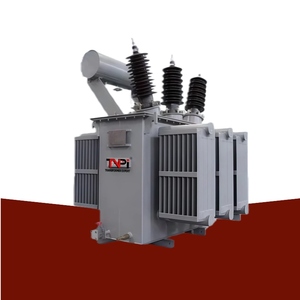
69kV 33kV Substation ONAN Oil Marine Power Transformer
Heavy-duty 10MVA to 30MVA step-down copper oil-immersed power transformer designed for offshore platforms and substation grids with C5-M anti-corrosion rating.
Designed specifically for naval architects, shipyard EPCs, and offshore system integrators. Engineered to withstand high vibration, salt mist corrosion, ambient temperatures up to 55°C, and stringent electromagnetic compatibility (EMC) regulations.
Offshore Step-Down
Heavy-duty 10MVA to 30MVA step-down copper oil-immersed power transformer designed for offshore platforms and substation grids with C5-M anti-corrosion rating.
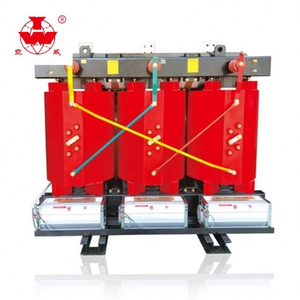
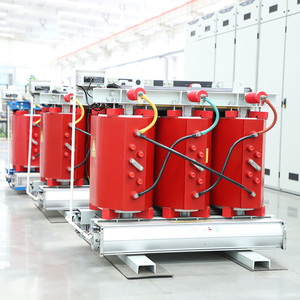
Shipboard Isolation
High-voltage VPI (Vacuum Pressure Impregnation) dry-type isolation transformer engineered for shipboard auxiliary power, eliminating harmonic interference.
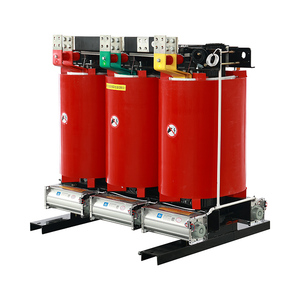
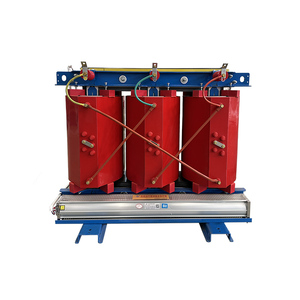
Forced Air Cooling
High-capacity step-down dry-type transformer equipped with low-noise cross-flow cooling fans, engineered for commercial vessel propulsion and main switchboards.
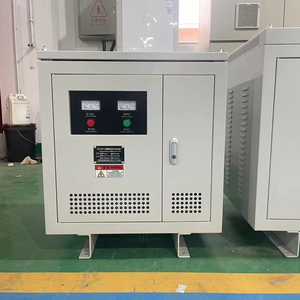
Multi-Voltage Step-Down
Compact 10kVA-50kVA multi-tap low-frequency transformer designed for specialized marine electronics, emergency power distribution, and SMPS isolation systems.
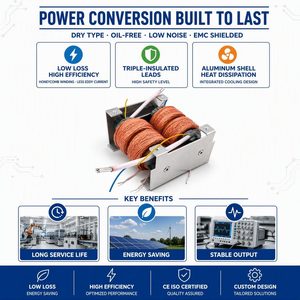
Custom OEM Single-Phase
Precision-engineered high-frequency isolation transformer featuring honeycomb winding topology for high thermal dissipation in tight shipboard compartments.
Dual Frequency 50/60Hz
Dual-frequency marine power transformer designed for international vessels operating across both 50Hz shore power and 60Hz shipboard generator networks.
Auxiliary Power 630kVA
Ultra-low loss 630kVA dry-type transformer optimized for vessel low-voltage distribution, HVAC units, dynamic positioning systems, and engine room auxiliaries.
IEC60076 / ISO Certified
Standard shipboard distribution transformer converting 440V main bus to 220V lighting, galley, and control system circuits. Fully compliant with IEC 60076 and ISO standards.
Operating in marine environments leaves zero margin for electrical failure. Humidity, salt spray, continuous hull vibration, and restricted ventilation present severe stress factors to electrical insulation systems. As a specialized OEM/ODM marine transformer supplier and global exporter, our engineering facilities integrate automated production technologies with rigorous marine classification compliance.
We engineer tailored electrical topologies ranging from multi-winding phase-shifting drive transformers for Variable Frequency Drives (VFD) to ultra-compact VPI transformers designed specifically for tight vessel machinery spaces.
Utilizing high-grade vacuum pressure impregnation (VPI) with Class H/F solvent-free resin epoxy, our coils are completely sealed against moisture, salt fog ingress, and airborne contaminants, securing superior dielectric breakdown strength.
Our stainless steel (316L/304) and hot-dip galvanized steel enclosures undergo multi-stage surface treatments compliant with ISO 12944 C5-M, guaranteeing decades of protection in severe offshore salt spray environments.
Coils are mechanically locked with heavy-duty clamping structures and specialized shock absorbers capable of handling continuous pitch, roll, and structural hull vibrations exceeding 3G forces without mechanical degradation.
All designs adhere strictly to international marine standards including IEC 60092-303, IEEE 45, and key maritime classification societies such as DNV, ABS, Lloyd's Register (LR), Bureau Veritas (BV), and RINA.
Equipped with state-of-the-art testing bays (KEMA/ASTA aligned protocols), every marine transformer undergoes complete routine tests, temperature rise tests, lightning impulse tests, and partial discharge measurements.
Selecting the correct transformer technology depends on vessel space, thermal rating, flame-retardancy requirements, and location (engine room, deckhouse, or hazardous area).
| Engineering Metric | VPI Dry-Type Transformer | Cast Resin Dry Transformer | Eco-Ester Fluid Marine Transformer |
|---|---|---|---|
| Primary Marine Application | Auxiliary lighting, distribution, control panels | Electric propulsion drives, main switchboards | Offshore platform substations, high-power GSU |
| Insulation Thermal Class | Class H (180°C) or Class C (220°C) | Class F (155°C) or Class H (180°C) | Class A (105°C) / High Temp Fluid (140°C) |
| Moisture & Salt Spray Resistance | High (VPI Sealed Coils) | Superior (Fully Encapsulated Epoxy) | Hermetically Sealed Liquid Tank |
| Fire Safety Rating | F1 Self-Extinguishing | F1 Fire-Proof / Zero Toxic Gas | K3 Class High Fire Point (>300°C) |
| Vibration Withstand Rating | 3G Continuous (Resilient Mounts) | 4G Structural Rigid Core | 2.5G Tank Reinforced Baffles |
| Cooling Options | AN (Air Natural), AF (Air Forced) | AN, AF, AFWF (Water-Cooled Air) | ONAN, ONAF, KNAN (Synthetic Ester) |
For machinery spaces located below the waterline, DNV and ABS mandate strict fire-retardant (F1) ratings and zero-halogen emissions. Our Cast Resin and VPI dry-type transformers utilize non-hygroscopic insulation materials that eliminate the risk of dielectric breakdown caused by condensation during cold vessel lay-ups.
The maritime industry is currently undergoing a massive transformation driven by the International Maritime Organization’s (IMO) 2030/2050 decarbonization targets and strict Energy Efficiency Existing Ship Index (EEXI) standards. As naval fleets transition to alternative fuels and hybrid power networks, marine transformer procurement strategies are evolving rapidly.
Modern vessel designs—such as electric ferries, offshore supply vessels (OSVs), and tugboats—rely heavily on battery energy storage systems (BESS) and Variable Frequency Drives (VFDs). Procurement is shifting toward multi-pulse phase-shifting transformers (12-pulse, 18-pulse, 24-pulse). These specialized transformers cancel low-order harmonics directly at the source, preventing total harmonic distortion (THD) from polluting the vessel's primary power grid and violating IEEE 519 standards.
For high-capacity liquid-filled transformers installed on offshore platforms or floating production storage and offloading (FPSO) units, traditional mineral oil is being rapidly phased out. Future procurement mandates biodegradable synthetic ester fluids (IEC 61099 compliant). Ester fluids offer fire points exceeding 300°C (K-class rating), eliminating catastrophic fire hazards while providing 100% eco-toxicity safety in sensitive ocean environments.
Unplanned electrical blackouts at sea can cause catastrophic steering and propulsion loss. Smart marine transformers are now embedded with fiber-optic micro-sensors for real-time winding hot-spot monitoring, continuous Dissolved Gas Analysis (DGA) for liquid units, and online partial discharge measurement. These digital inputs feed into vessel automation systems (IAS), allowing predictive maintenance while vessels are underway.
To meet the demands of modern naval architecture, transformer structural engineering focuses on weight reduction without sacrificing mechanical integrity. The deployment of high-permeability, laser-scribed Grain-Oriented Silicon Steel (CRGO) and amorphous metal cores has reduced transformer no-load core losses by up to 70%. Furthermore, integrated AFWF (Air-Force Water-Forced) heat exchangers enable high power density in compact engine room layouts, allowing shipyards to maximize cargo deck capacity.
Key technical considerations when procuring OEM/ODM marine transformers for ship building, vessel retrofits, and offshore energy infrastructure.
A: Marine transformers are engineered specifically for ocean environments. Unlike industrial units, marine transformers feature anti-corrosive C5-M surface treatments, enhanced vibration damping mounts to withstand 3G structural hull movement, Class H/F flame-retardant insulation, drip-proof enclosures (IP23 to IP56), and full compliance with marine classification societies (DNV, ABS, LR, BV) regarding electromagnetic compatibility and safety.
A: Both are widely used, but Cast Resin provides superior protection against severe moisture, conductive dust, and heavy salt fog due to full coil encapsulation. VPI (Vacuum Pressure Impregnation) is lighter, has better thermal dissipation, and is often preferred for auxiliary lighting and distribution where space and weight savings are critical.
A: Our OEM/ODM marine transformers are engineered with high K-factor ratings (K-9, K-13, K-20) and specialized phase-shifting windings (such as delta-star dual secondary for 12-pulse rectifiers). This mitigates harmonic heating, reduces THD, and prevents core saturation caused by non-linear VFD loads.
A: Yes. We provide full support for marine classification society inspection. During OEM manufacturing, we arrange design review approvals, routine testing witnesses, and formal type-testing certification according to DNV, ABS, LR, BV, RINA, or ClassNK requirements.
A: For dry indoor switchboard rooms, IP23 drip-proof enclosures are standard. For humid engine rooms or areas prone to water splash, IP44 or IP54 enclosures are recommended. For open weather deck installations, IP56 or IP66 stainless steel 316L weather-tight enclosures are mandatory.
A: Every exported marine transformer includes a comprehensive engineering dossier: Factory Acceptance Test (FAT) reports, ISO 17025 laboratory test certificates, 3D CAD dimensional drawings, electrical schematics, material traceability certificates, paint thickness test reports (C5-M), and official marine class certificates.
Consult with our senior marine transformer engineers for custom OEM/ODM designs, DNV/ABS class documentation, and competitive global export quotes.