Distribution Transformer Technical Articles, Industry Insights & Grid Updates — SOTEK Group
Executive Summary: Navigation of the Medium Voltage Transformer Ecosystem
Medium Voltage (MV) transformers—typically spanning primary operational ranges from 3.6 kV to 40.5 kV and up to 69 kV step-down substations—serve as the critical backbone for industrial electrification, renewable energy collection, and utility power distribution. As global energy systems shift toward decentralized generation, severe harmonic load profiles, and aggressive decarbonization mandates, procuring the correct medium-voltage step-down or step-up transformer requires deep technical scrutiny. This whitepaper evaluates lead tier manufacturers, structural designs (Oil-Immersed ONAN/ONAF vs. Cast Resin Dry-Type), vector group efficiency (Dyn11, Ynd11), core sheet lamination technologies (CRGO vs. Amorphous Metal), and key total-cost-of-ownership (TCO) variables essential for B2B procurement officers and engineering EPCs.
Featured Industrial Medium Voltage Transformers
Explore our top-tier catalog of medium-voltage power and distribution units engineered for high short-circuit withstand capacity, minimal dielectric stress, and compliance with IEC 60076 and IEEE C57 standards.
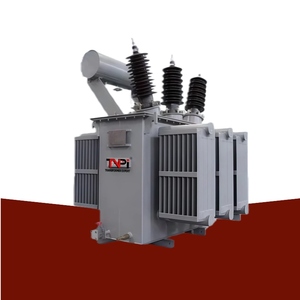
69kV 33kV 10MVA 20MVA 30MVA ONAN Copper Oil Immersed Power Transformer
High-capacity step-down transformer for grid substations. Features 100% electrolytic copper windings, low DGA gas evolution, and ONAN/ONAF cooling radiator banks.
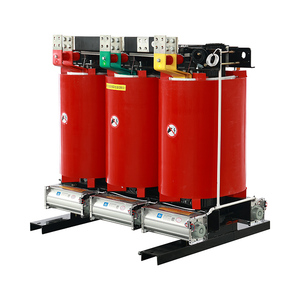
3-phase Dry Type Isolation Transformer 100kva High Voltage Industrial Transformer
Precision galvanic isolation unit designed to suppress electrical noise and common-mode transients in sensitive industrial manufacturing facilities.
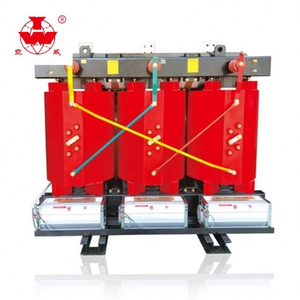
YAWEI Factory 10/11kv 500kva-2500 Kva Dry Type Transformer with Cooling Fan
Heavy-duty cast resin transformer with cross-flow cooling fans, PT100 temperature sensors, and high overload capability for commercial complexes.
CE Certified 10Kva-50Kva 35kV To 380V 400V Step Down Three Phase Dry Type Transformer
Compact 35kV high-voltage to 400V direct step-down unit. CE certified for auxiliary substation power supply and industrial equipment drives.
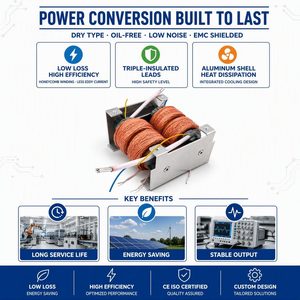
Single Phase 6kV to 220V Honeycomb Dry Type Isolation Power Transformer
Customized single-phase high-voltage honeycomb winding geometry. Engineered for low parasitic capacitance and high-frequency isolation performance.
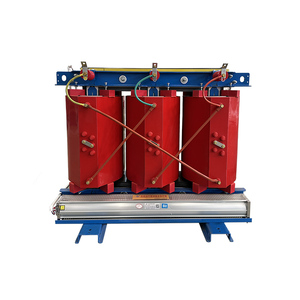
Three Phase Dry Type Transformer 50HZ/60HZ 10KV 35KV Cast Resin Unit
Universal 50Hz/60Hz dual-frequency resin encapsulated transformer. Offers self-extinguishing F1 fire performance and zero risk of toxic gas emissions.
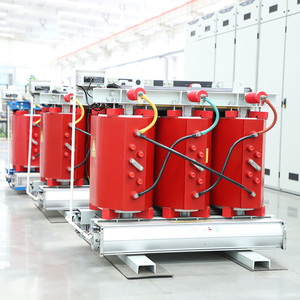
High Quality 630KVA High Voltage 20kv to 415V Low Loss Dry Type Power Transformer
Premium 630kVA rating utilizing high-permeability CRGO silicon steel. Achieves low no-load losses meeting modern international green energy metrics.
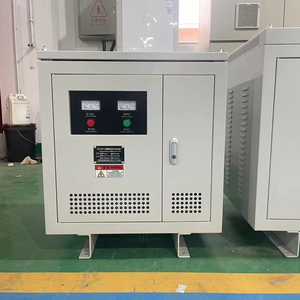
DingXin SG IEC60076 Certified Three Phase Dry Type Isolation Transformer 440V/220V
ISO & CE certified SG-series step-up/step-down isolation unit. Optimized for harsh industrial power quality correction and system grounding isolation.
Enterprise Engineering Strength & Production Capabilities
When procuring medium voltage infrastructure, manufacturing consistency, precision coil winding, and rigid quality assurance directly dictate continuous operational uptime over a 30-to-40-year asset lifecycle.
Precision CRGO & Amorphous Core Processing
Our manufacturing facilities leverage Georg automated core shearing lines to cut Cold-Rolled Grain-Oriented (CRGO) silicon steel laminations with step-lap geometry. This ultra-precise stacking technique minimizes air gaps, reducing magnetic reluctance, stray magnetic flux, and core vibration noise levels below 50 dB.
Advanced Vacuum Pressure Impregnation (VPI & VPE)
For cast resin dry-type transformers, high and low voltage windings are wound on automated tension-controlled foil machines. Windings undergo epoxy resin casting inside continuous high-vacuum chambers (VPC), ensuring void-free solid insulation with partial discharge levels tested under 5 to 10 pico-Coulombs (pC).
ISO 17025 Accredited High-Voltage Test Laboratory
Every MV transformer unit undergoes full factory acceptance testing (FAT) prior to shipment. Routine and type tests include Lightning Impulse Voltage Withstand up to 350 kV BIL, Short-Circuit Mechanical Withstand verification (KEMA certified), Temperature Rise tests under full rated load, and Dissolved Gas Analysis (DGA) for liquid-filled power transformers.
Technical Architecture Comparison: Oil-Immersed vs. Cast Resin Dry-Type
Selecting between oil-immersed medium voltage transformers and cast resin dry-type units depends heavily on installation environment, fire safety codes, environmental sensitivity, and maintenance access.
| Specification Parameter | Oil-Immersed Distribution (ONAN/ONAF) | Cast Resin Dry-Type (AN/AF) | Amorphous Alloy Core Series |
|---|---|---|---|
| Voltage Class Range | 6 kV up to 69 kV / 110 kV | 3.6 kV up to 35 kV | 10 kV to 35 kV Step-Down |
| Insulation Thermal Class | Class A (105°C) with mineral/ester fluid | Class F (155°C) / Class H (180°C) | Class A (Liquid) or Class F (Dry) |
| Fire Safety & Environmental | Requires oil containment sumps / fire wall | Self-extinguishing (F1 rating), zero oil leak | Depends on liquid or dry encapsulation |
| No-Load Loss Profile | Standard / Eco-Design Tier 2 CRGO stack | Low-loss step-lap CRGO geometry | 70% to 80% Lower Loss than CRGO |
| Overload Capability | High thermal capacity via liquid circulation | Up to +50% rating with forced air fans (AF) | Moderate, tailored to core stress limits |
| Typical Applications | Outdoor substations, renewable plants, utilities | Commercial high-rises, subway tunnels, hospitals | Data centers, solar farms, high-load industrial |
Technology Development Trends in Medium Voltage Power Systems
The global medium voltage transformer industry is undergoing a structural transition driven by decarbonization policies, digitizing energy networks, and high-frequency power electronics integration.
Biodegradable Ester Dielectric Fluids
Traditional mineral oil is rapidly being replaced by natural (vegetable-based) and synthetic ester fluids (e.g., FR3). Ester fluids offer high fire points (>300°C, K-class rating), eliminating the need for expensive fire suppression walls, while being 100% biodegradable within 28 days in soil/water environments.
Smart Digital Twin & IoT Monitoring
Modern MV transformers are evolving into smart grid nodes equipped with integrated fiber-optic temperature sensors, continuous Dissolved Gas Analysis (DGA) monitors, partial discharge acoustic sensors, and online tap-changer telemetry linked directly to SCADA and cloud-based predictive maintenance systems.
Harmonic-Mitigating K-Factor Engineering
With the explosion of non-linear loads—such as EV fast-charging hubs, variable frequency drives (VFDs), and solar PV central inverters—MV transformers must be rated for K-Factor harmonics (K-4, K-13, K-20) with double-sized neutral conductors and specialized electrostatic shields to eliminate eddy current overheating.
B2B Procurement Trends & Total Cost of Ownership (TCO) Strategy
Procurement managers are shifting away from evaluating MV transformers solely based on initial Capital Expenditure (CAPEX). Total Cost of Ownership models incorporate evaluated lifetime loss cost calculations over 25 to 30 years.
1. Capitalizing No-Load and Load Losses (TCO Formula)
Leading power utilities utilize loss evaluation formulas during technical bid evaluations:
TCO = Purchase Price + (A × No-Load Loss in kW) + (B × Load Loss in kW)
Where factors A and B represent the net present value of energy wasted over the transformer's lifetime (often ranging between $4,000 to $10,000 per kW of no-load loss). Investing in ultra-low-loss core steel yields substantial financial returns over the asset lifecycle.
2. Supply Chain Diversification & Lead-Time Mitigation
Due to global shortages of grain-oriented electrical steel and transformer oil, factory lead times from tier-1 Western OEMs currently stretch from 80 to 140 weeks. B2B procurement teams are increasingly partnering with verified Asian manufacturing hubs (such as ISO-certified plants in China and Vietnam) offering audited factory capacities, pre-approved type test reports, and accelerated delivery schedules within 16 to 26 weeks.
Frequently Asked Technical Procurement Questions
In-depth answers to common technical queries raised by electrical consultants, EPC contractors, and procurement decision-makers.
Request a Detailed Engineering Specification & RFQ Quote
Need customized voltage ratios, specialized tap-changer configurations (OLTC/DETC), or fast-track lead times for your medium voltage power project? Speak directly with our senior transformer application engineers today.
Get a Quote