Distribution Transformer Technical Articles, Industry Insights & Grid Updates — SOTEK Group
High-Voltage Transformers & Bushing Integrated Systems
Select from our benchmarked portfolio of oil-immersed, cast resin dry-type, and custom isolation transformers optimized for global power grids and heavy industrial installations.
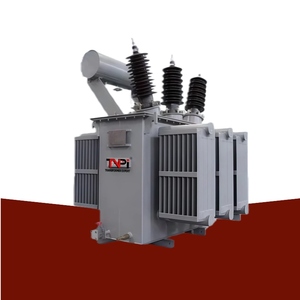 Substation Step-Down
69kV 33kV 10MVA 20MVA 30MVA ONAN Copper Oil Immersed Power Transformer
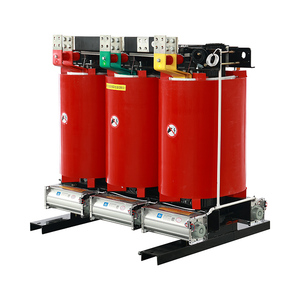 Industrial Dry Type
3-Phase Dry Type Isolation Transformer 100kVA High Voltage Industrial Unit
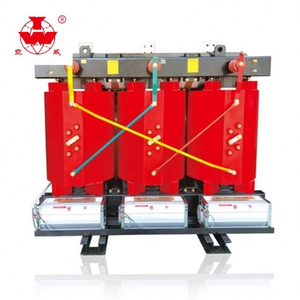 Forced Air Fan
YAWEI 10/11kV 500kVA-2500kVA Step Down Dry Type Transformer with Fan
 CE Certified
CE Certified 10kVA-50kVA 35kV to 380V/400V Step Down 3-Phase Dry Transformer
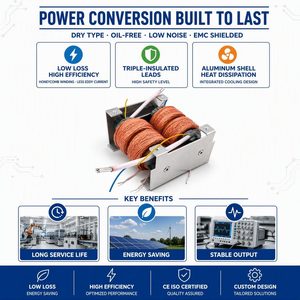 Custom Isolation
Single Phase 6kV to 220V High Frequency Dry Type Isolation Power Transformer
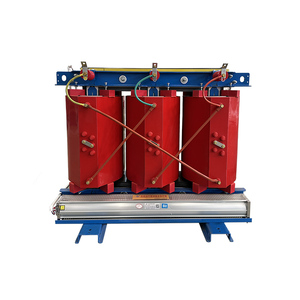 Cast Resin
Three Phase 50Hz/60Hz 10kV 35kV Cast Resin Dry Type Power Transformer
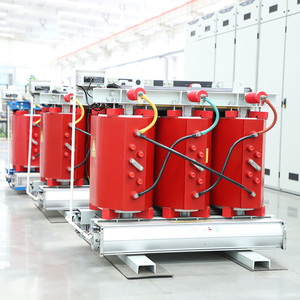 High Efficiency
High Quality 630kVA High Voltage 20kV to 415V Low Loss Dry Type Power Unit
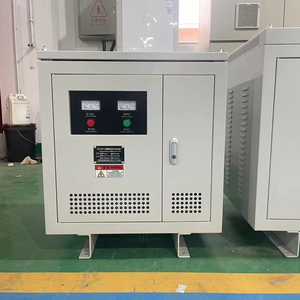 IEC/ISO Certified
DingXin SG IEC60076 Certified 3-Phase Step Up/Down Isolation Transformer 440V/220V
High-Voltage Transformer Bushings: Critical Infrastructure & Technical Fundamentals
Transformer bushings represent one of the most critical insulation components in electric power transmission and distribution infrastructure. Functioning as high-voltage insulating passages, a transformer bushing allows energized conductors to pass safely through the grounded metallic tank of power transformers, reactors, and switchgear without dielectric breakdown or catastrophic thermal runaway.
As electrical grids transition toward higher voltage ratings, renewable energy integration (solar PV, offshore wind), and intense urbanization, the technical requirements imposed on transformer bushing manufacturers have grown exponentially. Engineering buyers must evaluate dynamic mechanical stress withstand, lightning impulse withstand level (BIL), creeping discharge phenomena, and long-term thermal aging factors.
Information Gain Insight: Over 45% of catastrophic power transformer failures worldwide originate from bushing insulation degradation or explosive oil-leak events in legacy Oil-Impregnated Paper (OIP) bushings. Transitioning to solid-state Resin-Impregnated Paper (RIP) or Resin-Impregnated Synthetic (RIS) dry bushings reduces failure rates by over 80% while eliminating explosion hazards.
Bushing Insulation Technology Comparison: OIP vs. RIP vs. RIS
To establish a rigorous technical baseline for utility procurement officers and substation design engineers, the table below provides a comprehensive comparison across the three major insulating technologies dominant in today's export market:
| Technical Parameter | Oil-Impregnated Paper (OIP) | Resin-Impregnated Paper (RIP) | Resin-Impregnated Synthetic (RIS) |
|---|---|---|---|
| Insulation Core Material | Kraft paper impregnated with mineral oil | Creped paper cast in epoxy resin | Non-woven synthetic cloth + epoxy resin |
| Explosion & Fire Hazard | High (Flammable fluid, pressure build-up) | Zero (Explosion-proof solid core) | Zero (Self-extinguishing dry matrix) |
| Dielectric Loss Tangent (tan δ) | 0.30% – 0.50% | < 0.35% (Stable across temp) | < 0.25% (Ultra-low dissipation) |
| Moisture Sensitivity & Storage | High (Requires hermetic sealing) | Moderate (Hygroscopic paper core) | Immune (Hydrophobic synthetic matrix) |
| Outer Shed Material | Glazed Porcelain or Silicone Rubber | Silicone Rubber (Direct Molded) | Silicone Rubber (HTV Composite) |
| Maintenance Requirements | Frequent oil sampling, DGA, sight glass checks | Maintenance-Free (Visual inspection only) | 100% Maintenance-Free |
| Seismic & Mechanical Strength | Moderate (Porcelain shedding fragile) | High (Composite tube reinforcement) | Extreme (High mechanical impact resistance) |
Top 10 Transformer Bushing Suppliers & Exporters Worldwide
An objective evaluation based on manufacturing voltage limits, dielectric loss control, global export footprint, ISO compliance, and field reliability metrics.
1. Hitachi Energy (Switzerland / Japan)
Rank #12. Trench Group (Germany / Canada)
Rank #23. HSP Hochspannungsgeräte (Germany)
Rank #34. SOTEK / Yawei Power Group (Vietnam / China)
Rank #45. Eaton Electrical (USA)
Rank #56. Hyundai Electric (South Korea)
Rank #67. Pfiffner Group (Switzerland)
Rank #78. CG Power and Industrial Solutions (India)
Rank #89. DingXin Electrical / SG Series (China)
Rank #910. Webster-Wilkinson (United Kingdom)
Rank #10Future Purchasing & Technology Trends in Transformer Bushings (2026–2035)
The global market for transformer bushings is undergoing a profound structural shift driven by four core catalysts: grid decarbonization, digitization of asset management, stringent fire safety mandates, and supply chain regionalization. Procurement officers and chief engineers must align their vendor sourcing matrices with these emerging technical trends:
1. Mandatory Adoption of Dry RIP/RIS Bushings Over OIP
Environmental regulations and safety directives (such as EU REACH and local fire prevention codes) are accelerating the phase-out of traditional Oil-Impregnated Paper (OIP) bushings. Modern utility tenders increasingly mandate Resin-Impregnated Paper (RIP) or Resin-Impregnated Synthetic (RIS) bushings. Dry bushings eliminate the risk of oil leakage, flammability, and explosive porcelain shattering, thereby protecting multi-million-dollar power transformers from collateral damage.
2. Integrated Smart Bushings & Real-Time Condition Monitoring
Bushings are no longer passive insulation components; they are becoming smart sensory nodes in modern digital substations. Next-generation bushings feature embedded fiber-optic sensors and capacitive tap monitoring systems that continuously track:
- Dielectric Loss Tangent ($\tan \delta$) Drift: Real-time detection of moisture ingress or resin degradation.
- Capacitance Shift ($C_1 / C_2$): Early warning of partial breakdown in condenser foil layers.
- Dissolved Gas Analysis (DGA) Sensor Integration: On-line tracking of hydrogen and acetylene gas spikes in oil-filled compartments.
3. High-Temperature Hydrophobic Silicone Rubber Housings
Porcelain outer sheds are rapidly losing market share to Composite Hydrophobic Vulcanized (HTV) Silicone Rubber sheds. In heavily polluted industrial zones, desert environments with seismic activity, or marine environments subject to salt fog, silicone sheds prevent flashovers through continuous hydrophobicity transfer while offering superior seismic resilience under seismic acceleration exceeding 0.5g.
4. Eco-Friendly Ester Fluid Compatibility
With the rise of natural and synthetic ester transformer fluids (such as FR3), bushing manufacturers must re-engineer their seal polymers (fluorocarbon/HNBR) and internal field stress shields to withstand the higher viscosity and dielectric permittivity of ester liquids at low operating temperatures.
Why Engineering Utilities Sourcing SOTEK & Partner Systems
From CRGO silicon steel core cutting to vacuum epoxy encapsulation and ISO/IEC 17025 certified laboratory testing — explore our enterprise manufacturing capabilities.
Laser-Cut CRGO Efficiency
Utilizing Georg automated core-cutting lines, our transformer cores feature grain-oriented silicon steel with step-lap joints, delivering no-load losses up to 30% below IEC 60076 standards.
VILAS 1183 Accredited Lab
In-house ISO/IEC 17025 accredited laboratory conducting 100% routine tests: impulse withstand (BIL), partial discharge (<5 pC), temperature rise, and short-circuit verification.
Full Quality Certifications
ISO 9001:2015, ISO 14001:2015, CE, and EVN (Vietnam Electricity) vendor approval across all regional power distribution boards and global EPC contractors.
Class F & H Dry-Type Resin
Hedrich vacuum casting technology guarantees void-free epoxy resin encapsulation for dry-type transformers, providing self-extinguishing fire safety and zero fluid risk.
Global B2B Export Logistics
Proven export footprint across North America, Australia, Philippines (Aboitiz Power), Kenya, and Southeast Asia with FOB/CIF Incoterms and custom wooden seaworthy packing.
Tailored Engineering Support
Dedicated CAD/FEA engineering team capable of customizing voltage taps (DETC/OLTC), seismic withstand ratings, creepage distances, and compact enclosure dimensions.
Frequently Asked Questions (FAQ) for Bushing Sourcing
Direct engineering answers to common technical queries raised during transformer bushing procurement and quality audits.
What is the primary cause of high-voltage transformer bushing failures?
The leading cause of failure in traditional Oil-Impregnated Paper (OIP) bushings is moisture ingress through aging elastomeric gaskets, leading to insulation power factor ($\tan \delta$) degradation, partial discharge, internal arcing, and explosive gas generation. Modern RIP/RIS dry bushings eliminate this risk entirely.
How does a Resin-Impregnated Synthetic (RIS) bushing differ from a Resin-Impregnated Paper (RIP) bushing?
While RIP bushings use creped kraft paper as the core matrix, RIS bushings utilize a non-woven synthetic polymer cloth. RIS cores are completely non-hygroscopic (they do not absorb moisture during storage or manufacturing), resulting in even lower dielectric loss ($\tan \delta < 0.25\%$) and unlimited dry storage shelf life without specialized climate controls.
What creepage distance should be specified for transformer bushings in coastal or industrial areas?
According to IEC 60815, heavy pollution environments (Class IV/e) require a minimum nominal specific creepage distance of 31 mm/kV (phase-to-phase system voltage). For extreme marine coastal zones with high salt deposition, specifying HTV silicone composite sheds with >35 mm/kV is strongly recommended to prevent dry-band arcing and pollution flashover.
What standard routine tests are required for transformer bushings before factory acceptance (FAT)?
Per IEC 60137 and IEEE C57.19.01, standard routine tests include: (1) Power factor / Dielectric dissipation factor ($\tan \delta$) and capacitance measurement at power frequency, (2) Dry power-frequency voltage withstand test, (3) Partial discharge measurement ($\text{PD} < 5\text{ pC}$ requirement), and (4) Tap insulation testing.
Can dry-type cast resin transformers be fitted with custom high-voltage bushings?
Yes. Cast resin dry-type transformers installed in indoor substations or harsh industrial environments can be equipped with specialized plug-in touch-proof elbow bushings, resin-cast terminal extensions, or composite dry RIP bushings to meet specific IP protection ratings (IP23, IP44, IP54) and space constraints.