Distribution Transformer Technical Articles, Industry Insights & Grid Updates — SOTEK Group

Top China Dry Transformer Factories & Exporter Whitepaper

An Authoritative B2B Sourcing Guide on Cast Resin (CRT), VPI Isolation Transformers, High-Voltage Compliance (IEC/IEEE), and Tier-1 OEM Supply Chain Excellence.

Industrial High-Voltage & Dry-Type Transformer Series

Precision-engineered for power distribution, renewable energy substations, and critical commercial facilities. Fully compliant with IEC 60076 and ISO standards.
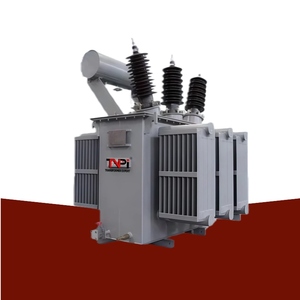
69kV 33kV 10MVA 20MVA 30MVA ONAN Copper Oil Immersed Power Transformer

69kV 33kV 10MVA–30MVA ONAN Copper Substation Power Transformer

⚡ Voltage Class: Up to 69kV
🛡️ Winding: 100% Electrolytic Copper
Send an Inquiry
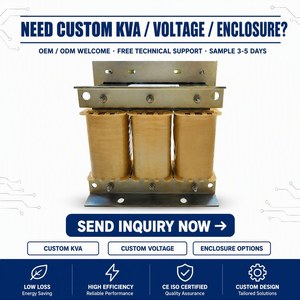
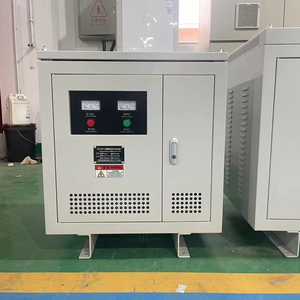
3-phase Dry Type Isolation Transformer 100kva High Voltage

3-Phase Dry Type Isolation Transformer 100kVA High Voltage

⚡ Insulation Class: Class H (180°C)
🛡️ Type: VPI Dry Industrial Isolation
Send an Inquiry
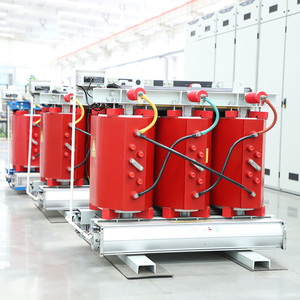
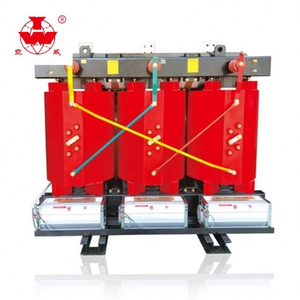
YAWEI China Factory 10kV 11kV 500kVA 1000kVA 2500kVA Dry Type Transformer

YAWEI Factory Supply 10kV/11kV 500kVA–2500kVA Dry Type Transformer

⚡ Capacity: Up to 2500 kVA
🛡️ Cooling: AF/AN Forced Cooling Fans
Send an Inquiry
CE Certified Low-frequency 35kV to 380V Step Down Dry Transformer

CE Certified 35kV to 380V/400V Step Down 3-Phase Dry Transformer

⚡ Certification: CE / IEC 60076
🛡️ Voltage Ratio: 35kV / 0.4kV Step Down
Send an Inquiry
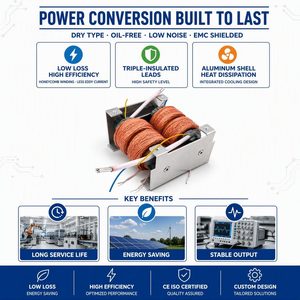
Single Phase 6kV to 220V Dry Type Isolation Power Transformer

Single Phase 6kV to 220V Dry Type Isolation Power Transformer

⚡ Application: Industrial Custom / High Freq
🛡️ Structure: Honeycomb Dry Isolation
Send an Inquiry
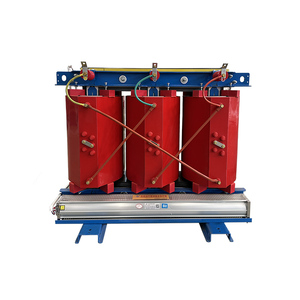
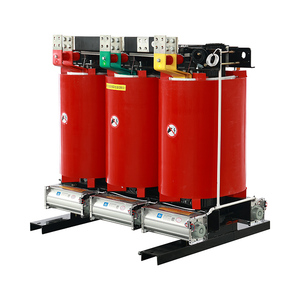
Three Phase Dry Type Transformer 10KV 35KV Dry Type Resin Transformer

Three Phase 10kV 35kV Cast Resin Dry Transformer (50Hz/60Hz)

⚡ Rating: 10kV / 35kV Cast Resin
🛡️ Fire Class: F1 Self-Extinguishing
Send an Inquiry
High Quality 630KVA Transformer High Voltage 20kv 415V

High Quality 630kVA 20kV to 415V Low Loss Dry Power Transformer

⚡ Core: CRGO Silicon Steel
🛡️ Loss Level: Ultra-Low No-Load Loss
Send an Inquiry
DingXin SG IEC60076 ISO CE Three Phase Dry Type Isolation Transformer

DingXin SG Series IEC60076 3-Phase Dry Isolation Transformer

⚡ Standards: IEC60076, ISO, CE
🛡️ Voltage: 440V Input / 220V Output
Send an Inquiry
35kV
Max Voltage Rating
25MVA
Max Unit Capacity
99.85%
FAT Pass Yield Rate
65+
Global Export Markets

Executive Summary: Top China Dry Transformer OEM Manufacturing Landscape

In the era of accelerated global electrification, urban power infrastructure expansion, and stringent indoor fire safety mandates, **dry-type transformers** have become the indispensable backbone for high-density commercial towers, underground rail networks, offshore wind platforms, data centers, and heavy industrial plants. Unlike traditional oil-immersed distribution units, dry-type transformers replace flammable mineral oil with advanced solid insulation media—most notably epoxy resin casting and vacuum pressure impregnation (VPI).

China has solidified its position as the global epicenter for power transformer innovation, raw material supply, and automated production. Top Chinese transformer manufacturers (such as YAWEI, DingXin, SOTEK, and allied Tier-1 OEM facilities) leverage fully integrated supply chains—from locally sourced high-grade Cold-Rolled Grain-Oriented (CRGO) silicon steel to advanced copper foil winding machinery and automated Hedrich vacuum casting chambers. This technical whitepaper analyzes the competitive advantages, engineering metrics, procurement trends, and quality benchmarks required when sourcing high-voltage dry transformers from China.

💡 Information Gain Insight: The Chinese Dry Transformer Advantage
Leading Chinese dry transformer exporters do not merely offer competitive capital costs (CAPEX reductions of 25%–40% compared to European or North American OEMs). They provide superior thermal resilience (Class H 180°C and Class C 220°C insulation systems), partial discharge ratings under 10 pC (picocoulombs), and strict adherence to IEC 60076-11, IEEE C57.12.01, and CE directives.

Core Manufacturing & Engineering Strengths

⚙️

Georg Automated Core Lines

Precision step-lap core shearing utilizing German Georg cutting lines minimizes magnetic domain distortion, reducing no-load losses by up to 20% below standard IEC limits.

🔬

Hedrich Vacuum Resin Casting

Fully enclosed epoxy resin casting under high vacuum (<1 mbar) prevents micro-void formation, guaranteeing partial discharge levels below 10 pC for extended operating life.

Foil Winding Technology

High-voltage primary windings utilize automated copper or aluminum foil winding machines with integrated edge-trimming, eliminating axial short-circuit mechanical forces.

🛡️

Class F1 Fire Resistance

Self-extinguishing cast resin materials pass rigorous F1 (Fire Risk), C2 (Climatic), and E2 (Environmental) testing, releasing zero toxic gases or heavy smoke under direct flame exposure.

📊

ISO/IEC 17025 Testing Labs

In-factory high-voltage testing bays conduct lightning impulse withstand (up to 250kV BIL), temperature rise, acoustic noise level measurements, and short-circuit withstand validation.

🌐

Global Grid Compliance

Engineered to seamlessly integrate into 50Hz and 60Hz utility grids across North America (ANSI/IEEE), Europe (EN/IEC), Southeast Asia (EVN/PEZA), and the Middle East (SASO).

Technical Architecture: Cast Resin (CRT) vs. VPI Dry Isolation Transformers

When evaluating dry transformers, electrical engineers and global procurement officers must distinguish between two fundamental structural topologies: **Cast Resin Transformers (CRT)** and **Vacuum Pressure Impregnated (VPI) Transformers**. Selecting the optimal design depends directly on ambient operating conditions, short-circuit requirements, and environmental humidity.

1. Cast Resin Dry-Type Transformers (CRT)

CRT units encapsulate both high-voltage (HV) and low-voltage (LV) windings inside a solid matrix of epoxy resin mixed with quartz powder filler. The high thermal mass of the epoxy resin provides exceptional short-term thermal surge withstand capabilities. CRT transformers are the gold standard for harsh, high-humidity, or heavily polluted environments where airborne contaminants could compromise open coil insulation.

2. Vacuum Pressure Impregnated (VPI) Transformers

VPI transformers utilize high-temperature Class H (180°C) or Class C (220°C) Nomex® insulation tape wrapped around the windings. The completed coil assembly is submerged in solventless polyester/silicone varnish inside a vacuum pressure vessel. VPI transformers offer superior ventilation, lighter physical weight, ease of field repairability, and lower initial capital cost, making them highly popular for industrial drives, isolation applications, and marine vessels.

Engineering Parameter Cast Resin (CRT) VPI Dry Isolation Oil-Immersed (Reference)
Insulation Medium Epoxy Resin + Quartz Powder High-Temp Varnish + Nomex® Mineral / Synthetic Ester Oil
Fire Safety Rating F1 Self-Extinguishing Non-Flammable (F1) Combustible (Class O1)
Partial Discharge (PD) < 10 pC (Ultra-Low) < 20 pC N/A (Liquid Dielectric)
Moisture & Contamination Impervious (E2/E3) Moderate (Requires Enclosure) Sealed Tank Sealed
Overload Capability (AF) Up to +50% with Fans Up to +33% with Fans Up to +20% (ONAF)
Maintenance Overhead Zero Fluid Sampling Dust Inspection Only Oil DGA / Moisture Testing

Future Procurement Trends: 2025–2030 Global Sourcing Outlook

As EPC contractors, utility developers, and OEM purchasers navigate global supply chain realignments, the dry transformer procurement playbook is undergoing a dramatic shift toward sustainability, digital integration, and lifecycle cost optimization.

Trend 1: Decarbonization & Eco-Design Directives (Tier 2/Tier 3 Losses)

Regulators worldwide—including the EU Eco-design Directive 2019/1783, US Department of Energy (DOE 2016/2026 standards), and China's GB 20052-2020 energy efficiency standard—are enforcing stricter limits on load (Pk) and no-load (Po) losses. Top Chinese exporters are preemptively adopting amorphous alloy cores and laser-scribed domain-refined CRGO steel. Amorphous core dry transformers reduce no-load losses by up to 70% compared to standard silicon steel, offering a payback period of under 4 years in continuous 24/7 operating facilities such as data centers.

Trend 2: K-Factor & Harmonic Mitigation for Renewable Integration

The rapid penetration of solar PV inverters, energy storage system (ESS) power conversion systems (PCS), and variable frequency drives (VFDs) introduces severe high-frequency harmonics into transformer windings. Modern sourcing specifications demand **K-Factor rated transformers (K-4, K-13, K-20)** with electrostatic copper shielding between primary and secondary windings to dissipate eddy current heating and attenuate line noise.

Trend 3: Smart Sensing & Digital Twin Condition Monitoring

Leading China dry transformer exporters now integrate digital temperature controllers featuring RS485 Modbus RTU or IEC 61850 communications as standard. Multi-channel PT100 platinum resistance sensors embedded directly inside the low-voltage phase windings provide real-time thermal telemetry, fan control automation, and predictive alarm triggers—enabling integration into SCADA systems and building management platforms (BMS).

📋 Strategic Procurement Checklist for International Buyers
  • Core Material Verification: Ensure factory uses prime CRGO steel (e.g., Baosteel or WISCO 0.23mm–0.27mm grades) rather than recycled stock.
  • Winding Material Integrity: Request dual-copper foil specifications for high-current LV windings to avoid hot spots.
  • Short-Circuit Test Validation: Request valid type-test certificates issued by independent ILAC-accredited laboratories (KEMA, CESI, ASTA, or CNAS).
  • Enclosure Protection Class: Specify IP20 for indoor dry rooms, IP23 for rain-proof protection, or IP54 for extreme outdoor dust environment housing.

Frequently Asked Questions: Procurement & Technical FAQ

Expert answers to critical technical and logistical queries encountered by international B2B buyers sourcing dry transformers from China.

Q1: Why should international EPCs source dry-type transformers from top China OEM factories rather than domestic suppliers?
Top Chinese dry transformer manufacturers offer a rare combination of advanced automated manufacturing (such as Georg cutting lines and Hedrich vacuum casting), raw material supply chain dominance (access to high-grade CRGO steel and copper), and competitive labor efficiency. This results in 25%–40% CAPEX savings, significantly shorter lead times (typically 4 to 8 weeks versus 20+ weeks from Western OEMs), and full compliance with IEC, IEEE, and CE standards.
Q2: What is Partial Discharge (PD) in cast resin dry transformers, and why is the <10 pC benchmark so critical?
Partial discharge refers to localized electrical breakdowns that occur within microscopic air voids trapped inside the solid epoxy resin insulation. Over time, continuous PD causes treeing degradation, eventually leading to catastrophic dielectric puncture. Quality Chinese factories perform 100% routine PD testing in shielded laboratory bays to guarantee PD levels remain strictly below 10 pC (picocoulombs) at 1.3 times rated operating voltage, ensuring a design service life exceeding 30 years.
Q3: How does Forced Air (AF) cooling increase the kVA rating of a dry transformer, and can it run continuously?
Dry-type transformers are typically dual-rated: Natural Air (AN) and Forced Air (AF). When cross-flow cooling fans are activated by the digital temperature controller, heat dissipation from the resin coils increases dramatically, boosting continuous kVA capacity by up to 33% to 50% above the AN baseline rating. While AF cooling can operate continuously, engineering best practice uses AF capacity as a thermal buffer for peak load management or emergency overload reserves.
Q4: What temperature insulation classes are standard for dry transformers, and how do Class F and Class H differ?
Standard insulation classes define maximum continuous operating temperatures: Class F allows up to 155°C (with a nominal winding temperature rise limit of 100K), while Class H allows up to 180°C (winding temperature rise limit of 125K). Class F is standard for epoxy cast resin transformers, whereas Class H (utilizing Nomex® insulation materials) is widely used in VPI transformers. Choosing Class H insulation for a transformer operating under Class F temperature rise limits provides an exceptional thermal safety margin.
Q5: What standards and certifications are mandatory for exporting Chinese dry transformers to North America, the EU, and Asia-Pacific?
For European and Asian markets, transformers must comply with IEC 60076-11 (dry type standard), possess CE marking, and hold ISO 9001 / ISO 14001 factory accreditations. For North America, units must comply with IEEE C57.12.01, ANSI C57.12.91, and carry UL or CSA recognized insulation system certifications. Additionally, anti-seismic seismic compliance (Zone 4 rating according to IEEE 693) is frequently requested for earthquake-prone regions.
Q6: How do dry transformers perform in highly humid, marine, or corrosive coastal environments?
Cast Resin Transformers (CRT) with E2 (Environmental) and C2 (Climatic) certifications are explicitly designed for condensation-heavy and heavily polluted environments. The total encapsulation of the windings inside hydrophobic epoxy resin prevents moisture absorption even during prolonged shutdowns. For marine or offshore installations, factory treatments include anti-corrosive IP23/IP54 stainless steel (316L) enclosures, tropicalized insulation varnishes, and marine-grade tin-plated copper busbars.
Q7: What is a Factory Acceptance Test (FAT), and can foreign buyers witness tests remotely?
A Factory Acceptance Test (FAT) verifies that every manufactured unit meets project specifications prior to shipment. Routine tests include winding resistance measurement, voltage ratio & vector group verification, short-circuit impedance & load loss testing, separate-source AC withstand voltage testing, induced overvoltage withstand, and partial discharge measurement. Tier-1 China factories provide live high-definition video FAT sessions, allowing overseas buyers and third-party inspection agencies (SGS, TÜV, Bureau Veritas) to witness calibration and test procedures in real time.
Q8: What packaging and shipping precautions are taken for heavy dry-type transformers?
High-voltage dry transformers are heavy, precision-engineered capital equipment requiring robust export packaging. Units are sealed inside heavy-duty vacuum moisture-proof foil wrapping with desiccant packs, secured onto reinforced wooden skids or steel frames, and housed inside ISPM-15 compliant fumigated seaworthy plywood crates. For open-frame units or large capacity transformers, 20ft/40ft Open Top (OT) or Flat Rack (FR) containers are utilized, featuring multi-point wire rope lashings and impact/tilt monitoring sensors.

Ready to Partner with China's Premier Transformer Exporters?

Request a detailed technical quotation, CAD outline drawings, type-test reports, or schedule an online factory audit with our engineering team today.