Distribution Transformer Technical Articles, Industry Insights & Grid Updates — SOTEK Group
Featured Transformer Radiators & Substation Cooling Solutions
Precision-engineered heat exchange radiator panels, dry-type cooling enclosures, and power transformer oil-cooling assemblies exported globally to IEC, IEEE, and DIN specifications.
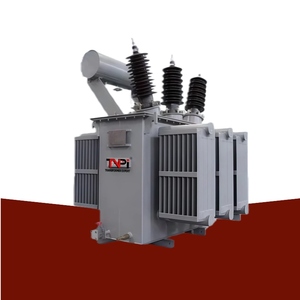
69kV/33kV Power Transformer Radiator Assembly (10MVA-30MVA)
Heavy-duty ONAN/ONAF oil cooling radiator banks engineered for high-voltage substation step-down transformers.
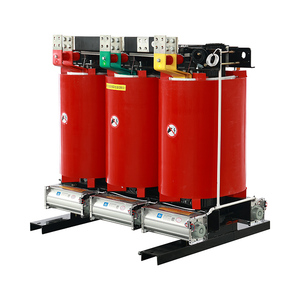
3-Phase Dry Type Isolation Transformer Thermal Shell (100kVA)
Optimized natural and forced-air ventilation panels designed for high-voltage industrial isolation transformers.
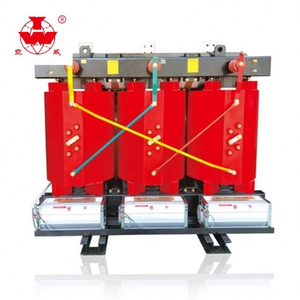
YAWEI Step Down Dry Transformer Radiating Fan & Panel Unit
500kVA to 2500kVA custom cooling module integrated with low-noise axial cooling blowers for rapid heat dissipation.
35kV to 380V Low-Frequency Dry Type SMPS Thermal Plates
CE-certified 10kVA-50kVA precision heat sink paneling engineered for solid-state power step-down systems.
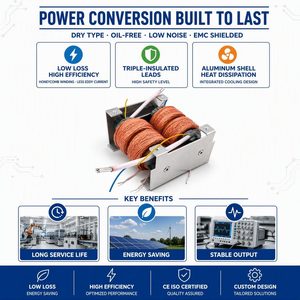
Honeycomb Single Phase 6kV High-Frequency Isolation Radiator
Ultra-compact honeycomb heat-exchanging fins developed for custom high-frequency industrial power units.
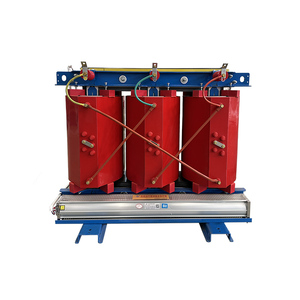
10kV/35kV Resin Cast Dry Type Transformer Radiator Shell
Heavy-gauge protective radiating louvers designed for harsh environmental resin transformer deployment.
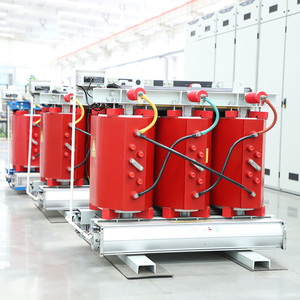
630kVA 20kV/415V Low-Loss Radiator Fin Panel Assembly
High-efficiency fluid circulation panel set ensuring minimal hot-spot temperature rise in distribution transformers.
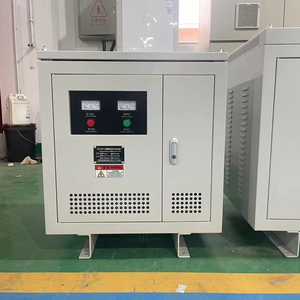
DingXin SG IEC60076 Standard Heavy-Duty Radiator Panel
ISO & CE certified industrial radiator assembly built for step up/down isolation transformers (440V to 220V).
Engineering Overview: High-Performance Transformer Radiator Panels & Corrugated Cooling Elements
In power distribution and extra-high-voltage (EHV) utility networks, transformer longevity is directly governed by thermal management efficiency. Radiator panels—specifically flat-header radiator banks and corrugated cooling walls—act as the primary thermal dissipation engine for oil-immersed and heavy-duty dry-type transformers. As a leading China radiator panel factory and international exporter, our manufacturing standard integrates advanced fluid-structure thermal modeling with automated continuous welding to prevent dielectric degradation, oil oxidation, and hot-spot failure modes.
Technical Insight: Thermal Dissipation & Oil Circulation Efficiency
A 1°C increase in transformer winding hot-spot temperature above the thermal limit (typically 98°C under IEC 60076-7) reduces insulation paper lifetime by approximately 50%. Our engineered panel geometry optimizes natural oil convection (ONAN) and forced fluid flow (ODAF/OFAF) to lower average oil temperature rises by up to 8.5K compared to standard stamped radiators.
Modern power grids demand cooling equipment capable of withstanding extreme pressure cycling, seismically active installations, and highly corrosive marine/industrial environments (C4 to C5-M under ISO 12944). China's industrial manufacturing ecosystem has evolved to produce state-of-the-art transformer radiator panels using ST12/DC01 cold-rolled steel and 304/316L stainless steel, utilizing GEORG cold-roll forming equipment, CNC automated spot-welding lines, and 100% helium vacuum leak-testing chambers.
China Factory Advantages: Engineering & Manufacturing Superiority
Why Tier-1 Transformer OEMs, EPC Contractors, and Power Utilities Trust Our China Radiator Panel Manufacturing Facility.
GEORG Automated Roll-Forming
Our production line utilizes high-precision German GEORG roll-forming and hydraulic pressing systems. This guarantees uniform channel geometry, consistent oil flow velocity, and zero residual mechanical stress across the entire length of the panel (up to 4000mm length).
Robotic CNC Seam & Header Welding
Welding integrity is paramount to leak prevention. Dual-arm Panasonic robotic welders execute 100% continuous seam welding along panel edges and header pipe junctions, eliminating manual operator variability and achieving a weld joint efficiency exceeding 99.5%.
C5-M Surface Anti-Corrosion
We operate full-immersion hot-dip galvanizing baths (zinc coating thickness > 85 µm / 610 g/m²) and multi-layer electrostatic epoxy powder coating facilities. Certified under ISO 12944 C5-M for 1500+ hours salt spray withstand in off-shore and industrial zones.
Radiator Panel Specification & Performance Comparison Matrix
Selecting the optimal cooling radiator configuration requires balancing thermal dissipation requirements, space constraints, and ambient environmental conditions:
| Panel Type / Parameter | Standard Flat Panel Radiator | Offset / Embossed Channel Radiator | Corrugated Tank Panel | Stainless Steel (316L) Radiator |
|---|---|---|---|---|
| Panel Widths Available | 520mm / 480mm / 320mm | 530mm / 520mm | 300mm to 1600mm height | 520mm / 480mm |
| Steel Sheet Thickness | 1.0mm - 1.2mm ST12/DC01 | 1.2mm ST12 / Q235 | 1.2mm - 1.5mm DC01 | 1.2mm - 1.5mm AISI 316L |
| Pressure Test Standard | 200 kPa (30 mins oil) | 250 kPa (Hydrostatic) | 150 kPa (Air under water) | 300 kPa (Helium Leak Test) |
| Cooling Efficiency (kW/m²) | 0.45 - 0.58 kW/m² | 0.62 - 0.75 kW/m² | 0.38 - 0.50 kW/m² | 0.48 - 0.60 kW/m² |
| Corrosion Class (ISO 12944) | C3 (Paint) / C4 (Galv) | C4 (Galv) / C5-I (Epoxy) | C2 - C4 (Power Coated) | C5-M (Offshore Marine) |
Future Procurement Trends in Global Transformer Radiator Supply
Key Strategic Shifts Reshaping Transformer Cooling Equipment Procurement for 2025–2030.
1. Shift Toward Biodegradable Synthetic & Natural Ester Fluid Compatibility
Global power utilities are rapidly transitioning from standard mineral oil to high-fire-point natural ester fluids (e.g., Cargill FR3). Ester fluids exhibit higher viscosity than mineral oil at lower operating temperatures. Procurement engineering teams must now source radiator panels featuring expanded 530mm internal oil channels with reduced internal hydraulic resistance to ensure natural thermosiphon circulation without requiring auxiliary pumps.
2. Decarbonization & Low-Carbon Steel Supply Chain Audit
Under the European Union's Carbon Border Adjustment Mechanism (CBAM) and global ESG frameworks, transformer OEMs are requiring carbon-footprint certifications for imported radiator components. Our factory utilizes green electric ARC furnace (EAF) steel coils and closed-loop zinc recovery in hot-dip galvanizing, providing full Scope 1 and Scope 2 carbon transparency per metric ton of radiator steel exported.
3. Modular Factory Pre-Assembly & Flanged Radiator Banks
To reduce field erection costs and eliminate oil contamination risks at substation project sites, EPC contractors are requesting complete pre-assembled radiator banks supplied with butterfly valves, transport bracing, and integrated oil header pipes. Modular flanged assemblies allow plug-and-play bolting directly to the transformer main tank wall during site erection.
4. Fiber-Optic Integrated Smart Thermal Sensing Radiators
Next-generation smart substations demand real-time telemetry across radiator cooling banks. Advanced radiator exports now integrate PT100 thermal sensors and fiber-optic probe ports directly within top and bottom oil header pipes, allowing predictive monitoring of oil velocity, sludge buildup, and fan control optimization via SCADA systems.
Product Development Trends: Thermal Mechanics & Material Innovations
The engineering evolution of transformer radiator panels focuses on maximizing heat transfer coefficients while reducing steel mass and fluid volume. Recent breakthroughs in China's manufacturing sector include:
Aerodynamic Dimple Embossing
Incorporating micro-dimple turbulence patterns along internal oil channels breaks the laminar boundary layer, increasing liquid-to-steel thermal transfer rates by up to 14% without elevating pump head pressure.
Automated Helium Mass Spectrometry
Replacing traditional air-under-water bubble testing with high-vacuum helium detection chambers capable of locating micro-fissures down to $1 \times 10^{-6} \text{ mbar}\cdot\text{l/s}$, eliminating field leaks during 30-year operational cycles.
Self-Healing ZAM® Coatings
Adopting Zinc-Aluminum-Magnesium (ZAM) alloy-coated steel sheets provides self-healing cut-edge protection, preventing rust creep along sheared panel edges even in harsh coastal environments.
Frequently Asked Questions (FAQ) for Transformer Radiator Procurement
Technical Answers to Common Questions Asked by Power Equipment Buyers, Quality Auditors, and Technical Specifiers.
What steel grades and thicknesses are standard for power transformer radiator panels?
The standard raw material for transformer radiators is high-grade cold-rolled steel according to EN 10130 / DC01 or DIN 1623 (ST12). Sheet thickness typically ranges from 1.0 mm to 1.2 mm for standard distribution radiator panels, while heavy-duty utility power transformer panels utilize 1.2 mm to 1.5 mm steel to withstand high internal pressure surges during vacuum oil filling.
How do your radiator panels comply with DIN EN 50216-6 standards?
Our radiators strictly follow DIN EN 50216-6 (Power transformer and reactor fittings - Part 6: Radiators). This encompasses standard panel widths (520mm, 480mm, 320mm), standard header pipe center distances (from 500mm up to 4000mm), 4-bolt or 6-bolt flanged oil connections, and normalized hydraulic flow passages to ensure total inter-changeability with global OEM equipment.
What surface anti-corrosion treatments are recommended for coastal/marine installations?
For coastal and marine environments classified under ISO 12944 C4 to C5-M, we recommend continuous Hot-Dip Galvanizing (HDG) with a minimum zinc coating thickness of 85 µm (610 g/m²). For extreme off-shore or chemical plant environments, a duplex system combining hot-dip galvanizing with a topcoat of polyurethane or zinc-rich epoxy paint provides over 25 years of maintenance-free service life.
What pressure and leak testing procedures are performed before shipment?
Every radiator assembly undergoes rigorous 2-stage testing. First, 100% of individual radiator panels are pressure-tested under 200 kPa to 250 kPa (2.0 to 2.5 bar) hot oil or dry air submerged in warm water for at least 30 minutes. Second, complete header assemblies undergo vacuum helium mass spectrometer testing to verify zero micro-leakage before painting or hot-dip galvanizing.
Can China radiator panel factories manufacture custom header pipe geometry and flange dimensions?
Yes. Our engineering center utilizes 3D CAD parameterization to customize header pipe diameters (standard 80mm, 100mm, 150mm NB), flange bolt-circle specs (ANSI B16.5, DIN 2501, JIS B2220), offset pitch distances, and custom lifting lugs to fit replacement retrofit projects or new proprietary transformer tank designs.
How are radiator panels packaged to prevent physical damage during ocean freight shipping?
Radiators are highly susceptible to fin deformation if improperly bundled. We export using custom heavy-duty steel-framed crate racks. Individual radiator panels are separated by high-density polyethylene (HDPE) protective foam strips, wrapped in moisture-barrier VCI foil, and securely strapped with heavy steel bands inside 20ft or 40ft open-top / dry containers.
What is the typical thermal dissipation rating (kW per panel) calculation methodology?
Thermal dissipation capacity depends on average oil temperature, ambient air temperature, oil viscosity, and radiator height. Under ONAN (Oil Natural Air Natural) conditions with a 40°C ambient temperature and a 60°C oil temperature rise, a standard 520mm width by 2000mm length panel delivers approximately 0.52 kW to 0.60 kW heat dissipation. Forced air cooling (ONAF) increases heat rejection by 35% to 50%.
What documentation and quality certificates accompany export shipments?
Each shipment is supplied with a comprehensive QA/QC Manufacturer Data Report (MDR). This includes Raw Material Mill Certificates (EN 10204 3.1), Hydrostatic Pressure Test Reports, Paint Thickness Calibration Logs (Elcometer), Zinc Coating Mass Inspection Reports, Dimension Verification Inspection Sheets, and ISO 9001/14001 compliance certificates.
Partner with China's Premier Radiator Panel Manufacturer
Looking for reliable transformer radiator panels, dry-type cooling enclosures, or custom heat exchangers built to IEC & DIN specifications? Request a fast technical quotation or engineering consultation today.