Distribution Transformer Technical Articles, Industry Insights & Grid Updates — SOTEK Group
Precision-Engineered Transformer Cores
Explore our industrial-grade transformer core portfolio engineered for renewable energy inverters, power distribution grids, high-frequency SMPS, and high-precision inductive components.
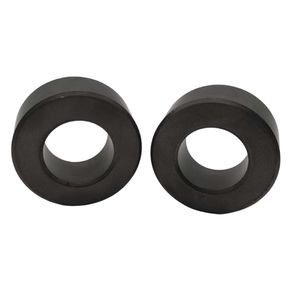
Ferrite Core Mn-zn P40 H6K H8K H10K T27x15x12 Toroidal Core Custom Core air Gap Value Adjustable Transformer Core
High-permeability Mn-Zn toroidal and gapped core series designed for broadband transformers, EMI filters, and precision pulse transformers requiring tight air gap tolerances and minimum hysteresis loss.
Send an Inquiry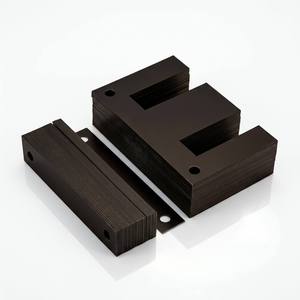
Non-Oriented Annealed Silicon Steel EI133 Transformer Lamination Side Holes Low Loss Power Inductor Core Assembly ASTM Standard
Precision-stamped, vacuum-annealed EI lamination sets with engineered side holes for optimal clamping bolt alignment, minimal eddy current dissipation, and high structural rigidity in power inductors.
Send an Inquiry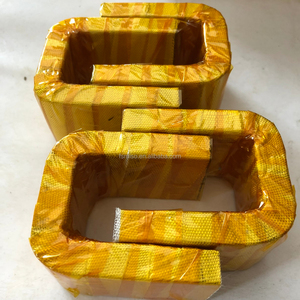
New Magnetic Material Amorphous Alloy Cut Core C Core Transformer Core for Solar Inverters
Next-generation Fe-based amorphous alloy C-cores developed specifically for grid-tied solar PV string inverters, providing up to 75% lower no-load power loss compared to traditional silicon steel cores.
Send an Inquiry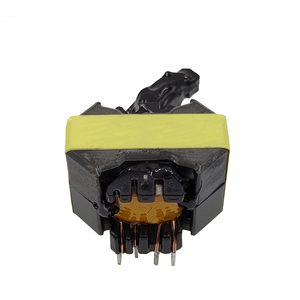
RM5 RM6 RM8 RM10 RM14 Ferrite Core High Frequency Transformer Phenolic Bobbin Switching Power Transformer 12V 24V 110V 220V
Modular RM-series ferrite core assemblies with primary-to-secondary phenolic bobbins for high-density SMPS, AC-DC power supplies, telecommunication power modules, and auxiliary transformers.
Send an Inquiry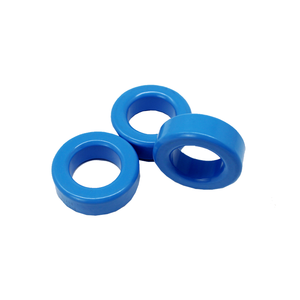
Wholesale CF Brand Amorphous Nanocrystalline Toroidal Core for High Power Transformer RoHS/REACH Certified -40C~150C
Heavy-duty encapsulated nanocrystalline toroidal core sets featuring ultra-high permeability (μi > 80,000) and flat temperature stability curves for extreme industrial environments and high-current power transformers.
Send an Inquiry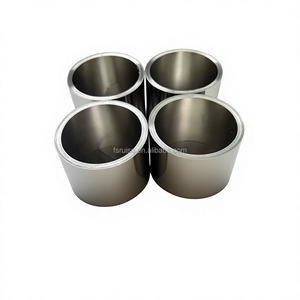
High Permeability core Low core Loss Nanocrystalline Customized Transformer core
Engineered ultra-low loss nanocrystalline cores optimized for smart grid current sensors, zero-sequence current transformers, high-frequency pulse transformers, and medical power systems.
Send an Inquiry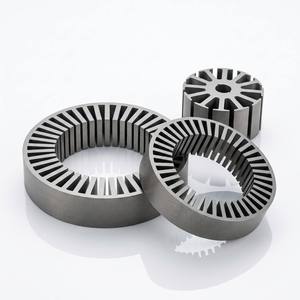
Precision EI Non-Oriented Silicon Steel Transformer Lamination Core Set Interlocking Design Grade 50W470 Tolerance 0.02 Stable
Automated progressive-die stamped lamination sets featuring self-interlocking studs for fast automated coil insertion, eliminating interlaminar acoustic hum and maintaining strict stacking factor consistency (>96%).
Send an Inquiry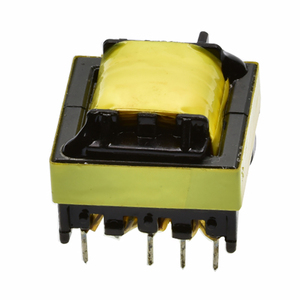
Innootec Custom EE Core Transformer For SMPS High Frequency Vertical Mount OEM Custom Winding Manufacturer
Complete OEM magnetic assembly solution incorporating precision EE ferrite cores, custom vertical-mount PCB bobbins, tuned center-post air gaps, and multi-strand Litz wire windings for switching frequencies up to 500 kHz.
Send an InquiryExecutive Technical Whitepaper: Advanced Transformer Core Manufacturing & Procurement Architecture
As global electric grids undergo massive modernization to support renewable integration, electric vehicle (EV) charging infrastructure, and high-efficiency power conversion topologies, the selection and procurement of high-performance transformer cores have emerged as pivotal strategic factors. A transformer's magnetic core serves as the fundamental flux-linkage pathway; its metallurgical composition, grain orientation, stacking accuracy, and air gap engineering dictate the total magnetic energy losses, temperature rise, harmonic resilience, and overall system lifecycle cost.
Leading Chinese manufacturing ecosystems have evolved beyond basic magnetic component stamping into sophisticated metallurgical and electrical engineering hubs. Combining state-of-the-art cold-rolled grain-oriented (CRGO) silicon steel slitting with continuous vacuum annealing, automated laser scribing, rapid quenching of amorphous metallic ribbons, and ultra-precise CNC air-gap grinding, premier China transformer core factories supply over 60% of the world's soft magnetic core demand.
SEO & Procurement Insight: Evaluating core vendors purely on upfront raw material costs often leads to severe total cost of ownership (TCO) penalties due to high no-load losses ($P_0$) over a 30-year operational lifecycle. Leading global EPC contractors prioritize manufacturers adhering to strict magnetic flux testing protocols (ASTM A876, IEC 60076-8, ISO 9001:2015) and localized air-gap calibration.
1. Enterprise Metallurgical Competencies & Processing Innovations
Top-tier Chinese magnetic core manufacturers utilize four core alloy families, each optimized for specific electromagnetic operational windows:
Cold-Rolled Grain-Oriented (CRGO) Silicon Steel
Utilizing high-permeability Goss-textured 3% silicon steel (e.g., 23Q110, 27Q120, and laser-scribed 20QG085 grades), CRGO cores deliver high saturation flux density ($B_s \approx 2.03\text{ T}$) and minimal core loss along the rolling direction. Essential for medium-voltage utility distribution transformers and transmission units operating at 50/60 Hz.
Manganese-Zinc (Mn-Zn) Soft Ferrites
Engineered via high-temperature solid-state sintering of $\text{Fe}_2\text{O}_3$, $\text{Mn}_3\text{O}_4$, and $\text{ZnO}$, Mn-Zn soft ferrites (grades P40, H6K, H8K, H10K) offer high initial permeability ($\mu_i$ up to 10,000) and elevated electrical resistivity ($\rho \approx 1 - 10\text{ }\Omega\cdot\text{m}$). Designed for high-frequency SMPS, pulse transformers, and EMI suppression up to 1 MHz.
Fe-Based Amorphous Alloys
Rapidly solidified at $10^6\text{ K/s}$ into thin non-crystalline ribbons ($\approx 25\mu\text{m}$ thickness), iron-based amorphous alloys (such as 1C60 / Metglas 2605SA1) lack long-range atomic order. This atomic arrangement suppresses magnetocrystalline anisotropy, yielding extraordinary coercivity ($H_c < 3\text{ A/m}$) and reducing no-load losses by up to 75% compared to premium CRGO steel.
Nanocrystalline Metallic Alloys
Formed by controlled devitrification annealing of Fe-Cu-Nb-Si-B precursor glass ribbons, nanocrystalline microstructures consist of ultra-fine $\alpha\text{-Fe(Si)}$ grains ($10-15\text{ nm}$) embedded in an amorphous matrix. They combine high saturation flux density ($B_s = 1.25\text{ T}$), near-zero magnetostriction, and remarkable initial permeability ($\mu_i > 100,000$) across broad operating temperatures ($-40^\circ\text{C}$ to $+150^\circ\text{C}$).
2. Precision Manufacturing Capabilities & Quality Architecture
World-class core manufacturing in China leverages specialized mechanical and chemical engineering workflows to eliminate parasitic losses and mechanical degradation:
- High-Speed Progressive Stamping & Interlocking: Progressive carbide dies execute clean blanking with burr heights under $0.02\text{ mm}$. Integrated interlocking studs secure lamination stacks without conductive mechanical rivets, suppressing inter-laminar circulating eddy currents.
- Protective Atmospheric Annealing: Cold-stamped laminations undergo continuous stress-relief annealing at $800^\circ\text{C} - 850^\circ\text{C}$ in a pure Nitrogen-Hydrogen ($N_2-H_2$) reducing atmosphere. This thermal cycle restores domain wall mobility damaged during punch shearing.
- CNC Precision Air Gap Grinding: To prevent magnetic core saturation under heavy DC bias conditions (common in solar string inverters and energy storage converters), center-leg air gaps are diamond-ground to tolerances within $\pm 0.005\text{ mm}$. Controlled gaps establish linear $B-H$ response characteristics.
- Vacuum Epoxy Encapsulation & C-Core Cutting: Wound amorphous and nanocrystalline cores undergo vacuum pressure impregnation (VPI) with high-temperature epoxy resins prior to precision wire-saw cutting, yielding smooth optical-grade mating surfaces ($Ra < 0.8\mu\text{m}$) for minimal acoustic hum and low fringing flux.
3. Technical Parameter Comparison Matrix
The following performance matrix illustrates the operational parameters across core material classifications to assist magnetic design engineers in component selection:
| Core Material Category | Saturation Flux ($B_s$) | Initial Permeability ($\mu_i$) | Core Loss ($P_c$) Spectrum | Curie Temp. ($T_c$) | Target Applications |
|---|---|---|---|---|---|
| CRGO Silicon Steel (23Q110) | 2.03 Tesla | 1,500 – 3,000 | 1.05 W/kg @ 1.7T, 50Hz | 740°C | 50/60Hz Power & Distribution Transformers |
| Non-Oriented Silicon Steel (50W470) | 1.70 Tesla | 600 – 1,200 | 4.70 W/kg @ 1.5T, 50Hz | 750°C | General Power Inductors, Motors, EI Transformers |
| Mn-Zn Soft Ferrite (P40) | 0.51 Tesla | 2,300 ± 25% | 350 kW/m³ @ 100kHz, 200mT | > 215°C | High-Frequency SMPS, Telecom Chargers, Flyback |
| Fe-Amorphous Cut Core (1C60) | 1.56 Tesla | > 8,000 | 0.15 W/kg @ 1.3T, 50Hz | 399°C | Solar PV Inverters, High-Efficiency Utility Grids |
| Nanocrystalline Toroidal Core | 1.25 Tesla | 80,000 – 120,000 | 40 W/kg @ 100kHz, 0.2T | 560°C | EV Charging Stations, Precision CTs, EMI Filters |
4. Next-Generation Global Procurement Trends (2026–2030)
As the international power equipment sector transitions toward net-zero targets and ultra-efficient distribution networks, transformer core purchasing strategies are undergoing four macro-shifts:
- Mandatory Eco-Design & Low-Loss Directives: Strict energy-efficiency regulations (such as EU Tier 2 Eco-design requirements and US DOE 2026 standards) mandate substantial reductions in transformer no-load loss. Consequently, global utilities are steadily shifting procurement volume from conventional CRGO steel to Fe-based amorphous and ultra-thin laser-scribed silicon steel cores.
- Adoption of Wide Bandgap (GaN / SiC) Power Systems: The deployment of Silicon Carbide (SiC) and Gallium Nitride (GaN) switching devices in EV traction inverters and industrial SMPS has pushed switching frequencies from tens of kilohertz into the megahertz region. This transition demands Mn-Zn soft ferrites and ultra-thin nanocrystalline cores engineered with flat power-loss density curves at elevated temperatures ($100^\circ\text{C}-120^\circ\text{C}$).
- Customized Modular Core Geometries (C-Cores, E-Cores, Segmented Toroids): Traditional stacked EI laminations are increasingly replaced by wound cut cores (C-Cores, E-Cores, and Toroids) with tuned air gaps. These modular geometries facilitate automated robotic coil winding, lower assembly labor costs, and improve thermal heat dissipation.
- Supply Chain Transparency & Material Traceability: Tier-1 international buyers require comprehensive raw material origin verification (covering raw steel coils and high-purity rare earth / iron precursor elements), alongside ISO 14001 environmental compliance declarations, RoHS/REACH certificates, and batch-specific Epstein Frame test reports.
Frequently Asked Procurement & Engineering Questions
Partner with China's Premier Transformer Core Manufacturing Engineering Hub
Whether you require low-loss CRGO distribution lamination stacks, custom-machined air-gap amorphous C-cores for solar PV inverters, or ultra-high permeability nanocrystalline toroidal cores, our engineering team provides end-to-end material design, prototyping, magnetic testing, and scalable volume manufacturing.