Distribution Transformer Technical Articles, Industry Insights & Grid Updates — SOTEK Group
High-Performance CRGO Core Transformers & Equipment
Direct factory-manufactured oil-immersed, dry-type, and isolation transformers utilizing premium cold-rolled grain-oriented silicon steel cores for maximum grid efficiency.
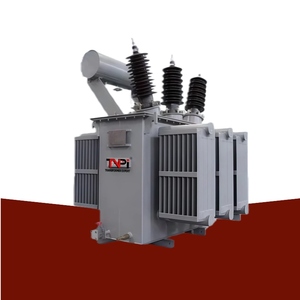
69kV 33kV 10MVA–30MVA ONAN Oil Immersed Power Transformer
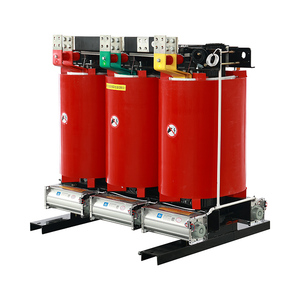
3-Phase Dry Type Isolation Transformer 100kVA High Voltage
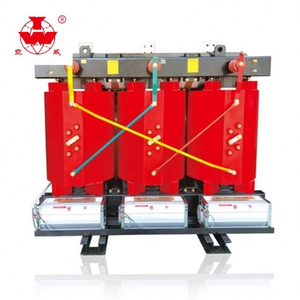
10/11kV 500kVA–2500kVA Step Down Dry Type Transformer
CE Certified 10kVA–50kVA 35kV to 400V 3-Phase Dry Transformer
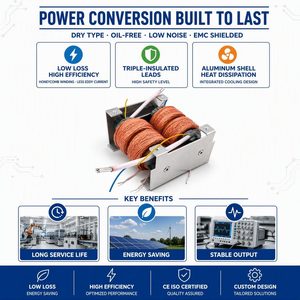
Single Phase 6kV to 220V Honeycomb Dry Isolation Transformer
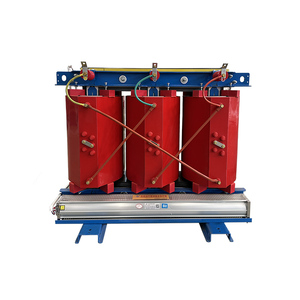
3-Phase 10kV–35kV 50Hz/60Hz Cast Resin Dry Type Transformer
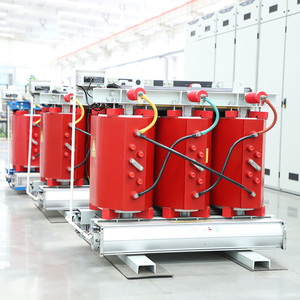
630kVA High Voltage 20kV to 415V Low Loss Dry Power Transformer
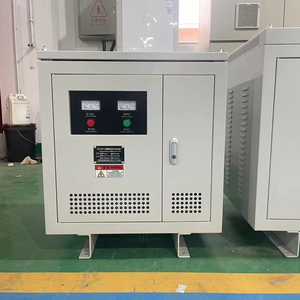
IEC60076 ISO CE Certified 440V to 220V Dry Isolation Transformer
Engineering Excellence in CRGO Electrical Steel Core Manufacturing
Cold-Rolled Grain-Oriented (CRGO) silicon steel is the single most critical structural material governing energy transmission efficiency across global electrical grids. Choosing leading CRGO steel manufacturers and specialized processing factories directly dictates a transformer's operational envelope, no-load thermal dissipation, and 30-year Total Cost of Ownership (TCO).
Goss Texture & Grain Alignment
High-grade CRGO steel relies on precise (110)[001] Goss crystallographic orientation. By aligning the easy axis of magnetization strictly parallel to the rolling direction, prime factories achieve magnetic permeability exceeding 1,890 H/m at 800 A/m field intensity.
Hysteresis & Eddy Current Minimization
Core losses ($P_c$) comprise hysteresis ($P_h$) and eddy current ($P_e$) components. Advanced laser-domain refinement etches microscopic thermal grooves into 0.23mm and 0.18mm laminations, restricting magnetic domain wall motion and curtailing eddy current losses by up to 25%.
45° Mitred Step-Lap Core Assembly
State-of-the-art core factories employ 7-stage or 9-stage step-lap joint geometries with precision 45-degree corner mitres. This eliminates 90-degree magnetic cross-flux bottlenecks, suppressing localized core overheating and acoustic noise by 4 to 8 dBA.
Information Gain: Why Core Material Selection Directly Impacts Grid ROI
In utility-scale substations, no-load losses (iron losses) occur continuously 24 hours a day, 365 days a year, regardless of grid load factor. Upgrading from standard M4 (0.27mm) conventional CRGO to domain-refined Hi-B steel (e.g., 23ZDH085 or 18ZDH070) reduces static iron loss by approximately 0.35 Watts per kilogram of core weight. Over a 30-year operational life for a 20MVA transformer, this metallurgical enhancement saves over 180,000 kWh of wasted electrical energy—yielding environmental compliance and rapid capital payback.
Comparative Analysis of Electrical Core Materials
A comprehensive metallurgical comparison between conventional CRGO, high-permeability Hi-B CRGO, laser domain-refined steel, and amorphous alloy cores.
| Material Category | Nominal Thickness | Max Saturation Flux ($B_s$) | Specific Core Loss (W/kg @ 1.7T, 50Hz) | Stacking Factor | Primary Transformer Application |
|---|---|---|---|---|---|
| Conventional CRGO (M4 / M5) | 0.27 mm – 0.30 mm | 1.82 Tesla | 1.05 – 1.25 W/kg | 96.5% | Standard Industrial & Distribution Transformers |
| High-Permeability Hi-B CRGO | 0.23 mm – 0.27 mm | 1.90 Tesla | 0.80 – 0.92 W/kg | 97.0% | Substation Step-Down & Medium-Voltage Power Grids |
| Laser Domain-Refined CRGO | 0.18 mm – 0.23 mm | 1.92 Tesla | 0.65 – 0.78 W/kg | 96.8% | EcoDesign Tier 2 / High-Efficiency Renewable Substation |
| Amorphous Alloy (Fe-B-Si) | 0.025 mm (Ribbon) | 1.56 Tesla | 0.20 – 0.28 W/kg | 86.0% | Ultra-Low Loss Rural & Microgrid Distribution |
Why Leading Utilities Trust SOTEK Factory Solutions
From raw prime coil slitting to automated step-lap stacking, vacuum drying, and ISO/IEC 17025 testing, SOTEK integrates vertical manufacturing control to guarantee grid-ready quality.
Strategic Mill Sourcing
We source 100% prime-grade cold-rolled grain-oriented coils exclusively from Tier-1 global mills, including Nippon Steel, Baosteel, POSCO, and Shougang, complete with traceable mill test certificates (MTC).
Georg (Germany) Precision Lines
Our 18,500 m² facility operates automated Georg CNC slitting and cut-to-length lines, delivering micro-burr lamination cuts below 0.01mm to preserve inter-lamination insulation resistance.
VILAS 1183 Accredited Lab
Our ISO/IEC 17025 accredited laboratory conducts routine, type, and special tests—including 1.2/50µs lightning impulse withstand, short-circuit validation, and low-frequency noise analysis.
EVN & International Certifications
Pre-qualified vendor for EVN (Vietnam Electricity) across all 5 regional distribution networks, holding ISO 9001:2015, ISO 14001:2015, ASTA, and KEMA type-test compliance certificates.
Ester Fluid & Class H Compatibility
Specialized engineering for bio-degradable synthetic/natural ester fluids (FR3) and high-temperature Class H dry-type cast resin insulation systems up to 35kV class.
Global B2B Export Network
Proven export track record delivering custom OEM transformer solutions across Southeast Asia (Aboitiz Power Philippines), Australia, East Africa, and North America under strict Incoterms.
Key Sourcing & Technological Trends in CRGO Core Fabrication
As global energy networks transition toward decentralized renewable integration, smart grids, and stringent energy efficiency mandates, the procurement of CRGO steel and transformer cores is undergoing four pivotal transformations:
1. Mandatory Ultra-Low Loss Standards
Regulations like EU EcoDesign Tier 2 and U.S. DOE 2026 efficiency mandates require utilities to deploy ultra-thin (0.18mm–0.23mm) laser domain-refined CRGO cores. Sourcing strategies are rapidly phasing out standard 0.30mm grade steel.
2. Nearshoring & Southeast Asian Supply Hubs
To mitigate geopolitical supply chain bottlenecks, global EPC contractors are shifting core cutting and assembly contracts toward established manufacturing centers in Vietnam and Southeast Asia with direct access to Tier-1 steel mills.
3. High-Harmonic Inverter-Duty Cores
Solar PV and wind farms generate high-frequency current harmonics. Modern CRGO cores feature custom K-Factor ratings, electrostatic shielding, and low-induction magnetic design to prevent stray eddy heating under non-linear loads.
Frequently Asked Questions by B2B Buyers & Power Engineers
In-depth technical answers addressing critical parameters in CRGO steel selection, core stacking methodologies, loss calculations, and quality verification.
Request Technical Specifications & Direct Factory Quotation
Partner with an ISO 9001 certified transformer core manufacturer. Submit your single-line diagram (SLD), voltage rating, and core loss targets to our engineering team today.
Send an Inquiry