Distribution Transformer Technical Articles, Industry Insights & Grid Updates — SOTEK Group
Featured Disconnector Switch & Substation Apparatus
Explore our high-performance electrical isolators, load break switches, and transformer integration units built for power generation, transmission, and heavy industrial distribution.
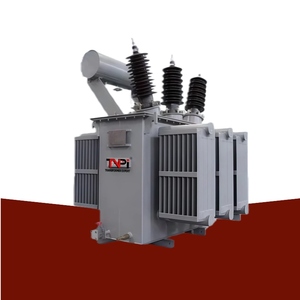
69kV – 230kV Substation Outdoor Air Break Disconnector Switch
Heavy-duty double-side break isolator designed for grid substations. Silver-plated copper contacts and hot-dip galvanized steel chassis ensure zero-maintenance operation under extreme outdoor weather.
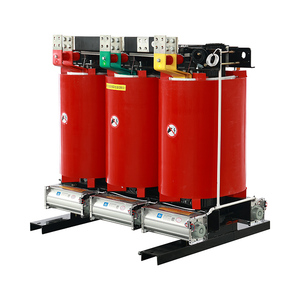
10kV – 35kV Cast Resin Isolated Medium-Voltage Disconnector Switch
Compact indoor solid insulation air isolator optimized for commercial switchgear and transformer rooms. Fire-resistant Class F insulation delivers maximum safety against arc flash events.
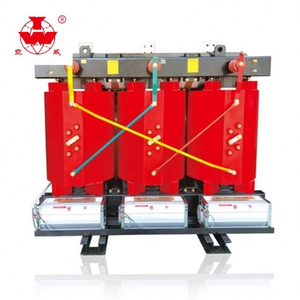
11kV / 33kV Motor-Operated Isolator Switch with Integral Earthing
Equipped with SCADA-compatible motorized operating mechanisms. Mechanical interlocking prevents illegal operation, providing seamless remote switching for distribution networks.
35kV to 400V Integrated Load Break Disconnector Switch Gear
High-capacity load break isolator combining quick-make/quick-break arc quenching capabilities with secondary transformer protection for chemical, mining, and manufacturing facilities.
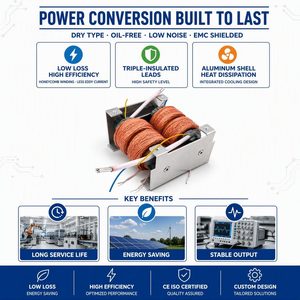
Single-Phase Overhead Overhead Line Pole Disconnector Switch
Heavy-duty gang-operated outdoor pole disconnector for rural electrification and distribution feeders. Silicon rubber hydrophobic insulators prevent flashovers in tropical coastal zones.
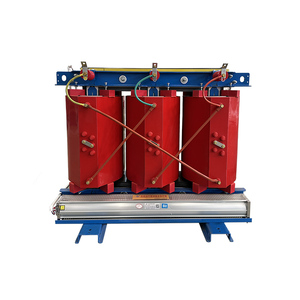
Three-Phase SF6-Free Solid Insulated Substation Disconnector
100% SF6-gas-free green disconnector engineered with epoxy resin vacuum casting. Eliminates greenhouse gas compliance costs while maintaining 50Hz/60Hz high dielectric strength.
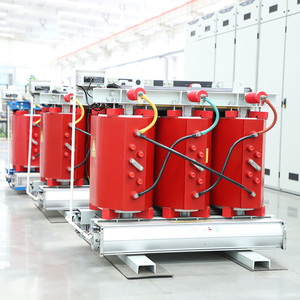
High-Current Station Service Disconnector Switch (up to 3150A)
Built for thermal plants, solar substations, and large power transformer primary circuits. Low contact resistance (<30μΩ) drastically minimizes continuous I²R heat losses.
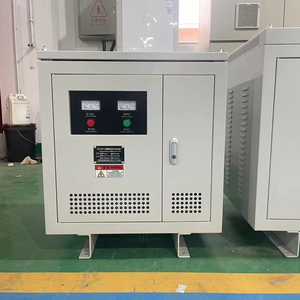
Rotary Double-Break Isolation Disconnector Switch Gear
ISO/CE certified central post rotary disconnector providing visible double isolation distances. Designed for high short-circuit withstand capacity (up to 50kA/3s).
Engineering Principles & Standards for Disconnector Switches
An authoritative operational guide for procurement officers, electrical consultants, and EPC contractors managing medium and high-voltage grid infrastructure.
1. The Critical Role of Disconnector Switches in Power Grids
In electrical power transmission and distribution systems, a Disconnector Switch (also referred to as an Isolator Switch) is an essential mechanical switching device. Unlike circuit breakers designed to interrupt heavy fault currents, disconnector switches provide a visible, physical isolation gap in an de-energized electrical circuit. This visible break guarantees safety for maintenance personnel working downstream on high-voltage apparatus, power transformers, and busbars.
Under international standards such as IEC 62271-102 and IEEE C37.30, high-voltage disconnectors must satisfy stringent mechanical endurance standards (M1 or M2 class) and withstand high peak dynamic currents ($I_{pk}$) during system short-circuit events without contact welding or mechanical distortion.
2. Fundamental Architecture & Kinematic Designs
Disconnector switch designs are categorized based on their mechanical movement and installation footprint within Air-Insulated Substations (AIS):
- Vertical Break Disconnector Switches: Feature a blade that swings vertically upwards to open. Ideal for compact substations with constrained phase-to-phase horizontal clearances.
- Double-Side Break Disconnector Switches: Feature a central rotating insulator post with two moving arms breaking at both ends. Offers superior short-circuit withstand strength and compact vertical profiles.
- Single-Side Break (Center Break) Switches: Two rotating insulator posts pivot simultaneously to meet in the middle. Widely specified for 33kV to 145kV transmission grids due to balanced mechanical torque.
- Pantograph Disconnectors: Used in ultra-high-voltage (UHV) substations (230kV to 550kV), connecting upper busbars directly to lower feeder circuits, reducing substation floor footprint by up to 40%.
3. Contact Metallurgy & Thermal Dissipation
The primary point of degradation in disconnector switches is contact resistance ($R_c$). High quality manufacturers utilize high-grade electrolytic copper blades coated with silver plating ($\ge 30\,\mu\text{m}$ thickness). Silver plating prevents copper oxidation under elevated continuous operating temperatures (up to 105°C), maintaining a low contact resistance below $35\,\mu\Omega$. Spring-loaded stainless steel backup clips ensure uniform contact finger pressure across thousands of opening and closing cycles.
Technical Specification Matrix: Disconnector Switch Classes
| Voltage Class (kV) | Rated Current ($I_n$) | Short-Time Withstand ($I_{cw}$) | Insulation Medium | Mechanical Endurance | Primary Application |
|---|---|---|---|---|---|
| 12kV – 36kV | 630A – 2000A | 25kA / 3s | Air / Solid Epoxy Resin | Class M1 (2,000 cycles) | Distribution Feeders & Industrial MV Switchgear |
| 69kV – 145kV | 1250A – 3150A | 40kA / 3s | Air Break / Composite Polymer | Class M2 (10,000 cycles) | Transmission Substations & Renewable Plants |
| 230kV – 550kV | 2000A – 4000A | 50kA / 3s – 63kA / 1s | Porcelain / SF6 Hybrid / Air | Class M2 (10,000 cycles) | UHV Grid Interconnections & Bulk Utility Lines |
Why Global Utilities Trust Our Manufacturing Facilities
Combining advanced European automation tooling, ISO 9001:2015 quality control systems, and rigorous full type testing to deliver failure-free substation equipment.
Precision Robotic Tooling
Our 18,500 m² modern manufacturing plant integrates Georg automated core cutting, robotic aluminum/copper contact welding, and automated galvanizing lines to maintain tight engineering tolerances.
ISO/IEC 17025 Accredited Testing
Equipped with in-house high voltage dielectric test bays, lightning impulse generators (up to 1000kV), temperature rise test setups, and micro-ohmmeter contact verification for 100% FAT compliance.
Global B2B Export Capability
Approved vendor for major international power entities across SE Asia, Australia, South America, and Africa. Complete Incoterms support including seaworthy vacuum packing and export documentation.
Future Procurement Trends for Disconnector Switches
Key technological shifts driving global procurement specifications over the next decade.
1. Smart Grid & SCADA Motorization
Utility procurement is rapidly shifting away from manual hand-operated levers toward smart, motorized operating mechanisms equipped with MODBUS / IEC 61850 protocol controllers. Automated disconnector switches enable self-healing power grids (FLISR) to isolate faulty grid sections in milliseconds without dispatching maintenance crews.
2. Eco-Friendly SF6-Free Technologies
With global environmental regulations phasing out SF6 gas (GWP of 23,500), grid engineers favor Solid Resin Insulation and Clean-Air Vacuum Isolators. Green disconnector switch designs eliminate environmental compliance liabilities while providing superior dielectric safety across 30+ year lifespans.
3. IoT Condition Monitoring Sensors
Modern high-voltage disconnectors are increasingly retrofitted with non-contact infrared thermal sensors, vibration analysis transducers, and motor current signature monitors. Real-time temperature measurement at jaw contacts allows operators to implement predictive maintenance before thermal runaway occurs.
4. Extreme Environment Polymer Insulators
Hydrophobic High-Consistency Silicone Rubber (HTV) insulators are rapidly replacing traditional heavy porcelain insulators. Silicon polymer composite posts drastically reduce weight, resist heavy industrial salt/dust pollution, and eliminate catastrophic shattering during seismic events.
Frequently Asked Questions (FAQ)
Expert answers to technical procurement questions regarding disconnector switch selection, standards, and global shipping.
Q1: What is the functional difference between a Disconnector Switch and a Circuit Breaker?
A Circuit Breaker is designed to interrupt heavy electrical current flow, including high-ampere short-circuit faults, automatically or manually under normal and fault conditions. Conversely, a Disconnector Switch (Isolator) is an off-load safety device operated only when no current is flowing through the circuit (or minimal magnetizing current). It creates a visible physical air gap to ensure safety during maintenance work.
Q2: What standards govern your disconnector switch manufacturing?
All SOTEK disconnector switches and isolator assemblies are strictly designed, manufactured, and tested in accordance with international electrical standards, including IEC 62271-102 (High-voltage alternating current disconnectors and earthing switches), IEC 62271-1, IEEE C37.30, and ANSI C37.32. Complete type-test certificates from independent laboratories are provided with all RFQs.
Q3: How do I correctly size the Rated Short-Time Withstand Current (Icw)?
The Rated Short-Time Withstand Current ($I_{cw}$) defines the maximum thermal current a disconnector can safely carry in the fully closed position for a specified duration (typically 1 second or 3 seconds) without damage. It must match or exceed the maximum prospective short-circuit fault level of your substation switchyard (e.g., 25kA/3s, 31.5kA/3s, 40kA/3s, or 50kA/1s).
Q4: Why are integrated Earthing Switches mandatory on transmission isolators?
Earthing switches (grounding blades) are mechanically mounted onto line disconnectors to safely discharge residual capacitive electrical charges remaining on isolated transmission cables or transformer windings directly to ground before maintenance personnel touch the equipment. Mechanical interlocks ensure the line disconnector cannot be closed while the earthing switch is grounded.
Q5: What Creepage Distance is required for coastal or heavily polluted installations?
For coastal regions or heavy chemical/industrial mining environments (Pollution Class IV / Very Heavy per IEC 60815), we recommend a minimum specific creepage distance of 31 mm/kV. We utilize hydrophobic Silicone Rubber composite insulators to prevent leakage currents and flashovers caused by atmospheric salt deposition.
Q6: Can disconnector switches be customized for remote SCADA operating systems?
Yes. We offer fully integrated motorized motor-operating mechanisms (24V DC, 110V DC, 220V DC, or 230V AC) fitted with auxiliary limit switches (10NO + 10NC), programmable logic controllers, and Modbus/RS485 communication cards for seamless SCADA integration and remote substation automation.
Q7: What routine maintenance is required for outdoor disconnector switches?
Routine maintenance should be performed every 2 to 5 years depending on environmental conditions. Key steps include cleaning insulator posts, inspecting main jaw contacts for mechanical wear, applying conductively rated conductive grease to contact surfaces, measuring contact resistance using a micro-ohmmeter (<35μΩ), and checking motor drive gear lubrications.
Q8: What lead time and export logistics options do you provide?
Standard production lead times range from 4 to 8 weeks depending on engineering complexity and quantity. Goods are packed in seaworthy, IP-rated fumigated wooden crates with corrosion-inhibiting VCI plastic wrap. Export shipping is available under FOB Hai Phong, CIF, or DDP terms to major sea ports worldwide.
Request Technical Quotation & Engineering CAD Drawings
Consult directly with our high-voltage switchgear engineering team for custom disconnector switch specifications, tender compliance support, and competitive factory-direct pricing.