Distribution Transformer Technical Articles, Industry Insights & Grid Updates — SOTEK Group
Featured Power & Pulse Transformer Products
Explore our ISO 9001 and IEC/IEEE compliant magnetic equipment engineered for high-frequency isolation, step-down substations, and heavy industrial applications.
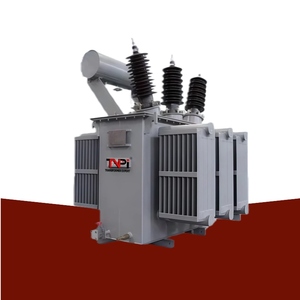
69kV 33kV 10MVA 20MVA 30MVA ONAN Copper Oil Immersed Power Transformer for Substation Step Down
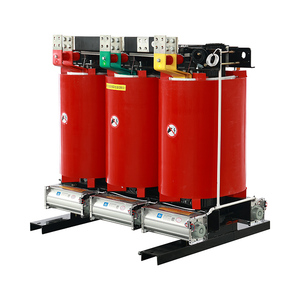
3-phase Dry Type Isolation Transformer 100kva High Voltage Dry Type Industrial Transformer
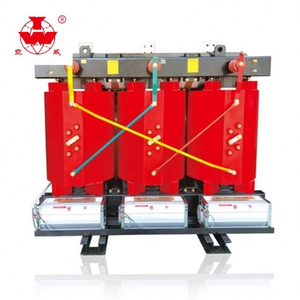
YAWEI Supply 10/11kv 500kva 1000 Kva Step Down 1600kva 2500 Kva Dry Type Transformer with Cooling Fan

Ce Certified Low-frequency 10Kva 15Kva 20Kva 25Kva 30Kva 50Kva 35kV Step Down Three Phase Dry Type SMPS Transformer
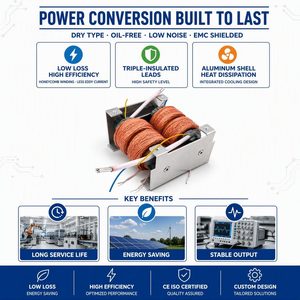
Single Phase 6kV to 220V High Frequency Honeycomb Transformer Dry Type Isolation Power Transformer Custom
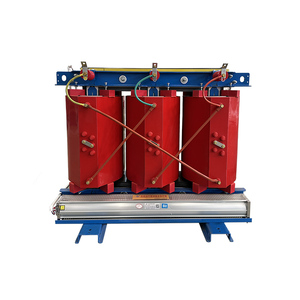
Three Phase Dry Type Transformer 50HZ/60HZ Frequency Transformer 10KV 35KV Dry Type Resin Transformer
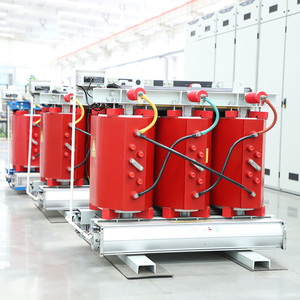
High Quality 630KVA Transformer High Voltage 20kv 415V 50 Hz 60 Hz Low Loss Dry Type Power transformers
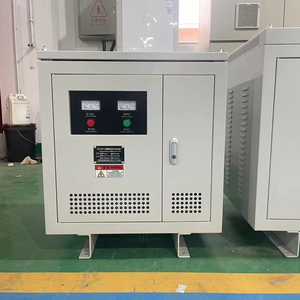
DingXin SG IEC60076 ISO CE Certified Three Phase Dry Type Step Up/Down Isolation Transformer 440V to 220V
Engineering Excellence in Pulse & High-Frequency Magnetic Design
In high-speed power conversion, signal isolation, and pulse-forming networks (PFN), selecting top-tier pulse transformer manufacturers is vital to safeguarding circuit integrity. Unlike standard power distribution transformers operating at fixed 50Hz or 60Hz line frequencies, pulse transformers are optimized to transfer rectangular voltage pulses with rapid rise times, minimal signal distortion, and precise volt-second product ($V \cdot t$) ratings.
Whether driving Wide Bandgap (WBG) Silicon Carbide (SiC) and Gallium Nitride (GaN) power switches, providing galvanic isolation in high-voltage Medical X-Ray apparatus, or regulating auxiliary power supplies in industrial Switched-Mode Power Supplies (SMPS), pulse transformers serve as the magnetic bedrock of modern power electronics. As an industry-leading OEM/ODM manufacturer, our facility combines advanced magnetic material science—utilizing nanocrystalline, amorphous alloys, and high-frequency MnZn ferrites—with automated winding precision to deliver superior magnetic performance.
1. Core Physics & Critical Parameters of Pulse Magnetics
To prevent core saturation during high-amplitude energy pulses, design engineers must carefully calculate the volt-second capacity. The mathematical boundary governing pulse transformer saturation is expressed by Faraday's Law of Electromagnetic Induction:
Where E represents applied pulse amplitude (Volts), t is pulse duration (Seconds), N is primary turn count, A_e is effective core cross-sectional area ($\text{m}^2$), and ΔB is total magnetic flux density excursion (Tesla). Modern pulse engineering leverages unipolar or bipolar flux swings to maximize energy density.
2. Comprehensive Magnetics Comparison Matrix
Understanding the functional operational boundaries between different transformer topologies enables procurement and design engineering teams to select the appropriate equipment for their electrical infrastructure:
| Transformer Type | Operating Frequency | Core Material | Primary Application | Key Engineering Focus |
|---|---|---|---|---|
| Gate Drive Pulse Transformer | 20 kHz – 2 MHz | High-μ Ferrite / Nanocrystalline | SiC/GaN IGBT Gate Triggering | Sub-nanosecond rise time, minimal $C_{p-s}$ |
| High-Voltage Pulse Transformer | 1 kHz – 100 kHz (Pulsed) | Amorphous Ribbon / Nano Core | Radar, Pulsed Laser, Plasma Drivers | Dielectric breakdown strength, impulse immunity |
| Cast Resin Dry-Type Power | 50 Hz / 60 Hz | Cold-Rolled Grain-Oriented (CRGO) Silicon Steel | Substation Step-Down (10kV-35kV) | Thermal dissipation, Class F/H insulation, low noise |
| ONAN Oil-Immersed Transformer | 50 Hz / 60 Hz | High-Permeability Silicon Steel | Utility & Grid Substations (33kV-69kV) | Oil-cooling thermal efficiency, weather resistance |
| SMPS Isolation Transformer | 50 kHz – 500 kHz | MnZn Power Ferrite | Industrial Power Supply Units | Low AC core loss, compact footprint |
Enterprise Manufacturing & Quality Superiority
As a premier global supplier of specialized magnetic components and medium-voltage power equipment, our manufacturing footprint integrates state-of-the-art automated core slitting, vacuum pressure impregnation (VPI), and real-time partial discharge monitoring.
Precision Core Processing
We utilize ultra-thin nanocrystalline ribbons (≤ 18 μm thickness) and high-saturation ferrite cores. Laser-annealed magnetic materials drastically reduce hysteresis losses, enabling maximum signal fidelity for fast-rise pulse applications.
Advanced Insulation Systems
From Class R (220°C) triple-insulated wire (TIW) for miniature signal pulse units to epoxy resin cast encapsulation for 35kV industrial dry-type transformers, our products resist extreme partial discharge and thermal breakdown.
Rigorous Testing & FAT Compliance
Every batch undergoes 100% Factory Acceptance Testing (FAT). Utilizing automated LCR meters, surge impulse testers, and partial discharge detectors (< 5 pC at 1.2 Un), we guarantee complete compliance with IEC 60076, IEEE C57, and CE standards.
Future Procurement & Technological Trends (2026–2030)
The global transition toward electrification, renewable energy integration, and ultra-fast semiconductor switching is redefining the pulse and power transformer landscape. Strategic procurement teams must account for four major industry shifts over the coming decade:
- Adoption of Wide Bandgap (WBG) Semiconductors: The rapid rollout of Silicon Carbide (SiC) and Gallium Nitride (GaN) devices in EV fast chargers and solar inverters requires pulse transformers capable of withstanding extreme $dV/dt$ slew rates exceeding 100 kV/μs without insulation degradation.
- Planar Matrix & Coaxial Winding Architecture: Traditional wire-wound bobbins are increasingly replaced by multi-layer PCB planar windings and coaxial transmission-line configurations to push operating frequencies into the megahertz range while maintaining repeatable parasitic inductance.
- High-Efficiency Eco-Design Mandates: Global energy efficiency frameworks (such as EU EcoDesign Tier 2 and US DOE 2016 standards) are forcing dry-type and oil-immersed distribution transformers to lower no-load ($P_0$) and load losses ($P_k$).
- Smart Grid Diagnostics & Embedded Sensing: Integration of fiber-optic temperature sensors, online partial discharge couplers, and real-time gas analysis sensors inside medium-voltage power transformers is becoming standard for utility-scale smart grids.
Frequently Asked Questions (FAQ) for Procurement Engineers
Get expert answers to common technical queries regarding custom pulse transformer design, insulation ratings, and bulk ordering.
Request Custom Pulse Transformer Specification & Pricing
Need custom magnetic design solutions, high-voltage isolation, or utility-grade distribution transformers? Speak directly with our senior magnetic application engineers today.