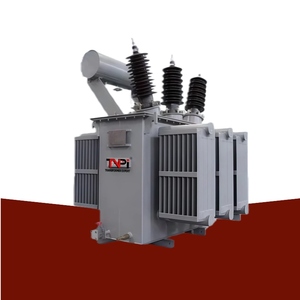
69kV 33kV 10MVA 20MVA 30MVA ONAN Copper Oil Immersed Power Transformer for Substation Step Down
Up to 69kV
ONAN Cooling
10-30 MVA
Select high-performance step-down, isolation, and substation transformers engineered for utility distribution networks, renewable integration, and heavy industry.
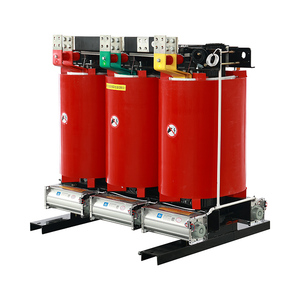
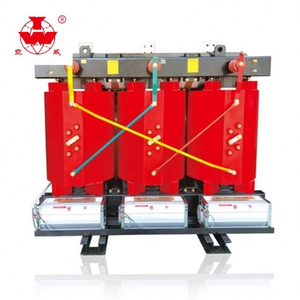
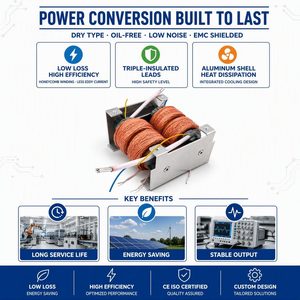
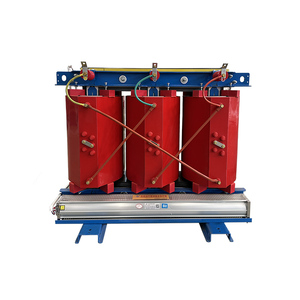
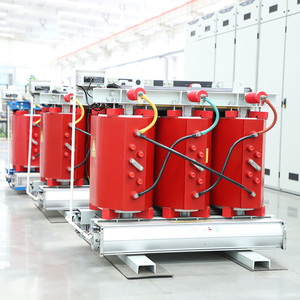
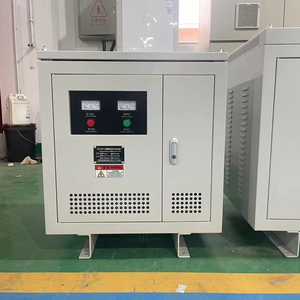
In modern high-density urban infrastructure, commercial high-rises, subterranean transport systems, and chemical processing facilities, electrical safety and fire protection are non-negotiable. Cast resin dry-type transformers (CRDT) have emerged as the definitive solution over conventional liquid-filled units for indoor medium-voltage power distribution. Engineered without liquid dielectric fluids, cast resin transformers eliminate the hazards of environmental oil spills, toxic flammability, and explosion risks while maintaining exceptional mechanical and dielectric integrity under harsh operational stresses.
The core structural advantage of high-tier resin transformers lies in the primary and secondary winding encapsulation process. Using advanced multi-stage vacuum casting chambers (operating at pressures below 1 mbar), high-grade epoxy resin blended with silica flour filler is injected into high-voltage coils. This forms a homogeneous, void-free monolithic solid block around the conductors.
The magnetic core structure utilizes cold-rolled grain-oriented (CRGO) silicon steel laminations processed with laser-scribing technology. Stacked using 45-degree step-lap mitred joints, this design minimizes magnetic domain boundary resistance, dramatically curbing no-load losses (P0) and total excitation current.
Comparative breakdown of technical metrics for grid integration decision-making:
| Performance Parameter | Vacuum Cast Resin (CRDT) | Open Vent Dry-Type (VPI) | Oil-Immersed (ONAN) |
|---|---|---|---|
| Fire Hazard Risk | Self-Extinguishing (F1 Rated) | Low Flammability | High (Requires Catch Basins & Fire Walls) |
| Partial Discharge (PD) | < 5 pC (Void-Free Solid Resin) | 10 – 50 pC (Air Cavity Risks) | N/A (Liquid Dielectric) |
| Maintenance Requirements | Zero (Visual Inspection & Dust Clearing) | Periodic Dust & Humidity Checks | Regular Oil DGA & Dielectric Testing |
| Environmental Protection | IP00 to IP54 Enclosures Available | Limited to Clean Indoor Environments | Risk of Soil/Water Contamination |
| Short-Circuit Mechanical Strength | Highest (Solid Monolithic Block) | Moderate | Moderate (Fluid Dynamic Stresses) |
| Overload Capability (AF Mode) | Up to +50% Rating with Forced Air | Up to +33% Rating | Up to +20% (Requires Radiator Pumps) |
Combining state-of-the-art production robotics, rigorous quality control laboratories, and full international compliance to deliver reliable grid infrastructure.
Operating over 18,500 m² of modern manufacturing space equipped with automated Georg core-slitting lines, automatic foil-winding machines, and positive-pressure vacuum casting chambers from Hedrich.
100% routine testing conducted at our ISO/IEC 17025 accredited laboratory. Full type test protocols include Lightning Impulse Withstand, Dynamic Short-Circuit, and Temperature Rise verification.
Full product certification compliant with IEC 60076, IEEE C57, CE, and ISO 9001:2015 standards. Trusted vendor for national power grids, renewable developers, and Fortune 500 industrial entities across 30+ nations.
As power grids undergo rapid decentralization driven by renewable energy expansion, hyper-scale AI data center construction, and electric vehicle (EV) charging infrastructure, transformer procurement parameters are shifting beyond simple initial purchase price (CapEx). EPC directors and utility procurement teams must align specifications with evolving operational challenges:
Modern cast resin transformers are increasingly requested with embedded fiber-optic thermal sensors directly embedded inside high-voltage coils. Coupled with IoT gateway modules, these sensors feed real-time temperature mapping, partial discharge telemetry, and load forecasting into central SCADA and cloud-based asset performance management systems.
Net-Zero corporate mandates are accelerating the demand for eco-designed dry-type transformers. Research into bio-based epoxy resins derived from renewable agricultural by-products promises to lower Scope 3 embodied carbon footprint by up to 35%, while ensuring total recyclability of copper/aluminum conductors and steel cores at end-of-life.
Non-linear workloads generated by AI server clusters, variable frequency drives (VFDs), and fast EV chargers introduce severe harmonic distortion (THD). Future procurement trends prioritize K-Factor rated (K-9, K-13, K-20) resin transformers engineered with specialized electrostatic shielding and enlarged neutral busbars to prevent stray load losses and overheating.
Leading procurement organizations utilize Total Cost of Ownership formulas ($TCO = CapEx + A \cdot P_0 + B \cdot P_k$), where capitalization rates ($A$ and $B$) assign monetary value to no-load and load losses over a 30-year lifecycle. Investing in ultra-low-loss CRGO resin transformers yields complete ROI within 3 to 5 years through reduced energy loss overhead.
Our cast resin transformers are custom-configured with specialized protective enclosures (IP20 to IP54), cooling arrangements, and vibration isolators optimized for diverse operating sectors:
Clear technical answers to critical questions encountered during specification, bidding, and installation of resin transformers.
Vacuum Cast Resin (CRDT) transformers feature high-voltage windings that are completely encapsulated in a solid, thick block of epoxy resin mixed with quartz silica under high vacuum. This creates a completely solid, moisture-proof barrier with minimal partial discharge (<5 pC). VPI transformers, on the other hand, utilize polyester resin dip coatings over aramid paper insulation. While VPI units are lighter, cast resin units offer far superior short-circuit strength, moisture resistance, and mechanical durability in harsh environments.
Under Natural Air (AN) cooling, the transformer relies on natural thermal convection to dissipate core and coil heat. By installing low-noise, cross-flow tangential cooling blowers along the base of the coils (Forced Air mode, AF), heat transfer efficiency is increased significantly. This allows the transformer to operate continuously at up to 140% to 150% of its nominal AN kVA rating without exceeding standard insulation temperature limits (e.g., 100K rise for Class F insulation).
Base units are supplied as IP00 (un-enclosed) for direct installation inside switchgear cabinets. For standalone indoor installation, IP20 or IP21 metallic enclosures with louvered ventilation protect against solid objects larger than 12mm and dripping water. For demanding outdoor or washdown environments, IP23, IP44, or IP54 enclosures with dust filters, air-to-air heat exchangers, or anti-condensation space heaters are provided.
Every single transformer undergoes 100% mandatory routine testing according to IEC 60076-11 standards, including: Winding Resistance Measurement, Voltage Ratio and Phase Displacement Check, Short-Circuit Impedance and Load Loss Measurement, No-Load Loss and Current Measurement, Separate-Source AC Withstand Voltage Test, Induced Overvoltage Withstand Test, and Partial Discharge Measurement (< 5 pC limit). Type test reports for Lightning Impulse and Short-Circuit Withstand are available upon request.
Standard resin transformers are rated for installation up to 1,000 meters above sea level. At higher altitudes, thinner air reduces cooling efficiency and dielectric withstand strength. For installations above 1,000 meters, our engineering team applies altitude derating factors to the thermal design and increases insulation clearance or Basic Impulse Insulation Level (BIL) ratings accordingly.
Standard rating cast resin transformers (e.g., 500 kVA to 2500 kVA, 10kV or 11kV step-down) typically ship within 3 to 4 weeks. Fully customized units requiring non-standard voltages, special tap changers (OLTC), K-factor rating, or IP54 stainless-steel enclosures take approximately 5 to 7 weeks from approval of CAD engineering drawings.
Speak directly with our technical application team for detailed single-line diagrams, CAD drawings, TCO loss evaluation calculations, and competitive B2B factory pricing.
Contact Us