Distribution Transformer Technical Articles, Industry Insights & Grid Updates — SOTEK Group
Featured Distribution & Substation Transformers for France
Explore our specialized liquid-immersed and dry-type amorphous transformers, tailored for 20kV French grid step-down, industrial microgrids, and commercial green real estate.
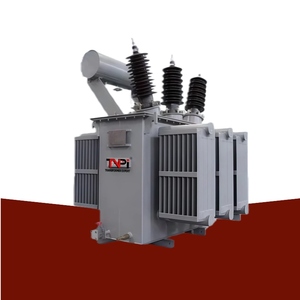
69kV / 33kV ONAN Oil Immersed Substation Step-Down Power Transformer
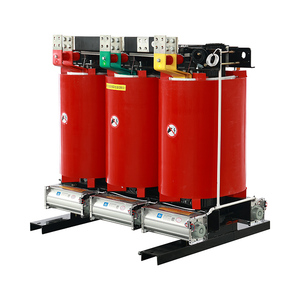
3-Phase Amorphous Dry Type Isolation Transformer 100kVA High Voltage
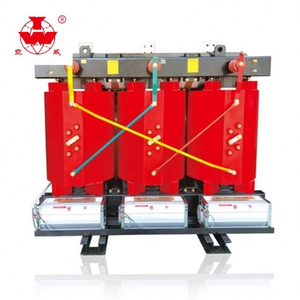
10kV/20kV 500kVA-2500kVA Cast Resin Dry Type Transformer with Forced Cooling
CE Certified 10kVA - 50kVA 35kV to 400V Step Down Three Phase Amorphous Transformer
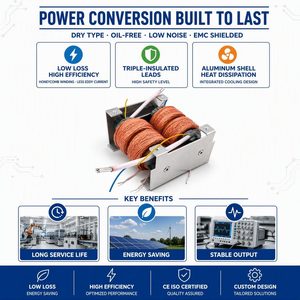
Single Phase 6kV to 220V Dry Type Amorphous Honeycomb Isolation Power Transformer
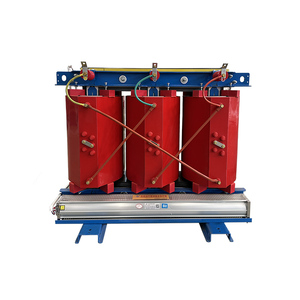
Three Phase 10kV / 20kV / 35kV Amorphous Alloy Resin Encapsulated Dry Transformer
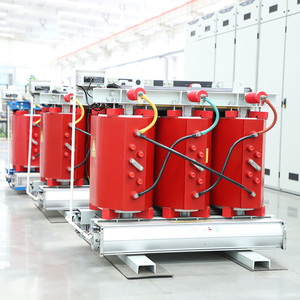
High Quality 630kVA 20kV to 400V/415V Low Loss Amorphous Core Dry Transformer
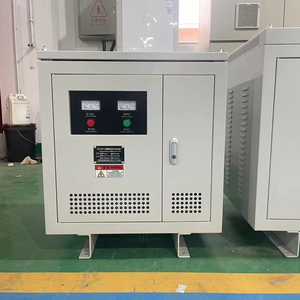
DingXin SG IEC60076 Three Phase Dry Type Step Up/Down Amorphous Transformer
Amorphous Alloy Metallurgy vs. Conventional CRGO Electrical Steel
As the European Union aggressively enforces its decarbonization directives—most notably the Ecodesign Directive Tier 2 (EN 50588-1 / Regulation EU 2019/1783)—distribution network operators (DNOs) like Enedis and private French industrial clients face stringent mandatory upper limits on transformer core losses ($A_0$ no-load loss levels).
Traditional cold-rolled grain-oriented silicon steel (CRGO, such as M3 or M4 grades) possesses a organized crystalline lattice structure. When subject to 50Hz alternating magnetic fields, domain boundary movement experiences substantial friction, giving rise to persistent hysteresis and eddy current losses.
In contrast, Amorphous Alloy Cores (Fe-Si-B non-crystalline ribbon) are manufactured via rapid solidification (cooling molten metal at approximately 1,000,000 °C/sec). This rapid quenching freezes atoms in a disordered, non-crystalline state. Because there are no crystal lattice boundaries or crystalline anisotropy barriers:
- Coercive Force is Minimal: Magnetic magnetization and demagnetization require a fraction of the energy.
- Ultra-Thin Ribbon Thickness: Amorphous metal strips measure only 0.025 mm (25 μm)—roughly 1/10th the thickness of standard CRGO steel (0.23 mm–0.30 mm)—drastically shrinking eddy current loops.
- Thermal Dissipation Drops: Core temperature rises under continuous energization remain significantly below industry benchmarks, slowing oil degradation and insulation aging.
Ecodesign Tier 2 Loss Comparison (20kV / 400V Class)
Benchmarking 1000 kVA Transformer Performance on the French Grid:
| Performance Metric | Standard CRGO ($C_0$) | Amorphous Alloy ($A_0-10\%$) |
|---|---|---|
| No-Load Loss ($P_0$) | 1,100 W | 195 W (-82%) |
| Full Load Loss ($P_k$) | 10,500 W | 9,000 W |
| Annual Standby Energy Loss | 9,636 kWh/yr | 1,708 kWh/yr |
| 30-Year Carbon Footprint | ~115 Tons CO₂e | ~20.4 Tons CO₂e |
| Noise Level (dB) | 58 dB | 52–54 dB (Optimized) |
*Calculated based on 8,760 annual operating hours at standard French electricity grid mix factors (RTE data).
Targeted Deployment Across the French Infrastructure Ecosystem
From French municipal electrification projects to renewable power plant integration and commercial real estate retrofits, our amorphous transformers meet strict French regulatory norms.
Enedis MV/LV Suburban Networks
French distribution voltage standards require precise 20kV to 400V step-down transformations. In rural and suburban residential grids where transformer load factors fluctuate widely throughout the day (often idling at night), amorphous transformers drastically reduce constant no-load grid losses (*pertes en ligne*), saving distribution operators thousands of megawatt-hours annually.
French Renewable Energy Farms (PV & Wind)
Under the French National Energy and Climate Plan (PPE), solar photovoltaics in regions like Nouvelle-Aquitaine and Occitanie are expanding rapidly. Inverters only generate power during sunlight hours, leaving transformers energized at no-load during nighttime. Amorphous core step-up transformers optimize yield by eliminating non-productive power drain during darkness.
Commercial Real Estate & RE2020 Compliance
France’s strict environmental regulation RE2020 imposes tight operational energy and carbon footprint limits on new commercial buildings, data centers (in Île-de-France), and hospitals. Installing low-noise cast resin dry-type amorphous transformers directly supports HQE (Haute Qualité Environnementale) and BREEAM certifications.
Why European EPCs & Importers Trust Our Manufacturing
Constructing high-reliability amorphous transformers requires solving key material challenges: ribbon brittleness, mechanical stress sensitivity, and magnetostriction acoustic noise.
Advanced Stress-Free Suspension Core Assembly
Because amorphous ribbon (Fe-Si-B) is extremely sensitive to mechanical strain, traditional tight clamping drastically increases core losses and noise. Our factory utilizes a proprietary Three-Phase Five-Column Three-Dimensional Suspended Core Structure.
The core frames are supported without direct mechanical pressure on the magnetic ribbon loops, preserving ultra-low core loss profiles and keeping noise levels within strict European residential limits (<55 dB at 1m).
Rigorous QA/QC & ISO/IEC 17025 Laboratory Testing
Every transformer batch bound for France undergoes exhaustive Factory Acceptance Testing (FAT) inside our ISO/IEC 17025 accredited facility, compliant with IEC 60076 and EN 50588-1:
- Full Wave Lightning Impulse Test: Verified up to 125kV BIL (for 20kV class).
- Partial Discharge Measurement: < 5 pC for dry-type cast resin units.
- Temperature Rise Test & Short-Circuit Withstand Validation.
- Oil Dielectric & Gas Analysis (DGA) for Liquid Transformers.
Frequently Asked Questions by French Buyers & Engineers
Comprehensive answers regarding standards compliance, grid integration, logistics to Le Havre/Marseille, and total cost of ownership (TCO) in France.
1 How do your amorphous alloy transformers comply with EU Ecodesign Tier 2 (EN 50588-1 / EU 2019/1783)?
2 Can your transformers be integrated directly into Enedis and RTE MV/LV distribution schemes?
3 What is the typical Return on Investment (ROI) period for French industrial buyers given current electricity tariffs?
4 How do you address the acoustic noise issues historically associated with amorphous metals?
5 Are vegetable ester (biodegradable fluid) insulation options available for sensitive French eco-zones?
6 What Incoterms, sea freight logistics, and French documentation services do you provide?
7 How are Factory Acceptance Tests (FAT) conducted if French clients cannot inspect in person?
Ready to Upgrade Your French Grid Project to EU Tier 2 Efficiency?
Consult with our senior electrical engineering team today. Get customized CAD drawings, precise loss calculations according to EN 50588-1, and competitive direct-factory FOB/DDP export quotations for France.