Distribution Transformer Technical Articles, Industry Insights & Grid Updates — SOTEK Group
Featured Transformer Solutions for Dutch Infrastructure
Factory-direct engineered transformers tested to IEC 60076, IEEE C57, and EU Ecodesign standards. Available with custom vector groups (Dyn11, Yyn0), DETC/OLTC, and low-noise acoustic enclosures.
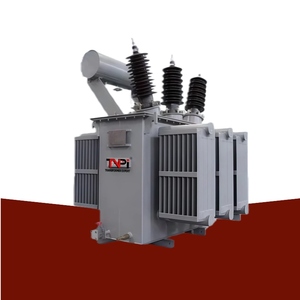 Substation Class
Features: Copper Winding, ONAN/ONAF, Step-Down
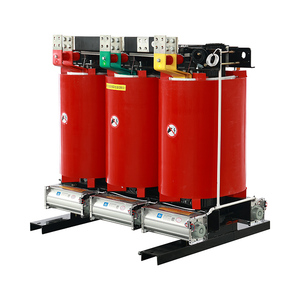 Industrial
Features: Galvanic Isolation, Air Self-Cooling
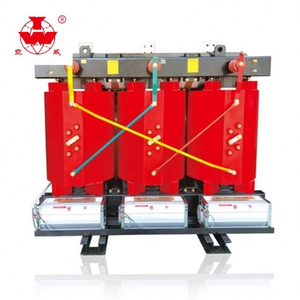 Low Loss Tier
Features: Forced Air Cooling Fans, Step-Down
 CE Certified
Features: Low Frequency, Compact SMPS Profile
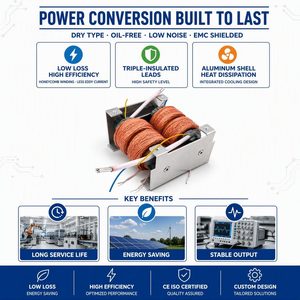 Custom OEM
Features: Honeycomb Winding, High Frequency
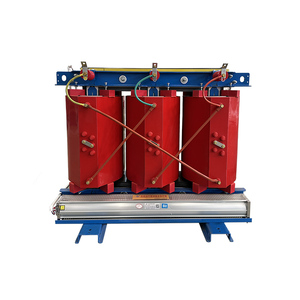 Cast Resin
Features: Flame Retardant Epoxy, Low Noise
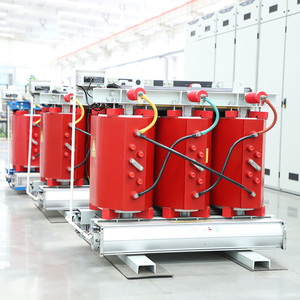 Grid Ready
Features: EU EcoDesign Tier 2 Compliant
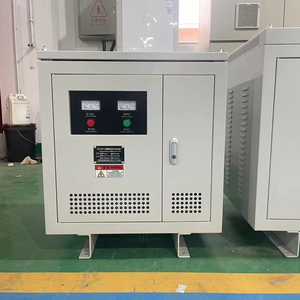 IEC Certified
Features: IEC60076 & CE Certified, Step Up/Down
Amorphous Core Technology: Solving Grid Congestion (*Netcongestie*) in the Netherlands
The Netherlands electrical grid is undergoing unprecedented transformation. Driven by the Dutch Climate Agreement (*Klimaatakkoord*) aiming for a 55% CO2 reduction by 2030 and full carbon neutrality by 2050, the surge in distributed energy resources—such as utility-scale solar PV developments in Groningen and Friesland, offshore wind landings in Zeeland, and commercial EV fast-charging hubs along the Randstad corridor—has created localized transmission bottlenecks known across the industry as netcongestie (grid congestion).
Regional distribution system operators (DSOs) such as Liander, Enexis, Stedin, and Westland Infra, alongside transmission system operator TenneT, face severe challenges in balancing peak feed-in power with continuous baseline loads. In this operational context, transformer efficiency is no longer merely a commercial operational expenditure (OpEx) concern; it is a critical grid stability parameter. Conventional Grain-Oriented Silicon Steel (CRGO) distribution transformers lose significant energy continuously through hysteresis and eddy currents in their magnetic cores. When scaled across thousands of urban compact substations (*transformatorhuisjes*) and rural feeder stations, these core losses accumulate into gigawatt-hours of wasted generation annually.
Key Insight for Dutch Energy Operators: Amorphous metal alloy transformers reduce no-load (iron) losses by up to 70% to 80% compared to standard CRGO silicon steel units. During low-sunlight winter periods or overnight off-peak hours when solar farms generate zero active power, an amorphous transformer continues to draw minimal standby magnetization energy from the grid, directly preserving grid capacity and minimizing reactive power draw.
As a specialized factory and direct exporter to the Benelux market, our engineering teams manufacture amorphous alloy core transformers (both liquid-immersed and cast resin dry-type) explicitly tailored to the operational frameworks of European Norm EN 50588-1 and the stringent directives of EU Commission Regulation (EU) No 548/2014 & Amendment (EU) 2019/1783 (Ecodesign Tier 2).
Physics & Material Benchmark: Fe-Si-B Amorphous Ribbon vs. CRGO Steel
The radical loss reduction achieved in an amorphous core transformer stems directly from its atomic lattice configuration. Standard CRGO core material possesses a crystalline structure with grain boundaries that resist domain alignment during 50Hz AC magnetization cycles. In contrast, our amorphous ribbon is produced via ultra-rapid solidification (cooling molten Fe-Si-B alloy at ~1,000,000 °C per second), freezing the atoms into a random, non-crystalline liquid-like matrix.
| Performance Parameter | Standard CRGO Core (M0H / M4) | Amorphous Metal Core (Fe-Si-B) | Advantage for Dutch Utilities |
|---|---|---|---|
| Atomic Structure | Crystalline (Grained) | Amorphous (Non-crystalline) | Eliminates grain boundary resistance |
| Ribbon Thickness | approx. 0.23 mm – 0.30 mm | approx. 0.025 mm (25 µm) | 10x Thinner dramatically reduces eddy currents |
| Coercive Force (Hc) | ~ 40 A/m | ~ 2.4 A/m | Minimal magnetizing energy required |
| No-Load Loss ($P_0$) at 1000 kVA | ~ 770 Watts to 1,100 Watts | ~ 180 Watts to 240 Watts | 75% Loss Reduction (Continuous 24/7/365 savings) |
| Hysteresis Loss Loop | Wide B-H Loop Area | Narrow B-H Loop Area | Drastically lower heat dissipation in substations |
| EU Tier 2 Compliance | Requires thick step-lap stacking | Exceeds Tier 2 requirement naturally | Future-proof for future Tier 3 standards |
*Data calculated based on 1000 kVA 20kV/400V step-down distribution transformer running at 50 Hz under standard ambient conditions ($20^\circ\text{C}$).
Localized Deployment Scenarios in the Dutch Energy Landscape
Our engineered amorphous transformers (spanning oil-immersed ONAN models up to 30MVA/69kV and cast resin dry-type units up to 35kV) are built for seamless integration into diverse Dutch infrastructure projects:
Solar PV Parks (Zonneparken)
Ideal for agricultural solar arrays in East Gelderland & Drenthe. Because PV systems experience low capacity factors (zero generation at night), amorphous transformers prevent massive standby idle power losses, optimizing Total Cost of Ownership (TCO) for project developers.
Urban Compact Substations (*Transformatorhuisjes*)
For municipal utility replacements in Amsterdam, Rotterdam, and Utrecht. Low-noise resin-encapsulated amorphous transformers fit within existing compact enclosure footprints while reducing thermal heat release in dense urban vaults.
EV Charging Superhubs & Mobility Hubs
Built to handle extreme intermittent load spikes along key highway corridors (A1, A4, A12). Features high short-circuit withstand capabilities and custom K-factor ratings to absorb harmonic distortions caused by high-power DC fast chargers.
Data Centers & High-Tech Campuses
Deployable in the Schiphol-Rijk and Westpoort data center corridors. Cast resin dry-type amorphous units feature Class F/Class H insulation with zero oil leak risk, high fire safety (F1 rating), and low partial discharge (<10 pC).
Factory-Direct Manufacturing Excellence & Engineering Credentials
With over 15 years of transformer manufacturing and international export experience, our production facility features world-class machinery and rigid quality control protocols aligned with European buyer demands:
Precision Core Cutting
Equipped with imported Georg (Germany) automatic amorphous alloy shear lines that eliminate mechanical stress on the ultra-thin 25µm ribbons, preserving low-loss properties.
Vacuum Annealing Chambers
Dedicated magnetic field vacuum annealing ovens reorient atomic magnetic domains post-winding, reducing stray losses and magnetostriction acoustic noise.
ISO/IEC 17025 Test Lab (VILAS 1183)
Every batch undergoes full routine testing: Lightning Impulse Withstand, Temperature Rise Test, Short-Circuit Impulse, Sound Level Measurement, and Dissolved Gas Analysis (DGA).
Frequently Asked Questions by Dutch Utility Engineers & EPC Contractors
How do your amorphous transformers comply with EU Ecodesign Directive Tier 2 (EN 50588-1)?
Our amorphous core transformers are engineered specifically to surpass EU Regulation 2019/1783 Tier 2 loss standards ($A_0$ no-load loss criteria). By substituting traditional CRGO laminations with Fe-Si-B amorphous ribbons, our $P_0$ values are 30% to 50% lower than the strict maximum limits enforced by EU Tier 2, giving EPC contractors and grid operators future-proof efficiency margins.
What is the expected ROI and payback period for upgrading to an amorphous transformer in the Netherlands?
Given current Dutch industrial electricity tariffs (€0.18 – €0.28 per kWh), the financial payback period for the premium cost of an amorphous core transformer is typically achieved within 2.5 to 4 years. Over a standard 30-year operational life, total energy savings far outweigh initial procurement capital expenditures (CapEx).
Amorphous ribbons are brittle. How do you guarantee mechanical strength against short-circuit forces?
Amorphous core material is indeed stress-sensitive. To overcome this, our engineering design utilizes a "floating core structure" combined with rigid rectangular epoxy-impregnated support frames. The windings (copper/aluminium) absorb all electromagnetic short-circuit mechanical forces, completely shielding the amorphous core from mechanical stress during grid fault events.
Can you supply custom primary voltages like 10kV, 11kV, 20kV, or 33kV for Dutch DSOs (Liander, Stedin, Enexis)?
Yes. We manufacture step-down and step-up transformers custom-built for specific Dutch regional grid voltages, including standard 10kV and 20kV medium-voltage distributions down to 400V/230V or 415V secondary outputs. Off-circuit tap changers (DETC $\pm2\times2.5\%$) or On-load tap changers (OLTC) are integrated per utility specs.
What export packaging, shipping time, and FAT documentation are provided to Rotterdam Port?
All units ship with full Factory Acceptance Test (FAT) dossiers, EN ISO quality certificates, schematic CAD drawings, and material inspection reports. Equipment is packed in IP55/NEMA 4X sea-freight wooden crates with desiccant protection, shipped direct to the Port of Rotterdam or inland transport destinations across the Netherlands.
Partner with a Leading Amorphous Transformer Exporter
Request detailed technical datasheets, full KEMA/ASTA/VILAS test report samples, or a competitive factory-direct quote for your Netherlands grid, industrial, or solar PV project.
Get a Quote