Distribution Transformer Technical Articles, Industry Insights & Grid Updates — SOTEK Group
Export-Grade Power & Distribution Transformers
Rigorous IEC 60076 compliant units engineered for high ambient temperatures, heavy humidity, and high-duty cycle applications across the Indonesian archipelago.
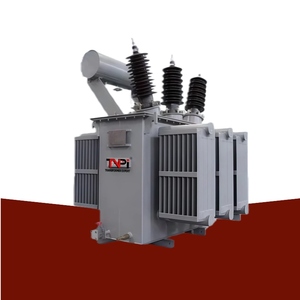
69kV 33kV 10MVA 20MVA 30MVA ONAN Copper Oil Immersed Power Transformer for Substation Step Down
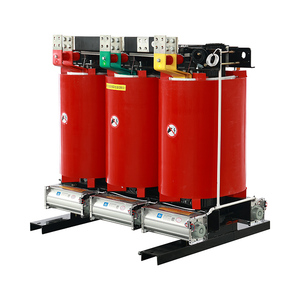
3-phase Dry Type Isolation Transformer 100kva High Voltage Dry Type Industrial Transformer
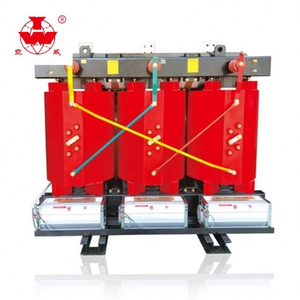
YAWEI China Factory Supply 10/11kv 500kva 1000 Kva Step Down 1600kva 2500 Kva Dry Type Transformer with Cooling Fan
Ce Certified Low-frequency 10Kva 15Kva 20Kva 25Kva 30Kva 50Kva 35kV To 380V 400V Step Down Three Phase Dry Type SMPS Transformer
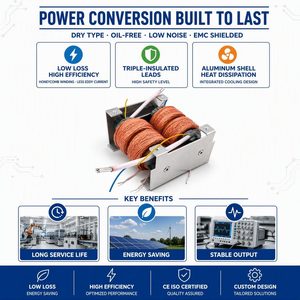
Single Phase 6kV to 220V High Frequency Honeycomb Transformer Dry Type Isolation Power Transformer Industrial Custom Transformer
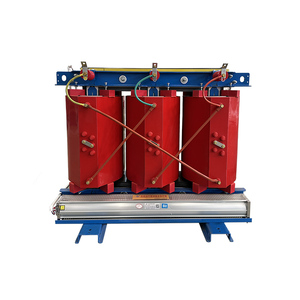
Three Phase Dry Type Transformer 50HZ/60HZ Frequency Transformer 10KV 35KV Dry Type Resin Transformer With Good Price
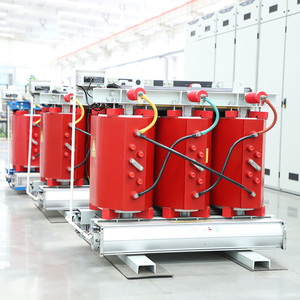
High Quality 630KVA Transformer High Voltage 20kv 415V 50 Hz 60 Hz Low Loss Dry Type Power transformers
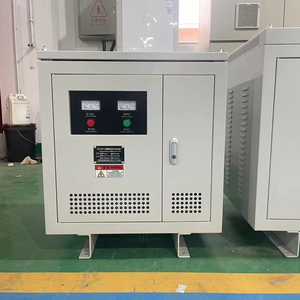
High Quality DingXin SG IEC60076 ISO CE Certified Three Phase Dry Type Step Up/Down Isolation Transformer 440V Input 220V Output
Executive Whitepaper: Cast Resin Dry-Type Transformers in Indonesia’s Power Ecosystem
Indonesia’s rapid industrial expansion—spearheaded by downstream nickel processing in Sulawesi, green energy initiatives in Kalimantan, and massive infrastructure upgrades in the Greater Jakarta area (Jabodetabek)—has triggered a fundamental shift in medium-voltage (MV) power distribution requirements. Energy managers, EPC contractors, and PT Perusahaan Listrik Negara (PLN) utility partners face an increasingly stringent operating mandate: to deploy high-voltage distribution transformers that withstand punishing tropical climate profiles while maintaining maximum fire safety and operational continuity.
Historically, oil-immersed transformers dominated the Indonesian power landscape due to lower upfront capital cost. However, the operational reality of oil-filled assets in high-density urban towers, commercial shopping complexes, underground transport nodes, and heavily polluted industrial zones has exposed significant vulnerabilities: risk of catastrophic dielectric oil ignition, costly containment bunding requirements, potential environmental fluid contamination, and heavy maintenance burdens driven by oil degradation under continuous humid heat.
Understanding the Indonesian Operating Environment (Climate & Grid Dynamics)
Customizing electrical equipment for the Indonesian archipelago demands a deep engineering understanding of local microclimates and grid constraints. A standard off-the-shelf dry-type transformer designed for mild European or North American climates will frequently experience premature dielectric breakdown or thermal tripping when installed in Jakarta or Surabaya without climate modification.
Extreme Tropical Humidity
Relative humidity across Java, Sumatra, and Kalimantan consistently exceeds 85% to 95%. Moisture ingress during planned maintenance shutdowns can degrade unsealed insulation. Cast resin vacuum encapsulation fully seals copper and silicon core structures against atmospheric moisture absorption.
High Ambient Thermal Load
Indonesian substation enclosures regularly record internal ambient temperatures between 40°C and 45°C. To prevent continuous thermal derating, our cast resin coils feature optimized vertical cooling ducts paired with automatic Forced Air (AF) fan arrays boosting capacity by up to 50%.
Seismic Resilience (Ring of Fire)
Indonesia is located along the Pacific Ring of Fire, requiring seismic-rated electrical installations. Our cast resin structural assemblies utilize reinforced steel frames and anti-vibration damping blocks rated to withstand Zone 4 seismic ground acceleration (>0.4g).
Material Engineering & Manufacturing Excellence
As a specialized factory exporter supplying Indonesia, our manufacturing protocol incorporates premium raw materials and tight quality assurance tolerances certified under ISO 9001:2015 and ISO 14001:2015 systems.
1. High-Permeability Grain-Oriented (CRGO) Core Construction
The core structure utilizes top-grade, cold-rolled grain-oriented silicon steel sheets (e.g., 23ZDG090 / 23ZH090) featuring domain refinement treatment. The laminations are cut using Georg automated CNC step-lap shearing lines, yielding a 45-degree full-miter joints design. This precise geometric assembly minimizes magnetic flux resistance, drastically reducing no-load losses (Po) and acoustic noise emissions to levels well below IEC 60076-11 thresholds—a crucial benefit for hospital and commercial building installations in central Jakarta.
2. Vacuum Pressure Epoxy Casting (Hedrich Chambers)
High-voltage (HV) windings are wound using continuous oxygen-free copper strip conductors insulated with F-grade or H-grade film. The coils are enclosed inside precision metallic molds and processed inside computerized Hedrich vacuum casting chambers. Advanced epoxy resin formulations filled with fine quartz powder are injected under a deep vacuum (<1 mbar). This ensures absolute degassing and complete resin penetration, guaranteeing a partial discharge level of less than 5 pico-coulombs (pC). Low partial discharge is the definitive metric for long-term dielectric durability, ensuring 30+ years of maintenance-free service without insulation tracking.
3. Low-Voltage (LV) Copper Foil Winding System
Instead of multiple wire strands which are susceptible to localized hot-spots and axial mechanical forces during grid short circuits, our low-voltage coils utilize full-width copper sheet foil. Pre-impregnated DMD resin paper is layered between turns. During the heat curing cycle, the sheet matrix cures into a solid, monolithic mechanical block exhibiting immense radial and axial mechanical strength against short-circuit electrodynamic forces.
Comparative Analysis: Cast Resin Dry-Type vs. Alternative Technologies
When designing medium-voltage substations for Indonesian industrial parks (such as Cikarang, Karawang, Kendal, or Morowali), engineering teams must weigh lifecycle metrics against capital investments. Below is a comparative performance matrix:
| Evaluation Parameter | Cast Resin Dry-Type (CRDT) | Oil-Immersed (Standard) | Open-Wound VPI Dry-Type |
|---|---|---|---|
| Fire Safety Rating | Self-Extinguishing (Class F1), Zero Fluid | Combustible Oil, High Fire Hazard | Flame Retardant, Low Fluid Hazard |
| Moisture & Condensation | Class E2 (Immune to Heavy Humidity) | Sealed Tank (Immune to Moisture) | Class E1 (Susceptible to Moisture) |
| Maintenance Overhead | Zero (Visual Inspection & Dust Removal) | High (Oil Testing, Gas/Seal Sampling) | Moderate (Periodic Tightening/Drying) |
| Overload Capacity (AF) | Up to +50% with Forced Fan Cooling | Limited +15% to +20% (ONAF) | Up to +30% with Forced Fan Cooling |
| Environmental Impact | 100% Recyclable, Non-Polluting | Risk of Ground/Water Oil Spills | Recyclable Core/Winding Components |
| Seismic & Mechanical Strength | Highest (Monolithic Solid Epoxy Block) | Moderate (Internal Coil Movement Risk) | Moderate (Varnished Mechanical Joints) |
Localized Application Scenarios across Indonesia
Our cast resin dry-type transformers are operational across key industrial sectors and public infrastructure projects nationwide, engineered to meet specific localized operational parameters:
1. High-Rise Commercial & Residential Towers (Jabodetabek)
National building regulations in Jakarta require non-combustible electrical infrastructure for indoor basement substations. Cast resin units eliminate oil-spill risks and costly fire suppression vaults, delivering compact power footprints for luxury high-rises, hospitals, and data centers.
2. Nickel & Mineral Processing Smelters (Sulawesi & Maluku)
Metals smelting facilities in Morowali and Weda Bay experience harsh environments with airborne dust, corrosive sulfur fumes, and heavy harmonic loads from industrial rectifiers. Our Class H resin insulation and IP23/IP54 protective enclosures ensure continuous heavy-duty service.
3. Green Capital Infrastructure (IKN Nusantara)
The development of Indonesia’s new capital city, Nusantara in East Kalimantan, emphasizes zero emissions, smart grid automation, and high environmental standards. Eco-friendly dry-type transformers align seamlessly with IKN’s green energy distribution goals.
Indonesian Power Market Trends & PLN Grid Compatibility
As PT PLN (Persero) executes its Long-Term Electricity Supply Plan (RUPTL) and works toward Indonesia’s Net Zero Emissions 2060 roadmap, several critical engineering trends are reshaping procurement parameters:
1. Standardized 20kV Distribution Voltage Integration
The vast majority of industrial and commercial medium-voltage connections in Indonesia operate on a standard 20kV 3-phase 50Hz grid system, stepping down to 400V/230V or 415V/240V for industrial machinery. Our step-down dry-type transformers feature customized primary tap changers (off-circuit DETC or on-load OLTC ±2x2.5% or ±5%) designed specifically to accommodate PLN grid voltage fluctuations in remote industrial zones.
2. Downstream Nickel Processing & EV Battery Ecosystem Expansion
Indonesia holds the world's largest nickel reserves. The aggressive drive to establish localized EV battery supply chains has led to an unprecedented construction surge in smelting operations. These facilities require ultra-rugged step-down dry-type isolation units capable of managing severe mechanical vibration, frequent load cycling, and high ambient temperatures without thermal breakdown.
3. Form E Tariff Exemption Benefits under ACFTA
Procurement teams in Indonesia can achieve significant landed cost reductions by sourcing directly from certified Chinese export factories. Under the ASEAN-China Free Trade Agreement (ACFTA), our factory provides official Form E Certificates of Origin, allowing Indonesian buyers to import eligible transformers at zero or substantially reduced import duties through Tanjung Priok (Jakarta), Tanjung Perak (Surabaya), or Belawan (Medan) sea ports.
Factory Qualifications & Global Export Authority
With over 15 years of continuous manufacturing excellence and more than 25,000 transformer units deployed across international markets, our enterprise stands as a premier manufacturing partner for engineering firms and importers serving Indonesia.
Certified Type Testing
All designs undergo rigorous short-circuit withstand, temperature rise, lightning impulse, and partial discharge testing in ISO/IEC 17025 accredited laboratories compliant with KEMA, ASTA, and IEC 60076 standards.
Custom Engineering & OEM
Our R&D team provides end-to-end technical support, producing customized CAD/BIM dimensional drawings, specialized IP enclosures (IP20 to IP54), forced cooling configurations, and digital temperature controller integrations (PT100 sensors).
Seaworthy Export Packaging
Every transformer destined for Indonesia undergoes vacuum-sealed moisture barrier foil wrapping and is anchored inside heavy-duty, heat-treated wooden crates compliant with ISPM-15 fumigation standards for safe maritime transport.
Frequently Asked Questions (FAQ) — Indonesian Procurement
Q1: How do your dry-type transformers comply with PLN grid standards in Indonesia?
Our transformers are engineered specifically to comply with IEC 60076-11 and PLN specifications (SPLN standards). Primary windings are rated for standard 20kV distribution grids with customizable step-down ratios (e.g., 20kV to 400V/230V or 415V), 50Hz frequency, and vector groups such as Dyn11 or Yyn0.
Q2: Can Form E Certificate of Origin be provided for Indonesian customs clearance?
Yes. As a registered exporter, we issue official ACFTA Form E Certificates of Origin with every shipment to Indonesia. This enables importers to benefit from preferential tariff treatment, reducing or eliminating import duties under the ASEAN-China Free Trade Agreement.
Q3: What protection degree (IP Rating) is recommended for high-humidity indoor sites?
For standard indoor electrical rooms, an IP20 or IP23 ventilated enclosure is typical. IP23 provides protection against falling water drops up to 60 degrees from vertical. For highly humid, dusty, or outdoor coastal installations, we provide IP54 totally enclosed units with air-to-air heat exchangers.
Q4: How does the continuous high ambient temperature in Indonesia affect transformer rating?
Standard transformers are rated for 40°C peak ambient temperature. When internal substation temperatures exceed 40°C, we apply thermal derating calculations according to IEC guidelines or equip the unit with forced air cooling (AF) fans that automatically increase continuous load capacity by up to 40%–50%.
Q5: What is the typical production lead time and sea freight transport duration to Jakarta?
Standard manufacturing lead time is 25 to 35 days depending on design specs and factory queue. Direct sea freight container transit from our port to Tanjung Priok (Jakarta) or Tanjung Perak (Surabaya) typically takes 10 to 14 days, allowing predictable delivery schedules.
Q6: How is post-sale technical support and commissioning assistance handled for Indonesian projects?
We provide full remote technical support, factory acceptance test (FAT) documentation, comprehensive operation manuals, and real-time video commissioning assistance. On-site engineering supervision can also be arranged for major industrial and utility projects.
Request a Custom Engineering Quote for Your Indonesian Project
Contact our senior engineering and export team today to receive detailed technical datasheets, full CAD dimensional drawings, and competitive FOB/CIF landed cost proposals tailored to your project requirements.
Contact Us