Distribution Transformer Technical Articles, Industry Insights & Grid Updates — SOTEK Group
Engineered Grid Substation Products
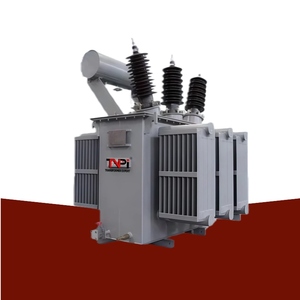
69kV 33kV 10MVA 20MVA 30MVA ONAN Copper Oil Immersed Power Transformer for Substation Step Down
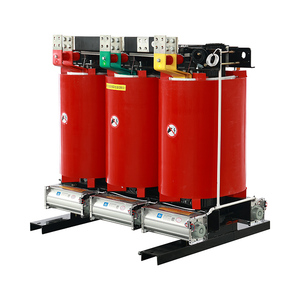
3-phase Dry Type Isolation Transformer 100kva High Voltage Dry Type Industrial Transformer
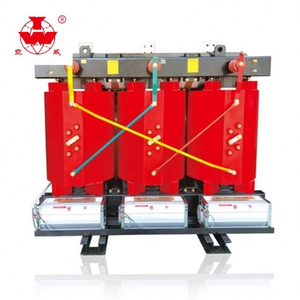
YAWEI China Factory Supply 10/11kv 500kva 1000 Kva Step Down 1600kva 2500 Kva Dry Type Transformer with Cooling Fan
Ce Certified Low-frequency 10Kva 15Kva 20Kva 25Kva 30Kva 50Kva 35kV To 380V 400V Step Down Three Phase Dry Type SMPS Transformer
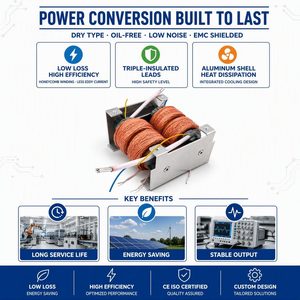
Single Phase 6kV to 220V High Frequency Honeycomb Transformer Dry Type Isolation Power Transformer Industrial Custom Transformer
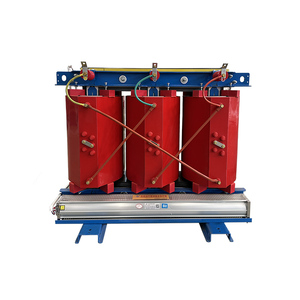
Three Phase Dry Type Transformer 50HZ/60HZ Frequency Transformer 10KV 35KV Dry Type Resin Transformer With Good Price
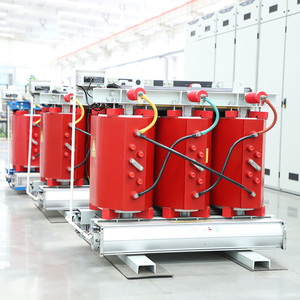
High Quality 630KVA Transformer High Voltage 20kv 415V 50 Hz 60 Hz Low Loss Dry Type Power transformers
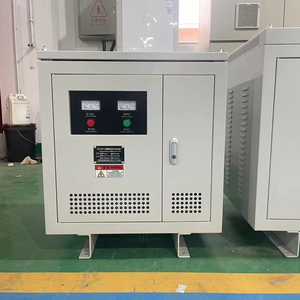
High Quality DingXin SG IEC60076 ISO CE Certified Three Phase Dry Type Step Up/Down Isolation Transformer 440V Input 220V Output
Technical White Paper: Engineering China-Supplied Substation Transformers for Tokyo's Metropolitan Grid
Tokyo operates one of the most sophisticated, high-density power distribution systems in the world. Governed predominantly by Tokyo Electric Power Company (TEPCO) Power Grid standards, Eastern Japan’s grid infrastructure is defined by strict regulatory demands: an exact 50 Hz operating frequency, ultra-compact subterranean footprints, stringent zero-fire hazard parameters for densely populated urban centers such as Shinjuku, Chiyoda, and Minato, and extreme seismic mitigation factors able to withstand peak ground acceleration exceeding 0.6g (Richter Scale 8+ equivalent).
As an industry-leading manufacturer and international exporter of electrical substations based in China, our engineering teams provide specialized grid integration solutions tailored specifically to the Tokyo market. From 69kV/33kV high-capacity outdoor step-down transformers to fire-retardant cast resin dry-type transformers (10kV to 35kV down to 400V/220V), our product architectures bridge Chinese manufacturing efficiencies with rigorous Japanese Industrial Standards (JIS C 4620 / JEC-2200) and International Electrotechnical Commission (IEC 60076) compliance.
Unlike generic export models, substation transformers exported to Tokyo require custom core flux density calculations to prevent saturation under 50Hz frequency constraints when stepping down high-voltage utility lines. Furthermore, partial discharge levels must be controlled to <5 pC (picocoulombs) to guarantee a 30+ year continuous operational lifespan in indoor data center substations.
1. Architectural Benchmarking: Standard Global Grid vs. Tokyo Metropolitan Grid Requirements
Procurement teams and Japanese EPC contractors evaluating power equipment suppliers must account for structural differences between general global grid equipment and Tokyo-bound substation designs:
| Technical Parameter | Standard Export Specification | Tokyo Grid / TEPCO Specialized Spec | Engineering Solution Implemented |
|---|---|---|---|
| Nominal Grid Frequency | 60 Hz (Western / US Standard) | 50 Hz Strictly (Eastern Japan) | Custom core cross-section & CRGO steel stacking to eliminate over-excitation. |
| Seismic Withstand (PGA) | 0.2g to 0.3g (Standard IEEE 693) | 0.5g to 0.6g+ (High-Zone JIS C 4620) | Reinforced tank ribs, anti-vibration rubber dampeners & rigid core clamping. |
| Acoustic Noise Level | 60 dB(A) - 68 dB(A) | < 45 dB(A) - 48 dB(A) (Urban Wards) | Step-lap laser-cut silicon steel joints & sound-dampening acoustic enclosures. |
| Fire Safety Rating | Standard Mineral Oil / F0 Dry Type | F1 / C2 / E2 Self-Extinguishing Dry Resin | Vacuum Cast Epoxy Resin with hydrated alumina flame retardant additive. |
| Partial Discharge (PD) | < 10 pC to 20 pC | < 5 pC (Ultra-Clean Insulation) | Hedrich multi-stage vacuum degassing & resin casting technology. |
Localized Application Scenarios across Tokyo’s Key Economic Zones
Substation deployment in Greater Tokyo is far from uniform. Equipment specifications must adapt dynamically depending on urban density, coastal proximity, and facility usage:
Shinjuku & Marunouchi Data Centers
High-density commercial centers demand compact cast resin dry-type isolation transformers (1000kVA to 2500kVA). With forced-air (AF) cooling fans, zero toxic gas emissions, and zero liquid leak risk, these units operate safely in basement substations directly beneath mission-critical financial servers.
Tokyo Bay & Port Coastal Industrial Zones
Facilities in Shinagawa, Odaiba, and Yokohama ports face aggressive salt-mist corrosion. Our 30MVA 69kV/33kV oil-immersed power transformers feature C5-M marine-grade anti-corrosion tank paint, stainless steel hardware, and hermetically sealed corrugated oil conservators.
Tokyo Metro & JR East Railway Substations
Urban rail infrastructure requires robust step-down dry-type SMPS isolation units (35kV to 380V/400V) equipped to withstand intense switching surges, rapid load fluctuations, and harsh electromagnetic interference (EMI) typical of high-frequency traction systems.
Chiba & Saitama Microgrid Integration
To support Tokyo’s outer-suburban renewable energy expansion, our amorphous alloy core transformers step up solar PV voltages while decreasing no-load energy losses by up to 75% compared to traditional silicon steel designs.
Macro Trends Driving Tokyo's Substation Modernization (2025-2035)
Procurement strategy in Japan is shifting rapidly due to broader environmental policies and grid technology evolution:
- Tokyo Metropolitan Government (TMG) Net-Zero 2050 Mandate: Commercial real estate developers in Tokyo are under legal pressure to lower building energy consumption. Energy-efficient dry-type transformers compliant with Japanese "Top Runner" efficiency standards have become mandatory for project approval.
- Transition from Mineral Oil to Biodegradable Ester Liquids: For outdoor substations situated close to residential zones, Japanese buyers are increasingly replacing traditional mineral oil with natural/synthetic ester fluids (e.g., FR3), providing fire points >300°C and 100% non-toxic biodegradability.
- Smart Substation Digitalization & IoT Monitoring: Modern Tokyo substations require real-time telemetry. Our transformers integrate optical fiber temperature sensors (DTS), dissolved gas analysis (DGA) monitors, and RS485/Modbus communication modules for predictive AI maintenance.
Enterprise Competencies: Our Manufacturing Power & Quality Assurance
As an authoritative supplier exporting high-voltage gear globally, our plant incorporates state-of-the-art manufacturing technologies to maintain zero-defect output:
- Automated Georg Core Cutting Lines: German-engineered slitting and step-lap longitudinal cutting equipment ensures pristine silicon steel edges, drastically reducing magnetic domain disruption and stray losses.
- High-Vacuum Epoxy Casting Chambers (Hedrich System): Ensures bubble-free, homogenous resin encapsulation for all dry-type coils, preventing insulation breakdown even under continuous high thermal stress.
- Comprehensive In-House Type Testing Laboratory: Certified under ISO/IEC 17025, our facilities perform Lightning Impulse Withstand Tests, Temperature Rise Tests, Short-Circuit Withstand Assessments, and Sound Level Measurements prior to dispatch.
- Ocean Freight & Customs Engineering for Tokyo/Yokohama Ports: All substation units undergo heavy-duty vapor-barrier vacuum packaging, anti-corrosion seaworthy wooden crating, and center-of-gravity lashing engineered to survive rough maritime transport across the East China Sea.
Tokyo B2B Buyer FAQ: Technical & Procurement Guide
Partner with China’s Premier Grid Substation Exporter to Tokyo
Request customized technical drawings, factory type-test reports, and competitive FOB/CIF quotation tailored to your specific project parameters in Japan.
Contact Us