1. Underground Power Distribution in Japan: Infrastructure Drivers & Market Dynamics
Japan’s electrical grid is undergoing one of the most radical structural transformations in Asia. Driven by the Ministry of Land, Infrastructure, Transport and Tourism (MLIT) under the national "Mu-chūkan" (无电柱化 / Power Pole Elimination) Initiative, major urban centers—including Tokyo, Osaka, Yokohama, Nagoya, and Kyoto—are systematically removing overhead power cables and utility poles. The goals are threefold: enhancing disaster resilience against high-magnitude earthquakes and severe typhoons, improving urban aesthetic landscapes, and guaranteeing uninterrupted power supply to high-density commercial corridors.
This massive transition from overhead lines to subterranean utility conduits (such as common utility ducts / Kyōdōdō) demands specialized medium-voltage (MV) distribution equipment. Unlike standard outdoor ground-mounted units, **underground distribution transformers deployed in Japan** must overcome extreme spatial constraints, high ambient humidity in sub-surface vaults, potential groundwater inundation during typhoons, and strict acoustic emission caps enforced by municipal noise regulations.
Japan's electrical grid is uniquely divided into two distinct operating frequencies: 50 Hz in Eastern Japan (operated by Tokyo Electric Power Company [TEPCO], Tohoku Electric, and Hokkaido Electric) and 60 Hz in Western Japan (operated by Kansai Electric [KEPCO], Chubu Electric, Kyushu Electric, etc.). Primary distribution step-down voltages typically range from traditional 6.6 kV networks to modernized 22 kV underground distribution loops. As a specialized Chinese OEM supplier, our transformers feature dual-frequency rating plates and dual-voltage tap changers to ensure seamless integration across all Japanese regional utilities.
2. Technical Engineering: Submersible IP68 Vault & Cast Resin Dry-Type Solutions
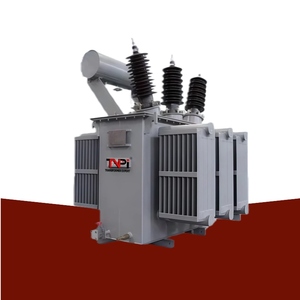
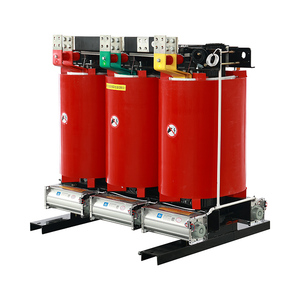
To meet the stringent physical and operational challenges of Japanese subterranean installations, our engineering team has developed two flagship architecture series: **Submersible Hermetically Sealed Oil-Immersed Transformers** and **Cast Resin Vacuum-Pressure Epoxy Impregnated Dry-Type Transformers**.
A. IP68 Fully Submersible Vault Distribution Transformers
Engineered for subterranean pit vaults prone to seasonal flooding, storm surges, or elevated groundwater tables. Key design features include:
- Corrosion-Resistant Stainless Steel Tanks: Formed using 304 or 316L stainless steel, coated with a multi-layer epoxy-polyurethane paint system engineered to survive 3,000+ hours of continuous salt-spray testing (ISO 12944 C5-M marine rating).
- IP68 Sealing & Dead-Front Elbow Bushings: Complete liquid tightness allows operation under continuous submersion up to 3 meters of water head. HV connections feature shielded, insulated plug-in elbow connectors compliant with IEEE 386 / IEC standards.
- Synthetic & Natural Ester Fluid Options: To eliminate environmental contamination risks in urban groundwater zones, transformers can be filled with biodegradable synthetic ester fluids (FR3 or MIDEL 7131) having a fire point exceeding 300°C.
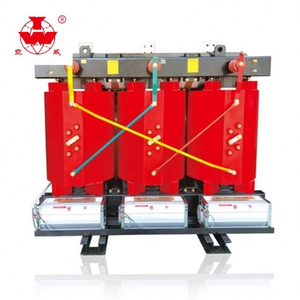
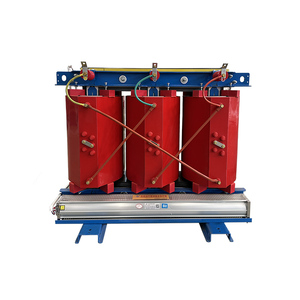
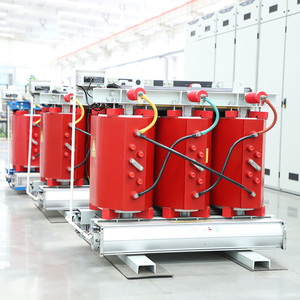
B. Cast Resin Dry-Type Transformers (JIS C 4306 Compliant)
For subterranean commercial buildings, underground shopping malls, and subway stations, dry-type transformers offer unmatched fire safety without fluid leakage risks:
- Vacuum Pressure Casting (VPC): High-grade epoxy resin filled with quartz powder is injected under deep vacuum, creating void-free coil insulation with partial discharge levels below 5 pC (pico-Coulombs).
- Class H (180°C) Thermal Rating: Formulated for self-extinguishing flame retardancy, meeting F1 fire behavior and E2 environmental resistance classes under international standards.
- Ultra-Quiet Core Geometry: High-permeability, cold-rolled grain-oriented (CRGO) silicon steel cores with 45-degree miter joints and step-lap core stacking reduce operating noise levels below 45–48 dB, compliant with Japanese city residential zone standards.
| Technical Parameter | Submersible Oil-Immersed Vault Series | Cast Resin Dry-Type Series | JIS C 4304 / 4306 Benchmark |
|---|---|---|---|
| Primary Voltage (HV) | 6.6 kV / 22 kV (3-Phase) | 6.6 kV / 10 kV / 22 kV | 6.6 kV Standard / 22 kV Loop |
| Secondary Voltage (LV) | 210V / 420V / 200V / 105V | 200V / 400V / 415V | Japanese Low Voltage Grid Standard |
| Ingress Protection | IP68 (Continuous Submersion) | IP20 (Standard) to IP54 (Vault Enclosure) | IP68 required for vault pits |
| Seismic Acceleration | 1.0G Horizontal / 0.5G Vertical | 1.0G Horizontal / 0.5G Vertical | High Seismic Grade 3 |
| Dielectric Insulation | Mineral Oil / Synthetic Ester Fluid | Class F (155°C) / Class H (180°C) Epoxy | Self-extinguishing mandatory |
| Acoustic Noise Level | 42 dB – 48 dB | 45 dB – 52 dB | Strict Urban Limits (<50 dB) |
| Efficiency Standard | Exceeds Top Runner Phase 2 Target | Exceeds Top Runner Phase 2 Target | METI Top Runner Energy Act |
3. Localized Application Scenarios Across Japan's Geography
A. Dense Urban Vault Pits (Tokyo & Osaka)
Directly installed in concrete underground sidewalk vaults. Small footprint dimensions allow insertion through standard 900mm manhole access hatches. Fully IP68 sealed against street runoff and severe monsoon water pooling.
B. High-Seismic Infrastructure Zones
Equipped with heavy-duty internal core clamping, low-center-of-gravity tanks, and flexible copper busbar expansion joints. Rigorously tested on tri-axial shaking tables to withstand seismic forces over 1.0G acceleration.
C. Coastal Industrial Parks (Kyushu/Chubu)
Featuring C5-M high-salinity corrosion protection, stainless steel fittings, and salt-mist resistant high-voltage bushings tailored for coastal chemical plants, ports, and offshore wind power landing stations.
4. Market Trends in Japan: Top Runner Program & Green Energy Decarbonization
Japan’s Energy Conservation Act mandates the **Top Runner Program** (*トップランナー制度*), administered by the Ministry of Economy, Trade and Industry (METI). This program establishes aggressive energy-efficiency target values based on the most efficient transformers commercially available in the market. Manufacturers exporting distribution transformers to Japan must comply with strict no-load loss (iron loss) and load loss (copper loss) limits.
To help Japanese buyers achieve total compliance and reduce lifecycle operating costs (TCO), our wholesale manufacturing facility incorporates advanced core technology options:
- Laser-Etched CRGO Silicon Steel Cores: Utilizing domain-refined 0.18mm to 0.23mm high-permeability silicon steel sheets. Laser scribing disrupts magnetic domain walls, reducing hysteresis and no-load losses by up to 25% compared to standard CRGO steel.
- Amorphous Alloy Core Integration: For utility networks seeking maximum energy conservation, our amorphous metal core series reduces no-load losses by an extraordinary 70% to 80% compared to traditional silicon steel, achieving rapid ROI over a 30-year operational life.
- Eco-Friendly Synthetic Ester Fluids: Fully compliant with Japanese environmental protection laws, non-toxic to aquatic ecosystems, and 100% biodegradable within 28 days.
5. Manufacturing Capabilities, Quality Assurance & Enterprise Export Advantages
As a premier Chinese transformer manufacturer and direct exporter to Japanese EPC contractors, industrial equipment suppliers, and global utility partners, our state-of-the-art 18,500 m² factory operates under total ISO 9001:2015 Quality Management and ISO 14001:2015 Environmental Management Systems.
Our core manufacturing advantages include:
- Automated Precision Machinery: Equipped with German Georg automated core cutting lines, high-precision foil winding machines, automatic tension-controlled wire winders, and Hedrich vacuum drying and epoxy casting chambers.
- In-House ISO/IEC 17025 Accredited Laboratory (VILAS 1183): Every unit undergoes 100% routine factory acceptance testing (FAT) before shipment. We provide complete English and Japanese bilingual test certificates.
- International Type-Test Verification: Certified by leading global independent testing bodies including KEMA (Netherlands), ASTA (UK), and QUATEST 1. Available type tests include full Lightning Impulse Withstand (BIL up to 350kV), Short-Circuit Withstand Capacity, Sound Level Measurement, and Temperature Rise Verification.
- Custom OEM/ODM Engineering: Complete flexibility to match Japanese client dimensional blueprints, terminal connection configurations, special dual-voltage taps, and customized brand labeling.