Technical White Paper
Engineering Distribution Transformers for Moscow’s Electrical Grid Architecture
An in-depth analysis of climatic insulation integrity, GOST compliance, thermal stress management, and voltage modernization across the Moscow Metropolitan Region.
Procuring distribution transformers for deployment within Moscow and the surrounding Moscow Oblast (Central Federal District of the Russian Federation) requires overcoming a unique combination of extreme climatic challenges, rigorous regulatory oversight, and shifting urban grid parameters. As PJSC Rosseti Moscow Region (ПАО «Россети Московский регион») continues its ambitious grid modernization initiatives—transitioning legacy 10kV networks to high-density 20kV distribution systems—engineering procurement managers must ensure imported transformers satisfy strict GOST standards, deliver uncompromised cold-start dielectric integrity, and minimize total cost of ownership (TCO) over a 30- to 35-year lifecycle.
1. Extreme Sub-Zero Thermal Management & GOST 15150 Compliance
The climatic conditions of Moscow demand electrical assets configured for UHL1 (Cold-Moderate Climate, outdoor placement) and UHL4 (indoor climate-controlled placement) under GOST 15150. During peak winter months, ambient temperatures routinely plummet below -30°C, with extreme design thresholds reaching -45°C to -50°C. Standard off-the-shelf transformers engineered for temperate zones suffer severe structural and operational failures under these conditions:
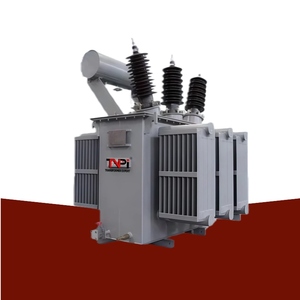
- Fluid Viscosity & Natural Convection Breakdown: Standard mineral oils experience exponential viscosity increases below -25°C, restricting thermo-siphon flow inside radiator tubes during cold start-ups. SOTEK equips oil-immersed units exported to Moscow with low-viscosity, high-flashpoint transformer oils (conforming to GOST 10121 / IEC 60296 Class I-30°C or synthetic esters like MIDEL 7131). This guarantees natural oil circulation (ONAN rating) and prevents localized hot-spot formation upon energization.
- Elastomer Embrittlement & Hermetic Sealing: Conventional NBR (Nitrile Butadiene Rubber) gaskets harden and crack at -30°C, causing catastrophic fluid loss and moisture ingress. SOTEK utilizes specialized Fluorosilicone and HNBR sealants rated for continuous operation down to -60°C, preserving tank vacuum and nitrogen blanketing integrity.
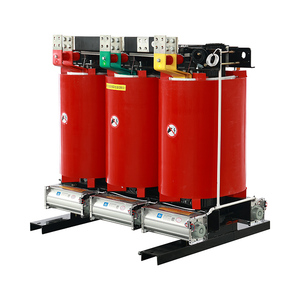
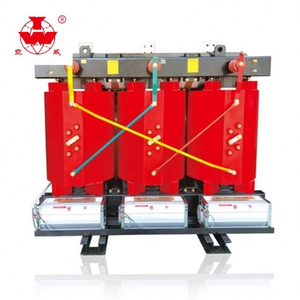
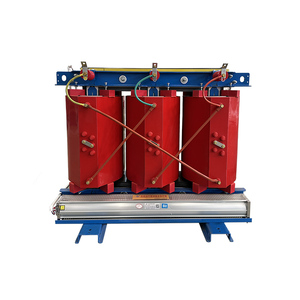
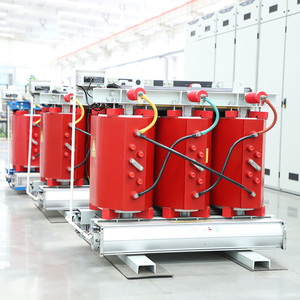
- Thermal Shock Resistance in Cast Resin Units: Indoor dry-type transformers in unheated Moscow facilities face rapid thermal expansion when energizing under full load from sub-zero ambient temperatures. Our cast resin transformers are certified to Class C2 (Climatic) and Class E2 (Environmental) per IEC 60076-11 / GOST 27079, utilizing pure quartz silica resin mixtures with linear thermal expansion coefficients matched precisely to copper/aluminum windings to eliminate resin micro-cracking.
Need Custom Technical Dossiers for Moscow Grid Interconnection?
Our engineering team provides comprehensive GOST compliance calculations, short-circuit withstand reports, and CAD drawings tailored to Rosseti specs.
Get Catalog
2. Navigating Moscow’s Dual-Voltage Landscape: The 10kV to 20kV Transition
Moscow’s urban energy infrastructure is currently undergoing a massive structural evolution. Historically dominated by 6kV and 10kV underground distribution loops, the central district and new commercial hubs (such as Moscow City and Technopolis Moscow) have standardized on 20kV medium-voltage distribution grids. The shift to 20kV offers double the transmission capacity and cuts line losses ($I^2R$) by up to 50%, enabling higher density substations without expanding underground cable trenches.
SOTEK supplies specialized dual-primary transformers (e.g., 10-20kV / 0.4kV) featuring Off-Circuit Tap Changers (OCTC) or On-Load Tap Changers (OLTC) with wide voltage adjustment ranges (±2×2.5% or ±4×1.25%). This allows developers and EPC contractors in Moscow to install future-proof infrastructure capable of immediate operation on legacy 10kV feeders, with seamless re-tap commissioning when Rosseti upgrades the local ring to 20kV.
3. Low-Loss Core Metallurgy & Acoustic Noise Mitigation
Under Russia's national energy efficiency mandates (Energy Strategy of Russia up to 2035) and strict Moscow municipality environmental sound regulations (SN 2.2.4/2.1.8.562-96), transformers installed in residential areas or integrated within commercial buildings must adhere to stringent acoustic and energy loss limits:
- Laser-Scribed CRGO & Amorphous Core Technology: SOTEK utilizes ultra-thin (0.23mm to 0.27mm) Cold Rolled Grain Oriented (CRGO) silicon steel sheets imported from premium steel mills (M0H / M1H grade), featuring step-lap core stacking. This reduces no-load loss ($P_0$) by up to 25% compared to standard GOST limits, lowering continuous utility bills for property owners.
- Acoustic Damping Design: By optimizing core flux densities ($B_{max} \le 1.55 \text{ Tesla}$) and incorporating elastic core-clamping dampers, our dry-type and oil-filled transformers achieve noise levels below 48–52 dB(A), fully compliant with Moscow indoor installation requirements for luxury residential and hospital environments.
 Substation Class