Distribution Transformer Technical Articles, Industry Insights & Grid Updates — SOTEK Group
Navigating Sri Lanka's Power Distribution Ecosystem: Technical Mandates & Challenges
Sri Lanka’s electrical utility framework, governed primarily by the Ceylon Electricity Board (CEB) and the Lanka Electricity Company (LECO) under the oversight of the Public Utilities Commission of Sri Lanka (PUCSL), operates under stringent environmental and technical guidelines. The island’s medium-voltage distribution infrastructure is structured around 33kV and 11kV primary feeder lines, stepping down to a standard 3-phase 415V / single-phase 240V at 50 Hz.
Exporting and installing transformers in Sri Lanka requires an engineering approach that accounts for aggressive tropical environmental stressors. The island experiences high relative humidity (frequently exceeding 85% to 95% in coastal regions such as Colombo, Galle, and Hambantota), heavy seasonal monsoons (South-West and North-East monsoons), and airborne saline contamination within 10 km of the coastline. Traditional oil-immersed transformers present significant environmental hazards, high maintenance burdens, and fire risks in dense urban centers, commercial high-rises, and textile manufacturing zones.
Critical Grid Vulnerability Factors in Sri Lanka
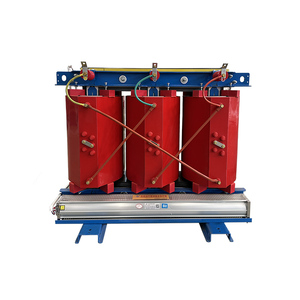
Due to historical power grid expansion patterns and seasonal drought affecting hydroelectric generation, Sri Lankan distribution networks often suffer from voltage surges, frequency fluctuations (±2.5 Hz), and high total harmonic distortion (THD) generated by heavy industrial motor loads and solar PV inverter injections. Standard commercial transformers frequently suffer dielectric breakdown due to moisture ingress, thermal runaway under high ambient heat (up to 40°C shade temperature), and premature winding degradation caused by salt spray rust. Our dry-type transformers are explicitly engineered with hydrophobic epoxy encapsulation to withstand these extreme conditions.
Engineering Deep Dive: Cast Resin (CRT) vs. Vacuum Pressure Impregnated (VPI) Technologies
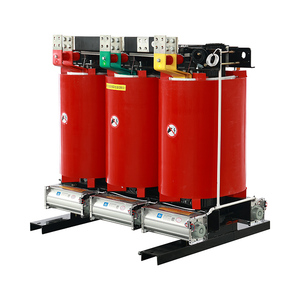
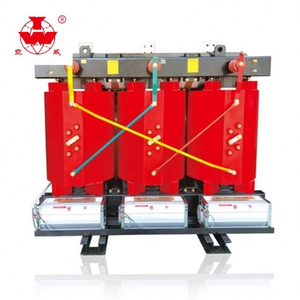
To ensure optimal equipment lifecycle ROI for Sri Lankan electrical consultants, EPC contractors, and procurement engineers, selecting the appropriate dry transformer insulation architecture is vital. Below is a side-by-side technical evaluation of Cast Resin Dry Transformers (CRT) versus Vacuum Pressure Impregnated (VPI) Transformers engineered for tropical maritime environments.
| Engineering Parameter | Cast Resin Dry-Type Transformer (CRT) | Vacuum Pressure Impregnated (VPI) | Sri Lanka Field Application Advantage |
|---|---|---|---|
| HV Winding Construction | Thin-sheet copper/aluminum encapsulated under high vacuum in solid Epoxy Resin with Quartz Powder filler. | Multiple layer coils thoroughly impregnated with high-temperature Class H/N varnish under vacuum pressure. | CRT provides absolute moisture immunity; zero risk of resin tracking in humid Sri Lankan coastal areas. |
| Partial Discharge Level | Exceptionally Low (< 5 pC at 1.3 Um nominal voltage). | Typically < 10 pC to 20 pC. | Prevents micro-arcing and internal dielectric breakdown under long-term 33kV electrical stress. |
| Thermal Insulation Rating | Class F (155°C) or Class H (180°C) with low temperature rise (≤ 90K/100K). | Class H (180°C) or Class C (220°C) organic resin varnish. | Class H provides thermal headroom against Sri Lanka's high ambient room temperatures without derating kVA. |
| Environmental / Fire Class | Certified E2 (Marine/High Humidity), C2 (Climatic -25°C), F1 (Self-Extinguishing Fire Safety). | E1/E2, C2, F0/F1 depending on outer enclosure and coating quality. | Mandatory requirement for urban developments in Colombo 01-07 and Board of Investment (BOI) industrial parks. |
| Short-Circuit Resistance | Superior mechanical strength due to rigid monolithic resin block construction. | High mechanical strength, dependent on resin bond curing completeness. | Withstands severe short-circuit electromagnetic forces during frequent CEB rural line trip events. |
| Maintenance Profile | Virtually Zero maintenance. Periodic visual check & dust blowing required. | Low maintenance, requires periodic inspection for moisture accumulation on varnish layers. | Eliminates liquid oil sampling, dissolved gas analysis (DGA), and oil filtration costs completely. |
Localized Application Scenarios Across Sri Lanka’s Strategic Sectors
Our dry-type transformers are manufactured to comply with both global standards (IEC 60076-11, IEEE C57.12.01) and local grid codes enforced by CEB/LECO. We specialize in custom-tailored installations across major Sri Lankan economic sectors:
Apparel & Garment Manufacturing Zones
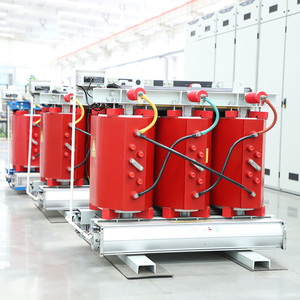
Sri Lanka’s premier export sector—located in Board of Investment (BOI) zones like Katunayake, Biyagama, and Seethawaka—demands 24/7 continuous power with zero fire hazard. Our cast resin transformers deliver F1 fire-proof ratings, ensuring zero toxic gas emission and zero flammable liquids inside fabric processing facilities.
Colombo Commercial High-Rises & Hotels
High-density luxury commercial towers, hospitals, and resorts along the Colombo beachfront require compact, low-noise footprint transformers. Featuring sound-dampening core clamps and IP23 to IP54 enclosures, our CRT units operate under 55 dB, preventing vibration transfer into building structures.
Solar PV Grid Integration (Soorya Bala Sangramaya)
With Sri Lanka pushing aggressively for utility-scale rooftop and ground-mounted solar power, our step-up dry transformers (0.415kV to 11kV/33kV) are designed with split HV windings, K-Factor 13 harmonic mitigation, and high efficiency to maximize grid-feed yield.
Tea Processing Factories (Upcountry & Lowcountry)
Located in humid, high-altitude regions like Nuwara Eliya, Kandy, and Ratnapura, tea processing mills operate heavy rolling machines and drying fans. Our dry transformers feature moisture-proof Class H insulation that prevents tracking during cold night-time condensation cycles.
Ports, Maritime & Logistics Hubs (Colombo & Hambantota)
Exposed to aggressive salt spray and marine corrosion, port gantry cranes and cold storage logistics hubs require specialized C4/C5 marine painted IP54 metal enclosures and C2/E2 climate class certified cast resin transformers to prevent galvanic oxidation.
Why Engineering & Procurement Teams Choose Our Manufacturing Infrastructure
As an established global manufacturer with dedicated B2B export capabilities serving South Asia, our production facilities combine state-of-the-art German automation with rigorous ISO 9001:2015, ISO 14001:2015, and ISO 45001 quality management frameworks.
Laser-Cut CRGO Cores
Utilizing top-grade Baosteel/WISCO high-permeability grain-oriented silicon steel with step-lap miter joint cutting, drastically reducing no-load losses (Po) and magnetizing noise.
Automated Vacuum Casting
Cast under ultra-high vacuum (< 1 mbar) using premium Huntsman epoxy resin systems. Guarantees 100% void-free resin encapsulation and partial discharge < 5 pC.
ISO/IEC 17025 Test Lab
Every unit undergoes 100% routine testing (winding resistance, voltage ratio, phase displacement, short-circuit impedance, power frequency withstand, partial discharge) before port dispatch.
Colombo Port Freight Expediting
Direct maritime shipping lanes from major port hubs to Port of Colombo (CICT/SAGT terminals). Standard lead times of 25-35 days with full Incoterms support (FOB, CIF, DDP).
Frequently Asked Questions by Sri Lankan Procurement Engineers & Contractors
Partner with a Premier Global Dry Transformer Exporter
Whether you are designing a 33kV commercial substation in Colombo, upgrading a textile mill in Katunayake FTZ, or developing a rooftop solar plant in Kandy, our application engineers are ready to assist with custom design specs, budgetary quotes, and fast-track production slots.