Distribution Transformer Technical Articles, Industry Insights & Grid Updates — SOTEK Group
Featured Marine & Heavy Industrial Transformers
Engineered for extreme offshore atmospheres, salt mist resistance, high vibration tolerance, and compliance with IEEE 45, ABS, DNV, and IEC 60076-16 marine standards.
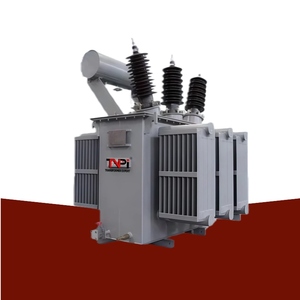 Substation Class
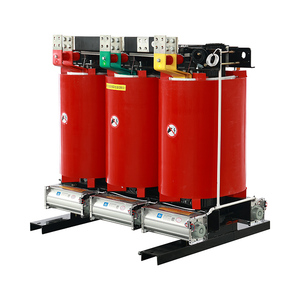 Marine Dry-Type
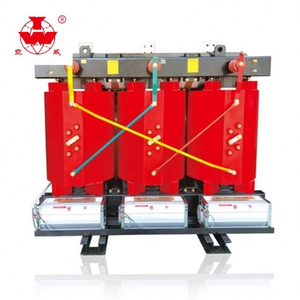 Forced Air Cooling
 High Voltage Step-Down
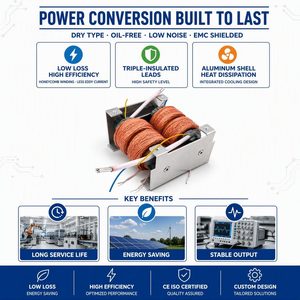 Custom Isolation
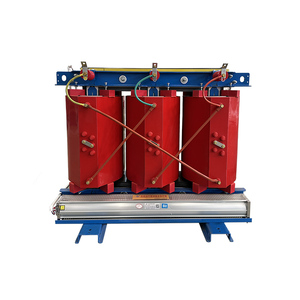 Cast Resin Epoxy
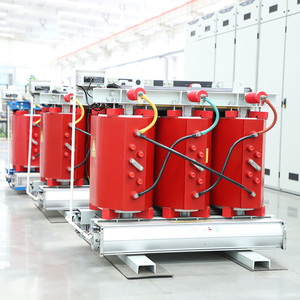 Low Loss Series
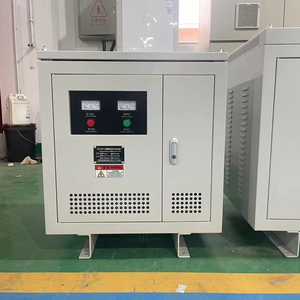 Standard Marine Deck
Marine Transformer Exporters in the New York Market: Technical Engineering Framework
The maritime economy of Greater New York, encompassing the Port of New York and New Jersey (PONYNJ), the Brooklyn Navy Yard, Staten Island ship repair hubs, and the rapidly growing offshore wind corridors in the New York Bight (including Empire Wind and Sunrise Wind), represents one of North America's most demanding operational sectors for heavy electrical power apparatus. As international shipping lines, naval defense contractors, and regional port authorities accelerate decarbonization, the demand for specialized Marine Transformers has surged. Sourcing from experienced global exporters who understand both federal U.S. electrical codes (ANSI/IEEE, NEC) and marine classification society mandates (ABS, DNV, Lloyds Register) is critical to avoiding catastrophic insulation breakdown, galvanic corrosion, and project commissioning delays.
Marine transformers operating within the New York coastal ecosystem face environmental and mechanical stresses far exceeding standard land-based industrial distribution substations. Marine transformers deployed on ocean-going vessels, tugboats, offshore supply vessels (OSVs), floating production systems, and port-side cold ironing installations must withstand high salt spray concentration (C5-M atmospheric rating), ambient moisture levels exceeding 95% relative humidity, constant pitch-and-roll mechanical vibration, and non-linear harmonic distortion generated by Variable Frequency Drives (VFDs) used in modern electric propulsion and bow thruster systems.
Where Marine Transformers Are Deployed Across New York Harbor & Offshore Grids
1. Port of NY & NJ Shore Power (Cold Ironing)
Shore-to-ship power installations at Red Hook Container Terminal and Port Newark allow container vessels and cruise liners to shut down auxiliary diesel generators while berthed. Our heavy-duty step-down dry-type isolation transformers step down 13.8kV or 4.16kV utility grid power to 440V/480V 60Hz or 400V 50Hz shipboard bus voltages, equipped with K-factor harmonic shielding and dual-frequency capability.
2. Offshore Wind Substation (OSS) Step-Up Grids
The New York Bight offshore wind leases require offshore substations to step up 66kV inter-array cable power to 138kV or 345kV export voltages. We export specialized marine-grade liquid-immersed transformers using synthetic ester fluid (biodegradable FR3) and dry resin transformers with IP56 stainless steel enclosures designed for zero fluid leakage in protected marine habitats.
3. Vessel Electrification & Ferry Retrofits
With NYC Ferry and Staten Island Ferry transitioning to hybrid electric and zero-emission battery propulsion systems, our compact cast-resin dry-type transformers serve as high-efficiency battery charging isolation units and drive transformers, featuring Class H (180°C) insulation and ultra-quiet operation (<50 dB) for urban waterfront compliance.
New York Marine Market Growth Trends & Regulatory Compliance
The procurement of marine transformers in New York is currently being reshaped by aggressive environmental mandates and utility grid modernization programs:
- Climate Leadership and Community Protection Act (CLCPA): New York State's statutory requirement to achieve 100% zero-emission electricity by 2040 has accelerated port terminal electrification, requiring exporters to supply transformers certified for integration with BESS (Battery Energy Storage Systems) and solar microgrids along the Hudson River and Long Island waterfronts.
- Consolidated Edison (ConEd) & PSEG Interconnection Rigor: Grid connection for shore power in NYC requires compliance with ConEd EO-4095 specifications, demanding low total harmonic distortion (THD < 3%), high short-circuit withstand withstand capability (up to 40kA/3s), and strict anti-islanding isolation features built into step-up step-down units.
- Shift to Biodegradable Ester Fluids: Environmental regulations in NY Harbor restrict mineral oil transformers near open waters. Synthetic ester oil (fire point >300°C, non-toxic to aquatic life) has become the required standard for oil-immersed units deployed on docks, piers, and offshore platforms.
- Space-Constrained Urban Substation Footprints: Commercial marine facilities in Manhattan, Brooklyn, and Queens require high-power-density transformers with compact footprints. Vacuum-cast dry-type units offering up to 30% footprint reduction compared to conventional air-insulated transformers are heavily prioritized.
Technical Comparison: Marine Transformer Technologies for NY Coastal Applications
| Transformer Architecture | Cooling & Insulation | Marine Protection Class | Harmonic Tolerance | Best NY Market Application |
|---|---|---|---|---|
| Cast Resin Dry-Type | AN / AF (Air Natural/Forced) | IP23 to IP56 Enclosure | K-13 to K-20 Rated | Vessel Interior Deck, Ferry Charging, Indoor Docks |
| Synthetic Ester Immersed | KAN / KAF (Ester Oil) | Hermetically Sealed IP66 | Standard to K-9 | Pier-side Cold Ironing, Offshore Platforms, Wet Docks |
| CRGO High-Voltage Power | ONAN / ONAF (Mineral Oil) | Substation Enclosure C5-M | Standard Grid | Coastal Utility Interconnection, Main Grid Step-Down |
| Single-Phase Overhead/Pole | ONAN Mineral / Ester | NEMA 3R Heavy Zinc Coating | Standard Load | Light Coastal Utility Poles, Marina Feeder Lines |
Why Engineering Procurement Teams in NY Trust Our Exporter Network
Combining German manufacturing precision, ISO-accredited testing, and full compliance with North American IEEE / ANSI and international IEC marine standards.
German Georg Core Lines
Precision step-lap cutting of high-permeability CRGO silicon steel reduces core loss by 20% and guarantees ultra-low no-load noise levels for urban NY port environments.
Hedrich Vacuum Casting
Full epoxy resin vacuum encapsulation ensures complete void-free insulation, zero partial discharge (<5 pC), and total immunity to moisture penetration in marine atmospheres.
VILAS 1183 Accredited Lab
In-house ISO/IEC 17025 accredited laboratory conducting full routine and type tests including short-circuit withstand, temperature rise, and lightning impulse up to 69kV.
C5-M Anti-Corrosion Coating
Multi-layer epoxy polyurethane paint system verified under 3,000-hour salt spray testing to prevent marine rust and degradation in brackish saltwater environments.
KEMA & ASTA Certified
Type-tested by international independent laboratories verifying compliance with global electrical safety, thermal endurance, and mechanical short-circuit strength.
Turnkey B2B Logistics to NY
Seamless CIF / DDP export shipping to Port of New York & New Jersey with complete customs documentation, US-compliant labeling, and factory acceptance test (FAT) dossiers.
Frequently Asked Questions by New York Marine Engineers & Buyers
Addressing critical standards, custom engineering, delivery logistics, and grid compliance for marine transformer exports into New York.
What marine standards do your transformers meet for installation in New York waters?
Our marine transformers are engineered and tested in accordance with IEEE 45 (Standard for Electrical Installations on Shipboard), ANSI/IEEE C57.12.01, and IEC 60076-16 (Supply Transformers for Wind Turbine Applications & Marine Dry-Type). Additionally, we provide third-party type testing documentation suitable for ABS (American Bureau of Shipping) and DNV classification approvals required for U.S. flagged vessels and offshore platforms.
How do you protect transformers against the corrosive salt air of New York Harbor?
For liquid-immersed units, we construct tanks using heavy-gauge stainless steel (304 or 316L) or high-strength carbon steel treated with an ISO 12944 compliant C5-M marine paint system (epoxy zinc-rich primer, epoxy intermediate coat, and polyurethane topcoat). For dry-type units, we apply anti-fungal, moisture-proof VPI (Vacuum Pressure Impregnation) varnish and supply NEMA 4X / IP56 marine-grade ventilated stainless enclosures.
Can your transformers handle the 60Hz frequency requirements of North American marine equipment?
Yes. While we export globally for both 50Hz and 60Hz systems, all transformers supplied to the New York market are engineered specifically for 60Hz primary and secondary frequencies, or supplied as dual-frequency (50/60Hz) isolation transformers designed for international vessel shore-to-ship power conversion terminals.
What insulation class is used to withstand high temperatures in enclosed vessel engine rooms?
Our dry-type marine transformers utilize Class H (180°C rise) or Class F (155°C rise) high-temperature insulation materials, featuring Nomex paper and premium epoxy resin casting. They are rated for continuous full-load operation in ambient engine room temperatures up to 45°C or 50°C without thermal degradation.
How do you mitigate harmonic distortion caused by shipboard VFD propulsion drives?
Shipboard variable speed drives generate significant harmonic currents that cause excessive core heating. We engineer custom K-factor rated transformers (K-4, K-13, K-20) featuring electrostatic copper shields between primary and secondary windings, double-sized neutral conductors, and optimized core flux densities to prevent saturation under high THD conditions.
What synthetic fluid options are available for eco-sensitive NY marine waterfronts?
To comply with EPA Vessel General Permit (VGP) regulations and local NY Department of Environmental Conservation (DEC) guidelines, we offer synthetic ester fluids (such as Midel 7131 or FR3) that are fully biodegradable, non-toxic to aquatic life, and carry a Class K fire-point (>300°C), drastically reducing fire hazard and oil spill liability.
What are the standard lead times for delivering a marine transformer to the Port of NY/NJ?
Standard lead times for custom-engineered marine dry-type or oil-immersed transformers range from 6 to 10 weeks depending on MVA capacity and testing requirements. Expedited manufacturing and ocean freight freight forwarding directly to Port Newark, Red Hook, or JFK air freight terminals are available for urgent vessel overhaul projects.
Are complete Factory Acceptance Tests (FAT) provided before export shipment?
Yes. Every transformer undergoes comprehensive FAT in our ISO/IEC 17025 accredited laboratory prior to export. Test dossiers include routine reports for winding resistance, voltage ratio, phase displacement, no-load loss, load loss, applied AC voltage, and induced overvoltage withstand. Third-party witness testing (ABS, DNV, SGS) can be arranged upon request.
Need Custom Marine Transformer Technical Specifications for New York Projects?
Consult with our senior marine electrical engineers to receive custom CAD drawings, technical datasheets, KEMA/ASTA type test reports, and competitive FOB/CIF quotation packages tailored to your port, offshore wind, or vessel electrification requirements.