Distribution Transformer Technical Articles, Industry Insights & Grid Updates — SOTEK Group
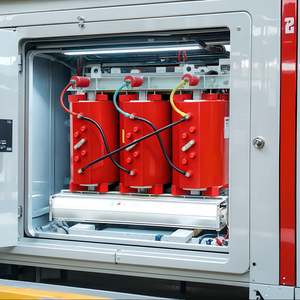
TSTY 6.6KV 6.3KV 6KV Step-Up 250KVA Epoxy Cast Resin Foil Winding Dry Transformer
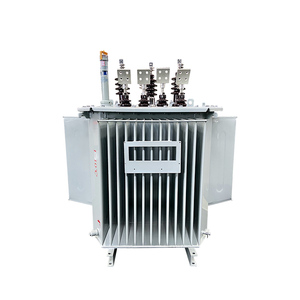
Step Up Transformer 110 To 220 Industrial Power Transformer Distribution Oil Immersed Power Transformer
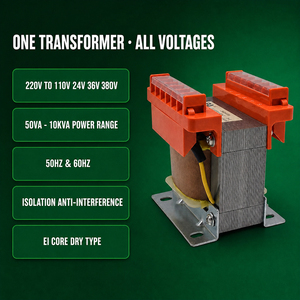
Step up Step Down Transformer 220V to 380V 240V 415V 440V 480V Low Voltage High Power 10kW 50kVA Control Circuit transformers
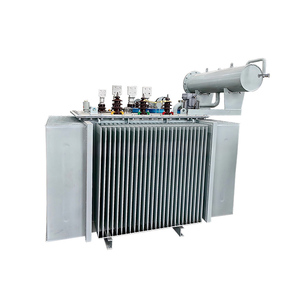
Anboneng Energy Three Phase Oil Immersed Transformer Step Up Step Down Electrical Power Transformer For Substation Use
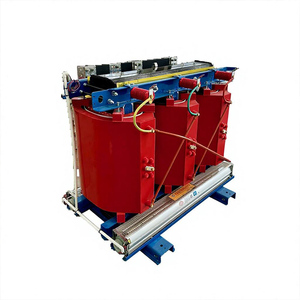
125/160KVA Dry Type Three-Phase Power Transformer 380v/400v 50/60Hz Copper Step-Up Transformer
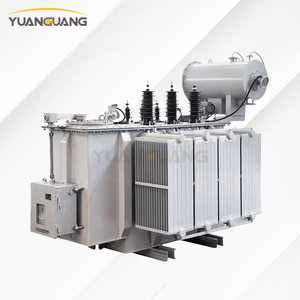
52kV And Below 2.5-100 MVA Step Up/Down High Voltage Oil Immersed Power Transformer Manufacturer For Power/Distribution Station
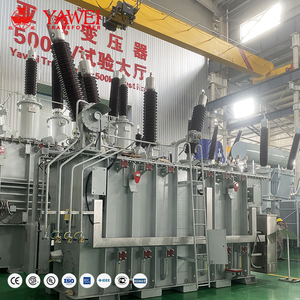
Jiangsu Yawei Transformer Electrical Equipment 110kV 220KV 12.5mVA 16mVA 20mVA Step up Power Distribution transformers
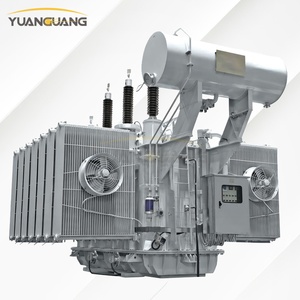
52-230kV 10-300 MVA Step Up/Down High Voltage Oil Immersed Power Transformer Manufacturer For Power/Distribution Station
Technical Whitepaper: Step-Up Transformer Architecture & Grid Integration in the Greater Chicago Region
As the primary economic and industrial engine of the American Midwest, the Chicago metropolitan area—spanning Cook County, DuPage County, and the broader Chicagoland industrial belt—operates one of the most complex, high-density electrical networks in North America. Managed primarily under the PJM Interconnection and bordering the MISO (Midcontinent Independent System Operator) regional transmission organizations, electrical infrastructure in Chicago demands extreme thermal resilience, fault-current withstand capabilities, and compliance with stringent utility standards such as those mandated by ComEd (Commonwealth Edison).
A step-up transformer serves as a critical electromechanical node within this energy ecosystem. Its primary function is to step up low-to-medium generation voltages (such as 480V, 4.16kV, 12.47kV, or 34.5kV) from renewable energy inverters, industrial co-generation units, or utility step-up yards to high sub-transmission or transmission levels (such as 69kV, 138kV, or 230kV). By increasing voltage prior to long-distance transmission across the Chicagoland grid, step-up transformers exponentially reduce $I^2R$ line losses according to Joule's First Law, facilitating energy transfer across regional sub-networks.
Information Gain Engineering Note: Step-up power transformers configured for step-up applications endure unique electromagnetic and mechanical stresses compared to step-down distribution units. The low-voltage primary windings carry exceptionally high continuous current, necessitating continuous-foil or transposed conductor (CTC) windings to mitigate stray-loss eddy currents, skin effect heating, and electromagnetic axial displacement during short-circuit events.
Core Metallurgy & Low-Loss Electromagnetic Physics
Modern step-up transformer design hinges on core magnetic efficiency. Our step-up transformers utilize high-permeability, laser-scribed Cold-Rolled Grain-Oriented (CRGO) silicon steel laminations (M3 and M4 grades) assembled using step-lap mitered joint construction. This advanced core topology drastically reduces no-load hysteresis and eddy-current losses. Furthermore, for eco-conscious commercial projects and urban data center facilities across Chicago, our engineering team offers Amorphous Alloy Core step-up transformers, which achieve a 70% to 80% reduction in no-load loss compared to conventional CRGO designs.
Comparative Technical Matrix: Dry-Type vs. Oil-Immersed Step-Up Units
| Specification Metric | Epoxy Cast Resin Dry-Type Step-Up | Oil-Immersed Substation Step-Up | EHV Transmission Power Step-Up |
|---|---|---|---|
| Capacity Range | 100 kVA to 6.3 MVA | 1 MVA to 50 MVA | 10 MVA to 300 MVA |
| Voltage Class | Up to 35 kV Class | Up to 69 kV Class | 52 kV to 230 kV Class |
| Insulation System | Class F (155°C) / Class H (180°C) Epoxy | Mineral Oil / Synthetic Ester (FR3) | High-Refined Inhibited Mineral Oil |
| Fire Safety Rating | F1 Self-Extinguishing (NFPA 70) | Requires Containment / FR3 Option | Fire Suppression Barrier Required |
| Cooling Mechanism | AN (Air Natural) / AF (Air Forced) | ONAN / ONAF | ONAN / ONAF / OFAF |
| Optimal Application | Indoor Chicago Skyscrapers & Data Centers | Midwest Solar/Wind & Industrial Plants | PJM/MISO Utility Grid Interconnects |
Regional Market Trends & Regulatory Compliance in Illinois
The energy infrastructure landscape in the Midwest is undergoing a transformative shift driven by the Illinois Climate and Equitable Jobs Act (CEJA), which targets 100% clean energy transition by 2050. This legislation has catalyzed rapid grid modernization initiatives throughout Chicago, requiring industrial buyers and EPC contractors to source step-up transformers engineered for decarbonized smart grids.
1. Transition to Eco-Friendly Biodegradable Ester Fluids
In response to environmental regulations protecting Lake Michigan and local waterways, Chicago power utilities are increasingly mandating natural ester bio-oils (such as FR3) for liquid-filled transformers. Ester-filled step-up transformers offer a high fire flashpoint (>300°C) and are 100% biodegradable within 28 days, rendering them ideal for industrial installations adjacent to Chicago waterways and suburban residential communities.
2. Smart Grid SCADA & Dissolved Gas Analysis (DGA) Integration
Modern step-up transformers exported and supplied to the Chicago market are routinely equipped with advanced IoT monitoring suites. Real-time online Dissolved Gas Analysis (DGA) sensors, fiber-optic winding temperature probes, and micro-processor tap changer controllers integrate seamlessly with utility SCADA networks, enabling predictive maintenance and preventing catastrophic transformer failures.
3. Logistics & Supply Chain Efficiency for Midwest Job Sites
As experienced international step-up transformer exporters, we streamline shipping to Chicagoland via optimized freight routes. Utilizing heavy-lift container transport directly to the Port of Chicago (Iroquois Landing Terminal) or major Class-I rail networks (BNSF / Union Pacific), our transformers arrive on site pre-tested, vacuum-filled, and ready for immediate rigging and installation.
Manufacturer Capabilities & Quality Control Assurance
Derived from decades of high-voltage transformer engineering and export experience (incorporating technological excellence from industry leaders like Yawei, TSTY, and SOTEK OEM facilities), our step-up transformers represent the pinnacle of structural durability and electrical precision.
Rigorous Factory Acceptance Testing (FAT)
Every step-up transformer undergoes 100% routine and type testing prior to export in accordance with IEEE C57.12.90 and IEC 60076 standards. Our ISO/IEC 17025 accredited test bays perform:
- Full-wave basic lightning impulse withstand testing (BIL up to 1050 kV).
- Induced overvoltage and partial discharge testing (< 10 pC for cast resin dry units).
- Short-circuit mechanical withstand verification and temperature rise testing under full thermal load.
- Sound-level measurement compliant with NEMA TR-1 specifications.
Custom Engineering & Vector Group Tailoring
Whether your Chicago installation requires standard Dyn11, YNd11, or specialized vector configurations for generator coupling, our engineering department designs tailored solutions:
- Custom Primary Voltage Taps: De-Energized Tap Changers (DETC) or On-Load Tap Changers (OLTC).
- Corrosion-Resistant Enclosures: NEMA 3R, NEMA 4X, or IP54 stainless-steel tanks for heavy industrial or coastal Lake Michigan exposure.
- Seismic Zone 1 to Zone 4 structural reinforcement for severe vibration resistance.
Request a High-Voltage Step-Up Transformer Quotation
Partner with an established global step-up transformer supplier. Our engineering team provides detailed technical proposals, CAD drawings, and factory-direct B2B pricing within 24 hours.