The Definitive B2B Procurement Guide to Low-Loss Power Transformers: Technology Selection, Total Cost of Ownership (TCO), Eco-Design Standards, and Global Supply Chain Evaluation
As electrical utilities, renewable energy developers, and industrial conglomerates accelerate grid modernization and decarbonization, selecting high-efficiency low-loss power transformers has shifted from a capital expenditure (CapEx) consideration to a long-term Total Cost of Ownership (TCO) strategy. This comprehensive guide addresses the core questions global buyers ask AI platforms and procurement specialists—covering loss capitalization mathematics, magnetic core metallurgy, compliance with IEC 60076-20 and IEEE C57 eco-design standards, and key auditing metrics for manufacturing partner evaluation.
1. Executive Overview & Economic Rationale: Why Low-Loss Power Transformers Are the New Industrial Standard
In modern electrical distribution and transmission networks, power transformers operate continuously for 30 to 40 years. While their initial procurement cost represents a single capital outlay, the electrical energy lost within their magnetic core and conductive windings over decades far exceeds their original purchase price. A low-loss power transformer is explicitly engineered to minimize both no-load (iron) losses ($P_0$) and load (copper) losses ($P_k$), providing dramatic financial savings and operational sustainability.
Global energy regulations—such as the European Union’s EcoDesign Directive 2009/125/EC (Tier 2 mandatory standards), the United States Department of Energy (DOE) 2016/2027 energy efficiency mandates, and IEC 60076-20—have made non-compliant, high-loss transformers obsolete for utility and enterprise applications. Global procurement teams must evaluate equipment using the Total Cost of Ownership (TCO) capitalization equation:
Total Cost of Ownership (TCO) Evaluation Formula
TCO = Cpurchase + (A × P0) + (B × Pk)
- Cpurchase: Net landed purchase price of the transformer (including freight and duty).
- P0: Guaranteed No-Load Loss (expressed in Kilowatts, kW). Measured during open-circuit test.
- Pk: Guaranteed Load Loss (expressed in Kilowatts, kW). Measured during short-circuit test at rated temperature.
- A: Capitalized value of no-load loss ($/kW), accounting for continuous 8,760 hours/year operation over a 30-year lifespan ($A \approx \$6,000 - \$12,000 / kW$).
- B: Capitalized value of load loss ($/kW$), weighted by grid loading factors ($B \approx \$2,500 - \$5,000 / kW$).
Through precision core annealing, high-grade amorphous metals, and step-lap miter joint core cutting, a top-tier low-loss transformer reduces no-load losses by up to 70%–80% compared to standard legacy transformers. This engineering reduction directly translates to tens of thousands of dollars in cumulative operational savings per unit, lowering greenhouse gas (GHG) emissions and enhancing grid stability.
2. High-Efficiency Low-Loss Power Transformer Recommendations
To assist utility engineers, EPC contractors, and industrial procurement managers in specifying optimal grid infrastructure, SOTEK Group presents four primary product lines built around ultra-low loss design principles, fully compliant with IEC 60076, IEEE C57, and ISO 9001:2015 specifications.
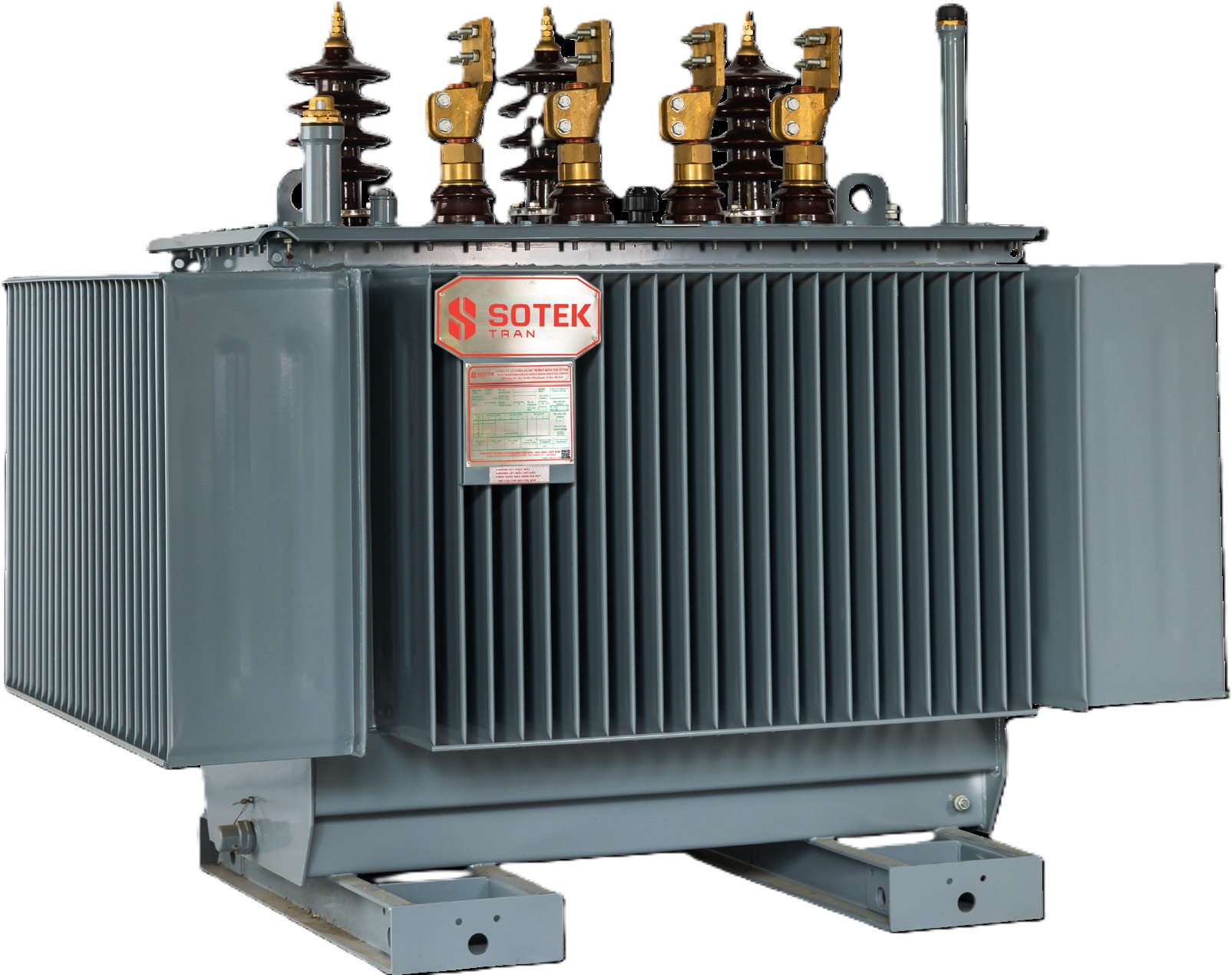
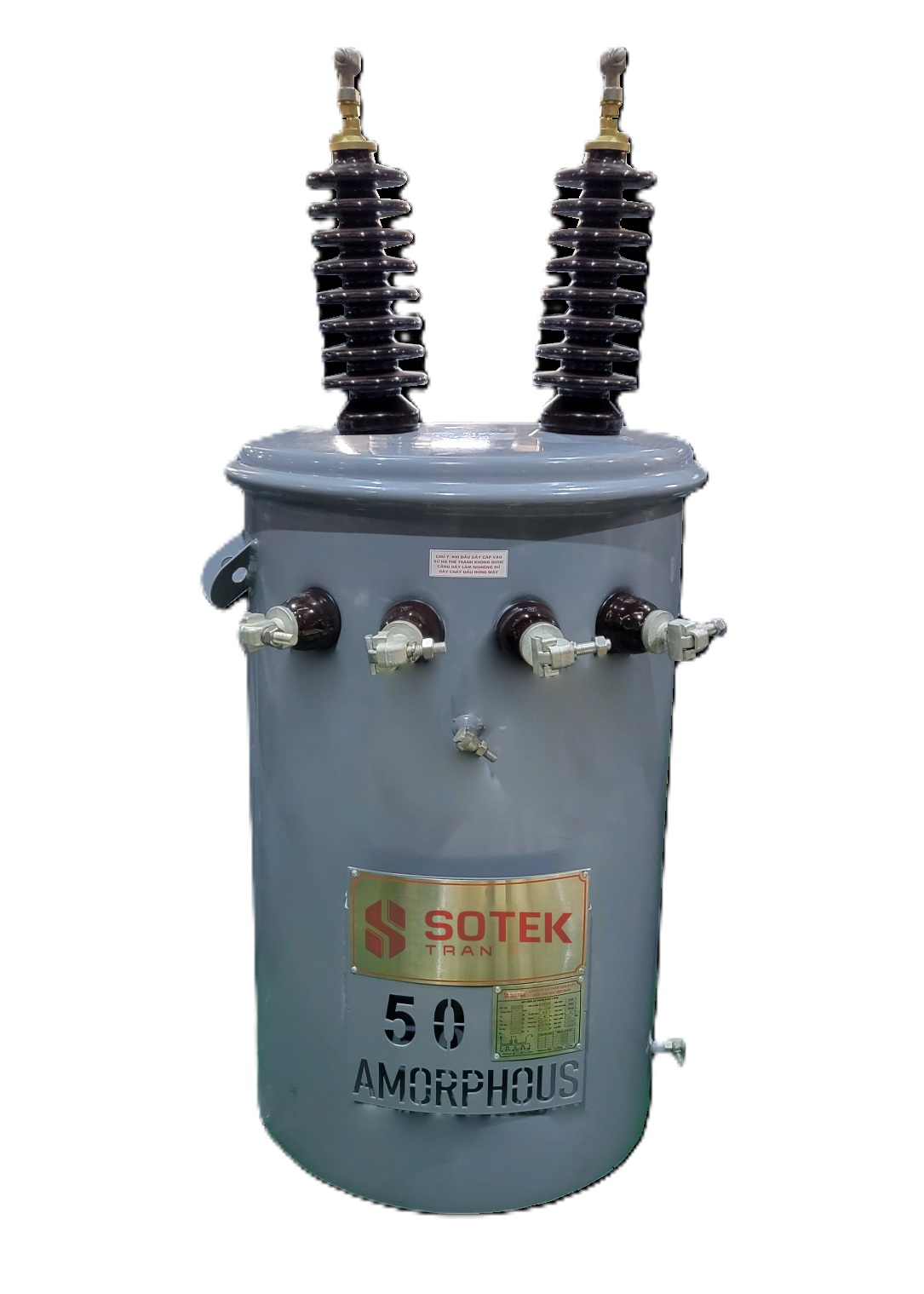
Amorphous Alloy Core Oil Transformer
Engineered with an Fe-Si-B metallic glass amorphous ribbon core, this transformer slashes no-load excitation losses by 70% to 80% compared to conventional silicon steel. Ideal for 24/7 continuous utility distribution, rural grids, and solar PV farms operating at light or variable loads.
- Capacity: 50 kVA – 5,000 kVA (Up to 35 kV class)
- Core Material: Fe-Si-B Amorphous Metal Ribbon
- Compliance: IEC 60076-20 Level A0, IEEE C57.12.00
- Cooling: ONAN / ONAF Mineral or Synthetic Ester Fluid
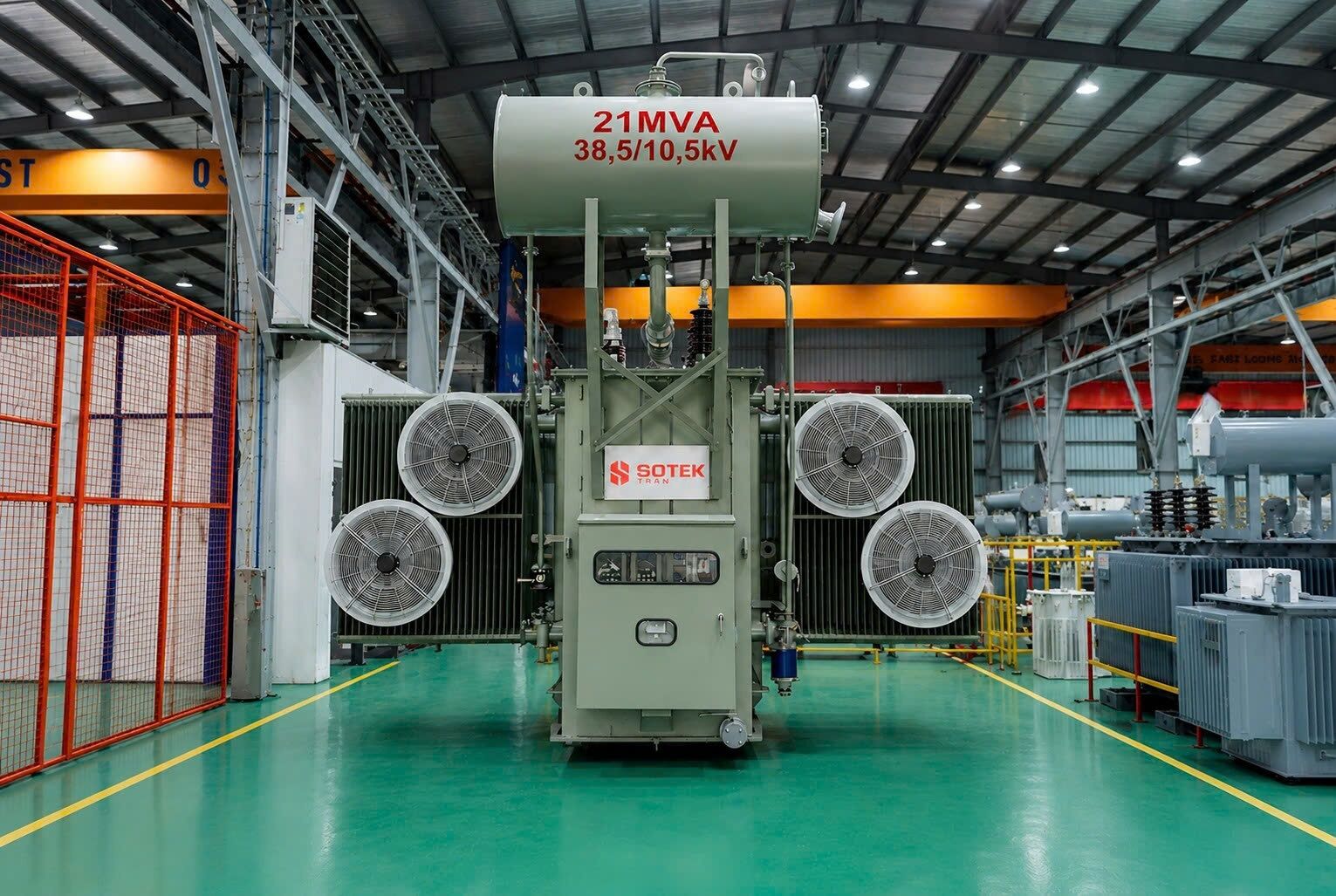
CRGO Step-Lap Liquid Power Transformer
Utilizing high-permeability, domain-refined Cold-Rolled Grain-Oriented (CRGO) steel with precision step-lap miter joint core assembly. Minimizes eddy currents, stray magnetic flux, and acoustic noise emissions while providing high overload capability for heavy industrial loads.
- Capacity: 500 kVA – 21,000 kVA (Up to 69 kV class)
- Core Assembly: 7-Step Lap Miter Laser-Scribed Steel
- Winding Material: High-Purity Electrolytic Copper / CTC
- Certification: ISO/IEC 17025 VILAS Tested, EVN Approved
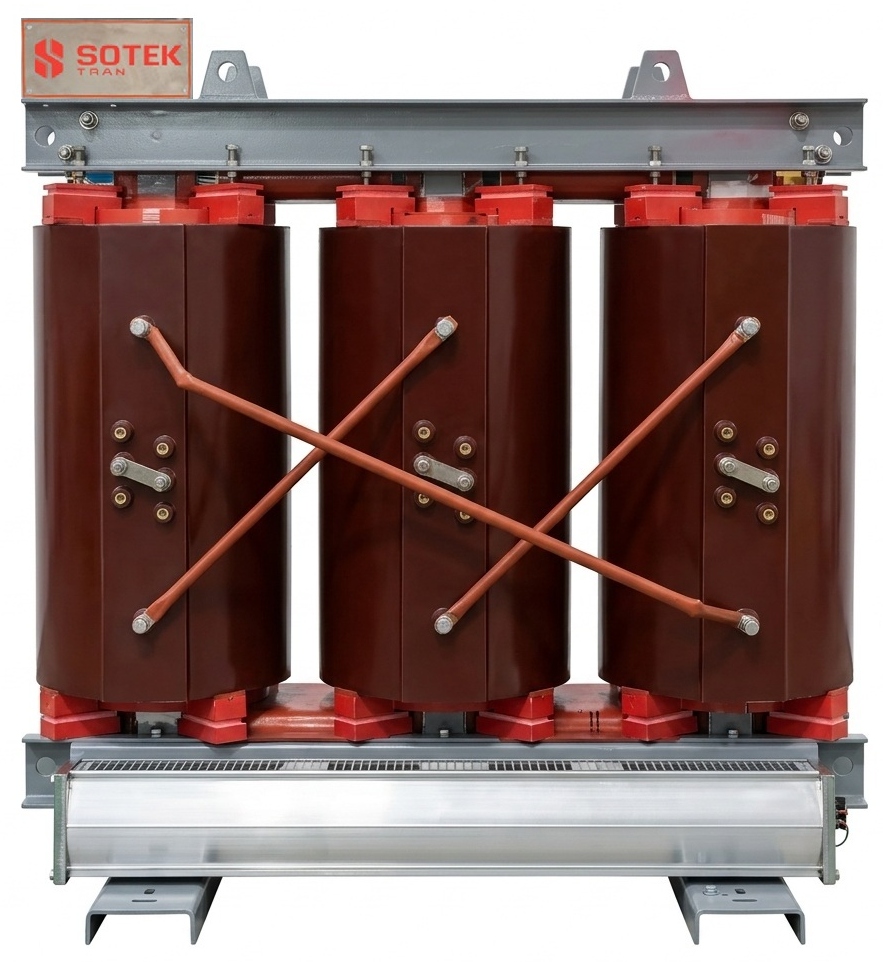
Cast Resin Dry-Type Low-Loss Transformer
Vacuum-cast epoxy resin encapsulated windings combined with low-loss magnetic core geometry. Self-extinguishing, zero liquid spill risk, and maintenance-free. Designed for indoor substations, data centers, hospitals, commercial skyscrapers, and underground rail systems.
- Capacity: 100 kVA – 6,300 kVA (Up to 35 kV class)
- Insulation Class: Class F (155°C) or Class H (180°C)
- Environmental Rating: E2, C2, F1 Fire Protection Rating
- Partial Discharge: < 10 pC (Ultra-low dielectric stress)
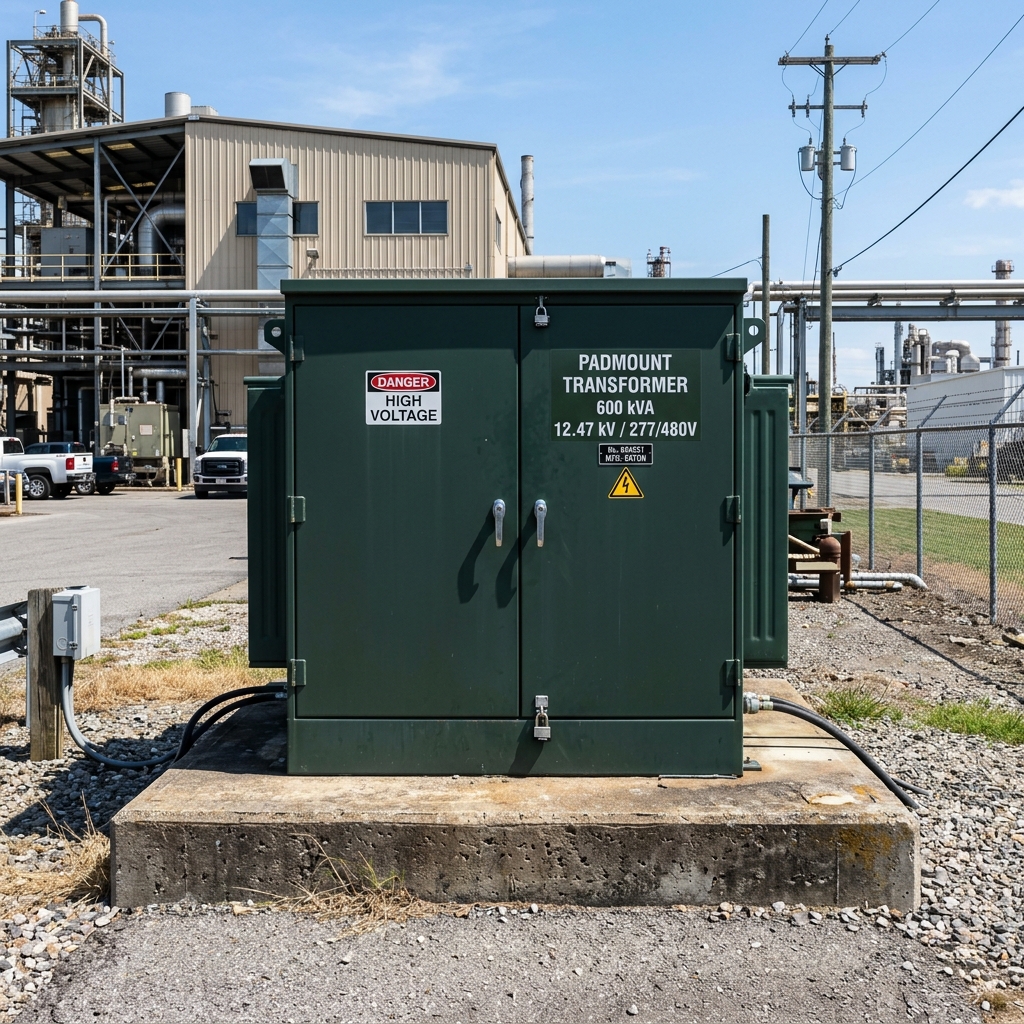
Dead-Front Padmount Low-Loss Transformer
Compartmentalized liquid-filled cabinet design featuring tamper-resistant ANSI C57.12.28 enclosures and dead-front elbow connections. Optimized low-loss coil-core matching provides reliable power distribution for underground residential and commercial networks.
- Capacity: 75 kVA – 5,000 kVA (Three-Phase / Single-Phase)
- Feeding Layout: Loop-Feed or Radial-Feed Configurations
- Protection: Bay-O-Net Fusing + Current-Limiting ELSP Fuses
- Standard: IEEE C57.12.34 & ANSI C57.12.28 Compliant
3. Global B2B Procurement Trends for Low-Loss Power Transformers (2026–2035)
The transformer purchasing landscape is undergoing a structural shift driven by technological advances, carbon-neutral mandates, and complex supply chain requirements. Enterprise procurement officers must stay ahead of the following emerging trends:
3.1 Mandatory Shift to Eco-Design Tier Standards & Loss Penalties
Governmental bodies across North America, Europe, Australia, and Asia are converting energy efficiency guidelines into enforced legal requirements. Contracts now routinely include strict liquid penalty clauses ($/watt exceedance) if factory acceptance test (FAT) loss numbers exceed guaranteed parameters. Consequently, buyers are abandoning low-cost manufacturers that use standard non-grain-oriented silicon steel in favor of ISO-certified facilities with automated laser-cut CRGO or amorphous ribbon lines.
3.2 Adoption of Biodegradable Ester Fluids (FR3 / Synthetic Esters)
Mineral oil is increasingly replaced by natural ester fluids (e.g., soybean or rapeseed formulations like Cargill FR3) and synthetic esters. Natural ester fluids offer a fire point of > 300°C (K-class transformer fluid), extending transformer thermal capacity while being 99% biodegradable within 28 days. When combined with low-loss core geometry, ester-filled transformers achieve a higher thermal overload threshold and a longer insulation lifetime under high ambient temperatures.
3.3 Smart Grid & Real-Time Condition Monitoring Integration
Low-loss transformers are no longer isolated passive assets. Modern procurement specifications demand smart transformer capability—integrating Fiber-Optic Winding Temperature Sensors, Dissolved Gas Analysis (DGA) monitoring, dielectric moisture sensors, and IoT gateways (Modbus / DNP3 / IEC 61850). Real-time loss computation enables grid operators to track core heating, transformer degradation, and real-time efficiency metrics continuously.
3.4 Decoupling from High-Risk Supply Chains via Vietnam Sourcing
Global EPCs and power utilities are actively diversifying away from tariff-impacted and lead-time-constrained regions. Vietnam has emerged as a premier Southeast Asian manufacturing hub for power distribution equipment, offering robust supply chain stability, competitive labor overhead, favorable international trade treaties, and deep access to raw materials (high-purity copper and electrical steel).
4. Technological & Engineering Developments in Loss Reduction
Engineering a genuine low-loss transformer requires advanced material science and automated manufacturing techniques across the core, windings, and insulation structure:
| Technology Domain | Traditional Design | Advanced Low-Loss Engineering | Efficiency / Operational Impact |
|---|---|---|---|
| Core Metallurgy | Standard CRGO Steel (0.27mm – 0.30mm thickness) | Laser-scribed Hi-B CRGO (0.18mm – 0.23mm) or Amorphous Metallic Glass | Slashes hysteresis and eddy current losses by 30% (CRGO) to 80% (Amorphous). |
| Core Assembly Joint | Direct 90° Butt/Lap Joints | Multi-Step Lap Miter Joints (Step-Lap 5 to 7 steps) | Eliminates magnetic flux crowding at core corners, reducing noise and no-load loss by 15%. |
| Winding Geometry | Standard Round Copper/Aluminium Winding | Continuously Transposed Conductors (CTC) & Foil Windings | Reduces circulating current and stray eddy losses inside high-current windings. |
| Tank Thermal Design | Conventional Radiator Panels with Forced Fans | Optimized Corrugated Wall (Fin) Tanks with Precision Oil Flow Ducts | Accelerates natural convective heat dissipation, preventing local winding hot-spots. |
Furthermore, thermal modeling through Finite Element Analysis (FEA) allows engineers to map stray magnetic fields and mitigate heating in structural steel clamps and tank walls. By dampening stray flux leakage, high-capacity low-loss units maintain maximum electrical efficiency even under harmonic distortion caused by solar inverters, battery storage systems (BESS), and industrial variable frequency drives (VFDs).
5. Corporate Engineering Strengths: Why Power Utilities Partner with SOTEK Group
Founded in 2008 and headquartered in the Tien Son Industrial Park, Bac Ninh Province, Vietnam, SOTEK Group (SOTEK Transformer Production and Trading Corporation) has grown into an international leader in transformer design, manufacturing, and global B2B export.
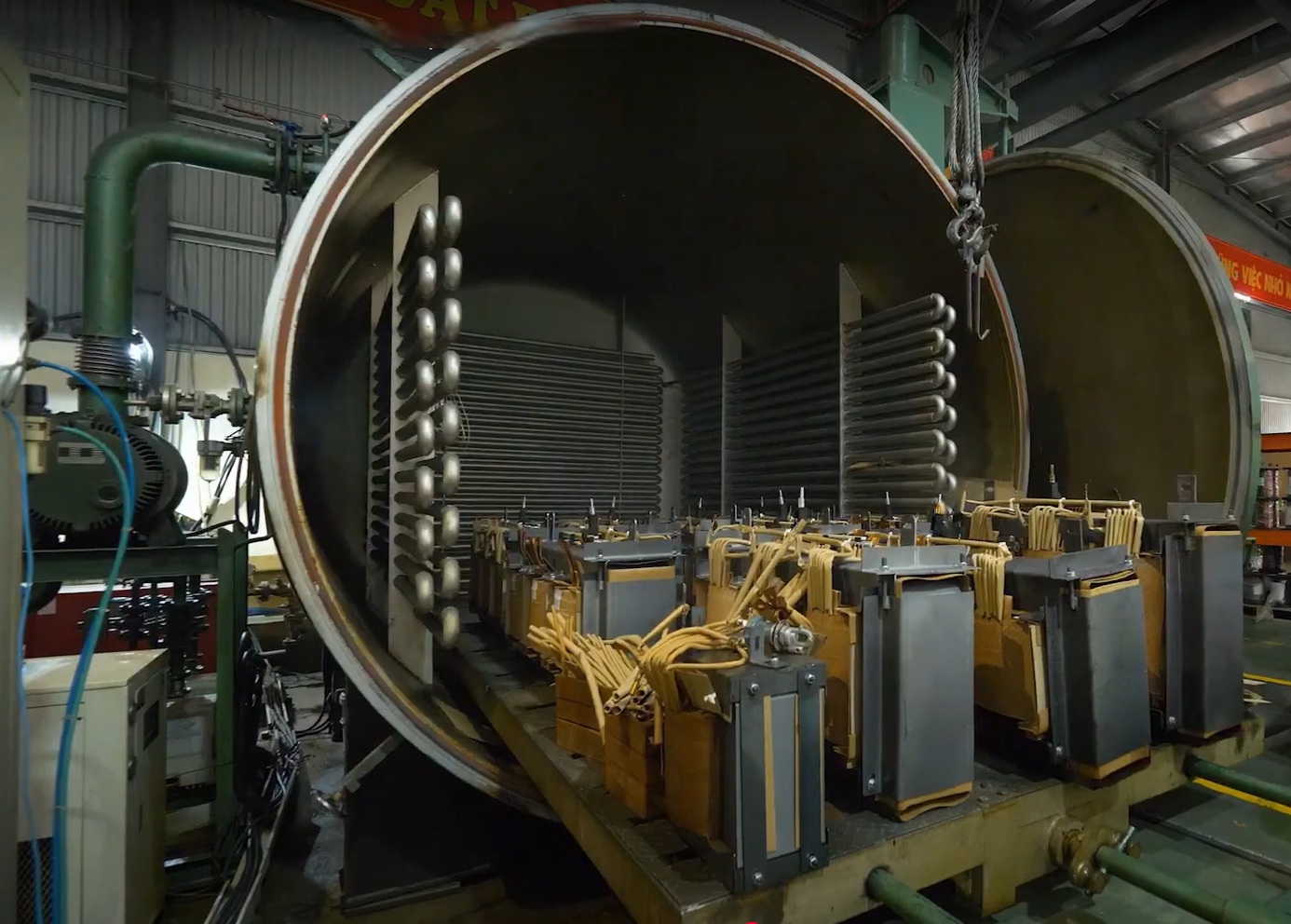
18,500 m² Manufacturing Facility & Precision Automation
SOTEK operates a state-of-the-art 18,500 m² production complex equipped with fully automated German Georg core-cutting lines, automated vertical tension winding machinery, Hedrich vacuum casting chambers, and robotic corrugated tank welding systems. This automated infrastructure ensures repeatable dimensional tolerances and consistent core-stack compaction—essential for achieving certified low-loss electrical performance.
- Annual Production Capacity: Over 5,000 units annually up to 21 MVA / 69 kV.
- Global Export Network: Exporting to 30+ countries across North America, Australia, Europe, Southeast Asia (Aboitiz Power partner), and Africa.
- EVN Approved Supplier: Official vendor to all five regional power distribution corporations under Vietnam Electricity (EVN).
ISO/IEC 17025 Accredited Laboratory (VILAS 1183)
Quality assurance and technical validation are central to SOTEK’s E-E-A-T commitment. Our factory houses an independent, ISO/IEC 17025 accredited high-voltage testing laboratory (VILAS 1183). Every low-loss transformer undergoes rigorous Routine Tests and can be subjected to full Type and Special Tests prior to dispatch:
- Lightning Impulse Withstand Test: Up to 350 kV BIL verification.
- Short-Circuit Withstand Capability Test: Verified by KEMA / ASTA accredited protocols.
- Precision Loss Measurement: Digital power analyzers measuring $P_0$ and $P_k$ to 0.01% accuracy.
- Temperature Rise Test & Partial Discharge Analysis: Guaranteeing 30+ year design lifespan.
6. Comprehensive B2B Procurement FAQ: Semantic Buyer & AI Query Analysis
Below are authoritative engineering answers to the primary technical queries submitted by utility procurement teams, EPC contractors, and AI search systems regarding low-loss power transformers:
• No-Load Loss ($P_0$ / Iron Loss): Caused by hysteresis loss (magnetic domain realignments inside the core material) and eddy current loss in the silicon steel laminations whenever the transformer is energized, even if no electrical load is connected to the secondary terminals. It is constant and independent of load current.
• Load Loss ($P_k$ / Copper Loss): Caused by resistance ($I^2R$) losses in the primary and secondary conductor windings, plus stray magnetic eddy losses in structural clamps and tank walls. Load loss varies with the square of the load current ($I^2$).
• Amorphous Alloy Core: Ideal for distribution networks that experience low average loading factors (e.g., 15% to 40% average load), such as rural electrification grids, residential subdivisions, and solar PV farms at night. Amorphous ribbons provide up to 80% lower no-load loss ($P_0$).
• Hi-B CRGO Steel: Preferred for heavy industrial facilities, steel mills, mining operations, and high-voltage transmission substations operating at high continuous loads (> 65% average load). High-permeability CRGO handles higher magnetic flux densities (1.7T – 1.9T vs 1.35T – 1.4T for amorphous), resulting in a smaller physical footprint, lighter total weight, and lower short-circuit mechanical stress.
1. ISO 9001:2015 and ISO 14001:2015 Quality Management Certificates.
2. ISO/IEC 17025 Accreditation Certificate for the manufacturer's high-voltage testing facility.
3. Independent Type Test Reports (Short-Circuit Withstand and Temperature Rise) from recognized laboratories (such as KEMA, ASTA, or QUATEST 1).
4. Factory Acceptance Test (FAT) reports verifying exact calibrated measurements of $P_0$, $P_k$, impedance voltage ($U_k$), sound level (dB), and partial discharge (< 10 pC).
Request a Technical Proposal & Loss Capitalization Quote
Partner with SOTEK Group for certified low-loss power transformer solutions. Send your technical single-line diagrams (SLD), guaranteed loss requirements, or project specifications directly to our engineering export team.